When a tenant or landlord decides to end a lease agreement, a Lease Termination Letter becomes an essential document. This letter serves as a formal notice, clearly stating the intent to terminate the lease and specifying the last date of occupancy. It is crucial for both parties to understand their rights and responsibilities during this process. The letter typically includes important details such as the address of the rental property, the names of both the tenant and the landlord, and the reason for termination, if applicable. Additionally, it may outline any necessary steps for the return of the security deposit and the condition in which the property should be left. By using a Lease Termination Letter, both parties can ensure a smooth transition and avoid potential disputes, making it a vital tool in the rental process.
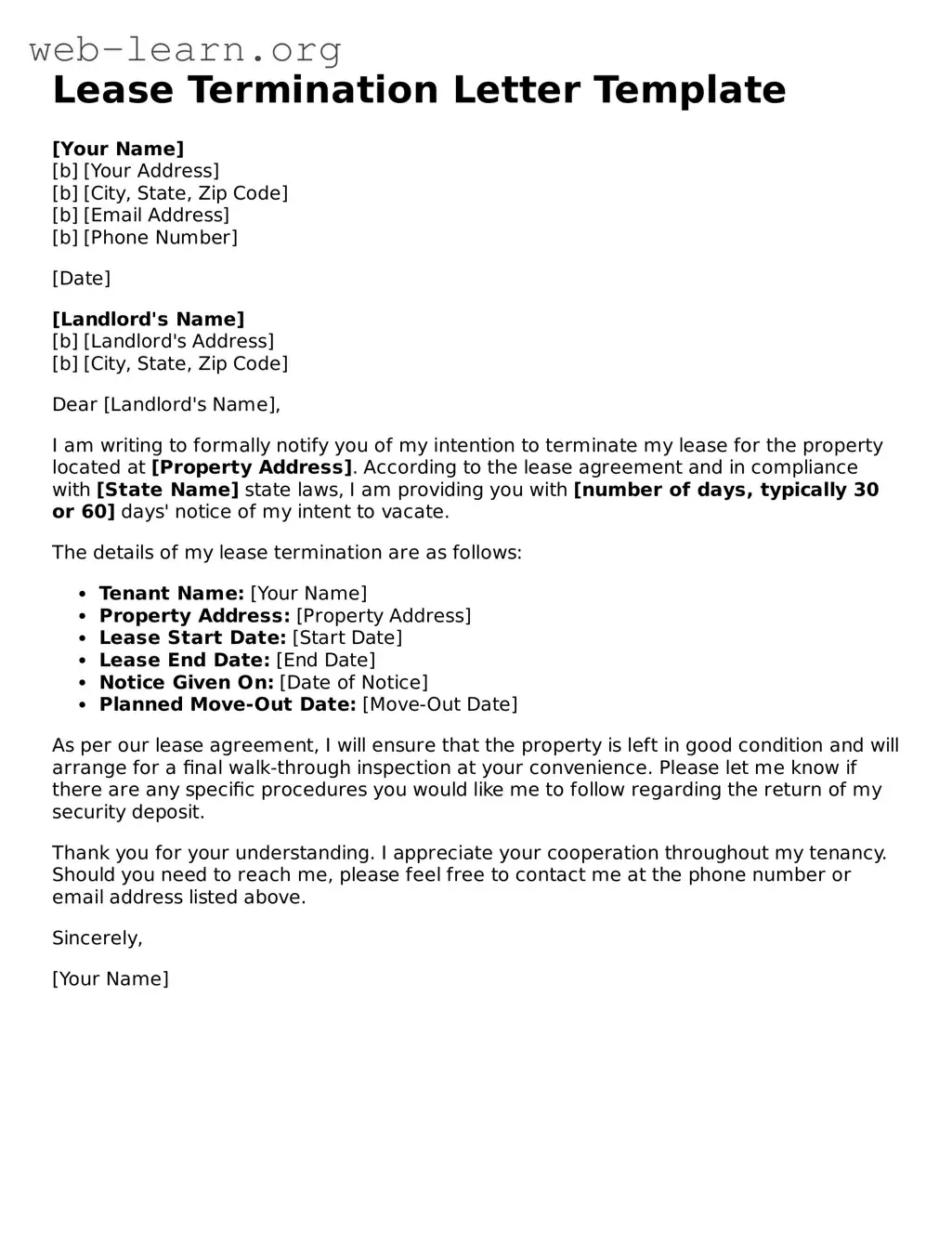
Lease Termination Letter Template
[Your Name]
[b] [Your Address]
[b] [City, State, Zip Code]
[b] [Email Address]
[b] [Phone Number]
[Date]
[Landlord's Name]
[b] [Landlord's Address]
[b] [City, State, Zip Code]
Dear [Landlord's Name],
I am writing to formally notify you of my intention to terminate my lease for the property located at [Property Address]. According to the lease agreement and in compliance with [State Name] state laws, I am providing you with [number of days, typically 30 or 60] days' notice of my intent to vacate.
The details of my lease termination are as follows:
As per our lease agreement, I will ensure that the property is left in good condition and will arrange for a final walk-through inspection at your convenience. Please let me know if there are any specific procedures you would like me to follow regarding the return of my security deposit.
Thank you for your understanding. I appreciate your cooperation throughout my tenancy. Should you need to reach me, please feel free to contact me at the phone number or email address listed above.
Sincerely,
[Your Name]
| Fact Name | Description |
|---|---|
| Purpose | A Lease Termination Letter formally notifies a landlord or tenant of the intent to end a lease agreement. |
| Notice Period | The notice period required varies by state, commonly ranging from 30 to 60 days. |
| State-Specific Forms | Some states require specific forms or formats for lease termination. Check local laws. |
| Governing Laws | In California, for example, the governing law is found in California Civil Code Section 1946. |
| Delivery Methods | The letter can be delivered via mail, email, or in person, depending on the lease terms and state laws. |
| Content Requirements | The letter should include the date, parties involved, and the effective termination date. |
| Signature Requirement | A signature from the tenant or landlord is typically required to validate the letter. |
| Documentation | Keep a copy of the letter for your records and proof of notice in case of disputes. |
Once you have your Lease Termination Letter form ready, it's time to fill it out accurately. This letter will serve as a formal notice to your landlord or property manager that you intend to end your lease. Follow these steps carefully to ensure all necessary information is included.
After completing the form, make sure to keep a copy for your records. Deliver the letter to your landlord in person, by certified mail, or through another method that provides proof of delivery. This will ensure that you have documentation of your notice.
What is a Lease Termination Letter?
A Lease Termination Letter is a formal document that notifies a landlord or tenant of the intent to end a lease agreement. This letter outlines the reasons for termination and specifies the date by which the lease will end. It serves as a written record of the decision to terminate the lease, ensuring that both parties are aware of the timeline and conditions involved.
When should I send a Lease Termination Letter?
It is crucial to send a Lease Termination Letter well in advance of the lease expiration date. Most leases require a notice period, often ranging from 30 to 60 days. Check your lease agreement for specific requirements. Sending the letter promptly helps avoid misunderstandings and provides both parties with adequate time to prepare for the transition.
What should I include in the Lease Termination Letter?
Your Lease Termination Letter should include the following key elements:
Including these details ensures clarity and helps facilitate a smooth transition for both parties.
What happens after I send the Lease Termination Letter?
After sending the Lease Termination Letter, the landlord or tenant should acknowledge receipt. It is advisable to keep a copy of the letter for your records. Depending on the lease terms, the landlord may conduct a final inspection of the property to assess any damages or necessary repairs. Both parties should also discuss the return of the security deposit, if applicable, to ensure that all financial matters are settled before the lease officially ends.
When completing a Lease Termination Letter form, individuals often make several common mistakes that can lead to confusion or disputes. One frequent error is failing to include the correct date. The date is crucial as it establishes the timeline for the lease termination. Without a clear date, landlords and tenants may have differing interpretations of when the lease officially ends.
Another common mistake is neglecting to provide the proper address of the rental property. This detail is essential for ensuring that all parties are on the same page regarding which property is being referenced. Omitting or incorrectly stating the address can lead to misunderstandings or delays in processing the termination.
People sometimes forget to include their own contact information. This omission can create difficulties in communication, especially if the landlord or property manager needs to reach out for clarification or further discussions. Providing a phone number and email address helps facilitate a smoother transition.
Additionally, some individuals fail to specify the reason for termination. While it may not be legally required in all situations, including a brief explanation can help clarify the circumstances and demonstrate goodwill. This can be particularly helpful if there are any disputes later on.
Another mistake involves not signing the letter. A signature is often required to validate the document. Without it, the letter may be considered incomplete or unenforceable. It is essential to ensure that the letter is signed before submission.
People also sometimes overlook the importance of keeping a copy of the completed letter. Having a personal record can be invaluable for future reference. It serves as proof of the notice given and can help resolve any potential issues that may arise later.
Lastly, submitting the letter without verifying the delivery method can lead to complications. It is important to choose a reliable method of delivery, whether it be certified mail, email, or in-person delivery. Ensuring that the landlord receives the notice is a critical step in the termination process.
When you decide to end a lease, a Lease Termination Letter is often the first step. However, there are several other important forms and documents that may accompany this letter. Understanding these documents can help ensure a smooth transition and protect your rights as a tenant or landlord.
Having these documents ready can facilitate a smoother lease termination process. They help clarify expectations and responsibilities, making it easier for both tenants and landlords to navigate the transition.
Notice to Quit: This document serves as a formal request for a tenant to vacate the premises. Like a Lease Termination Letter, it outlines the reasons for the termination and provides a timeline for the tenant to leave.
Eviction Notice: An Eviction Notice is issued when a tenant fails to comply with the lease terms. Similar to a Lease Termination Letter, it informs the tenant of the need to vacate but often follows legal procedures for eviction.
Rental Agreement Amendment: This document modifies the existing lease terms. It can be similar to a Lease Termination Letter if it includes changes that lead to the end of the lease, such as a mutual agreement to terminate.
Lease Renewal Notice: While primarily used to extend a lease, a Lease Renewal Notice can also indicate a termination if the landlord chooses not to renew. It serves to communicate intentions clearly, just like a Lease Termination Letter.
Move-Out Checklist: This document outlines the responsibilities of the tenant upon vacating the property. It parallels the Lease Termination Letter in that both documents address the end of the tenancy and the expectations for the tenant's departure.
When filling out a Lease Termination Letter form, it's essential to approach the task with care and attention to detail. Here are some important dos and don’ts to keep in mind:
By following these guidelines, you can ensure that your Lease Termination Letter is clear, professional, and effective in communicating your intentions. This can help facilitate a smoother transition for both you and your landlord.
When it comes to lease termination, many people have misunderstandings about the Lease Termination Letter form. Here are seven common misconceptions that can lead to confusion:
Not every lease mandates a formal termination letter. Some agreements may allow for verbal notice or may have specific clauses that dictate how termination should be handled.
Most leases specify a notice period that must be adhered to. Sending a termination letter without following this timeline could lead to complications.
While email is convenient, many leases require written notice to be delivered through certified mail or another formal method to ensure receipt.
Sending a termination letter does not release a tenant from their lease obligations until the end of the notice period or until the landlord has acknowledged the termination.
While there are common elements that should be included, the format can vary depending on the lease terms and the parties involved. Customization may be necessary.
Landlords also need to provide termination letters in certain circumstances, such as when they decide to end a lease for non-compliance or other valid reasons.
Disputes can still arise after a termination letter is sent. Both parties may have the right to contest the terms or conditions leading to the termination.
Understanding these misconceptions can help both tenants and landlords navigate the lease termination process more effectively.
When filling out and using a Lease Termination Letter form, there are several important points to consider. Below are key takeaways that can guide you through the process.
These steps can help ensure that the lease termination process is clear and legally compliant.
Free Room Rental Agreement Template - It can specify any additional fees related to late payments or other violations.
Booth Rental Contract - It includes provisions for advertising and promotions within the salon.
Sample Auto Lease Agreement - The Lessor has the right to terminate the lease if the Lessee breaches the agreement.