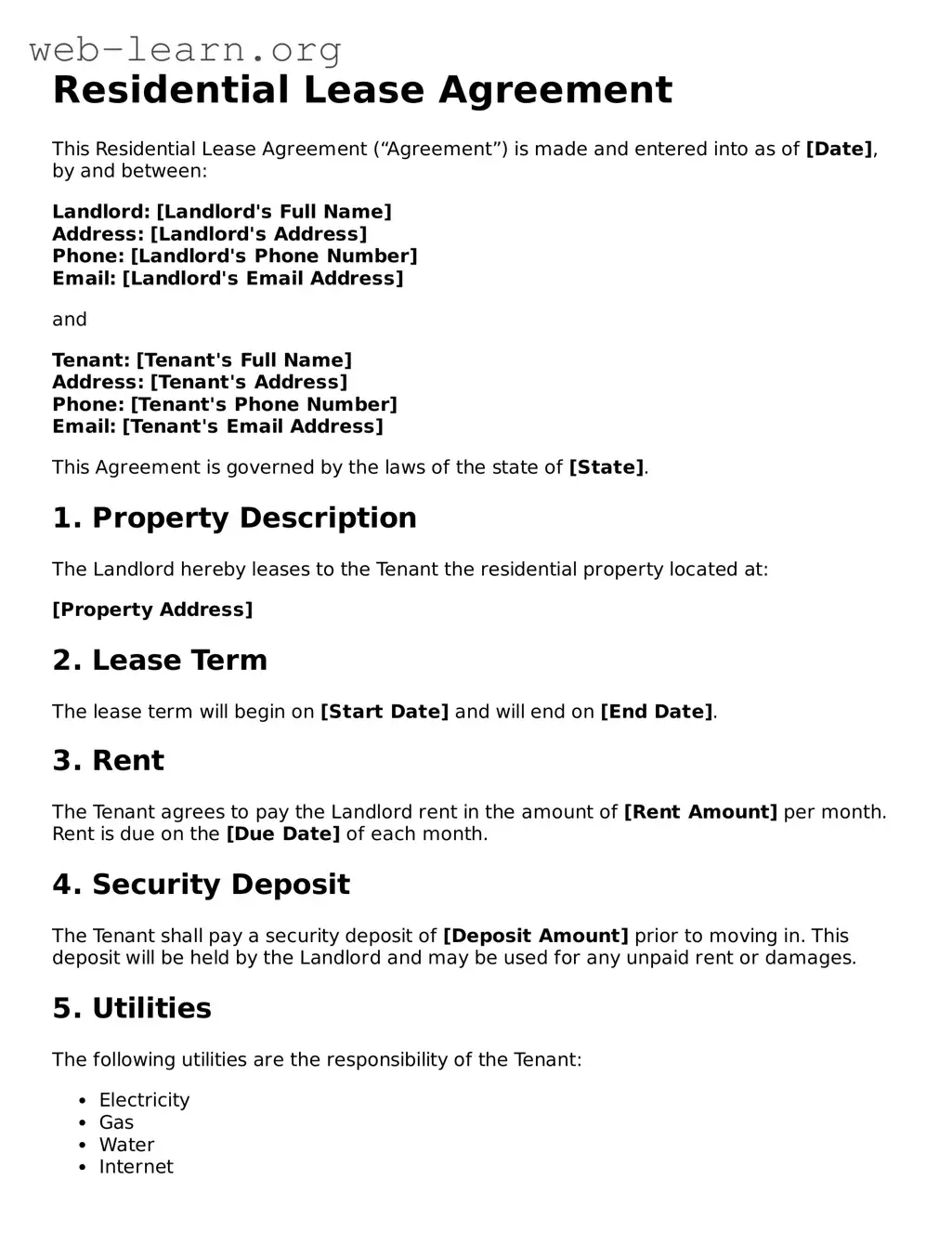
In the realm of real estate transactions, the Lease Agreement form serves as a vital document that outlines the terms and conditions governing the rental of property between a landlord and a tenant. This form typically includes essential details such as the duration of the lease, the amount of rent due, and the responsibilities of both parties regarding property maintenance and repairs. Additionally, it often specifies the security deposit requirements, rules for property use, and procedures for lease termination. By clearly delineating these aspects, the Lease Agreement helps to prevent misunderstandings and disputes, ensuring that both the landlord's and tenant's rights are protected. Moreover, the form may incorporate provisions for late payments, subletting, and modifications to the lease terms, which can be crucial for adapting to changing circumstances. Understanding the components of a Lease Agreement is fundamental for anyone involved in a rental arrangement, as it lays the groundwork for a successful landlord-tenant relationship.
Residential Lease Agreement
This Residential Lease Agreement (“Agreement”) is made and entered into as of [Date], by and between:
Landlord: [Landlord's Full Name]
Address: [Landlord's Address]
Phone: [Landlord's Phone Number]
Email: [Landlord's Email Address]
and
Tenant: [Tenant's Full Name]
Address: [Tenant's Address]
Phone: [Tenant's Phone Number]
Email: [Tenant's Email Address]
This Agreement is governed by the laws of the state of [State].
1. Property Description
The Landlord hereby leases to the Tenant the residential property located at:
[Property Address]
2. Lease Term
The lease term will begin on [Start Date] and will end on [End Date].
3. Rent
The Tenant agrees to pay the Landlord rent in the amount of [Rent Amount] per month. Rent is due on the [Due Date] of each month.
4. Security Deposit
The Tenant shall pay a security deposit of [Deposit Amount] prior to moving in. This deposit will be held by the Landlord and may be used for any unpaid rent or damages.
5. Utilities
The following utilities are the responsibility of the Tenant:
6. Maintenance and Repairs
The Tenant agrees to keep the property in good condition. The Tenant must notify the Landlord of any needed repairs.
7. Use of Property
The property is to be used solely as a private residence. No illegal activities or commercial enterprises are allowed.
8. Termination
Either party may terminate this Agreement by providing written notice at least [Notice Period] days in advance.
9. Governing Law
This Agreement shall be governed by and construed in accordance with the laws of the state of [State].
10. Signatures
By signing below, both parties agree to the terms and conditions of this Lease Agreement.
Landlord's Signature: ___________________________ Date: ______________
Tenant's Signature: ___________________________ Date: ______________
| Fact Name | Description |
|---|---|
| Definition | A lease agreement is a contract between a landlord and a tenant outlining the terms of renting property. |
| Duration | Lease agreements can be short-term (month-to-month) or long-term (yearly), depending on the needs of both parties. |
| Security Deposit | Most lease agreements require a security deposit, which protects the landlord against potential damages or unpaid rent. |
| Governing Law | The laws governing lease agreements vary by state. For example, California follows the California Civil Code, while Texas adheres to the Texas Property Code. |
| Termination Clause | A termination clause outlines how and when either party can end the lease, ensuring clarity and reducing disputes. |
| Maintenance Responsibilities | Typically, lease agreements specify who is responsible for maintenance and repairs, which can prevent misunderstandings. |
| Amendments | Any changes to the lease agreement must be made in writing and agreed upon by both parties to be enforceable. |
Filling out a Lease Agreement form is an important step in securing your rental situation. By providing accurate information, you help ensure a smooth process for both you and the landlord. Follow the steps below to complete the form correctly.
After completing the form, keep a copy for your records. This will be helpful for future reference. Make sure to submit the form to the landlord or property management as instructed.
A Lease Agreement is a legally binding contract between a landlord and a tenant. It outlines the terms under which the tenant agrees to rent a property from the landlord. This document typically includes details such as the rental amount, duration of the lease, and the responsibilities of both parties.
A standard Lease Agreement usually contains the following information:
Lease Agreements can vary in length. Most residential leases are for one year, but they can also be month-to-month or longer, depending on the needs of the landlord and tenant. Always review the duration specified in your agreement.
Yes, a Lease Agreement can be modified, but both parties must agree to the changes. Any modifications should be documented in writing and signed by both the landlord and tenant to ensure clarity and legality.
If a tenant breaks the Lease Agreement, they may face penalties as outlined in the contract. This could include losing their security deposit or being responsible for rent until a new tenant is found. It's important to review the specific terms related to early termination in the lease.
While a Lease Agreement is not always legally required, it is highly recommended. Having a written agreement helps protect both the landlord and tenant by clearly outlining expectations and responsibilities.
If a dispute arises, first try to resolve the issue directly through open communication. If that fails, you may consider mediation or legal action, depending on the situation. Always refer to the Lease Agreement for guidance on dispute resolution processes.
Yes, using a Lease Agreement template can be a helpful starting point. However, it is crucial to customize it to fit your specific situation and local laws. Consider consulting a legal professional if you have questions about the terms.
Lease Agreement forms can be obtained from various sources, including online legal document services, real estate offices, or local housing authorities. Ensure that the form you choose complies with state and local laws.
Filling out a Lease Agreement form can seem straightforward, but many people overlook important details that can lead to complications later on. One common mistake is failing to include all required personal information. This includes the full names of all tenants and landlords, as well as accurate contact information. Omitting even a single piece of information can delay the process or create confusion down the line.
Another frequent error is neglecting to specify the lease term. Whether it’s a month-to-month agreement or a fixed-term lease, it’s crucial to clearly outline the duration. Without this clarity, misunderstandings may arise about when the lease begins and ends, leading to potential disputes.
Many individuals also forget to detail the rent amount and payment schedule. It’s not enough to simply state the rent; specifying when it is due, acceptable payment methods, and any late fees is essential. This information helps avoid any financial misunderstandings and ensures that both parties are on the same page.
Another mistake is failing to include security deposit details. It’s important to state the amount of the deposit, the conditions for its return, and any deductions that might be made. This clarity protects both landlords and tenants and helps prevent disputes when the lease ends.
Some people overlook the importance of including maintenance responsibilities. Clearly defining who is responsible for repairs and upkeep can save a lot of headaches later. If this section is vague or missing, it can lead to disagreements about who should handle issues that arise during the lease.
Additionally, neglecting to outline rules regarding pets can create problems. If pets are allowed, the agreement should specify any restrictions, such as breed or size limitations. Conversely, if pets are not allowed, this should be clearly stated to avoid any misunderstandings.
Another common oversight is failing to include clauses about early termination. Both landlords and tenants should understand the conditions under which the lease can be terminated early, as well as any penalties that may apply. This information is vital for protecting both parties’ interests.
In some cases, individuals forget to review the entire document before signing. Skimming through the agreement can lead to missed details that might be unfavorable. It’s always wise to read the lease thoroughly and ask questions if anything is unclear.
Some people also make the mistake of not keeping a copy of the signed lease. After the agreement is completed, both parties should retain a copy for their records. This ensures that everyone has access to the same information and can refer back to it if necessary.
Lastly, failing to update the lease when changes occur can lead to confusion. If there are any modifications to the agreement, such as changes in rent or tenant information, these should be documented and signed by both parties. Keeping the lease current helps maintain clarity and mutual understanding.
A Lease Agreement is a vital document in rental transactions, but several other forms and documents often accompany it to ensure a smooth process. Each of these documents serves a specific purpose, contributing to a clear understanding between the landlord and tenant.
Understanding these accompanying documents can help both landlords and tenants navigate the leasing process more effectively. Each form plays a crucial role in establishing clear communication and expectations throughout the rental relationship.
A Lease Agreement is a crucial document for establishing the terms between a landlord and tenant. However, there are several other documents that share similarities with a Lease Agreement in terms of purpose and structure. Here’s a look at nine of them:
Each of these documents plays a vital role in property management and rental agreements, ensuring clarity and protection for all parties involved.
When filling out a Lease Agreement form, attention to detail is crucial. Here are some important dos and don'ts to keep in mind:
Understanding lease agreements can be challenging, and several misconceptions often arise. Here are six common misunderstandings about lease agreements, along with explanations to clarify them.
This is not true. Lease agreements can vary significantly based on location, property type, and the specific terms negotiated between the landlord and tenant. Each agreement should be tailored to fit the unique circumstances of the rental situation.
While a lease is a binding contract, it can be modified if both parties agree to the changes. Any amendments should be documented in writing and signed by both the landlord and tenant to ensure clarity and enforceability.
Lease agreements protect both landlords and tenants. For tenants, these documents outline their rights, responsibilities, and the terms of their tenancy, providing security and clarity in their living arrangements.
This is a misconception. While verbal agreements can be legally binding, they are much harder to enforce. Written leases provide clear evidence of the terms agreed upon, which helps prevent misunderstandings and disputes.
Lease agreements encompass much more than just rent payment. They typically include rules about property maintenance, pet policies, utilities, and termination procedures, among other important details.
While a lease does commit a tenant to stay for a specified term, there are often options for early termination. These options may include subletting, breaking the lease under certain conditions, or negotiating an exit with the landlord.
By understanding these misconceptions, both landlords and tenants can navigate lease agreements more effectively and create a positive rental experience.
Understanding how to fill out and use a Lease Agreement form is essential for both landlords and tenants. Here are some key takeaways to consider:
By following these guidelines, both landlords and tenants can create a clear and effective Lease Agreement that protects their interests and fosters a positive rental experience.