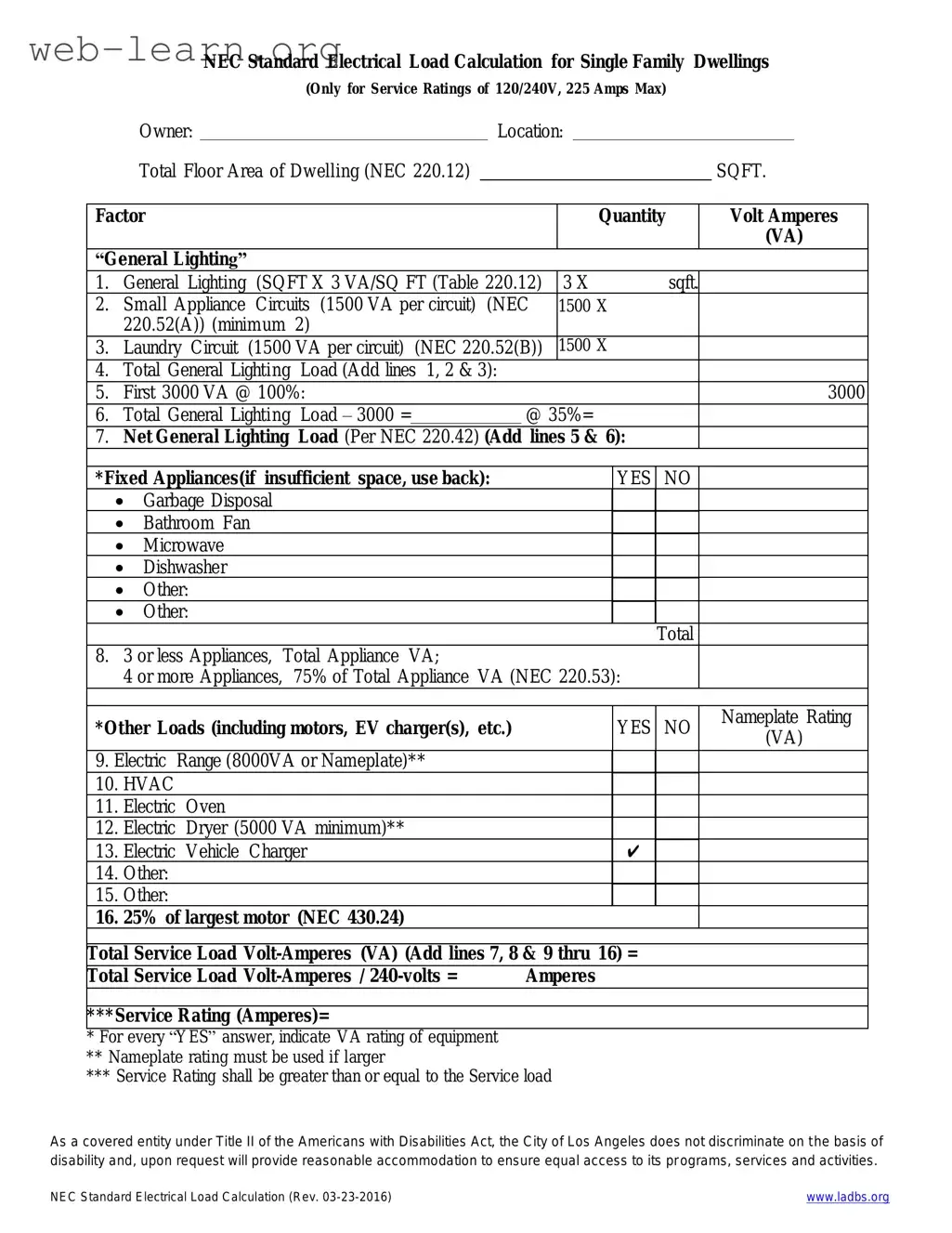
The LADBS NEC Standard Electrical Load Calculation form is an essential tool for anyone involved in electrical work in Los Angeles. This form is designed to help ensure that electrical systems are properly sized and meet safety standards. It covers various aspects, including the calculation of load requirements for residential and commercial properties. Users will find sections dedicated to different types of loads, such as lighting, receptacles, and appliances. Additionally, the form provides guidance on how to account for demand factors and diversity in load calculations. Completing this form accurately is crucial for obtaining the necessary permits and ensuring compliance with the National Electrical Code (NEC). By following the structured approach outlined in the form, electricians and contractors can streamline their project planning and execution, ultimately contributing to safer electrical installations.

NEC Standard Electrical Load Calculation for Single Family Dwellings
(Only for Service Ratings of 120/240V, 225 Amps Max)
|
|
Owner: |
|
|
|
|
Location: |
|
|
|
|
|
|||||
|
|
Total Floor Area of Dwelling (NEC 220.12) |
|
|
|
|
|
|
|
|
|
SQFT. |
|||||
|
|
|
|
|
|
|
|
|
|
|
|
|
|
|
|||
Factor |
|
|
|
|
|
|
|
|
Quantity |
|
|
Volt Amperes |
|||||
|
|
|
|
|
|
|
|
|
|
|
|
|
|
|
|
(VA) |
|
|
|
|
|
|
|
|
|
|
|
|
|
|
|
||||
“General Lighting” |
|
|
|
|
|
|
|
|
|
|
|
|
|
||||
1. |
General Lighting (SQFT X 3 VA/SQ FT (Table 220.12) |
3 X |
sqft. |
|
|
|
|||||||||||
2. |
Small Appliance Circuits (1500 VA per circuit) |
(NEC |
1500 X |
|
|
|
|
||||||||||
|
220.52(A)) (minimum 2) |
|
|
|
|
|
|
|
|
|
|
|
|||||
3. |
Laundry Circuit (1500 VA per circuit) (NEC 220.52(B)) |
1500 X |
|
|
|
|
|||||||||||
4. |
Total General Lighting Load (Add lines 1, 2 & 3): |
|
|
|
|
|
|
|
|
||||||||
5. |
First 3000 VA @ 100%: |
|
|
|
|
|
|
|
|
|
3000 |
||||||
6. |
Total General Lighting Load – 3000 = |
|
|
@ 35%= |
|
|
|
|
|
|
|||||||
|
|
|
|
|
|
|
|
||||||||||
7. |
Net General Lighting Load (Per NEC 220.42) (Add lines 5 & 6): |
|
|
|
|
||||||||||||
|
|
|
|
|
|
|
|
||||||||||
*Fixed Appliances(if insufficient space, use back): |
|
|
YES |
NO |
|
|
|
||||||||||
|
Garbage Disposal |
|
|
|
|
|
|
|
|
|
|
|
|
|
|||
|
Bathroom Fan |
|
|
|
|
|
|
|
|
|
|
|
|
|
|||
|
Microwave |
|
|
|
|
|
|
|
|
|
|
|
|
|
|||
|
Dishwasher |
|
|
|
|
|
|
|
|
|
|
|
|
|
|||
|
Other: |
|
|
|
|
|
|
|
|
|
|
|
|
|
|||
|
Other: |
|
|
|
|
|
|
|
|
|
|
|
|
|
|||
|
|
|
|
|
|
|
|
|
|
|
|
|
Total |
|
|
|
|
8. |
3 or less Appliances, |
Total Appliance VA; |
|
|
|
|
|
|
|
|
|
|
|
||||
|
4 or more Appliances, |
75% of Total Appliance VA (NEC 220.53): |
|
|
|
|
|||||||||||
|
|
|
|
|
|
|
|
|
|
|
|
|
|
|
|
|
|
*Other Loads (including motors, EV charger(s), etc.) |
|
|
YES |
NO |
|
Nameplate Rating |
|||||||||||
|
|
|
(VA) |
||||||||||||||
|
|
|
|
|
|
|
|
|
|
|
|
|
|
|
|
||
|
|
|
|
|
|
|
|
|
|
|
|
|
|||||
9. Electric |
Range (8000VA or Nameplate)** |
|
|
|
|
|
|
|
|
|
|
|
|||||
10. HVAC |
|
|
|
|
|
|
|
|
|
|
|
|
|
|
|
||
11. |
Electric |
Oven |
|
|
|
|
|
|
|
|
|
|
|
|
|
||
12. |
Electric |
Dryer (5000 VA minimum)** |
|
|
|
|
|
|
|
|
|
|
|
||||
13. |
Electric |
Vehicle Charger |
|
|
|
|
|
✔ |
|
|
|
|
|
||||
14. |
Other: |
|
|
|
|
|
|
|
|
|
|
|
|
|
|
|
|
15. |
Other: |
|
|
|
|
|
|
|
|
|
|
|
|
|
|
|
|
16. |
25% of largest motor (NEC 430.24) |
|
|
|
|
|
|
|
|
|
|
|
|||||
|
|
|
|
|
|||||||||||||
Total Service Load |
|
|
|
|
|||||||||||||
Total Service Load |
|
|
Amperes |
|
|
|
|
||||||||||
***Service Rating (Amperes)=
*For every “YES” answer, indicate VA rating of equipment
**Nameplate rating must be used if larger
***Service Rating shall be greater than or equal to the Service load
As a covered entity under Title II of the Americans with Disabilities Act, the City of Los Angeles does not discriminate on t he basis of disability and, upon request will provide reasonable accommodation to ensure equal access to its programs, services and activities.
NEC Standard Electrical Load Calculation (Rev. |
www.ladbs.org |
| Fact Name | Details |
|---|---|
| Purpose | The LADBS NEC Standard Electrical Load Calculation form is used to determine the electrical load requirements for buildings and structures in compliance with the National Electrical Code (NEC). |
| Applicability | This form is required for all new electrical installations and significant modifications to existing systems within the jurisdiction of the Los Angeles Department of Building and Safety. |
| Governing Law | The form is governed by the California Electrical Code, which is based on the NEC, and local amendments as established by the City of Los Angeles. |
| Submission Requirement | Completed forms must be submitted with building permit applications to ensure compliance with electrical safety standards. |
| Load Calculation Method | The form outlines specific methods for calculating the total electrical load, including residential, commercial, and industrial requirements. |
| Documentation | Additional documentation may be required to support the calculations, including equipment specifications and load data sheets. |
| Review Process | Once submitted, the LADBS reviews the form to verify compliance with electrical codes before issuing a permit. |
| Importance of Accuracy | Accurate calculations are critical to ensure safety and prevent electrical overloads, which can lead to hazards. |
| Updates | The form may be updated periodically to reflect changes in electrical codes or local regulations, so it is essential to use the latest version. |
Filling out the LADBS NEC Standard Electrical Load Calculation form is straightforward. This form helps ensure that the electrical system meets the necessary requirements for safety and efficiency. Follow these steps to complete it accurately.
After completing the form, you will need to submit it to the appropriate department for review. Make sure to keep a copy for your records.
The LADBS NEC Standard Electrical Load Calculation form is a document used by the Los Angeles Department of Building and Safety (LADBS) to assess the electrical load requirements for residential and commercial buildings. This form helps ensure that electrical systems are designed to handle the anticipated load safely and efficiently.
Any individual or entity planning to install or modify electrical systems in a building within Los Angeles must complete this form. This includes homeowners, contractors, and electrical engineers. Proper completion of the form is essential for obtaining the necessary permits.
The form requires various details, including:
The calculation is based on the National Electrical Code (NEC) guidelines. It considers factors like the total wattage of all electrical devices, the demand factors for different types of loads, and any applicable local amendments. The form provides a structured approach to ensure all relevant factors are considered.
Failure to submit the LADBS NEC Standard Electrical Load Calculation form can lead to delays in obtaining necessary permits. It may also result in fines or the requirement to redo work that does not comply with safety standards. Compliance with this requirement is crucial for the safety and legality of electrical installations.
The form is available on the official LADBS website. It can be downloaded in PDF format for easy access. Additionally, physical copies may be available at LADBS offices for those who prefer to fill out the form by hand.
Yes, assistance is available. Individuals can consult with licensed electricians or contractors who are familiar with the form and the requirements. Additionally, LADBS staff can provide guidance during the permitting process. It is advisable to seek help if there are any uncertainties about the information needed.
Completing the LADBS NEC Standard Electrical Load Calculation form can be a daunting task. Many individuals make common mistakes that can lead to delays or complications in their electrical projects. Awareness of these pitfalls is crucial for a smooth submission process.
One frequent error is miscalculating the load requirements. It's essential to accurately assess the total load that the electrical system will need to support. Underestimating or overestimating this figure can result in inadequate service or unnecessary costs. Double-checking calculations can prevent this mistake.
Another mistake involves neglecting to include all relevant appliances. People often forget to account for smaller devices or additional equipment that may contribute to the overall load. Ensure that every appliance, from large machines to smaller gadgets, is included in the calculations to avoid issues later on.
Additionally, not following the specific guidelines provided by the LADBS can lead to errors. Each section of the form has specific instructions that must be adhered to. Skipping steps or misinterpreting the requirements can result in an incomplete or incorrect submission.
Many individuals also overlook the importance of using the correct units of measurement. Whether it’s volts, amps, or watts, using inconsistent units can confuse the calculations and lead to significant errors. Always verify that the units match the requirements outlined in the form.
Another common mistake is failing to sign and date the form. It may seem minor, but an unsigned or undated form can be rejected. Ensure that all necessary signatures are present before submitting to avoid unnecessary delays.
Lastly, not keeping a copy of the submitted form is a mistake that can cause problems down the line. Having a record of what was submitted can be invaluable for future reference or in case any issues arise. Always make a copy for your files to safeguard against potential complications.
The LADBS NEC Standard Electrical Load Calculation form is a vital document for electrical projects in Los Angeles. However, it is often accompanied by several other forms and documents that help streamline the permitting and inspection processes. Below is a list of commonly used forms that work in conjunction with the load calculation form, each serving its own unique purpose.
Having these forms and documents ready can significantly enhance the efficiency of your electrical project. Each plays a crucial role in ensuring that everything runs smoothly, from the initial application to the final inspection. By understanding their purposes, you can better navigate the permitting process and achieve successful project completion.
The LADBS NEC Standard Electrical Load Calculation form shares similarities with several other documents used in electrical planning and compliance. Below is a list of these documents, highlighting their common features and purposes.
When filling out the LADBS NEC Standard Electrical Load Calculation form, it is essential to approach the task with care and attention. The following list outlines key actions to take and avoid, ensuring that your submission is accurate and complete.
By following these guidelines, you can help ensure that your LADBS NEC Standard Electrical Load Calculation form is processed smoothly and efficiently.
When dealing with the LADBS NEC Standard Electrical Load Calculation form, several misconceptions can lead to confusion. Understanding these misconceptions can help ensure compliance and proper usage. Here’s a breakdown of nine common misunderstandings:
By addressing these misconceptions, individuals can navigate the process more effectively and ensure that their electrical systems are safe and compliant with local regulations.
When filling out the LADBS NEC Standard Electrical Load Calculation form, keep these key points in mind: