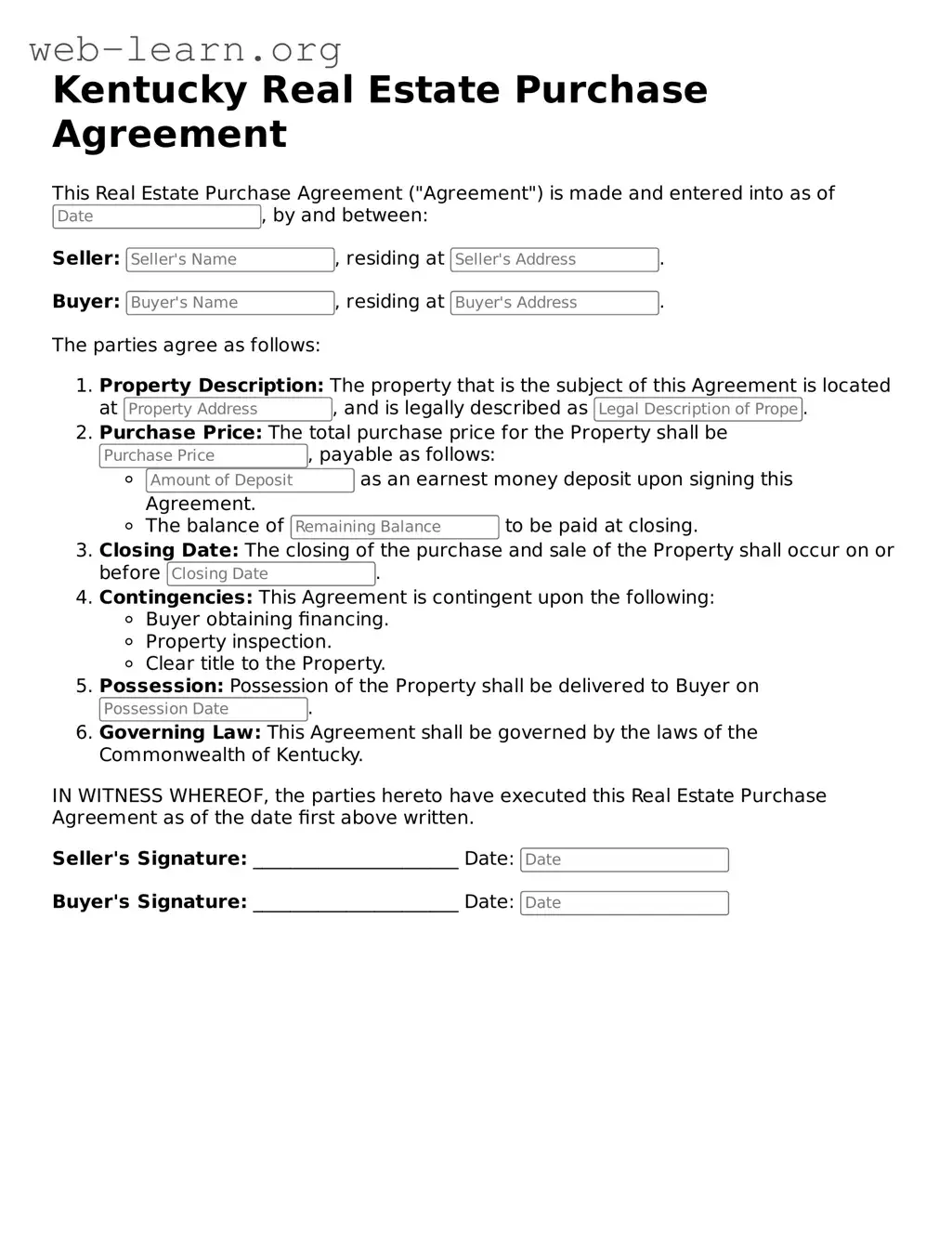
When it comes to buying or selling property in Kentucky, having a solid understanding of the Kentucky Real Estate Purchase Agreement form is essential. This document serves as a legally binding contract between the buyer and seller, outlining the terms and conditions of the transaction. Key elements of the agreement include the purchase price, earnest money deposit, and financing details, which set the stage for a smooth transfer of ownership. Additionally, the form addresses contingencies, such as inspections and appraisals, ensuring that both parties are protected throughout the process. It also specifies the closing date and any additional terms that may be unique to the transaction, providing clarity and reducing the potential for disputes. Navigating this form effectively can empower buyers and sellers alike, making the journey of real estate transactions less daunting and more straightforward.
Kentucky Real Estate Purchase Agreement
This Real Estate Purchase Agreement ("Agreement") is made and entered into as of , by and between:
Seller: , residing at .
Buyer: , residing at .
The parties agree as follows:
IN WITNESS WHEREOF, the parties hereto have executed this Real Estate Purchase Agreement as of the date first above written.
Seller's Signature: ______________________ Date:
Buyer's Signature: ______________________ Date:
| Fact Name | Description |
|---|---|
| Purpose | The Kentucky Real Estate Purchase Agreement is used to outline the terms and conditions of a real estate transaction between a buyer and a seller. |
| Governing Laws | This agreement is governed by the laws of the Commonwealth of Kentucky, specifically under Kentucky Revised Statutes related to real estate transactions. |
| Key Components | It typically includes details such as purchase price, property description, contingencies, and closing date. |
| Signatures Required | Both the buyer and seller must sign the agreement for it to be legally binding, indicating their acceptance of the terms outlined. |
Completing the Kentucky Real Estate Purchase Agreement form is an essential step in the process of buying or selling property. Once you have filled out the form, you will be ready to move forward with negotiations and finalize the transaction.
Once you have completed these steps, ensure that both parties receive a copy of the signed agreement for their records. This will help facilitate a smooth transaction moving forward.
What is the Kentucky Real Estate Purchase Agreement?
The Kentucky Real Estate Purchase Agreement is a legal document used in real estate transactions. It outlines the terms and conditions under which a buyer agrees to purchase a property from a seller. This agreement includes important details such as the purchase price, closing date, and any contingencies that must be met before the sale is finalized.
Who should use this agreement?
This agreement is intended for use by individuals or entities involved in buying or selling real estate in Kentucky. Both buyers and sellers benefit from having a clear, written understanding of the transaction terms.
What key components are included in the agreement?
Can I modify the agreement?
Yes, you can modify the agreement to fit your specific needs. However, all parties involved must agree to any changes. It’s wise to document any modifications in writing and have everyone sign the updated agreement.
What happens if one party does not fulfill their obligations?
If one party fails to meet their obligations, the other party may have legal recourse. This could involve seeking damages or specific performance, which means asking the court to enforce the terms of the agreement. It’s important to understand your rights and obligations before signing.
Is an attorney necessary to complete this agreement?
While it is not legally required to have an attorney, it is highly recommended. An attorney can help ensure that the agreement is properly drafted and that your interests are protected throughout the transaction.
What are contingencies, and why are they important?
Contingencies are conditions that must be met for the sale to proceed. Common contingencies include home inspections, financing approval, and appraisal results. They are important because they protect the buyer and seller from unforeseen issues that could impact the transaction.
How is earnest money handled?
Earnest money is a deposit made by the buyer to show their commitment to the purchase. This money is typically held in an escrow account until closing. If the sale goes through, it is applied to the purchase price. If the buyer backs out without a valid reason, the seller may keep the earnest money as compensation.
How do I ensure the agreement is legally binding?
For the agreement to be legally binding, it must be signed by all parties involved. Additionally, the terms must be clear, and the agreement should comply with Kentucky laws regarding real estate transactions. Having an attorney review the document can help ensure its validity.
What should I do if I have more questions?
If you have further questions about the Kentucky Real Estate Purchase Agreement, consider consulting with a real estate professional or an attorney. They can provide specific guidance based on your situation and help you navigate the complexities of real estate transactions.
Filling out the Kentucky Real Estate Purchase Agreement can be a daunting task, especially for first-time buyers or sellers. Mistakes can lead to confusion, delays, or even legal issues down the line. Here are seven common pitfalls to avoid when completing this important document.
One of the most frequent errors is incomplete information. Buyers and sellers often overlook sections that require details about the property, such as the address or legal description. This oversight can cause significant delays in the transaction process. Make sure to double-check that every field is filled out accurately and completely.
Another common mistake is failing to specify contingencies. Contingencies are conditions that must be met for the sale to proceed, such as home inspections or financing approval. Without clearly stating these, parties may find themselves in a bind if issues arise after the agreement is signed.
Misunderstanding the terms of the agreement can also lead to complications. Many people fail to grasp the implications of certain clauses, such as the earnest money deposit or the closing date. Taking the time to read and comprehend each section is crucial to ensure that all parties are on the same page.
Additionally, neglecting to include necessary disclosures can be a costly mistake. Sellers are required to disclose certain information about the property, such as known defects or past repairs. Failing to provide this information can lead to disputes and potential legal action later on.
Another frequent error involves improper signatures. All parties involved in the transaction must sign the agreement for it to be valid. Sometimes, individuals forget to include a spouse or co-owner's signature, which can invalidate the contract. It's essential to ensure that everyone required to sign does so.
People often overlook the importance of dates. The Kentucky Real Estate Purchase Agreement includes several critical dates, such as the offer date, acceptance date, and closing date. Missing or miswriting these dates can create confusion and impact the timeline of the sale.
Finally, not seeking professional advice can be a significant misstep. Real estate transactions can be complex, and having an experienced agent or attorney review the agreement can help catch errors and clarify any confusing terms. Investing in professional guidance can save time and prevent costly mistakes in the long run.
When engaging in a real estate transaction in Kentucky, several important documents often accompany the Real Estate Purchase Agreement. Each of these forms plays a vital role in ensuring a smooth and legally sound process. Here is a list of common forms and documents used in conjunction with the purchase agreement.
Understanding these documents can help buyers and sellers navigate the complexities of real estate transactions in Kentucky. Each form contributes to a clear and organized process, ensuring that all parties are informed and protected throughout the transaction.
When completing the Kentucky Real Estate Purchase Agreement form, certain practices can help ensure a smooth process. Below is a list of essential dos and don'ts to consider.
By following these guidelines, individuals can navigate the complexities of the Kentucky Real Estate Purchase Agreement more effectively.
Understanding the Kentucky Real Estate Purchase Agreement form is crucial for anyone involved in real estate transactions. However, several misconceptions can lead to confusion. Here are eight common misconceptions:
Many believe that once both parties sign the agreement, it is automatically binding. In reality, it often requires additional conditions, such as the acceptance of an offer or the fulfillment of certain contingencies.
While it is recommended for clarity and enforcement, not all agreements need to be in writing. Verbal agreements can be valid but are harder to prove.
Some think that only the buyer's signature is necessary. However, the seller's signature is equally important to create a valid contract.
This is a common misunderstanding. The form may not include every possible scenario. Buyers and sellers should consider additional clauses to address their specific needs.
While agents can assist, it is not their responsibility to draft the agreement. Buyers and sellers should review and understand the document themselves.
People often think the agreement is set in stone. In fact, terms can be negotiated and amended, provided both parties agree.
This is misleading. Each agreement can vary based on the specifics of the transaction, local laws, and individual negotiations.
Some believe they can navigate the process without legal help. However, having an attorney can provide valuable insights and protect your interests.
Being aware of these misconceptions can help individuals navigate the real estate process more effectively and avoid potential pitfalls.
When filling out and using the Kentucky Real Estate Purchase Agreement form, it is important to keep several key points in mind. Here are some essential takeaways:
Contract of Sale Real Estate - It specifies the purchase price and payment terms for the transaction.
How to Write a Purchase Agreement - The document can include a clause allowing for extensions of the closing date under certain conditions.