In Kentucky, a Power of Attorney (POA) is a crucial legal document that allows you to appoint someone you trust to make decisions on your behalf. This form can cover a variety of areas, including financial matters, healthcare decisions, and property management. By designating an agent, you ensure that your wishes are respected even if you become unable to communicate them yourself. The POA can be tailored to fit your needs, whether you want it to be effective immediately or only in certain situations, such as if you become incapacitated. It’s important to understand the responsibilities of the agent and the scope of their authority, as well as the potential risks involved. Additionally, Kentucky law requires that the document be signed in the presence of a notary public or two witnesses to be valid. Knowing these details can help you make informed decisions about your future and ensure that your interests are protected.
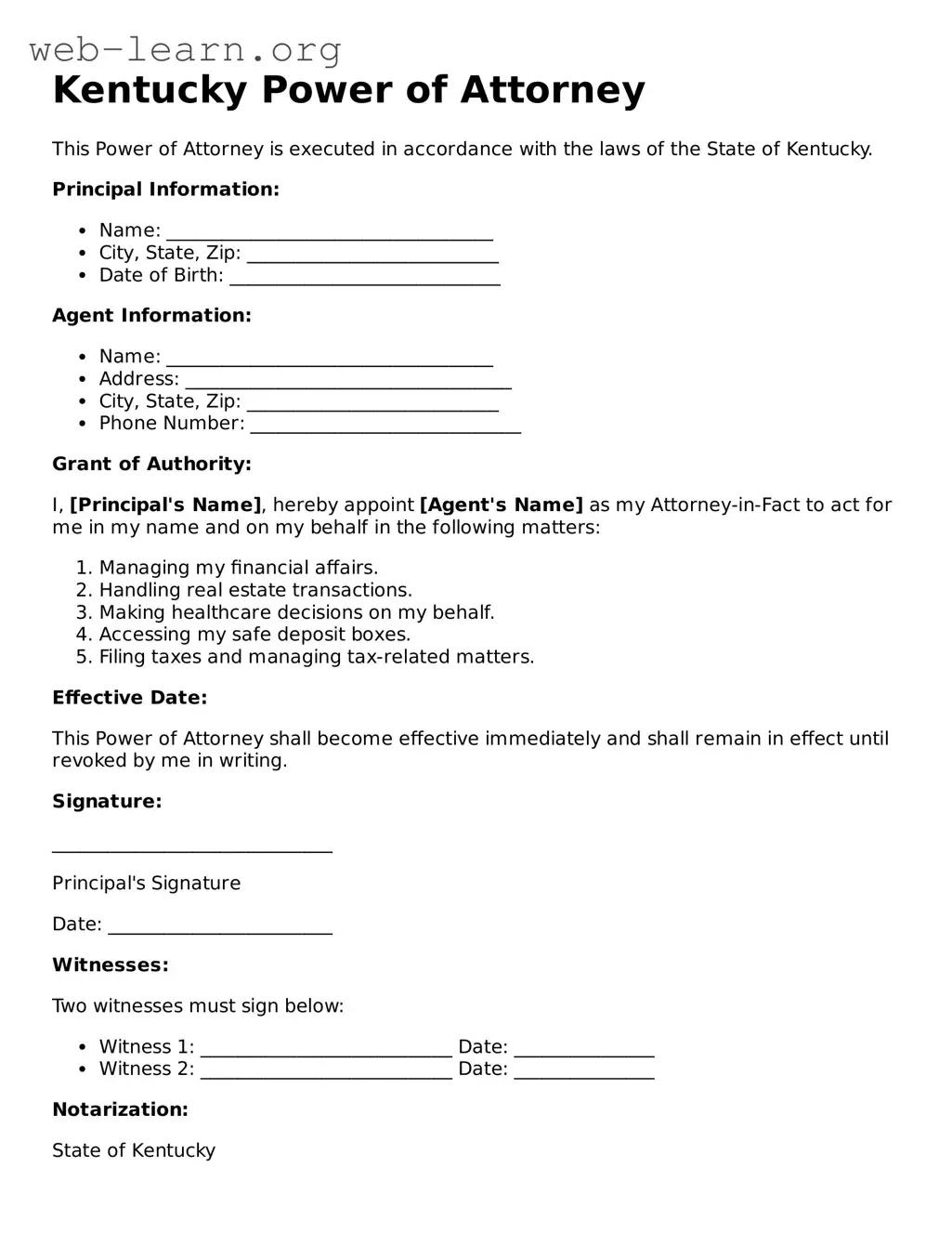
Kentucky Power of Attorney
This Power of Attorney is executed in accordance with the laws of the State of Kentucky.
Principal Information:
Agent Information:
Grant of Authority:
I, [Principal's Name], hereby appoint [Agent's Name] as my Attorney-in-Fact to act for me in my name and on my behalf in the following matters:
Effective Date:
This Power of Attorney shall become effective immediately and shall remain in effect until revoked by me in writing.
Signature:
______________________________
Principal's Signature
Date: ________________________
Witnesses:
Two witnesses must sign below:
Notarization:
State of Kentucky
County of ___________________________
Subscribed and sworn to before me this _____ day of ____________, 20__.
______________________________
Notary Public
My Commission Expires: ________________
| Fact Name | Description |
|---|---|
| Definition | A Kentucky Power of Attorney form allows an individual to designate another person to make decisions on their behalf. |
| Governing Law | The form is governed by Kentucky Revised Statutes, Chapter 386. |
| Types | There are different types of Power of Attorney forms in Kentucky, including durable, non-durable, and springing. |
| Durability | A durable Power of Attorney remains effective even if the principal becomes incapacitated. |
| Agent Responsibilities | The appointed agent must act in the best interest of the principal and follow their instructions. |
| Revocation | The principal can revoke the Power of Attorney at any time as long as they are competent. |
| Witness and Notary Requirements | The form must be signed in the presence of a notary public and may require witnesses, depending on the type. |
Filling out the Kentucky Power of Attorney form is a straightforward process. Once completed, the form will need to be signed and notarized to ensure its validity. Here are the steps to guide you through filling out the form effectively.
What is a Power of Attorney in Kentucky?
A Power of Attorney (POA) is a legal document that allows one person, known as the "principal," to grant another person, referred to as the "agent" or "attorney-in-fact," the authority to make decisions on their behalf. In Kentucky, this can cover a range of matters, including financial decisions, healthcare choices, and property management. The principal must be of sound mind when creating this document, and it should be signed in accordance with state laws to ensure its validity.
How do I create a Power of Attorney in Kentucky?
To create a Power of Attorney in Kentucky, follow these steps:
Once completed, provide copies to your agent and any relevant institutions, such as banks or healthcare providers.
Can I revoke a Power of Attorney in Kentucky?
Yes, you can revoke a Power of Attorney at any time, as long as you are mentally competent. To do this, you should create a written revocation document that clearly states your intention to revoke the POA. It's important to notify your agent and any institutions that had relied on the previous document. Destroying the original POA document can also help prevent any future confusion.
What happens if I do not have a Power of Attorney?
If you do not have a Power of Attorney and become unable to make decisions for yourself, your family may need to go through a court process to appoint a guardian or conservator. This process can be lengthy, costly, and may not reflect your personal wishes. Having a POA in place allows you to choose someone you trust to make decisions on your behalf, ensuring your preferences are respected.
Filling out a Power of Attorney (POA) form in Kentucky can be a straightforward process, but there are common mistakes that people often make. Understanding these pitfalls can help ensure that the document serves its intended purpose without complications. One frequent error is failing to specify the powers granted to the agent. The form should clearly outline what decisions the agent can make on behalf of the principal. Without this clarity, the agent may not have the authority needed to act effectively.
Another mistake is not signing the document in the presence of a notary or witnesses. In Kentucky, a POA must be notarized to be valid. If the form is not properly executed, it may not hold up when it’s needed. Additionally, forgetting to date the document can lead to confusion about its validity. A dated form helps establish when the powers were granted, which is crucial if there are any disputes later on.
People also sometimes overlook the importance of selecting a reliable agent. It’s essential to choose someone trustworthy, as this person will have significant control over financial or medical decisions. Rushing this choice can lead to regret down the line. Furthermore, neglecting to discuss the POA with the chosen agent is another common mistake. Open communication ensures that the agent understands their responsibilities and is willing to accept them.
Another area where errors occur is in the selection of alternate agents. Many people forget to name a backup agent in case the primary agent is unable or unwilling to serve. This oversight can create complications during critical times when decisions need to be made quickly. Lastly, failing to review and update the POA regularly can lead to issues. Life changes, such as marriage, divorce, or the birth of a child, may necessitate updates to the document to reflect new circumstances.
By being aware of these common mistakes, individuals can take the necessary steps to fill out the Kentucky Power of Attorney form correctly. This proactive approach ensures that the document functions as intended, providing peace of mind for both the principal and the agent.
When creating a Power of Attorney in Kentucky, several other forms and documents may be relevant to ensure comprehensive legal coverage. Each of these documents serves a specific purpose and can complement the Power of Attorney. Below is a list of common forms that individuals often consider.
Each of these documents plays a vital role in personal and estate planning. It is essential to consider how they interact with the Power of Attorney to ensure that your wishes are clearly communicated and legally upheld.
A Power of Attorney (POA) form is a legal document that allows one person to act on behalf of another in various matters. Several other documents share similarities with a Power of Attorney, as they also grant authority or designate representation. Below are eight such documents, each with a brief explanation of how they relate to a Power of Attorney.
When filling out the Kentucky Power of Attorney form, it's essential to approach the process with care. Here’s a list of things you should and shouldn't do:
When considering a Power of Attorney (POA) in Kentucky, it's important to clarify some common misconceptions. Understanding these can help individuals make informed decisions about their legal affairs.
By addressing these misconceptions, individuals can better navigate the process of establishing a Power of Attorney in Kentucky and make choices that align with their personal and legal needs.
Filling out and using the Kentucky Power of Attorney form is an important step in ensuring that your financial and legal matters are handled according to your wishes. Here are some key takeaways to keep in mind:
Understanding these points can help you navigate the process smoothly and ensure that your affairs are managed according to your preferences.
Ca Poa - This form can help protect your interests and ensure your preferences are respected.
Does Oregon Power of Attorney Need to Be Notarized - Make your intentions clear by detailing the powers granted in the form.
Poa Notarized - This form can help streamline the process of managing your affairs during travel.