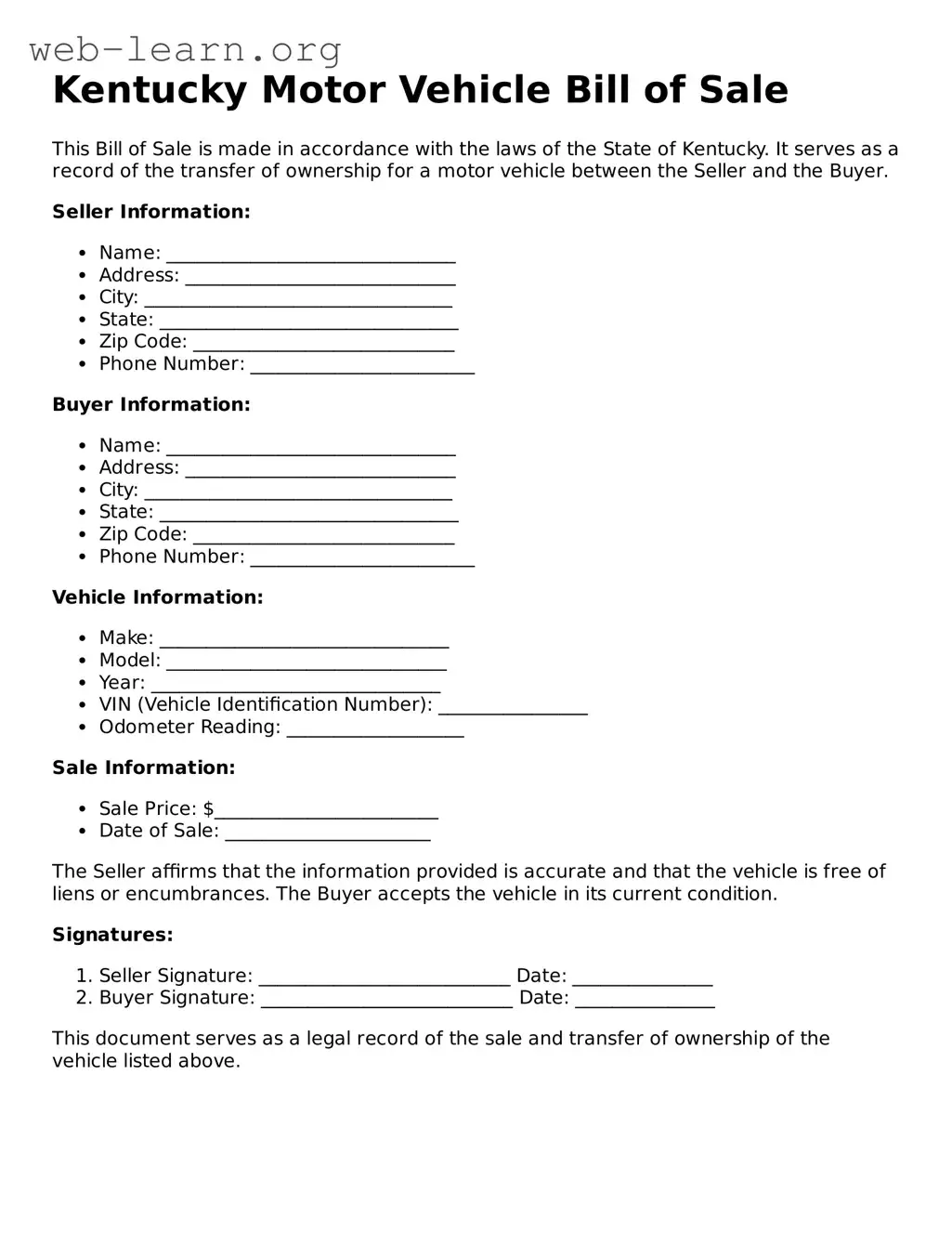
The Kentucky Motor Vehicle Bill of Sale form serves as a crucial document in the transfer of vehicle ownership between parties. This form captures essential details, such as the vehicle's make, model, year, and Vehicle Identification Number (VIN), ensuring that all necessary information is recorded for a smooth transaction. Both the buyer and seller must provide their names and addresses, along with signatures to validate the agreement. The form also includes space for the sale price, which is vital for tax purposes. Additionally, it may outline any warranties or representations made by the seller, offering protection for both parties involved. Understanding this form is essential for anyone looking to buy or sell a vehicle in Kentucky, as it not only facilitates the transfer but also helps in maintaining clear records for future reference.
Kentucky Motor Vehicle Bill of Sale
This Bill of Sale is made in accordance with the laws of the State of Kentucky. It serves as a record of the transfer of ownership for a motor vehicle between the Seller and the Buyer.
Seller Information:
Buyer Information:
Vehicle Information:
Sale Information:
The Seller affirms that the information provided is accurate and that the vehicle is free of liens or encumbrances. The Buyer accepts the vehicle in its current condition.
Signatures:
This document serves as a legal record of the sale and transfer of ownership of the vehicle listed above.
| Fact Name | Description |
|---|---|
| Purpose | The Kentucky Motor Vehicle Bill of Sale form is used to document the sale of a vehicle between a buyer and a seller, providing proof of the transaction. |
| Governing Law | This form is governed by Kentucky Revised Statutes (KRS) § 186A.220, which outlines the requirements for vehicle sales and transfers. |
| Required Information | Essential details include the vehicle's make, model, year, Vehicle Identification Number (VIN), sale price, and the names and signatures of both parties. |
| Notarization | While notarization is not mandatory in Kentucky, it is recommended to enhance the validity of the document and protect against disputes. |
| Tax Implications | Sales tax is typically applicable based on the sale price, and it must be paid when the buyer registers the vehicle with the Kentucky Department of Vehicle Regulation. |
| Record Keeping | Both the buyer and seller should keep a copy of the completed Bill of Sale for their records, as it serves as proof of ownership transfer. |
When preparing to fill out the Kentucky Motor Vehicle Bill of Sale form, it is essential to gather all necessary information regarding the vehicle and the transaction. This form serves as a record of the sale, detailing the agreement between the buyer and seller. Once completed, it can be used for registration and title transfer purposes.
What is a Kentucky Motor Vehicle Bill of Sale?
The Kentucky Motor Vehicle Bill of Sale is a legal document that records the sale of a motor vehicle. It serves as proof of the transaction between the buyer and seller, detailing the terms of the sale, including the vehicle's identification information, purchase price, and the parties involved.
Is a Bill of Sale required in Kentucky?
While a Bill of Sale is not legally required for every vehicle sale in Kentucky, it is highly recommended. It provides essential documentation that can help resolve any disputes regarding ownership or the terms of the sale. Additionally, it may be necessary for the buyer when registering the vehicle with the Kentucky Transportation Cabinet.
What information is included in the Bill of Sale?
The Bill of Sale typically includes:
Do I need to notarize the Bill of Sale?
Notarization is not a requirement for the Kentucky Motor Vehicle Bill of Sale. However, having the document notarized can add an extra layer of protection and validity to the transaction. It can help verify the identities of the parties involved and confirm that they willingly entered into the agreement.
Can I create my own Bill of Sale?
Yes, you can create your own Bill of Sale as long as it includes all necessary information. However, using a template specifically designed for Kentucky can ensure that you do not miss any important details. Templates are often available online and can simplify the process.
What should I do after completing the Bill of Sale?
After completing the Bill of Sale, both the buyer and seller should keep a copy for their records. The buyer will need to present the Bill of Sale when registering the vehicle with the Kentucky Transportation Cabinet. Additionally, the seller should notify their local Department of Motor Vehicles (DMV) about the sale to update ownership records.
What if there are issues after the sale?
If any issues arise after the sale, such as disputes over the vehicle's condition or ownership, the Bill of Sale can serve as crucial evidence. It is important to keep all related documents, including any correspondence between the buyer and seller, to support your case if necessary.
Where can I obtain a Kentucky Motor Vehicle Bill of Sale form?
You can obtain a Kentucky Motor Vehicle Bill of Sale form from various sources. Many websites offer free downloadable templates. Additionally, local DMV offices may provide printed forms. Ensure that the form you use complies with Kentucky state requirements.
Filling out the Kentucky Motor Vehicle Bill of Sale form can seem straightforward, but many people make common mistakes that can lead to complications. One frequent error is failing to include all required information. The form asks for specific details about the vehicle, including the VIN, make, model, and year. Omitting any of this information can create confusion and may delay the transfer of ownership.
Another mistake is not providing accurate purchase price information. Buyers and sellers should ensure that the price reflects the actual transaction. Listing an incorrect amount can lead to issues with tax assessments and may raise red flags during the registration process.
Many individuals also overlook the importance of signatures. Both the seller and the buyer must sign the form for it to be valid. Without these signatures, the document may not be recognized by the state. It’s essential to double-check that all parties have signed before submitting the form.
In addition, failing to date the form is a common oversight. The date of the sale is critical for legal purposes, including determining when ownership officially changes hands. Without a date, the transaction may be questioned or disputed later on.
People often forget to provide their contact information. Including phone numbers or email addresses is vital for any follow-up communication regarding the sale. This simple step can prevent misunderstandings and facilitate smoother transactions.
Another frequent mistake is not keeping a copy of the completed form. After filling out the Bill of Sale, both parties should retain a copy for their records. This document serves as proof of the transaction and can be helpful if any disputes arise in the future.
Lastly, individuals sometimes fail to review the form for errors before submission. Typos or incorrect information can lead to complications down the line. Taking a moment to review all entries can save time and prevent headaches later on.
When buying or selling a vehicle in Kentucky, several important documents accompany the Motor Vehicle Bill of Sale. These forms help ensure that the transaction is legal and that both parties are protected. Below is a list of common documents used in conjunction with the Bill of Sale.
Having these documents ready can streamline the process of buying or selling a vehicle in Kentucky. It’s essential to ensure that all paperwork is completed accurately to avoid any potential issues down the line.
The Motor Vehicle Bill of Sale form serves a crucial role in the transfer of ownership for vehicles. However, it shares similarities with several other important documents. Here’s a look at four documents that are akin to the Motor Vehicle Bill of Sale:
Understanding these documents can help ensure that transactions are smooth and legally binding. Always consider consulting with a professional when engaging in sales of significant assets.
When completing the Kentucky Motor Vehicle Bill of Sale form, it's important to follow certain guidelines to ensure accuracy and compliance. Below is a list of dos and don'ts to consider:
The Kentucky Motor Vehicle Bill of Sale form is an essential document for anyone involved in the buying or selling of a vehicle in the state. However, several misconceptions exist regarding its purpose and requirements. Here are four common misunderstandings:
Many believe that as long as a vehicle is registered, a Bill of Sale is unnecessary. In reality, this document serves as proof of the transaction between the buyer and seller, regardless of registration status. It protects both parties and provides a clear record of the sale.
While notarization can add an extra layer of authenticity, it is not a requirement for the Bill of Sale in Kentucky. The form is valid as long as it is filled out correctly and signed by both parties involved in the transaction.
Some individuals think they can fill out the Bill of Sale after the transaction has taken place. It is important to complete the form at the time of sale to ensure accuracy and to provide immediate proof of the transaction for both parties.
Both the buyer and the seller should retain copies of the Bill of Sale. This document serves as a legal record of the transaction and may be needed for future reference, especially for title transfers or potential disputes.
When filling out and using the Kentucky Motor Vehicle Bill of Sale form, consider the following key takeaways:
Car Bill of Sale Printable - Helps in tracking ownership history of the vehicle.
How to Sell Your Car in Oregon - Can help in case of future legal issues regarding the vehicle.
Idaho Bill of Sale Pdf - The form can help prevent misunderstandings regarding the sale terms.
Ct Dmv Bill of Sale - The Bill of Sale can also be a useful reference for future vehicle sales.