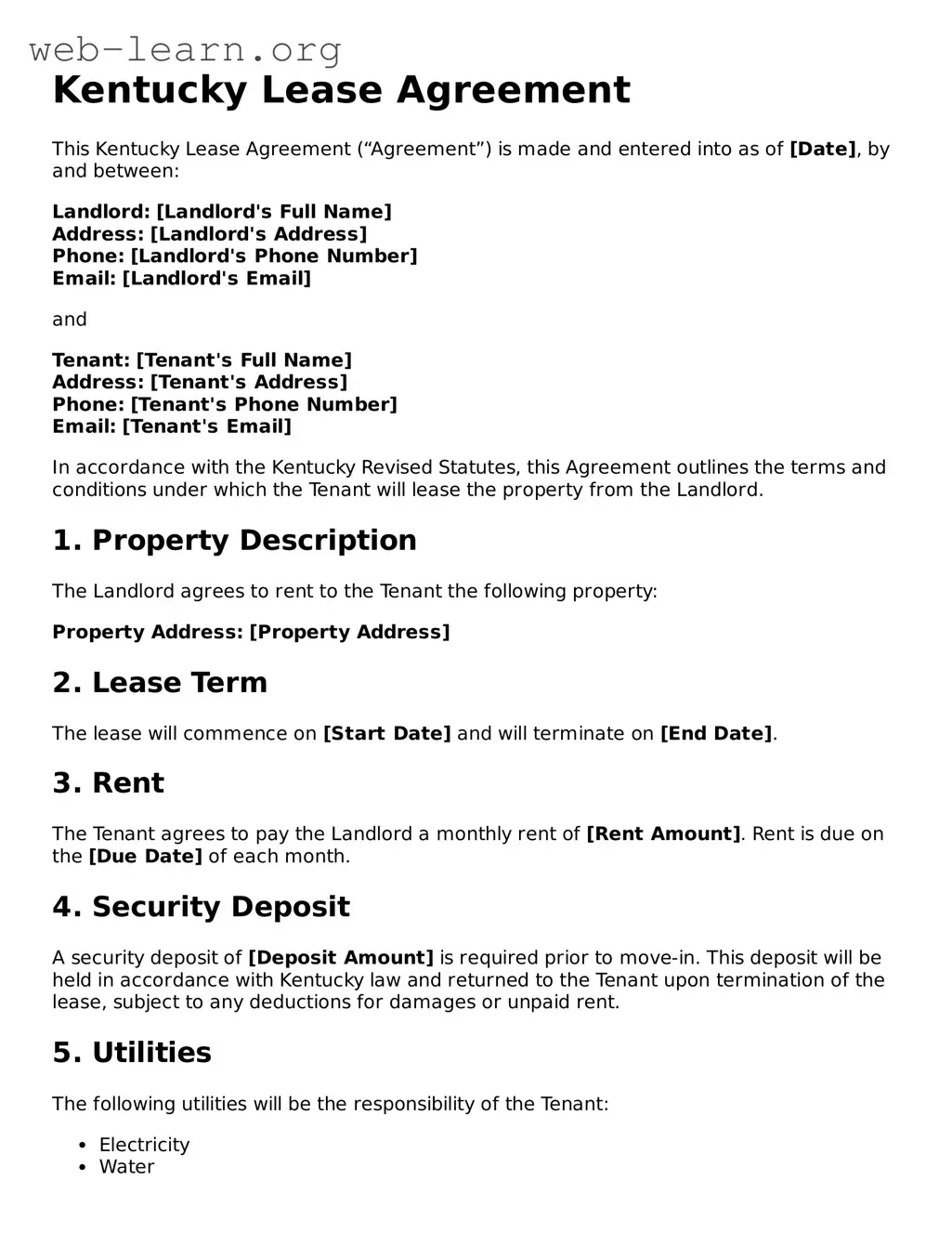
The Kentucky Lease Agreement form serves as a crucial document for both landlords and tenants in the state, outlining the terms and conditions that govern their rental relationship. This form typically includes essential details such as the names of the parties involved, the property address, and the duration of the lease. Additionally, it specifies the rental amount, payment due dates, and security deposit requirements. Provisions regarding maintenance responsibilities, utilities, and rules for property use are also commonly addressed. The agreement may further include terms for lease termination, renewal options, and any applicable fees or penalties. Understanding these components is vital for both parties to ensure compliance with state laws and to protect their rights throughout the tenancy. By establishing clear expectations, the Kentucky Lease Agreement form helps mitigate disputes and fosters a more harmonious living arrangement.
Kentucky Lease Agreement
This Kentucky Lease Agreement (“Agreement”) is made and entered into as of [Date], by and between:
Landlord: [Landlord's Full Name]
Address: [Landlord's Address]
Phone: [Landlord's Phone Number]
Email: [Landlord's Email]
and
Tenant: [Tenant's Full Name]
Address: [Tenant's Address]
Phone: [Tenant's Phone Number]
Email: [Tenant's Email]
In accordance with the Kentucky Revised Statutes, this Agreement outlines the terms and conditions under which the Tenant will lease the property from the Landlord.
1. Property Description
The Landlord agrees to rent to the Tenant the following property:
Property Address: [Property Address]
2. Lease Term
The lease will commence on [Start Date] and will terminate on [End Date].
3. Rent
The Tenant agrees to pay the Landlord a monthly rent of [Rent Amount]. Rent is due on the [Due Date] of each month.
4. Security Deposit
A security deposit of [Deposit Amount] is required prior to move-in. This deposit will be held in accordance with Kentucky law and returned to the Tenant upon termination of the lease, subject to any deductions for damages or unpaid rent.
5. Utilities
The following utilities will be the responsibility of the Tenant:
The Landlord will be responsible for:
6. Maintenance and Repairs
The Tenant agrees to maintain the property in a clean and sanitary condition. The Tenant must promptly report any repairs needed to the Landlord.
7. Termination
Either party may terminate this Agreement by providing written notice at least [Notice Period] days prior to the intended termination date.
8. Governing Law
This Agreement shall be governed by the laws of the Commonwealth of Kentucky.
9. Signatures
By signing below, both parties agree to the terms outlined in this Lease Agreement.
Landlord Signature: ____________________________ Date: ________________
Tenant Signature: _____________________________ Date: ________________
This Agreement serves to protect the rights of both the Landlord and the Tenant. It is advisable for both parties to keep a copy of this signed Agreement for their records.
| Fact Name | Details |
|---|---|
| Governing Law | The Kentucky Lease Agreement is governed by the Kentucky Revised Statutes, specifically KRS Chapter 383. |
| Types of Leases | This form can be used for residential, commercial, and agricultural leases. |
| Duration | The lease can specify a fixed term or be a month-to-month agreement. |
| Security Deposit | Landlords may require a security deposit, typically not exceeding one month's rent, as per state law. |
| Notice Requirements | Both landlords and tenants must provide written notice for lease termination, generally 30 days for month-to-month leases. |
| Repairs and Maintenance | The lease should outline the responsibilities of both parties regarding repairs and maintenance of the property. |
| Rent Payment | The lease must specify the amount of rent, payment due date, and acceptable payment methods. |
| Alterations | Tenants typically need written permission from landlords before making alterations to the property. |
| Dispute Resolution | The lease may include provisions for resolving disputes, such as mediation or arbitration, although this is not mandatory. |
Filling out the Kentucky Lease Agreement form requires attention to detail and accuracy. Each section must be completed carefully to ensure that all parties understand their rights and obligations. Follow the steps outlined below to fill out the form correctly.
After completing the form, both parties should retain a copy for their records. This ensures that everyone has access to the agreed-upon terms throughout the lease duration.
What is a Kentucky Lease Agreement form?
A Kentucky Lease Agreement form is a legal document that outlines the terms and conditions under which a landlord rents property to a tenant. This agreement specifies important details such as the duration of the lease, rental amount, payment due dates, and responsibilities of both parties. It serves to protect the rights of both the landlord and tenant, ensuring that all parties are aware of their obligations.
What are the key components of a Kentucky Lease Agreement?
Several essential components should be included in a Kentucky Lease Agreement:
How can I modify a Kentucky Lease Agreement?
Modifying a Kentucky Lease Agreement is possible, but it requires mutual consent from both the landlord and tenant. Any changes should be documented in writing to avoid misunderstandings. It is advisable to create an amendment that specifies the changes being made, and both parties should sign this document. This ensures that the modifications are legally binding and recognized by both parties.
What should I do if there is a dispute regarding the lease?
In the event of a dispute, it is crucial to first communicate directly with the other party to try to resolve the issue amicably. If direct communication does not lead to a resolution, consider seeking mediation. Mediation involves a neutral third party who can help facilitate a discussion and find a compromise. If mediation fails, legal action may be necessary, but it is generally advisable to explore all other options before proceeding with this step.
When filling out the Kentucky Lease Agreement form, many people overlook important details that can lead to misunderstandings or legal issues. One common mistake is failing to include the full names of all tenants. It’s crucial to list everyone who will be living in the rental property. Omitting a tenant can complicate matters later, especially regarding responsibilities and rights.
Another frequent error is neglecting to specify the rental term. Whether it’s a month-to-month lease or a fixed-term lease, clarity is key. Without this information, both parties may have different expectations about the duration of the agreement.
People often forget to include the security deposit amount. This detail is essential, as it protects both the landlord and the tenant. Clearly stating the security deposit ensures that everyone is aware of the financial obligations involved.
Providing an incomplete property description is another mistake. The lease should clearly identify the rental property, including the address and any specific details that define the space. A vague description can lead to disputes about what is being rented.
Additionally, some individuals fail to outline the rules regarding pets. If pets are allowed, the lease should specify any restrictions or additional fees. Not addressing this can lead to conflicts between landlords and tenants down the line.
Another common oversight is not including maintenance responsibilities. Clearly defining who is responsible for repairs and maintenance can prevent disagreements and ensure that both parties know their obligations.
People sometimes forget to include the rent payment details, such as the due date and acceptable payment methods. This information is vital for maintaining a good landlord-tenant relationship and ensuring timely payments.
Lastly, failing to sign and date the agreement is a critical mistake. An unsigned lease is not legally binding. Both parties must ensure that the document is properly executed to protect their interests.
When entering into a lease agreement in Kentucky, several other forms and documents may be necessary. These documents help clarify terms, protect the rights of both parties, and ensure compliance with local laws. Below is a list of commonly used forms that often accompany a Kentucky Lease Agreement.
Using these documents alongside the Kentucky Lease Agreement can help both landlords and tenants navigate their responsibilities and rights more effectively. It's important to ensure that all forms are completed accurately and retained for future reference.
A Lease Agreement is a crucial document in real estate transactions, establishing the terms between a landlord and tenant. Several other documents share similarities with a Lease Agreement, each serving specific purposes in property management and rental arrangements. Here are four such documents:
When filling out the Kentucky Lease Agreement form, it's important to follow certain guidelines to ensure accuracy and compliance. Here’s a list of things you should and shouldn't do:
Following these guidelines will help you navigate the lease process more smoothly and protect your rights as a tenant.
Understanding the Kentucky Lease Agreement form can be challenging, and several misconceptions often arise. Here are six common misunderstandings about this important document:
Many people assume that all lease agreements, including the Kentucky Lease Agreement form, are identical. In reality, lease agreements can vary significantly based on local laws, property types, and the specific terms negotiated between the landlord and tenant.
Some believe that a verbal agreement is enough to establish a lease. However, while verbal agreements can be legally binding, they are difficult to enforce. A written lease agreement, like the Kentucky form, provides clear documentation of the terms and conditions.
There is a misconception that tenants must accept the lease terms as they are presented. In fact, tenants have the right to negotiate various aspects of the lease, including rent, security deposits, and maintenance responsibilities.
Some individuals think that once a lease is signed, all terms are set in stone. However, many agreements allow for amendments or modifications if both parties agree. It’s important to review the lease for any clauses regarding changes.
Many people believe that only landlords have the authority to terminate a lease. In reality, tenants can also terminate a lease under certain conditions, such as a breach of contract by the landlord or specific legal protections.
There is a common belief that security deposits are always non-refundable. In Kentucky, landlords must return the security deposit, minus any lawful deductions, within a specified timeframe after the lease ends. Understanding this can help tenants know their rights.
When filling out and using the Kentucky Lease Agreement form, it’s important to keep several key points in mind. Here are five essential takeaways:
By following these guidelines, you can navigate the leasing process with confidence and clarity.
Lease of Agreement - Responsibilities for maintenance and repairs are often clearly defined.
Free Printable Lease Rental Agreement - The Lease Agreement can include terms for lease renewal options.