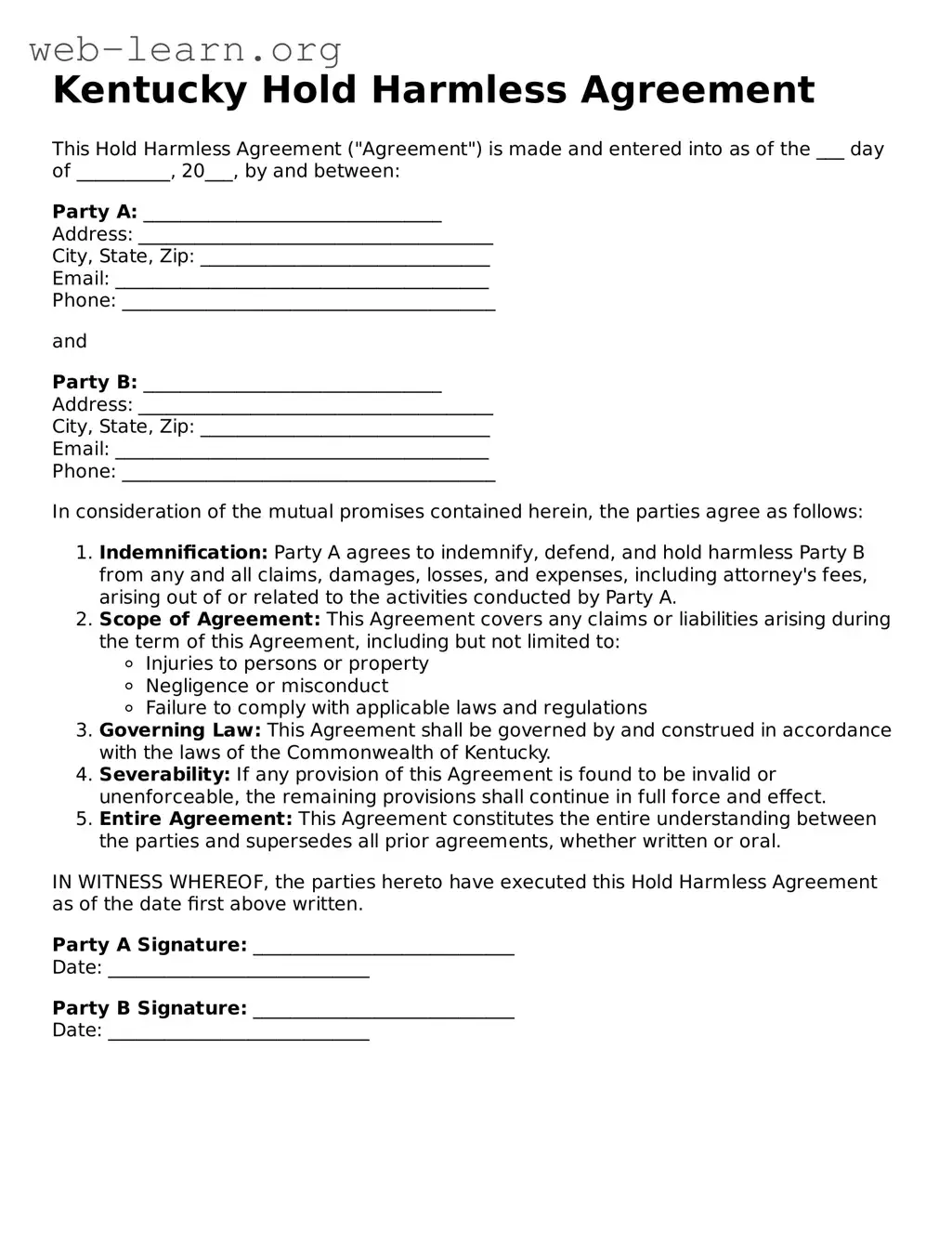
The Kentucky Hold Harmless Agreement form serves as a vital tool for individuals and businesses seeking to protect themselves from potential liabilities. This agreement outlines the responsibilities of the parties involved, ensuring that one party agrees to take on the risk of loss or damage that may arise during specific activities or events. By signing this form, individuals can safeguard their interests while engaging in activities such as renting property, hosting events, or participating in recreational activities. The agreement typically includes key elements like the identification of parties, a clear description of the activities covered, and a statement of indemnification. Understanding these aspects is crucial for anyone considering entering into such an agreement, as it helps clarify expectations and responsibilities, ultimately fostering a safer environment for all involved.
Kentucky Hold Harmless Agreement
This Hold Harmless Agreement ("Agreement") is made and entered into as of the ___ day of __________, 20___, by and between:
Party A: ________________________________
Address: ______________________________________
City, State, Zip: _______________________________
Email: ________________________________________
Phone: ________________________________________
and
Party B: ________________________________
Address: ______________________________________
City, State, Zip: _______________________________
Email: ________________________________________
Phone: ________________________________________
In consideration of the mutual promises contained herein, the parties agree as follows:
IN WITNESS WHEREOF, the parties hereto have executed this Hold Harmless Agreement as of the date first above written.
Party A Signature: ____________________________
Date: ____________________________
Party B Signature: ____________________________
Date: ____________________________
| Fact Name | Description |
|---|---|
| Definition | A Hold Harmless Agreement is a legal document where one party agrees to not hold another party responsible for any damages or liabilities. |
| Purpose | This agreement is often used to protect one party from legal claims that may arise from the actions of another party. |
| Common Use | These agreements are frequently used in construction, events, and rental agreements. |
| Governing Law | In Kentucky, the agreement is governed by state contract law. |
| Parties Involved | Typically, there are at least two parties: the indemnitor (the one who agrees to take on the risk) and the indemnitee (the one being protected). |
| Enforceability | For the agreement to be enforceable, it must be clear, specific, and voluntarily signed by both parties. |
| Limitations | Hold Harmless Agreements cannot protect against gross negligence or intentional misconduct. |
| Duration | The duration of the agreement can vary and should be clearly stated in the document. |
| Legal Advice | It is advisable to seek legal counsel when drafting or signing a Hold Harmless Agreement to ensure all terms are understood. |
Filling out the Kentucky Hold Harmless Agreement form is a straightforward process. Once you have the form in hand, you can begin to provide the necessary information. Make sure to have all relevant details ready, as this will help ensure that the form is completed accurately.
After completing the form, make sure to keep a copy for your records. You may need to submit it to the appropriate party or organization as outlined in your agreement.
A Kentucky Hold Harmless Agreement is a legal document that protects one party from liability for any injuries or damages that may occur during a specific activity or event. Essentially, it allows one party to agree not to hold the other party responsible for certain risks associated with that activity.
Various individuals and organizations utilize Hold Harmless Agreements. Common users include:
While the specific wording can vary, a typical Hold Harmless Agreement includes:
Yes, Hold Harmless Agreements are generally enforceable in Kentucky, provided they are drafted clearly and fairly. However, courts may not enforce them if they are deemed overly broad or if they attempt to waive liability for gross negligence or intentional misconduct.
No, a Hold Harmless Agreement cannot protect against all types of liability. For example, it typically cannot protect against liability resulting from willful misconduct or gross negligence. It is important to understand the limitations of such agreements.
While it is not legally required to have a lawyer draft a Hold Harmless Agreement, it is advisable to consult with one. A legal professional can ensure that the agreement is properly structured, complies with Kentucky laws, and adequately protects your interests.
Present the Hold Harmless Agreement clearly and transparently. Explain its purpose and the risks involved. Allow the other party time to read the document and ask questions. This approach fosters understanding and can help avoid disputes later on.
If the other party refuses to sign the Hold Harmless Agreement, consider discussing their concerns. They may have valid reasons for their hesitation. If necessary, you can negotiate terms or decide whether to proceed with the activity without the agreement.
Filling out the Kentucky Hold Harmless Agreement form can be straightforward, but mistakes often occur. One common error is not providing complete information. When individuals leave out essential details, it can lead to misunderstandings or disputes later on. Always ensure that all required fields are filled in accurately.
Another frequent mistake is failing to read the agreement thoroughly before signing. Many people may skim through the document, missing critical clauses that outline their responsibilities. Taking the time to understand what you are agreeing to is crucial for protecting your interests.
People also sometimes neglect to include the date of signing. This oversight may seem minor, but it can create confusion about when the agreement takes effect. Always remember to date your signature to establish a clear timeline.
Some individuals mistakenly assume that a verbal agreement is sufficient. However, a Hold Harmless Agreement must be in writing to be enforceable. Relying on verbal promises can lead to complications, so ensure that everything is documented properly.
Another common error is not having the agreement reviewed by a legal professional. While it may seem unnecessary, a legal expert can spot potential issues and provide guidance. This step can save time and resources in the long run.
Lastly, individuals often forget to keep a copy of the signed agreement for their records. Without a copy, it can be challenging to reference the terms later. Always make sure to retain a copy for your files to avoid any future problems.
The Kentucky Hold Harmless Agreement is a vital document that protects one party from liability for damages or injuries that may occur during a specific activity or event. However, it is often accompanied by other forms and documents that enhance its effectiveness and clarity. Below are six commonly used documents that complement the Hold Harmless Agreement.
Incorporating these documents along with the Kentucky Hold Harmless Agreement can create a robust framework for risk management. Together, they help ensure that all parties are informed, protected, and prepared for any eventualities during an event or activity.
The Hold Harmless Agreement is a legal document that protects one party from liability or claims arising from certain activities or events. Several other documents serve similar purposes in various contexts. Here are six documents that are comparable to the Hold Harmless Agreement:
When filling out the Kentucky Hold Harmless Agreement form, it is essential to approach the task with care and attention to detail. Below is a list of things you should and shouldn't do to ensure the process goes smoothly.
The Kentucky Hold Harmless Agreement form is often misunderstood. Here are seven common misconceptions that people may have about this important document.
Understanding these misconceptions can help individuals and businesses navigate the complexities of liability and protection more effectively. Always consider consulting a legal professional when dealing with such agreements.
When filling out and using the Kentucky Hold Harmless Agreement form, keep these key takeaways in mind:
Hold Harmless Agreement - This form can foster cooperation by outlining mutual expectations regarding liability.
What Is a Hold Harmless Agreement - This form can be tailored to suit specific situations and needs.
What Is a Hold Harmless Letter - This form can help clarify the relationship between the parties involved.