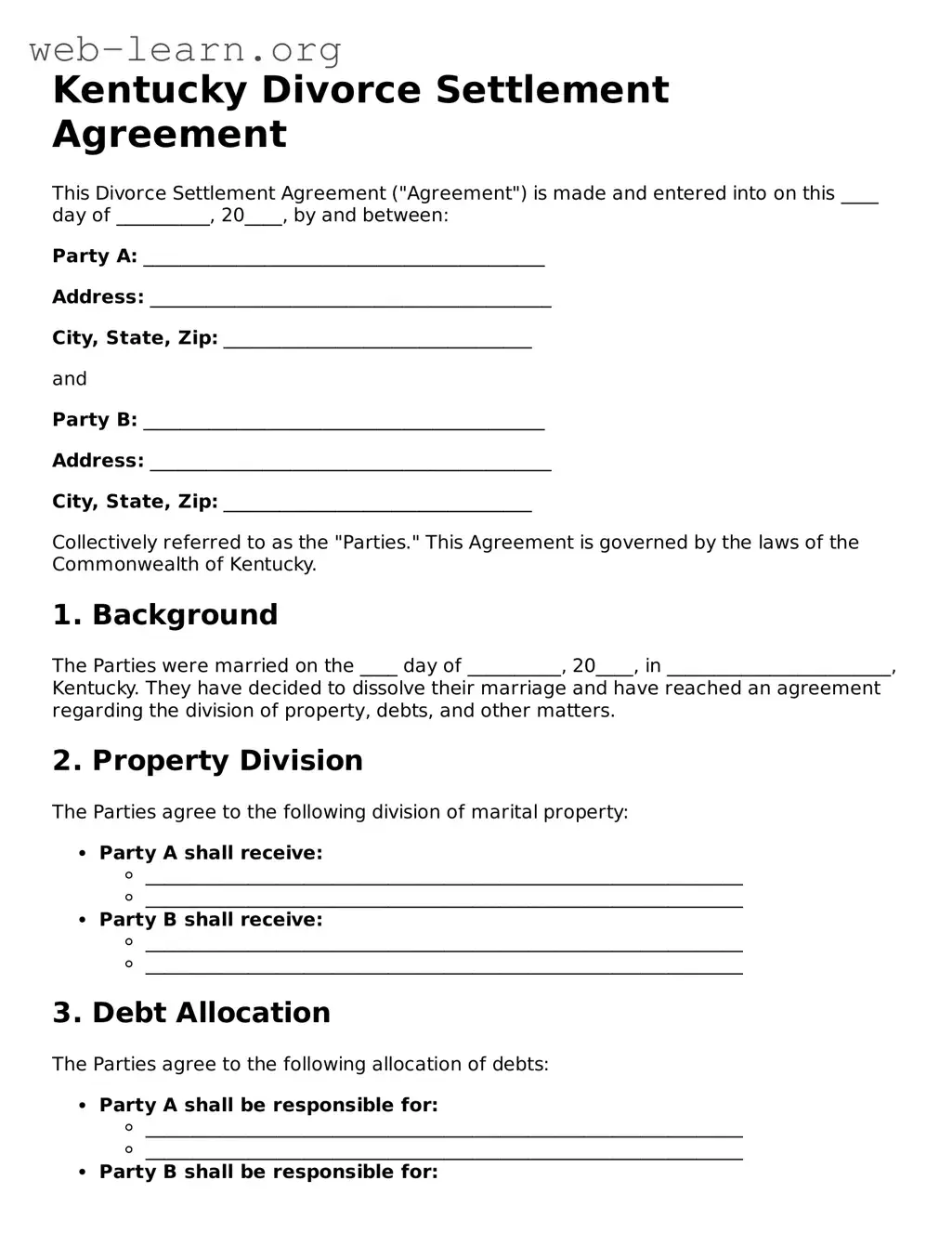
When navigating the complexities of divorce in Kentucky, a Divorce Settlement Agreement form plays a crucial role in outlining the terms of the separation. This document typically addresses key issues such as asset division, child custody arrangements, and spousal support. By clearly detailing the agreements reached by both parties, the form helps to minimize misunderstandings and potential conflicts in the future. It is essential for individuals to understand their rights and obligations as they fill out this form, ensuring that all pertinent details are accurately represented. Additionally, the agreement must comply with Kentucky state laws to be enforceable in court. Completing this form is a significant step towards finalizing a divorce, allowing both parties to move forward with their lives while maintaining a clear understanding of their respective responsibilities.
Kentucky Divorce Settlement Agreement
This Divorce Settlement Agreement ("Agreement") is made and entered into on this ____ day of __________, 20____, by and between:
Party A: ___________________________________________
Address: ___________________________________________
City, State, Zip: _________________________________
and
Party B: ___________________________________________
Address: ___________________________________________
City, State, Zip: _________________________________
Collectively referred to as the "Parties." This Agreement is governed by the laws of the Commonwealth of Kentucky.
1. Background
The Parties were married on the ____ day of __________, 20____, in ________________________, Kentucky. They have decided to dissolve their marriage and have reached an agreement regarding the division of property, debts, and other matters.
2. Property Division
The Parties agree to the following division of marital property:
3. Debt Allocation
The Parties agree to the following allocation of debts:
4. Child Custody and Support
If applicable, the Parties agree to the following arrangements regarding child custody and support:
5. Spousal Support
If applicable, the Parties agree to the following regarding spousal support:
6. Miscellaneous
This Agreement represents the entire understanding between the Parties. Any modifications must be made in writing and signed by both Parties.
IN WITNESS WHEREOF, the Parties have executed this Divorce Settlement Agreement as of the date first above written.
Party A Signature: ___________________________ Date: ____________
Party B Signature: ___________________________ Date: ____________
Witness Signature: ________________________________ Date: ____________
| Fact Name | Details |
|---|---|
| Purpose | The Kentucky Divorce Settlement Agreement form outlines the terms agreed upon by both parties during a divorce. |
| Governing Law | This form is governed by the Kentucky Revised Statutes, specifically KRS Chapter 403. |
| Parties Involved | The form is used by both spouses in a divorce proceeding. |
| Contents | It typically includes provisions on property division, child custody, and support obligations. |
| Filing Requirement | The completed form must be filed with the court as part of the divorce proceedings. |
| Mutual Agreement | Both parties must agree to the terms outlined in the settlement for it to be valid. |
| Legal Review | It is advisable for both parties to have the agreement reviewed by an attorney before signing. |
| Modification | Once signed, the agreement can only be modified by mutual consent of both parties. |
| Enforcement | The agreement is enforceable by the court, ensuring compliance with its terms. |
After gathering all necessary information, you are ready to fill out the Kentucky Divorce Settlement Agreement form. This form will outline the terms of your divorce and the agreements reached between both parties. Completing it accurately is essential for a smooth process.
Once the form is filled out and reviewed, you will need to file it with the appropriate court. Ensure that all required copies are made and that you understand the next steps in the process.
What is a Kentucky Divorce Settlement Agreement form?
A Kentucky Divorce Settlement Agreement form is a legal document that outlines the terms agreed upon by both parties during a divorce. This form typically addresses key issues such as the division of property, custody arrangements for children, and any spousal support or alimony obligations. It serves to formalize the agreements made between spouses, ensuring clarity and mutual understanding.
Who needs to fill out this form?
Both spouses involved in the divorce process need to fill out the Kentucky Divorce Settlement Agreement form. It is essential for both parties to agree on the terms included in the document. This agreement is particularly important if children are involved or if there are significant assets that need to be divided.
How do I obtain the form?
The Kentucky Divorce Settlement Agreement form can typically be obtained from various sources:
It is important to ensure that you are using the most current version of the form, as laws and requirements can change.
What information is required to complete the form?
When filling out the Kentucky Divorce Settlement Agreement form, you will need to provide detailed information, including:
Being thorough and accurate is crucial, as this document will be used in court.
Is the Divorce Settlement Agreement legally binding?
Yes, once signed and submitted to the court, the Divorce Settlement Agreement becomes a legally binding document. This means that both parties are obligated to adhere to the terms outlined in the agreement. If either party fails to comply, the other may seek enforcement through the court.
Can the terms of the agreement be modified later?
Yes, the terms of the Divorce Settlement Agreement can be modified, but this typically requires a formal process. If both parties agree to the changes, they can file a motion with the court to amend the agreement. However, if one party does not agree, modifications may need to be resolved through mediation or court intervention.
What if my spouse and I cannot agree on the terms?
If spouses cannot reach an agreement on the terms of the divorce, they may consider mediation. Mediation involves a neutral third party who helps facilitate discussions and negotiations. If mediation fails, the case may need to go to court, where a judge will make the final decisions regarding the divorce terms.
Do I need a lawyer to complete the Divorce Settlement Agreement?
While it is not legally required to have a lawyer to complete the Kentucky Divorce Settlement Agreement form, it is highly recommended. A lawyer can provide valuable guidance, ensure that your rights are protected, and help you understand the implications of the agreement. This is especially important if there are complex issues involved, such as significant assets or child custody matters.
Filling out the Kentucky Divorce Settlement Agreement form is a crucial step in the divorce process. However, many individuals make common mistakes that can lead to complications down the line. Understanding these pitfalls can help ensure that your agreement is both fair and legally sound.
One frequent mistake is failing to provide accurate financial information. Many people underestimate their assets or liabilities, which can lead to an unfair settlement. It’s essential to list all sources of income, property, debts, and any other financial obligations. Inaccuracies can result in disputes later, so thoroughness is key.
Another common error is neglecting to consider future expenses. Many individuals focus solely on current financial situations without factoring in future needs, such as education costs for children or changes in living expenses. Planning for the future is vital to create a settlement that remains fair over time.
Some people also overlook the importance of clarity in their agreements. Vague language can lead to misunderstandings between parties. Each term should be clearly defined, and expectations should be explicitly stated. This clarity helps prevent future conflicts and ensures both parties understand their responsibilities.
Additionally, failing to address child custody and support issues properly can be detrimental. Many individuals may assume these matters will resolve themselves or be handled later. However, it’s critical to outline custody arrangements and support obligations in the settlement to avoid confusion and ensure the best interests of the children are prioritized.
Another mistake involves not seeking legal advice. While it may seem tempting to fill out the form independently, the complexities of divorce law can be overwhelming. Consulting with a legal professional can provide valuable insights and help avoid costly mistakes.
Lastly, some individuals rush through the process without fully reviewing the agreement. Taking the time to read through the entire document is essential. Overlooking even minor details can lead to significant issues in the future. A thorough review allows for corrections and ensures that all parties are satisfied with the terms before finalizing the agreement.
When navigating a divorce in Kentucky, several forms and documents accompany the Divorce Settlement Agreement. Each of these documents plays a crucial role in ensuring that the divorce process is handled efficiently and fairly. Below is a list of common forms that you may encounter during this process.
Understanding these documents can help make the divorce process smoother. Each form serves a specific purpose and contributes to a fair resolution for both parties involved. Being informed about these requirements can lead to a more organized and less stressful experience.
Separation Agreement: This document outlines the terms under which a couple agrees to live apart. It addresses issues such as property division, child custody, and support obligations, similar to a Divorce Settlement Agreement.
Child Custody Agreement: This agreement specifically focuses on the arrangements for child custody and visitation. It ensures that both parents understand their rights and responsibilities, akin to the custody provisions in a Divorce Settlement Agreement.
Property Settlement Agreement: This document details how a couple's assets and debts will be divided upon separation. It serves a similar purpose to the property division section of a Divorce Settlement Agreement.
Spousal Support Agreement: This agreement outlines the terms of financial support one spouse will provide to the other after separation or divorce. It parallels the support provisions found in a Divorce Settlement Agreement.
Prenuptial Agreement: Although created before marriage, this document sets forth the terms regarding property and support in the event of divorce. It can influence the Divorce Settlement Agreement by establishing expectations and rights.
Postnuptial Agreement: Similar to a prenuptial agreement, this document is created after marriage and addresses the same issues regarding asset division and support. It can serve as a reference point in a Divorce Settlement Agreement.
When filling out the Kentucky Divorce Settlement Agreement form, it's important to approach the process with care. Here are some guidelines to follow:
Understanding the Kentucky Divorce Settlement Agreement form is crucial for anyone going through a divorce. Unfortunately, several misconceptions can lead to confusion. Here are eight common misconceptions about this form:
Being aware of these misconceptions can help individuals navigate the divorce process more effectively. Understanding the purpose and limitations of the Kentucky Divorce Settlement Agreement form is essential for making informed decisions.
When navigating the Kentucky Divorce Settlement Agreement form, it’s essential to understand its importance and how to complete it effectively. Below are key takeaways to guide you through the process:
Approaching the Kentucky Divorce Settlement Agreement form with careful consideration and attention to detail can significantly ease the divorce process. Stay organized and proactive to ensure a smoother transition during this challenging time.
Mutual Divorce Agreement Sample - It may also specify how future changes in circumstances will be handled.
Typical Divorce Settlement Connecticut - The document can provide peace of mind regarding the future for both parties.
Divorce Contract Template - The settlement can be filed with the court as part of the divorce proceedings.