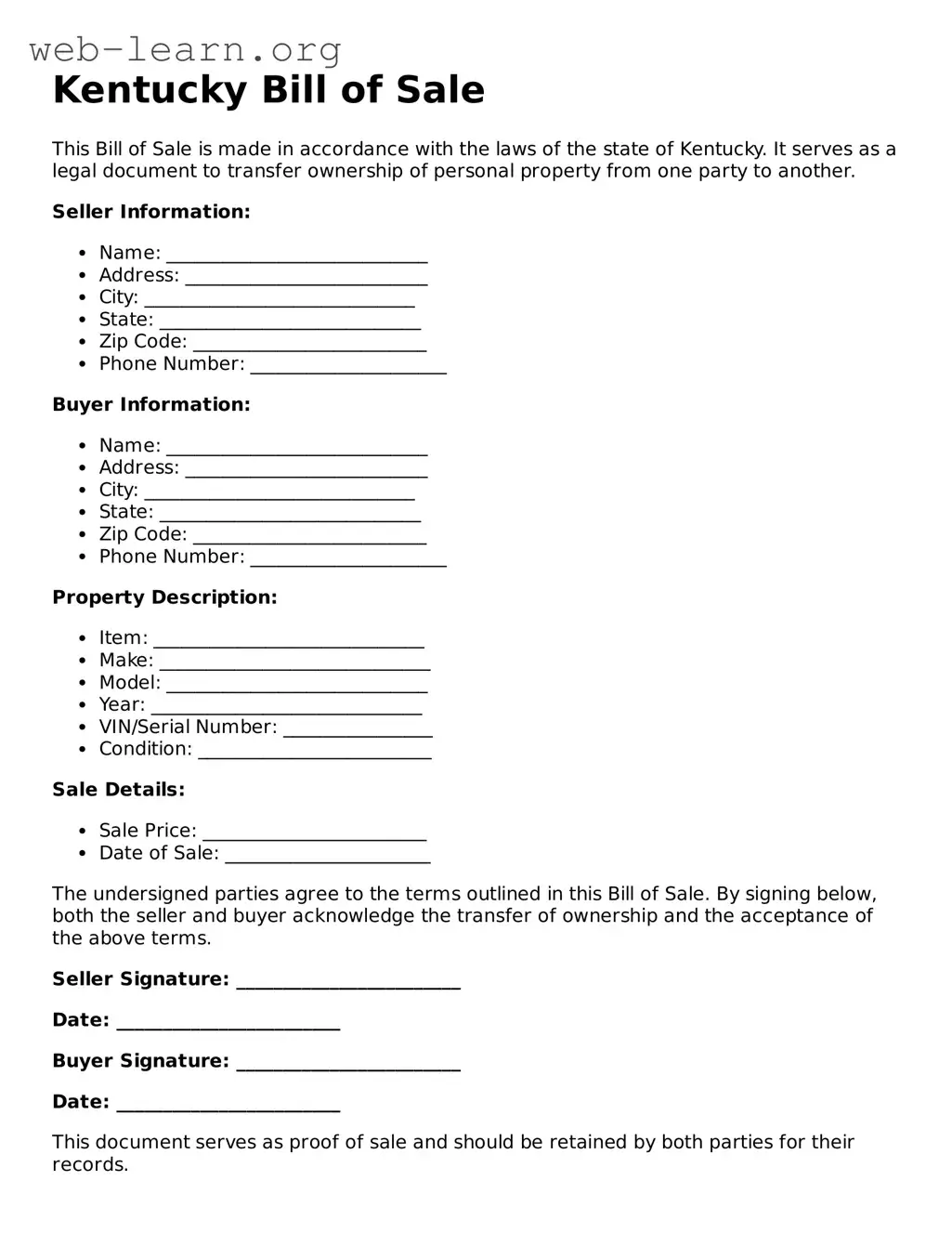
The Kentucky Bill of Sale form serves as a crucial document in various transactions, particularly for the sale of personal property. This form outlines essential details such as the names and addresses of both the buyer and seller, a description of the item being sold, and the sale price. It provides a clear record of the transaction, ensuring that both parties have a mutual understanding of the agreement. Additionally, the form may include information about any warranties or guarantees associated with the item, as well as the date of the transaction. By documenting these elements, the Bill of Sale protects the interests of both the buyer and the seller, offering legal proof of ownership transfer. Understanding the components and importance of this form can help individuals navigate the buying and selling process with confidence, reducing the risk of disputes down the line.
Kentucky Bill of Sale
This Bill of Sale is made in accordance with the laws of the state of Kentucky. It serves as a legal document to transfer ownership of personal property from one party to another.
Seller Information:
Buyer Information:
Property Description:
Sale Details:
The undersigned parties agree to the terms outlined in this Bill of Sale. By signing below, both the seller and buyer acknowledge the transfer of ownership and the acceptance of the above terms.
Seller Signature: ________________________
Date: ________________________
Buyer Signature: ________________________
Date: ________________________
This document serves as proof of sale and should be retained by both parties for their records.
| Fact Name | Description |
|---|---|
| Purpose | The Kentucky Bill of Sale form serves as a legal document that records the transfer of ownership of personal property from one individual to another. |
| Governing Law | This form is governed by Kentucky state law, specifically the Uniform Commercial Code (UCC) as adopted by the state. |
| Property Types | The form can be used for various types of personal property, including vehicles, furniture, and equipment. |
| Signatures Required | Both the seller and the buyer must sign the document to validate the transfer of ownership. |
| Record Keeping | It is advisable for both parties to keep a copy of the Bill of Sale for their records, as it may be needed for future reference or legal purposes. |
After obtaining the Kentucky Bill of Sale form, you will need to provide specific information regarding the transaction. Follow these steps to complete the form accurately.
Once you have filled out the form, keep a copy for your records and provide the other copy to the buyer or seller as needed. This documentation is important for both parties involved in the transaction.
A Kentucky Bill of Sale is a legal document that serves as proof of the transfer of ownership of personal property from one individual to another. This document outlines the details of the transaction, including the buyer and seller's information, a description of the item being sold, and the sale price. It is essential for both parties to have a record of the sale for future reference.
In Kentucky, a Bill of Sale is commonly used for the sale of vehicles, boats, trailers, and other valuable personal property. While it is not legally required for every transaction, having a Bill of Sale is highly recommended, especially for high-value items. It can help protect both the buyer and seller in case of disputes.
To complete a Kentucky Bill of Sale, follow these steps:
It is advisable to have a witness or notary public present during the signing for added legal protection.
Yes, a Bill of Sale is legally binding in Kentucky as long as it contains the essential elements of a contract. These elements include the agreement between the buyer and seller, consideration (the sale price), and the signatures of both parties. However, it is important to ensure that all information is accurate and complete to avoid any potential disputes.
While a Bill of Sale itself does not need to be registered with the state, it is crucial for the buyer to use it when registering the vehicle or item with the appropriate authorities. For vehicles, this includes the Kentucky Transportation Cabinet. The Bill of Sale serves as proof of ownership and is often required for the registration process.
If you lose your Bill of Sale, it is advisable to create a new one. Both the buyer and seller can sign a new document to reaffirm the sale. If possible, include a statement indicating that it replaces the lost document. Keeping multiple copies of important documents is a good practice to prevent future issues.
Filling out the Kentucky Bill of Sale form can seem straightforward, but many people make common mistakes that can lead to complications later. One frequent error is failing to include all necessary information. Buyers and sellers must provide their full names, addresses, and contact details. Omitting any of this information can create confusion and may render the document invalid.
Another mistake often made is not accurately describing the item being sold. Whether it's a vehicle, boat, or other personal property, the description should be clear and detailed. This includes the make, model, year, and identification number, if applicable. A vague description can lead to disputes over what was actually sold.
Many individuals also overlook the importance of signatures. Both the buyer and seller must sign the Bill of Sale for it to be legally binding. In some cases, people forget to sign or assume that a verbal agreement is sufficient. Without signatures, the document lacks the necessary legal weight.
Additionally, failing to date the document is a common oversight. The date signifies when the transaction occurred, which is crucial for record-keeping and legal purposes. An undated Bill of Sale can create uncertainty about the timeline of the sale.
People sometimes forget to check for any outstanding liens on the property being sold. If there are liens, the seller should disclose this information to the buyer. Not doing so can lead to legal issues down the line, as the buyer may end up responsible for debts tied to the item.
Another frequent mistake is not keeping copies of the completed Bill of Sale. Both parties should retain a copy for their records. This documentation can be vital for future reference, especially if disputes arise or if the buyer needs to register the item.
Some individuals also neglect to consult local laws regarding the Bill of Sale. While Kentucky has its own requirements, regulations may vary by county or city. Ignoring these local laws can lead to complications that may affect the validity of the sale.
Lastly, people may not realize the importance of notarization. While not always required, having the Bill of Sale notarized can add an extra layer of protection. A notary public verifies the identities of the parties involved and witnesses the signing, which can help prevent fraud.
When engaging in the sale or transfer of property in Kentucky, various documents often accompany the Bill of Sale form. Each of these documents serves a specific purpose, helping to ensure that the transaction is legally sound and properly documented. Below is a list of four common forms and documents that are frequently used alongside the Kentucky Bill of Sale.
Using these additional documents in conjunction with the Kentucky Bill of Sale can enhance the security and clarity of your transaction. Each form plays a vital role in ensuring that both parties are protected and that the transfer of ownership is conducted smoothly.
When filling out the Kentucky Bill of Sale form, it is essential to ensure accuracy and completeness. Here are some important dos and don'ts to keep in mind:
By following these guidelines, you can ensure that your Bill of Sale is properly completed and legally binding.
There are several misconceptions surrounding the Kentucky Bill of Sale form. Understanding these can help clarify its purpose and use.
When dealing with the Kentucky Bill of Sale form, there are several important points to keep in mind. This document serves as a legal record of the transfer of ownership of personal property. Understanding its components can help ensure a smooth transaction.
By paying attention to these key elements, individuals can navigate the process of using the Kentucky Bill of Sale form more effectively, ensuring a clear and legally binding transaction.
Hand Written Bill of Sale Oregon - A Bill of Sale can be a useful tool for both individuals and businesses in making sales.
Dealer Bill of Sale Template - It is commonly used in private sales, such as selling a car or furniture.