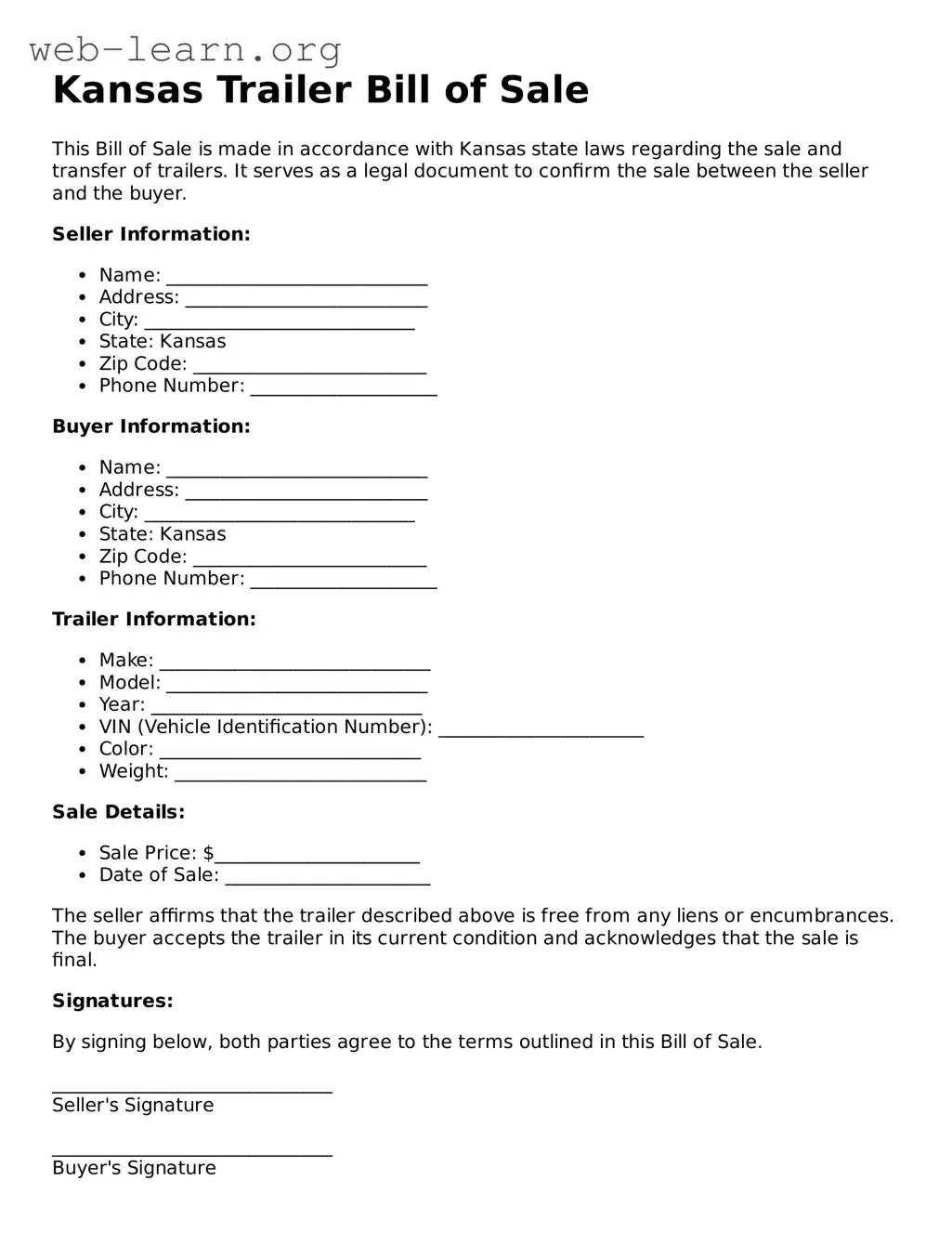
When buying or selling a trailer in Kansas, the Trailer Bill of Sale form plays a crucial role in documenting the transaction. This form serves as a legal record, providing essential details such as the names and addresses of both the buyer and seller, a description of the trailer, and the sale price. It also includes information about the trailer's vehicle identification number (VIN), which helps confirm its identity and ownership. By completing this form, both parties can protect their interests and ensure a smooth transfer of ownership. Additionally, the form may include space for any warranties or representations made by the seller, offering further clarity in the transaction. Understanding the importance of this document can facilitate a more secure and transparent process for all involved.
Kansas Trailer Bill of Sale
This Bill of Sale is made in accordance with Kansas state laws regarding the sale and transfer of trailers. It serves as a legal document to confirm the sale between the seller and the buyer.
Seller Information:
Buyer Information:
Trailer Information:
Sale Details:
The seller affirms that the trailer described above is free from any liens or encumbrances. The buyer accepts the trailer in its current condition and acknowledges that the sale is final.
Signatures:
By signing below, both parties agree to the terms outlined in this Bill of Sale.
______________________________
Seller's Signature
______________________________
Buyer's Signature
Date: ___________________________
| Fact Name | Description |
|---|---|
| Purpose | The Kansas Trailer Bill of Sale form is used to document the sale of a trailer between a buyer and a seller. |
| Governing Law | This form is governed by the laws of the State of Kansas, specifically under the Kansas Statutes Annotated. |
| Required Information | The form typically requires details such as the names and addresses of both parties, the trailer's make, model, year, and Vehicle Identification Number (VIN). |
| Signatures | Both the seller and the buyer must sign the form to validate the transaction. |
| Notarization | While notarization is not always required, it is recommended for added legal protection. |
| Record Keeping | Both parties should retain a copy of the completed Bill of Sale for their records. |
| Transfer of Ownership | The Bill of Sale serves as proof of ownership transfer and may be required for registration with the Kansas Department of Revenue. |
Once you have the Kansas Trailer Bill of Sale form ready, it’s important to fill it out accurately to ensure a smooth transaction. This document will be essential for both the buyer and seller in the transfer of ownership. Follow these steps carefully to complete the form.
After completing the form, it is advisable to ensure that both parties retain their copies. This will help in any future inquiries or issues regarding the sale. Once everything is filled out and signed, the transfer of ownership can proceed smoothly.
What is a Kansas Trailer Bill of Sale?
A Kansas Trailer Bill of Sale is a legal document that serves as proof of the sale and transfer of ownership of a trailer in the state of Kansas. It includes essential details such as the seller's and buyer's information, trailer specifications, sale price, and the date of the transaction.
Why do I need a Bill of Sale for my trailer?
Having a Bill of Sale is crucial for several reasons. First, it provides a record of the transaction, which can be helpful for both the buyer and seller. Second, it can assist in the registration process with the Kansas Department of Revenue. Lastly, it serves as proof of ownership in case of disputes or legal issues in the future.
What information is required on the form?
The Kansas Trailer Bill of Sale typically requires the following information:
Is the Bill of Sale required for all trailer sales in Kansas?
While it is not legally required to have a Bill of Sale for all trailer sales, it is highly recommended. Having this document can facilitate the registration process and provide legal protection. It is especially important for larger transactions or when selling to someone you do not know well.
How do I complete the Kansas Trailer Bill of Sale?
To complete the form, fill in all required information accurately. Both the seller and buyer should review the document to ensure all details are correct. After filling it out, both parties must sign the form to validate the transaction. It is advisable to keep a copy for personal records.
Can I use a generic Bill of Sale form?
Yes, you can use a generic Bill of Sale form as long as it includes all the necessary information required by Kansas law. However, using a specific Kansas Trailer Bill of Sale form can help ensure that all state requirements are met and may simplify the registration process.
What should I do after completing the Bill of Sale?
After completing the Bill of Sale, the buyer should take it to the local Department of Revenue office to register the trailer in their name. The seller should also keep a copy for their records. This documentation can be important for future reference or in case of any disputes.
Where can I obtain a Kansas Trailer Bill of Sale form?
You can obtain a Kansas Trailer Bill of Sale form from various sources, including:
Filling out the Kansas Trailer Bill of Sale form can seem straightforward, but many individuals make common mistakes that can lead to complications. One frequent error is failing to provide accurate information about the trailer itself. This includes the Vehicle Identification Number (VIN), make, model, and year. Omitting or miswriting any of these details can cause issues when registering the trailer or transferring ownership.
Another mistake involves the seller's signature. The seller must sign the form to validate the sale. Some individuals forget this crucial step, believing that their verbal agreement suffices. Without a signature, the document lacks legal standing, which can lead to disputes later on.
Buyers also make mistakes when filling out their information. They may provide incorrect personal details, such as their name or address. This can create problems when the buyer attempts to register the trailer. Accurate identification is essential to ensure a smooth transfer of ownership.
Not including the sale price is another common error. The form requires a specified amount for the sale. Leaving this section blank or writing “N/A” can raise red flags during the registration process. It is essential to document the sale price clearly to avoid any misunderstandings.
Some people overlook the importance of including the date of the sale. Failing to write the date can lead to confusion regarding when the transaction took place. This information is vital for both parties, especially if any disputes arise in the future.
Another mistake is neglecting to provide a bill of sale copy to the buyer. While the seller keeps one copy, the buyer should also receive a signed copy for their records. This document serves as proof of purchase and is important for future reference.
People sometimes forget to check for additional requirements specific to their county or city. Local regulations may impose extra conditions for trailer sales. Ignoring these can lead to fines or complications in the registration process.
Lastly, individuals may not keep copies of the completed form. Retaining a copy for personal records is essential. It can serve as evidence of the transaction if questions arise later. Keeping documentation protects both parties and ensures a smoother ownership transition.
The Kansas Trailer Bill of Sale form is essential for transferring ownership of a trailer. However, several other documents may accompany it to ensure a smooth transaction and proper registration. Below is a list of commonly used forms and documents in conjunction with the Bill of Sale.
Using these documents alongside the Kansas Trailer Bill of Sale will help facilitate a clear and legal transfer of ownership. Always ensure that all forms are completed accurately to avoid any issues in the future.
The Trailer Bill of Sale form is an important document when buying or selling a trailer. It serves as proof of ownership and includes essential details about the transaction. However, it shares similarities with several other documents. Here are four documents that are akin to the Trailer Bill of Sale:
Each of these documents plays a critical role in facilitating smooth transactions and protecting the interests of all parties involved. Understanding their similarities can help ensure that you have the right paperwork for your specific needs.
When filling out the Kansas Trailer Bill of Sale form, it's important to follow some guidelines to ensure everything is completed correctly. Here are five things you should and shouldn't do:
By following these tips, you can help ensure a smooth process when completing the Kansas Trailer Bill of Sale form.
When it comes to the Kansas Trailer Bill of Sale form, several misconceptions can lead to confusion. Understanding these myths is crucial for anyone involved in buying or selling a trailer. Here are five common misconceptions:
Some people believe that a bill of sale is optional for trailer transactions. However, having a written bill of sale is important for establishing proof of ownership and can protect both the buyer and seller in case of disputes.
Many think that any generic bill of sale form is sufficient. In reality, the Kansas Trailer Bill of Sale form includes specific information required by state law, ensuring that all necessary details are captured.
Some believe that the bill of sale is only relevant for new trailers. In fact, it is equally important for used trailers. A bill of sale provides a clear record of the transaction, regardless of the trailer's age.
People often think that signing a bill of sale means they can’t change their mind. While the document does signify an agreement, it’s still possible to negotiate terms before the sale is finalized, as long as both parties are in agreement.
Some individuals assume that only larger or more expensive trailers require a bill of sale. However, even smaller trailers benefit from this documentation, as it helps clarify ownership and transaction details.
By addressing these misconceptions, individuals can navigate the process of buying or selling a trailer in Kansas with greater confidence and clarity.
When completing the Kansas Trailer Bill of Sale form, it is essential to understand the key elements involved. Here are some important takeaways to keep in mind:
Following these guidelines will help ensure a smooth transaction when buying or selling a trailer in Kansas.
Florida Trailer Registration Under 2,000 Lbs - It is advisable to fill out the form completely to avoid any confusion later.
Registering a Trailer in Arkansas - Provides a legal framework for the sale, making it more formal and binding.
Bill of Sale Print - Overall, a Trailer Bill of Sale is an essential tool for anyone involved in buying or selling a trailer.