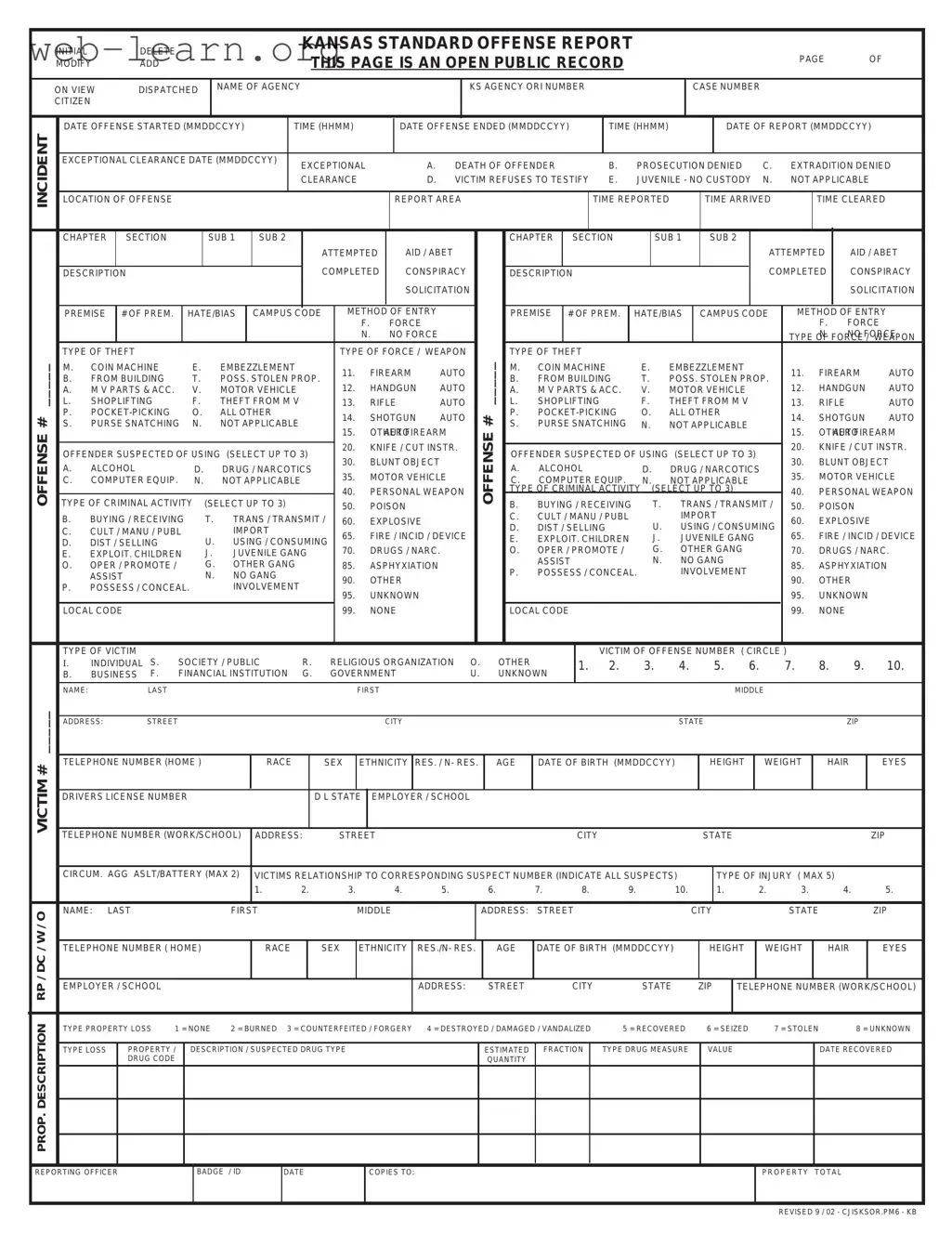
The Kansas Standard Offense Report form is a crucial document used by law enforcement agencies across the state to systematically record details of criminal incidents. This form captures a wide range of information, ensuring that every aspect of an offense is documented clearly and comprehensively. Key elements include the identification of the agency involved, the case number, and the specifics of the incident such as the date and time it occurred. Additionally, the form outlines the nature of the offense, whether it was completed or attempted, and any exceptional clearance circumstances, like the death of the offender or the victim's refusal to testify. Location details are also crucial, as they specify where the offense took place, while sections dedicated to the victim and suspect provide vital demographic information. The form even includes space for describing the method of entry and type of criminal activity, which can help in understanding patterns of crime in different areas. By capturing this information, the Kansas Standard Offense Report serves not only as a record for law enforcement but also as a valuable tool for data analysis and crime prevention strategies.
¸ INITIAL |
|
¸ DELETE |
|
|
|
|
|
|
|
|
KANSAS STANDARD OFFENSE REPORT |
|
|
|
|
|
|
|
|
|
|
|
|
|
|
|
|
|
|
|
||||||||||||||||||||||||
|
|
|
|
|
|
|
|
|
|
THIS PAGE IS AN OPEN PUBLIC RECORD |
|
|
|
|
|
|
|
|
|
|
|
|
|
PAGE |
|
OF |
||||||||||||||||||||||||||||
¸ MODIFY |
|
¸ ADD |
|
|
|
|
|
|
|
|
|
|
|
|
|
|
|
|
|
|
|
|
|
|
|
|
|
|||||||||||||||||||||||||||
|
|
|
|
|
|
|
|
|
|
|
|
|
|
|
|
|
|
|
|
|
|
|
|
|
|
|
|
|
|
|
||||||||||||||||||||||||
|
|
|
|
|
|
|
|
|
|
|
|
|
|
|
|
|
|
|
|
|
|
|
|
|
|
|
|
|
|
|
|
|
|
|
|
|
|
|
|
|
|
|
|
|
|
|
|
|
|
|
|
|
||
¸ ON VIEW |
|
¸ DISPATCHED |
|
NAME OF AGENCY |
|
|
|
|
|
|
|
|
|
KS AGENCY ORI NUMBER |
|
|
|
|
|
|
|
CASE NUMBER |
|
|
|
|
|
|
|
|
||||||||||||||||||||||||
|
|
|
|
|
|
|
|
|
|
|
|
|
|
|
|
|
|
|
|
|
|
|
|
|
|
|
|
|
|
|
|
|
|
|
|
|
|
|
|
|
|
|
|
|
|
|
||||||||
¸ CITIZEN |
|
|
|
|
|
|
|
|
|
|
|
|
|
|
|
|
|
|
|
|
|
|
|
|
|
|
|
|
|
|
|
|
|
|
|
|
|
|
|
|
|
|
|
|
|
|
|
|
|
|
|
|
|
|
|
|
|
|
|
|
|
|
|
|
|
|
|
|
|
|
|
|
|
|
|
|
|
|
|
|
|
|
|
|
|
|
|
|
|
|
|
|
|
|
|
|
|
|
|||||||||||
INCIDENT |
DATE OFFENSE STARTED (MMDDCCYY) |
|
|
TIME (HHMM) |
|
|
|
|
DATE OFFENSE ENDED (MMDDCCYY) |
|
TIME (HHMM) |
|
|
|
|
DATE OF REPORT (MMDDCCYY) |
||||||||||||||||||||||||||||||||||||||
|
|
|
|
|
|
|
|
|
|
|
|
|
|
|
|
|
|
|
|
|
|
|
|
|
|
|
|
|
|
|
|
|
|
|
|
|
|
|
|
|
|
|
|
|
|
|
|
|
|
|||||
EXCEPTIONAL CLEARANCE DATE (MMDDCCYY) |
|
EXCEPTIONAL |
|
|
|
A. ¸ DEATH OF OFFENDER |
|
|
|
|
B. ¸ PROSECUTION DENIED |
C. ¸ EXTRADITION DENIED |
||||||||||||||||||||||||||||||||||||||||||
|
|
|
|
|
|
|
|
|
|
|
|
|
|
|
|
|
|
|
|
|
||||||||||||||||||||||||||||||||||
|
|
|
|
|
|
|
|
|
|
|
|
|
|
CLEARANCE |
|
|
|
D. ¸ VICTIM REFUSES TO TESTIFY |
|
E. ¸ JUVENILE - NO CUSTODY |
N. ¸ NOT APPLICABLE |
|||||||||||||||||||||||||||||||||
|
|
|
|
|
|
|
|
|
|
|
|
|
|
|
|
|
|
|
|
|
|
|
|
|
|
|
|
|
|
|
|
|
|
|
|
|
|
|
|
|
|
|
|
|
|
|
||||||||
LOCATION OF OFFENSE |
|
|
|
|
|
|
|
|
|
|
|
|
|
|
|
|
|
REPORT AREA |
|
|
|
|
|
|
|
TIME REPORTED |
|
|
|
TIME ARRIVED |
|
|
|
TIME CLEARED |
||||||||||||||||||||
|
|
|
|
|
|
|
|
|
|
|
|
|
|
|
|
|
|
|
|
|
|
|
|
|
|
|
|
|
|
|
|
|
|
|
|
|
|
|
|
|
|
|
|
|
|
|
|
|
|
|
|
|
|
|
|
|
|
|
|
|
|
|
|
|
|
|
|
|
|
|
|
|
|
|
|
|
|
|
|
|
|
|
|
|
|
|
|
|
|
|
|
|
|
|
|
|
|
|
|
|
|
|
|
|
|
||||
|
CHAPTER |
|
SECTION |
|
|
|
|
SUB 1 |
SUB 2 |
|
|
|
|
|
|
|
|
|
|
|
|
|
CHAPTER |
SECTION |
|
SUB 1 |
|
SUB 2 |
|
|
|
|
|
|
|
|
|
|||||||||||||||||
|
|
|
|
|
|
|
|
|
|
|
|
|
|
|
|
¸ ATTEMPTED |
|
¸ AID / ABET |
|
|
|
|
|
|
|
|
|
|
|
|
|
|
|
|
|
|
|
|
|
¸ ATTEMPTED |
|
¸ AID / ABET |
||||||||||||
|
|
|
|
|
|
|
|
|
|
|
|
|
|
|
¸ COMPLETED |
|
¸ CONSPIRACY |
|
|
|
|
|
|
|
|
|
|
|
|
|
|
|
|
|
|
|
|
|
¸ COMPLETED |
|
¸ CONSPIRACY |
|||||||||||||
|
DESCRIPTION |
|
|
|
|
|
|
|
|
|
|
|
|
|
|
|
|
DESCRIPTION |
|
|
|
|
|
|
|
|
|
|
|
|
|
|
||||||||||||||||||||||
|
|
|
|
|
|
|
|
|
|
|
|
|
|
|
|
|
|
|
|
|
¸ SOLICITATION |
|
|
|
|
|
|
|
|
|
|
|
|
|
|
|
|
|
|
|
|
|
|
|
|
|
|
|
|
¸ SOLICITATION |
||||
|
|
|
|
|
|
|
|
|
|
|
|
|
|
|
|
|
|
|
|
|
|
|
|
|
|
|
|
|
|
|
|
|
|
|
|
|
|
|
|
|||||||||||||||
|
PREMISE |
|
# OF PREM. |
|
HATE/BIAS |
|
CAMPUS CODE |
METHOD OF ENTRY |
|
|
|
PREMISE |
# OF PREM. |
HATE/BIAS |
|
CAMPUS CODE |
|
METHOD OF ENTRY |
||||||||||||||||||||||||||||||||||||
|
|
|
|
|
|
|
|
|
|
|
|
|
|
|
|
|
|
F. ¸ FORCE |
|
|
|
|
|
|
|
|
|
|
|
|
|
|
|
|
|
|
|
|
|
|
|
|
|
|
F. ¸ FORCE |
|||||||||
|
|
|
|
|
|
|
|
|
|
|
|
|
|
|
|
|
|
N. ¸ NO FORCE |
|
|
|
|
|
|
|
|
|
|
|
|
|
|
|
|
|
|
|
|
|
|
|
|
|
|
N. ¸ NO FORCE |
|||||||||
|
TYPE OF THEFT |
|
|
|
|
|
|
|
|
|
|
|
|
|
TYPE OF FORCE / WEAPON |
|
|
|
TYPE OF THEFT |
|
|
|
|
|
|
|
|
|
|
|
|
|
|
|
|
TYPE OF FORCE / WEAPON |
||||||||||||||||||
_____ |
M. ¸ COIN MACHINE |
|
|
|
E. ¸ EMBEZZLEMENT |
|
|
11. |
¸ FIREARM |
¸ AUTO |
_____ |
|
M. ¸ COIN MACHINE |
E. ¸ EMBEZZLEMENT |
|
|
11. |
¸ FIREARM |
¸ AUTO |
|||||||||||||||||||||||||||||||||||
B. ¸ FROM BUILDING |
|
|
|
T. ¸ POSS. STOLEN PROP. |
|
B. ¸ FROM BUILDING |
T. ¸ POSS. STOLEN PROP. |
|
||||||||||||||||||||||||||||||||||||||||||||||
|
|
|
12. ¸ HANDGUN |
¸ AUTO |
|
|
12. ¸ HANDGUN |
¸ AUTO |
||||||||||||||||||||||||||||||||||||||||||||||
A. ¸ M V PARTS & ACC. |
|
|
|
V. ¸ MOTOR VEHICLE |
|
|
|
A. ¸ M V PARTS & ACC. |
V. ¸ MOTOR VEHICLE |
|
|
|||||||||||||||||||||||||||||||||||||||||||
L. ¸ SHOPLIFTING |
|
|
|
F. ¸ THEFT FROM M V |
|
|
13. ¸ RIFLE |
¸ AUTO |
|
L. ¸ SHOPLIFTING |
F. ¸ THEFT FROM M V |
|
|
13. ¸ RIFLE |
¸ AUTO |
|||||||||||||||||||||||||||||||||||||||
# |
P. ¸ |
|
|
|
O. ¸ ALL OTHER |
|
|
14. |
¸ SHOTGUN |
¸ AUTO |
# |
|
P. ¸ |
O. ¸ ALL OTHER |
|
|
|
|
|
14. |
¸ SHOTGUN |
¸ AUTO |
||||||||||||||||||||||||||||||||
S. ¸ PURSE SNATCHING |
|
N. ¸ NOT APPLICABLE |
|
|
|
S. ¸ PURSE SNATCHING |
N. ¸ NOT APPLICABLE |
|
|
|||||||||||||||||||||||||||||||||||||||||||||
|
|
|
15. ¸ OTHER FIREARM |
|
|
|
15. |
¸ OTHER FIREARM |
||||||||||||||||||||||||||||||||||||||||||||||
OFFENSE |
|
|
|
|
|
|
|
|
|
|
|
|
|
|
|
|
OFFENSE |
|
|
|
|
|
|
|
|
|
|
|
|
|
|
|
|
|
|
|
|
|
|
|||||||||||||||
|
|
|
|
|
|
|
|
|
|
|
|
|
|
|
|
|
|
¸ AUTO |
|
|
|
|
|
|
|
|
|
|
|
|
|
|
|
|
|
|
|
|
|
|
|
|
|
|
¸ AUTO |
|
||||||||
OFFENDER SUSPECTED OF USING (SELECT UP TO 3) |
|
|
|
|
|
OFFENDER SUSPECTED OF USING (SELECT UP TO 3) |
|
|
|
|
|
|||||||||||||||||||||||||||||||||||||||||||
20. |
¸ KNIFE / CUT INSTR. |
|
|
|
20. |
¸ KNIFE / CUT INSTR. |
||||||||||||||||||||||||||||||||||||||||||||||||
A. ¸ ALCOHOL |
|
|
|
|
D. ¸ DRUG / NARCOTICS |
|
A. ¸ ALCOHOL |
|
|
|
D. ¸ DRUG / NARCOTICS |
|
|
|||||||||||||||||||||||||||||||||||||||||
|
|
|
|
30. |
¸ BLUNT OBJECT |
|
|
|
|
|
|
30. |
¸ BLUNT OBJECT |
|||||||||||||||||||||||||||||||||||||||||
C. ¸ COMPUTER EQUIP. |
|
N. ¸ NOT APPLICABLE |
|
C. ¸ COMPUTER EQUIP. |
N. ¸ NOT APPLICABLE |
|
|
|||||||||||||||||||||||||||||||||||||||||||||||
|
|
|
|
|
|
|
|
|
|
|
|
|
|
|
|
|
|
|||||||||||||||||||||||||||||||||||||
|
|
|
|
|
|
|
|
|
|
|
|
|
|
|
|
35. ¸ MOTOR VEHICLE |
|
|
|
|
|
|
|
|
|
|
|
|
|
|
|
|
|
|
|
|
|
|
35. ¸ MOTOR VEHICLE |
|||||||||||||||
TYPE OF CRIMINAL ACTIVITY (SELECT UP TO 3) |
|
|
|
TYPE OF CRIMINAL ACTIVITY |
|
(SELECT UP TO 3) |
|
|
|
|
|
|||||||||||||||||||||||||||||||||||||||||||
|
|
40. |
¸ PERSONAL WEAPON |
|
|
|
|
|
|
|
40. |
¸ PERSONAL WEAPON |
||||||||||||||||||||||||||||||||||||||||||
|
|
|
|
|
|
|
|
|
|
|
|
|
|
|
|
|
|
|
|
|
|
|
|
|
|
|
|
|
|
|
|
|
|
|
|
|
|
|
|
|
||||||||||||||
|
B. ¸ BUYING / RECEIVING |
|
|
T. ¸ TRANS / TRANSMIT / |
50. ¸ POISON |
|
|
|
|
|
B. ¸ BUYING / RECEIVING |
|
T. ¸ TRANS / TRANSMIT / |
|
50. ¸ POISON |
|
||||||||||||||||||||||||||||||||||||||
|
C. ¸ CULT / MANU / PUBL |
|
|
|
IMPORT |
|
|
60. |
¸ EXPLOSIVE |
|
|
|
C. ¸ CULT / MANU / PUBL |
|
|
IMPORT |
|
|
|
|
|
60. |
¸ EXPLOSIVE |
|||||||||||||||||||||||||||||||
|
D. ¸ DIST / SELLING |
|
|
|
|
U. ¸ USING / CONSUMING |
|
|
|
D. ¸ DIST / SELLING |
|
U. ¸ USING / CONSUMING |
||||||||||||||||||||||||||||||||||||||||||
|
|
|
|
|
65. ¸ FIRE / INCID / DEVICE |
|
|
|
|
65. ¸ FIRE / INCID / DEVICE |
||||||||||||||||||||||||||||||||||||||||||||
|
E. ¸ EXPLOIT. CHILDREN |
|
|
J. ¸ JUVENILE GANG |
|
|
|
E. ¸ EXPLOIT. CHILDREN |
|
J. ¸ JUVENILE GANG |
|
|
||||||||||||||||||||||||||||||||||||||||||
|
O. ¸ OPER / PROMOTE / |
|
|
G. ¸ OTHER GANG |
|
|
70. ¸ DRUGS / NARC. |
|
|
|
O. ¸ OPER / PROMOTE / |
|
G. ¸ OTHER GANG |
|
|
70. ¸ DRUGS / NARC. |
||||||||||||||||||||||||||||||||||||||
|
ASSIST |
|
|
|
|
|
N. ¸ NO GANG |
|
|
85. |
¸ ASPHYXIATION |
|
|
|
|
ASSIST |
|
|
|
|
N. ¸ NO GANG |
|
|
|
|
|
85. |
¸ ASPHYXIATION |
||||||||||||||||||||||||||
|
P. ¸ POSSESS / CONCEAL. |
|
|
|
INVOLVEMENT |
|
|
|
|
|
P. ¸ POSSESS / CONCEAL. |
|
|
INVOLVEMENT |
|
|
||||||||||||||||||||||||||||||||||||||
|
|
|
|
|
|
90. ¸ OTHER |
|
|
|
|
|
|
|
|
|
90. ¸ OTHER |
|
|||||||||||||||||||||||||||||||||||||
|
|
|
|
|
|
|
|
|
|
|
|
|
|
|
|
|
|
|
|
|
|
|
|
|
|
|
|
|
|
|
|
|
|
|
|
|
|
|
|
|
|
|
|
|||||||||||
|
LOCAL CODE |
|
|
|
|
|
|
|
|
|
|
|
|
|
95. ¸ UNKNOWN |
|
|
|
LOCAL CODE |
|
|
|
|
|
|
|
|
|
|
|
|
|
|
|
|
95. ¸ UNKNOWN |
|
|||||||||||||||||
|
|
|
|
|
|
|
|
|
|
|
|
|
|
|
|
|
99. ¸ NONE |
|
|
|
|
|
|
|
|
|
|
|
|
|
|
|
|
|
|
|
|
|
|
|
|
|
|
99. ¸ NONE |
|
|||||||||
|
|
|
|
|
|
|
|
|
|
|
|
|
|
|
|
|
|
|
|
|
|
|
|
|
|
|
|
|
|
|
|
|
|
|
|
|
|
|
|
|
|
|
|
|
|
|
|
|
||||||
|
TYPE OF VICTIM |
|
|
|
|
|
|
|
|
|
|
|
|
|
|
|
|
|
|
|
|
|
|
|
|
|
|
|
|
|
VICTIM OF OFFENSE NUMBER ( CIRCLE ) |
|
|
|
|
|
||||||||||||||||||
|
I. ¸ INDIVIDUAL |
S. ¸ SOCIETY / PUBLIC |
R. ¸ RELIGIOUS ORGANIZATION O. ¸ OTHER |
|
|
1. |
|
2. |
|
3. |
4. |
5. |
|
6. |
|
|
7. |
8. |
|
9. |
10. |
|||||||||||||||||||||||||||||||||
|
B. ¸ BUSINESS |
F. ¸ FINANCIAL INSTITUTION |
G. ¸ GOVERNMENT |
|
U. ¸ UNKNOWN |
|
|
|
|
|
|
|
|
|
|
|
|
|
|
|
|
|
|
|
|
|
|
|
|
|
||||||||||||||||||||||||
|
NAME: |
|
|
LAST |
|
|
|
|
|
|
|
|
|
|
|
|
|
FIRST |
|
|
|
|
|
|
|
|
|
|
|
|
|
|
|
|
|
|
|
|
|
|
|
|
MIDDLE |
|
|
|
|
|
|
|
||||
_____ |
|
|
|
|
|
|
|
|
|
|
|
|
|
|
|
|
|
|
|
|
|
|
|
|
|
|
|
|
|
|
|
|
|
|
|
|
|
|
|
|
|
|
|
|
|
|
|
|
|
|||||
ADDRESS: |
|
|
STREET |
|
|
|
|
|
|
|
|
|
|
|
|
|
CITY |
|
|
|
|
|
|
|
|
|
|
|
|
|
|
|
STATE |
|
|
|
|
|
|
|
|
|
ZIP |
|
||||||||||
|
|
|
|
|
|
|
|
|
|
|
|
|
|
|
|
|
|
|
|
|
|
|
|
|
|
|
|
|
|
|
|
|
|
|
|
|
|
|
|
|
|
|
|
|
|
|
|
|
|
|
|
|
|
|
# |
TELEPHONE NUMBER (HOME ) |
|
|
|
RACE |
|
SEX |
ETHNICITY |
RES. / N- RES. |
|
|
AGE |
DATE OF BIRTH (MMDDCCYY) |
|
|
|
HEIGHT |
|
WEIGHT |
|
HAIR |
EYES |
||||||||||||||||||||||||||||||||
|
|
|
|
|
|
|
|
|
|
|
|
|
|
|
|
|
|
|
|
|
|
|
|
|
|
|
|
|
|
|
|
|
|
|
|
|
|
|
|
|
|
|
|
|
|
|
|
|
|
|
|
|
|
|
VICTIM |
|
|
|
|
|
|
|
|
|
|
|
|
|
|
|
|
|
|
|
|
|
|
|
|
|
|
|
|
|
|
|
|
|
|
|
|
|
|
|
|
|
|
|
|
|
|
|
|
|
|
|
|||
DRIVERS LICENSE NUMBER |
|
|
|
|
|
|
|
|
|
D L STATE |
EMPLOYER / SCHOOL |
|
|
|
|
|
|
|
|
|
|
|
|
|
|
|
|
|
|
|
|
|
|
|
|
|
|
|
|
|
|
|||||||||||||
|
|
|
|
|
|
|
|
|
|
|
|
|
|
|
|
|
|
|
|
|
|
|
|
|
|
|
|
|
|
|
|
|
|
|
|
|
|
|
|
|
|
|
|
|
|
|
|
|
|
|
|
|
|
|
TELEPHONE NUMBER (WORK/SCHOOL) |
ADDRESS: |
STREET |
|
|
|
|
|
|
|
|
|
|
|
CITY |
|
|
|
|
|
|
|
|
STATE |
|
|
|
|
|
|
|
|
|
|
ZIP |
||||||||||||||||||||
|
|
|
|
|
|
|
|
|
|
|
|
|
|
|
|
|
|
|
|
|
|
|
|
|
|
|
|
|
|
|||||||||||||||||||||||||
|
|
|
|
|
|
|
|
|
|
|
|
|
|
|
|
|
|
|
|
|
|
|
|
|
|
|||||||||||||||||||||||||||||
|
CIRCUM. AGG ASLT/BATTERY (MAX 2) |
VICTIMS RELATIONSHIP TO CORRESPONDING SUSPECT NUMBER (INDICATE ALL SUSPECTS) |
|
|
TYPE OF INJURY ( MAX 5) |
|
|
|||||||||||||||||||||||||||||||||||||||||||||||
|
|
|
|
|
|
|
|
|
|
|
|
1. |
|
|
2. |
|
3. |
|
|
4. |
5. |
|
6. |
|
|
7. |
8. |
|
9. |
|
|
10. |
|
|
1. |
|
2. |
|
3. |
|
|
4. |
5. |
|||||||||||
|
|
|
|
|
|
|
|
|
|
|
|
|
|
|
|
|
|
|
|
|
|
|
|
|
|
|
|
|
|
|
|
|
|
|
|
|
|
|
|
|
|
|
|
|
|
|
|
|
|
|
|
|
||
/ W / O |
NAME: |
LAST |
|
|
|
|
|
|
FIRST |
|
|
|
MIDDLE |
|
|
ADDRESS: |
STREET |
|
|
|
|
|
|
|
CITY |
|
|
|
|
|
STATE |
|
ZIP |
|||||||||||||||||||||
|
|
|
|
|
|
|
|
|
|
|
|
|
|
|
|
|
|
|
|
|
|
|
|
|
|
|
|
|
|
|
|
|
|
|
|
|
|
|
|
|
|
|
|
|
||||||||||
TELEPHONE NUMBER ( HOME) |
|
|
|
RACE |
|
SEX |
ETHNICITY |
RES./N- RES. |
|
|
AGE |
DATE OF BIRTH (MMDDCCYY) |
|
|
|
HEIGHT |
|
WEIGHT |
|
HAIR |
EYES |
|||||||||||||||||||||||||||||||||
/ DC |
|
|
|
|
|
|
|
|
|
|
|
|
|
|
|
|
|
|
|
|
|
|
|
|
|
|
|
|
|
|
|
|
|
|
|
|
|
|
|
|
|
|
|
|
|
|
|
|
|
|
|
|
|
|
RP |
EMPLOYER / SCHOOL |
|
|
|
|
|
|
|
|
|
|
|
|
|
|
|
|
|
|
ADDRESS: |
|
STREET |
|
CITY |
|
|
|
STATE |
|
|
|
ZIP |
|
TELEPHONE NUMBER (WORK/SCHOOL) |
||||||||||||||||||||
|
|
|
|
|
|
|
|
|
|
|
|
|
|
|
|
|
|
|
|
|
|
|
|
|
|
|
|
|
|
|
|
|
|
|
|
|
|
|
|
|
|
|
|
|
|
|
|
|
|
|
|
|
|
|
|
|
|
|
|
|
|
|
|
|
|
|
|
|
|
|
|
|
|
|
|
|
|
|
|
|
|
|
|
|
|
|
|
|
|
|
|
|
|
|
|
|
|
|
|
|
|
||||||||
PROP. DESCRIPTION |
TYPE PROPERTY LOSS |
1 = NONE 2 = BURNED 3 = COUNTERFEITED / FORGERY |
4 = DESTROYED / DAMAGED / VANDALIZED |
|
5 = RECOVERED |
|
6 = SEIZED |
|
7 = STOLEN |
8 = UNKNOWN |
||||||||||||||||||||||||||||||||||||||||||||
|
|
|
|
|
|
|
|
|
|
|
|
|
|
|
|
|
|
|
|
|
|
|
|
|
|
|
|
|
|
|
|
|||||||||||||||||||||||
TYPE LOSS |
|
PROPERTY / |
|
DESCRIPTION / SUSPECTED DRUG TYPE |
|
|
|
|
|
|
|
|
ESTIMATED |
FRACTION |
|
|
TYPE DRUG MEASURE |
|
VALUE |
|
|
|
|
|
|
|
DATE RECOVERED |
|||||||||||||||||||||||||||
|
|
DRUG CODE |
|
|
|
|
|
|
|
|
|
|
|
|
|
|
|
|
|
|
|
|
QUANTITY |
|
|
|
|
|
|
|
|
|
|
|
|
|
|
|
|
|
|
|
|
|
|
|
|
|
|
|||||
|
|
|
|
|
|
|
|
|
|
|
|
|
|
|
|
|
|
|
|
|
|
|
|
|
|
|
|
|
|
|
|
|
|
|
|
|
|
|
|
|
|
|
|
|
|
|
|
|
|
|
|
|
|
|
|
|
|
|
|
|
|
|
|
|
|
|
|
|
|
|
|
|
|
|
|
|
|
|
|
|
|
|
|
|
|
|
|
|
|
|
|
|
|
|
|
|
|
|
|
|
|
|
|
|
|
|
|
|
|
|
|
|
|
|
|
|
|
|
|
|
|
|
|
|
|
|
|
|
|
|
|
|
|
|
|
|
|
|
|
|
|
|
|
|
|
|
|
|
|
|
|
|
|
|
|
|
|
|
|
|
|
|
|
|
|
|
|
|
|
|
|
|
|
|
|
|
|
|
|
|
|
|
|
|
|
|
|
|
|
|
|
|
|
|
|
|
|
|
|
|
|
|
|
|
|
|
|
|
|
|
|
|
|
|
|
||||
REPORTING OFFICER |
|
|
|
|
BADGE / ID |
|
DATE |
|
|
COPIES TO: |
|
|
|
|
|
|
|
|
|
|
|
|
|
|
|
|
|
|
|
|
|
|
|
|
PROPERTY TOTAL |
|
||||||||||||||||||
|
|
|
|
|
|
|
|
|
|
|
|
|
|
|
|
|
|
|
|
|
|
|
|
|
|
|
|
|
|
|
|
|
|
|
|
|
|
|
|
|
|
|
|
|
|
|
|
|
|
|
|
|
|
|
REVISED 9 / 02 - CJISKSOR.PM6 - KB
| Fact Name | Description |
|---|---|
| Form Purpose | The Kansas Standard Offense Report is used by law enforcement to document offenses and incidents reported in the state. |
| Public Record | This form is considered an open public record, allowing access to the information it contains. |
| Governing Law | The form is governed by Kansas Statutes Annotated (K.S.A.) 22-4701, which outlines the requirements for reporting offenses. |
| Incident Details | It captures essential details such as the date, time, and location of the offense, along with the reporting agency's information. |
| Victim Information | The form requires comprehensive details about the victim, including demographics and contact information. |
| Suspect Information | Information about suspects, including their physical descriptions and any vehicles involved, is also collected. |
| Types of Offenses | It categorizes various types of offenses, including theft, assault, and drug-related crimes, providing clarity for law enforcement. |
| Evidence Documentation | The form includes sections to document any evidence collected during the investigation, ensuring thorough record-keeping. |
Completing the Kansas Standard Offense Report form requires accurate and detailed information about the incident. Follow these steps carefully to ensure all necessary information is provided.
What is the Kansas Standard Offense Report form?
The Kansas Standard Offense Report form is a document used by law enforcement agencies in Kansas to record details about criminal offenses. This form captures essential information such as the nature of the offense, the involved parties, and the circumstances surrounding the incident.
Who uses the Kansas Standard Offense Report form?
This form is primarily used by police officers and law enforcement agencies. It helps them document incidents for investigations and record-keeping purposes. Additionally, it may be used by other agencies for statistical analysis and crime reporting.
What information is required on the form?
The form requires various details, including:
Is the Kansas Standard Offense Report form a public record?
Yes, the Kansas Standard Offense Report form is considered an open public record. This means that, in most cases, the public can request access to it. However, there may be exceptions based on the nature of the case or ongoing investigations.
How can someone obtain a copy of the report?
To obtain a copy of the Kansas Standard Offense Report, you typically need to contact the law enforcement agency that filed the report. They may have specific procedures for requesting copies, which could include filling out a form or paying a fee.
What is the purpose of documenting exceptional clearance?
Exceptional clearance refers to situations where a case is closed without an arrest. This could happen for various reasons, such as the death of the offender or the victim refusing to testify. Documenting this helps maintain accurate crime statistics and provides transparency in law enforcement practices.
What types of offenses are reported on this form?
The form covers a wide range of offenses, including theft, assault, drug offenses, and more. Each offense is categorized to help law enforcement track crime trends and allocate resources effectively.
Can the form be modified after submission?
Once submitted, the form should not be modified without proper authorization. If there is a need for corrections, it is essential to follow the agency's procedures for amending reports.
What should I do if I notice an error on my report?
If you find an error on your report, contact the law enforcement agency that issued it. They will guide you through the process of correcting the information. It's important to address errors promptly to ensure accurate records.
Are there any penalties for providing false information on the form?
Yes, providing false information on the Kansas Standard Offense Report can lead to serious consequences. This could include criminal charges, fines, or other legal repercussions. It’s crucial to provide accurate and truthful information when completing the form.
When filling out the Kansas Standard Offense Report form, many individuals make common mistakes that can hinder the accuracy of the report. One prevalent error is the failure to provide complete and accurate dates. This includes not only the date of the offense but also the dates for when the report is filed and when the offense began and ended. Missing or incorrect dates can lead to confusion and may complicate any subsequent investigations.
Another frequent mistake involves the selection of offense categories. Many people either misclassify the offense or neglect to check all relevant boxes. For instance, if a theft occurred that involved multiple methods or types of property, it’s crucial to indicate all applicable categories. Failing to do so could result in an incomplete understanding of the incident and may affect how the case is handled.
Additionally, individuals often overlook the importance of providing detailed descriptions of the offense. A vague description can leave law enforcement without the necessary context to pursue leads effectively. It’s essential to include specific details about what happened, where it occurred, and any relevant circumstances surrounding the incident. This clarity can significantly aid in the investigation process.
Lastly, inaccuracies in the victim or suspect information can lead to significant issues. Filling in incorrect names, addresses, or other identifying details can cause delays and miscommunication. It is vital to double-check all personal information for both victims and suspects to ensure that law enforcement can reach the right individuals and gather the necessary evidence efficiently.
The Kansas Standard Offense Report form is a crucial document used by law enforcement to record details about criminal incidents. Along with this form, several other documents are often utilized to provide a comprehensive view of the case. Here’s a brief overview of those additional forms and documents.
These documents work together with the Kansas Standard Offense Report to create a complete picture of the criminal incident. Each form serves a specific purpose, ensuring that all aspects of the case are thoroughly documented and accessible for future reference.
The Kansas Standard Offense Report form shares similarities with several other law enforcement and legal documents. Each of these documents serves specific purposes in documenting incidents, investigations, and legal proceedings. Below is a list of nine documents that resemble the Kansas Standard Offense Report form, along with a brief explanation of how they are similar.
When filling out the Kansas Standard Offense Report form, attention to detail is crucial. Here’s a list of things you should and shouldn’t do to ensure the form is completed accurately.
Misconception 1: The Kansas Standard Offense Report form is only for serious crimes.
This form is utilized for a wide range of offenses, not just serious crimes. It captures various incidents, including minor offenses, which allows law enforcement to maintain comprehensive records.
Misconception 2: The information on the report is not publicly accessible.
In fact, the Kansas Standard Offense Report is an open public record. This means that the general public can access certain information contained within the report, promoting transparency in law enforcement activities.
Misconception 3: The form is only filled out by law enforcement officers.
While law enforcement officers primarily complete the form, it can also involve input from victims and witnesses. Their information may be included to provide a fuller picture of the incident.
Misconception 4: The report is not standardized across different agencies.
The Kansas Standard Offense Report is designed to be uniform across various law enforcement agencies in Kansas. This standardization helps ensure consistency in data collection and reporting, which is crucial for analysis and crime statistics.
Filling out the Kansas Standard Offense Report form is an essential task for law enforcement agencies. Here are some key takeaways to keep in mind:
By keeping these takeaways in mind, you can help ensure that the Kansas Standard Offense Report is filled out effectively and efficiently.