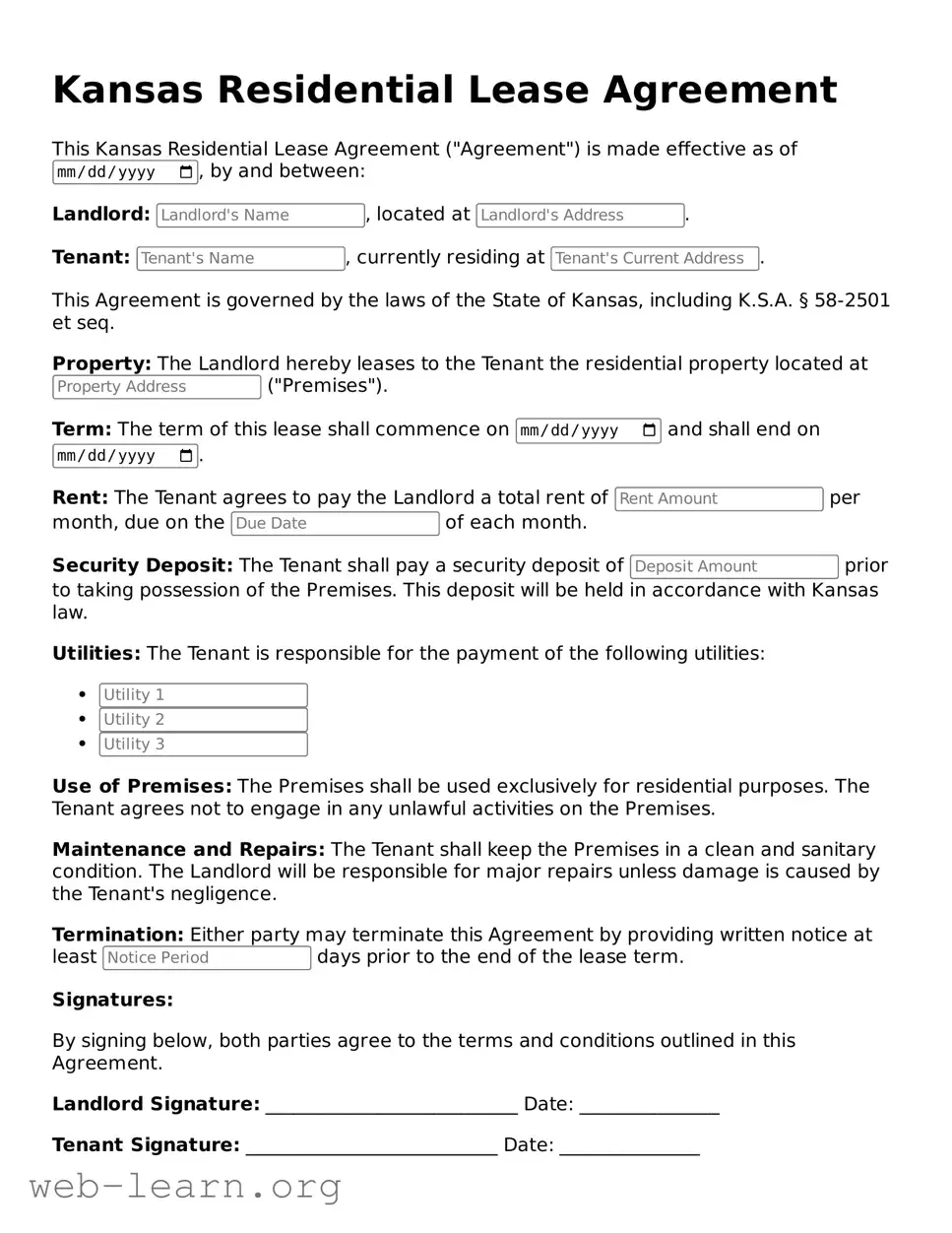
The Kansas Residential Lease Agreement form serves as a crucial document in the landlord-tenant relationship, outlining the rights and responsibilities of both parties involved in a rental arrangement. This form typically includes essential details such as the names of the landlord and tenant, the rental property's address, and the duration of the lease. It specifies the monthly rent amount, payment due dates, and acceptable methods of payment. Additionally, the agreement covers security deposits, outlining the amount required and the conditions under which it may be withheld upon lease termination. Important clauses related to maintenance responsibilities, rules regarding pets, and the process for resolving disputes are also included. By providing a clear framework, the Kansas Residential Lease Agreement helps to minimize misunderstandings and legal disputes, ensuring that both landlords and tenants have a mutual understanding of their obligations and expectations throughout the lease term.
Kansas Residential Lease Agreement
This Kansas Residential Lease Agreement ("Agreement") is made effective as of , by and between:
Landlord: , located at .
Tenant: , currently residing at .
This Agreement is governed by the laws of the State of Kansas, including K.S.A. § 58-2501 et seq.
Property: The Landlord hereby leases to the Tenant the residential property located at ("Premises").
Term: The term of this lease shall commence on and shall end on .
Rent: The Tenant agrees to pay the Landlord a total rent of per month, due on the of each month.
Security Deposit: The Tenant shall pay a security deposit of prior to taking possession of the Premises. This deposit will be held in accordance with Kansas law.
Utilities: The Tenant is responsible for the payment of the following utilities:
Use of Premises: The Premises shall be used exclusively for residential purposes. The Tenant agrees not to engage in any unlawful activities on the Premises.
Maintenance and Repairs: The Tenant shall keep the Premises in a clean and sanitary condition. The Landlord will be responsible for major repairs unless damage is caused by the Tenant's negligence.
Termination: Either party may terminate this Agreement by providing written notice at least days prior to the end of the lease term.
Signatures:
By signing below, both parties agree to the terms and conditions outlined in this Agreement.
Landlord Signature: ___________________________ Date: _______________
Tenant Signature: ___________________________ Date: _______________
| Fact Name | Description |
|---|---|
| Governing Law | The Kansas Residential Lease Agreement is governed by the Kansas Statutes Annotated, specifically K.S.A. 58-2540 et seq. |
| Parties Involved | The agreement is made between the landlord and the tenant, both of whom must be clearly identified in the document. |
| Lease Duration | The lease can be for a fixed term or month-to-month, depending on the agreement between the parties. |
| Security Deposit | Kansas law limits the security deposit to one month's rent for leases of one year or less. |
| Maintenance Responsibilities | The lease should specify maintenance responsibilities, outlining what the landlord and tenant are responsible for during the lease term. |
| Termination Notice | For month-to-month leases, either party must provide at least 30 days' notice to terminate the agreement. |
Completing the Kansas Residential Lease Agreement form is a critical step in establishing a rental arrangement. It is essential to ensure that all information is accurate and complete. Follow these steps carefully to fill out the form correctly.
After completing the form, it is advisable to keep a copy for your records. Ensure all parties receive a signed copy for their files as well. This will help prevent misunderstandings in the future.
What is a Kansas Residential Lease Agreement?
A Kansas Residential Lease Agreement is a legal document that outlines the terms and conditions under which a landlord rents property to a tenant. This agreement typically includes details such as the rental amount, duration of the lease, responsibilities of both parties, and rules regarding the property.
Who needs to sign the lease?
Both the landlord and the tenant must sign the lease for it to be legally binding. If there are multiple tenants, all adult tenants should also sign the agreement. This ensures that everyone is aware of their responsibilities and obligations under the lease.
How long does a typical lease last?
The duration of a lease can vary. Most residential leases in Kansas are for a term of one year, but they can also be month-to-month or for a shorter or longer period, depending on what the landlord and tenant agree upon. It is important to specify the lease term in the agreement.
What happens if the lease is broken?
If either party breaks the lease, there may be legal consequences. The landlord may have the right to retain the security deposit or seek damages. Similarly, the tenant could be responsible for rent until a new tenant is found. Each situation is unique, so it is advisable to review the lease for specific terms regarding early termination.
What is a security deposit?
A security deposit is a sum of money paid by the tenant to the landlord at the beginning of the lease. This deposit serves as protection for the landlord against potential damages or unpaid rent. In Kansas, the maximum amount for a security deposit is generally equal to one month's rent, unless otherwise specified in the lease.
Are there any specific disclosures required in Kansas?
Yes, landlords in Kansas are required to provide certain disclosures to tenants. For example, landlords must inform tenants if the property has been subject to flooding, has lead-based paint, or has any known health hazards. It is important for landlords to comply with these requirements to avoid legal issues.
Can a landlord increase rent during the lease term?
Generally, a landlord cannot increase rent during the term of a fixed lease unless the lease specifically allows for it. For month-to-month leases, landlords must provide proper notice, usually 30 days, before increasing the rent. The terms regarding rent increases should be clearly outlined in the lease agreement.
What are the tenant's maintenance responsibilities?
Tenants are typically responsible for keeping the property clean and in good condition. This may include minor repairs, yard maintenance, and reporting any significant issues to the landlord promptly. The lease should specify the extent of the tenant's responsibilities regarding maintenance.
What should I do if I have a dispute with my landlord?
If a dispute arises, the first step is to communicate directly with the landlord to attempt to resolve the issue amicably. If this does not work, tenants may seek mediation or legal advice. It is important to document all communications and attempts to resolve the issue for future reference.
Can I have pets in the rental property?
Whether pets are allowed in a rental property depends on the terms of the lease agreement. Some landlords may allow pets with an additional pet deposit or fee, while others may have a strict no-pet policy. Always check the lease for specific pet policies before bringing a pet into the property.
Filling out the Kansas Residential Lease Agreement form can be a straightforward process, but many individuals make common mistakes that can lead to complications later on. One frequent error is neglecting to include all required personal information. Tenants and landlords must provide their full names, addresses, and contact information. Omitting any of these details can create confusion and may result in delays in the leasing process.
Another common mistake is failing to specify the lease term clearly. The lease should outline the start and end dates of the tenancy. If these dates are not clearly stated, misunderstandings about the duration of the lease may arise, leading to potential disputes between the landlord and tenant.
People often overlook the importance of detailing the rental amount and payment schedule. It is essential to specify the monthly rent, the due date, and acceptable payment methods. Without this information, tenants may miss payments, and landlords may face difficulties in enforcing payment terms.
Additionally, many individuals forget to include information about security deposits. The lease should state the amount of the security deposit, the conditions under which it may be withheld, and the timeline for its return. Failing to address this can lead to disagreements at the end of the lease term.
Another mistake involves neglecting to outline maintenance responsibilities. The lease should clearly define who is responsible for repairs and maintenance tasks. If these responsibilities are not explicitly stated, disputes may arise regarding who should handle issues such as plumbing or electrical problems.
Some individuals make the error of not reviewing the pet policy. If a landlord allows pets, the lease should specify any restrictions, such as breed or size limitations. Conversely, if pets are not allowed, this should be clearly stated to avoid any misunderstandings.
People sometimes forget to include provisions for early termination of the lease. It is important to outline the conditions under which either party can terminate the lease early. This section can protect both the landlord and tenant from potential legal complications.
Lastly, many individuals fail to read the entire lease agreement thoroughly before signing. It is crucial to understand all terms and conditions outlined in the document. Not doing so can lead to unintentional agreements to unfavorable terms.
The Kansas Residential Lease Agreement is a key document for landlords and tenants, outlining the terms and conditions of renting a property. However, several other forms and documents are commonly used alongside it to ensure a smooth rental process. Below is a list of these essential documents.
Utilizing these forms and documents alongside the Kansas Residential Lease Agreement can help ensure clarity and protect the rights of both landlords and tenants throughout the rental process.
When filling out the Kansas Residential Lease Agreement form, it's essential to approach the task with care and attention to detail. Below are ten important things to consider, divided into two lists: things you should do and things you should avoid.
Things You Should Do:
Things You Shouldn't Do:
Taking these steps will help ensure a smooth leasing process and foster a positive relationship between landlords and tenants.
When it comes to the Kansas Residential Lease Agreement form, several misconceptions can lead to confusion for both landlords and tenants. Understanding these common misunderstandings is essential for anyone entering into a rental agreement in Kansas.
By addressing these misconceptions, both landlords and tenants can navigate the leasing process with greater confidence and clarity. Knowledge of the Kansas Residential Lease Agreement form will ultimately foster a more positive rental experience for all parties involved.
When navigating the Kansas Residential Lease Agreement form, several important points should be kept in mind. Understanding these key aspects can lead to a smoother leasing experience for both landlords and tenants.
By keeping these key takeaways in mind, individuals can better navigate the complexities of the Kansas Residential Lease Agreement form, leading to a more successful rental experience.