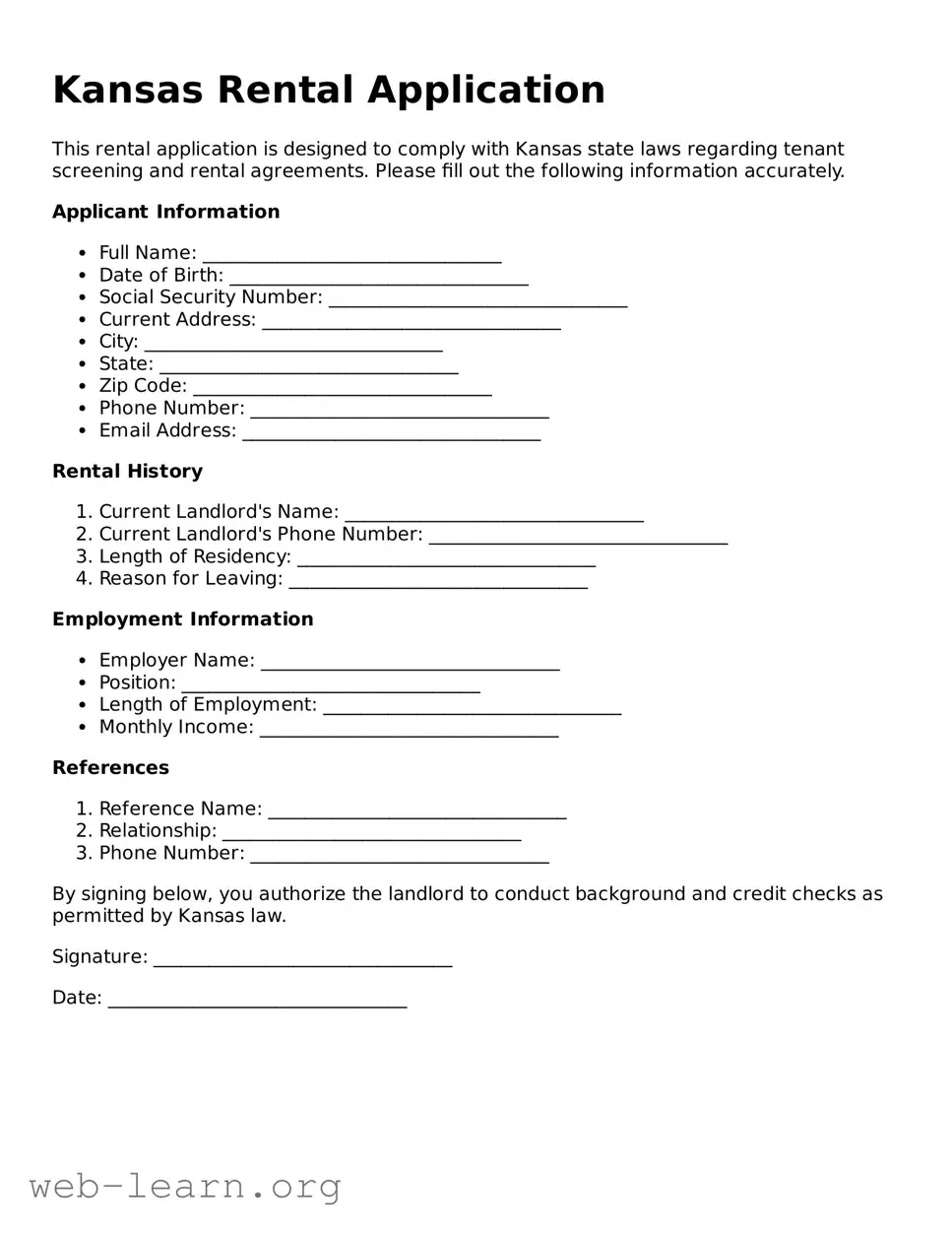
When seeking a rental property in Kansas, potential tenants often encounter a crucial document known as the rental application form. This form serves as a gateway for landlords to assess the suitability of applicants. Typically, it requires essential personal information, such as the applicant's name, contact details, and social security number. Additionally, it may ask for employment history, income verification, and references from previous landlords. This information helps landlords gauge an applicant's ability to pay rent consistently and maintain a positive rental history. In some cases, applicants may also need to disclose any criminal history or prior evictions, which can significantly impact their chances of securing a lease. Understanding the components of this form is vital for both tenants and landlords, as it lays the foundation for a successful rental relationship.
Kansas Rental Application
This rental application is designed to comply with Kansas state laws regarding tenant screening and rental agreements. Please fill out the following information accurately.
Applicant Information
Rental History
Employment Information
References
By signing below, you authorize the landlord to conduct background and credit checks as permitted by Kansas law.
Signature: ________________________________
Date: ________________________________
| Fact Name | Description |
|---|---|
| Purpose | The Kansas Rental Application form is used by landlords to screen potential tenants before signing a lease agreement. |
| Governing Law | This form is governed by the Kansas Residential Landlord and Tenant Act. |
| Information Required | Applicants typically need to provide personal information, including their name, contact details, and rental history. |
| Credit Check | Landlords often require permission to conduct a credit check as part of the application process. |
| Application Fee | Some landlords may charge a non-refundable application fee to cover the cost of background checks. |
| Discrimination Laws | Landlords must comply with federal and state fair housing laws when evaluating rental applications. |
| Processing Time | The processing time for a rental application can vary, but it generally takes a few days to a week. |
| Approval Notification | Landlords are typically required to notify applicants of their approval or denial within a reasonable time frame. |
| Right to Appeal | If denied, applicants may have the right to request the reasons for the denial and appeal the decision. |
| Signature Requirement | Applicants must sign the rental application to confirm that the information provided is accurate and complete. |
Completing the Kansas Rental Application form is an essential step in securing a rental property. After filling out the form, the landlord or property manager will review the information provided to assess your eligibility as a tenant. Ensure that all details are accurate and complete to facilitate a smooth application process.
The Kansas Rental Application form is a document used by landlords and property managers to gather essential information from prospective tenants. This form typically includes details about the applicant's employment, income, rental history, and personal references. The goal is to assess the applicant's suitability for renting a property.
When filling out the Kansas Rental Application, you will generally need to provide:
Many landlords or property management companies charge a fee for processing rental applications. This fee typically covers the cost of background checks and credit reports. The amount can vary, so it’s important to ask about any application fees upfront before submitting your form.
The duration of the application process can vary widely. Generally, landlords aim to process applications within a few days. However, it may take longer if they need to verify information or if there are multiple applications to review. It’s a good idea to follow up with the landlord or property manager if you haven’t heard back within a reasonable time frame.
Yes, a rental application can be denied for various reasons. Common factors include poor credit history, insufficient income, or negative rental history. Landlords are required to follow fair housing laws, so they must provide a valid reason for any denial. If your application is denied, you have the right to ask for the reason behind the decision.
Filling out a rental application can be a straightforward process, but there are common mistakes that applicants often make. These errors can lead to delays or even disqualification from consideration. Understanding these pitfalls can help ensure a smoother application experience.
One frequent mistake is providing inaccurate personal information. Applicants sometimes misstate their current address or contact number. This can create confusion and hinder communication between the landlord and the applicant. It is crucial to double-check all details to ensure they are correct and up-to-date.
Another common error is failing to disclose all sources of income. Many applicants only list their primary job and overlook side jobs or other income streams. Landlords typically want a complete picture of an applicant's financial situation. Omitting this information can raise red flags and affect the application’s credibility.
Some individuals neglect to include references or provide outdated contact information for them. References can play a significant role in the approval process. If the landlord cannot reach the references provided, it may lead to doubts about the applicant's reliability or character.
Inadequate documentation is another issue. Many rental applications require supporting documents, such as pay stubs or bank statements. Failing to attach these documents can result in delays or the application being deemed incomplete. It is advisable to gather all necessary paperwork before submitting the application.
Another mistake is not reading the application thoroughly before submission. Applicants might overlook important sections or specific requirements outlined in the form. Taking the time to read through the entire application can prevent misunderstandings and ensure that all necessary information is included.
Some applicants also underestimate the importance of honesty. Providing false information, even if intended to improve chances of approval, can lead to serious consequences. Landlords often conduct background checks and verify information, so honesty is always the best policy.
Additionally, applicants sometimes fail to follow up after submitting their application. A lack of communication can leave landlords unsure about the applicant’s interest. A simple follow-up can demonstrate enthusiasm and may positively influence the landlord's decision.
Lastly, neglecting to check for errors in spelling or grammar can reflect poorly on the applicant. A well-prepared application shows attention to detail and professionalism. Taking a moment to review the application for any mistakes can enhance its overall presentation.
When applying for a rental property in Kansas, several additional forms and documents may be required alongside the Kansas Rental Application form. These documents help landlords assess potential tenants and ensure a smooth leasing process. Below is a list of commonly used forms that complement the rental application.
Having these documents ready can facilitate the application process and improve the chances of securing a rental property. Each form serves a specific purpose in evaluating the suitability of an applicant, making them essential for both landlords and tenants.
The Rental Application form serves as a crucial document in the process of securing a rental property. It collects essential information from potential tenants, helping landlords make informed decisions. Several other documents share similarities with the Rental Application form, each serving a unique purpose in the realm of real estate and tenant screening. Below are six such documents:
When filling out the Kansas Rental Application form, it's important to be thorough and accurate. Here’s a list of things you should and shouldn't do:
Understanding the Kansas Rental Application form is crucial for both landlords and tenants. However, several misconceptions can lead to confusion and misinterpretation. Below are six common misconceptions about the form, along with explanations to clarify each point.
Many believe that landlords can choose whether or not to use a rental application. In reality, while it is not legally required, using a rental application is a common practice that helps landlords screen potential tenants effectively.
Some assume that all rental applications follow a standard format. However, each landlord or property management company may have its own version, tailored to their specific needs and requirements.
There is a belief that tenants can withhold personal information on the application. In fact, landlords require specific details to conduct background checks and verify the applicant's rental history.
Some tenants think that filling out the application guarantees they will be approved for the rental. However, approval depends on various factors, including credit history, income verification, and landlord references.
There is a misconception that landlords cannot charge application fees. In Kansas, landlords can charge a fee to cover the cost of processing the application, but they must disclose this fee upfront.
Some individuals believe that rental applications are only necessary for long-term leases. In truth, they can also be used for short-term rentals, ensuring that landlords have a complete understanding of potential tenants.
By addressing these misconceptions, both landlords and tenants can navigate the rental process more effectively and with greater understanding.
Filling out a rental application in Kansas is an important step in securing a place to live. Here are some key takeaways to keep in mind: