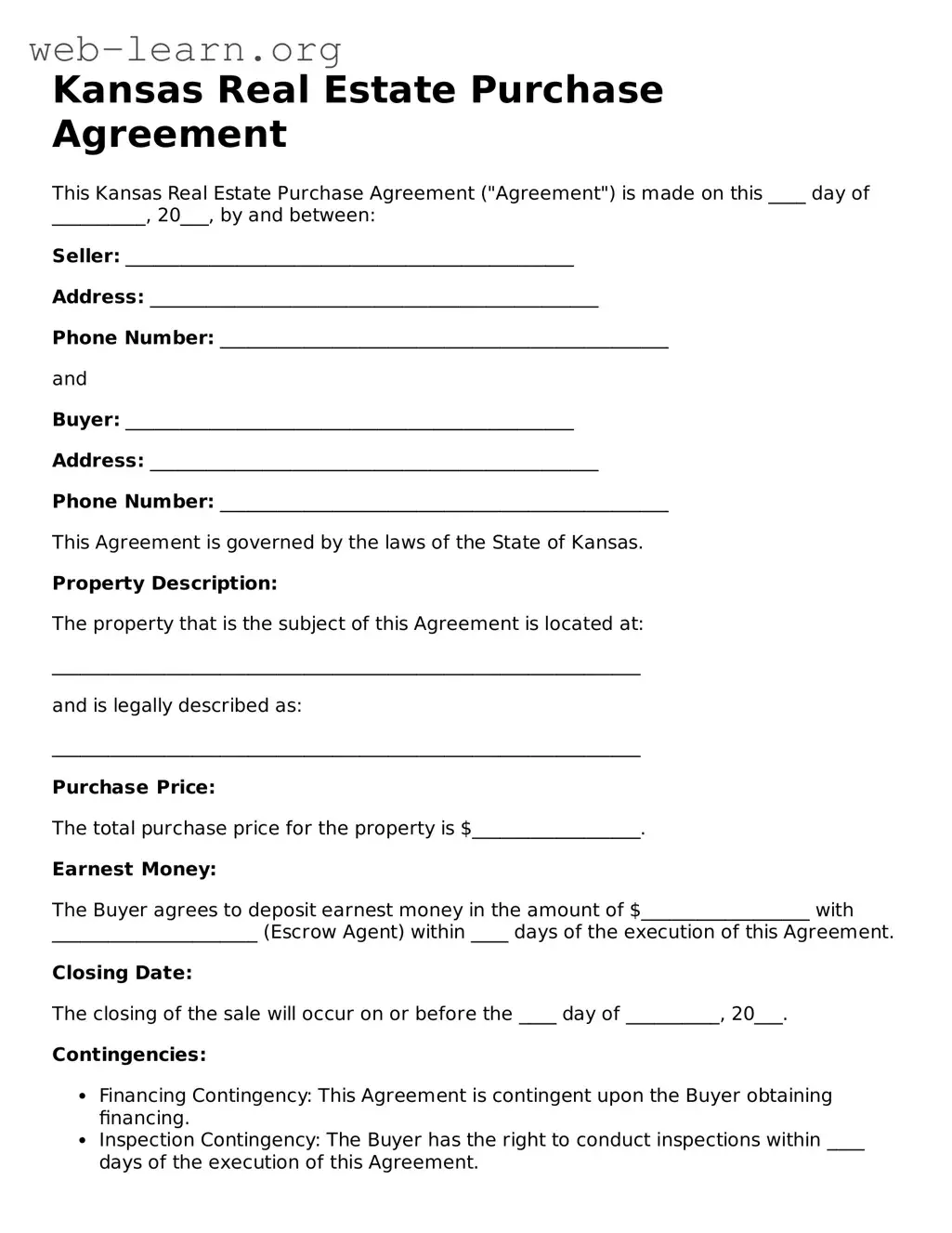
The Kansas Real Estate Purchase Agreement is a crucial document in the home-buying process, serving as a binding contract between the buyer and the seller. This form outlines the essential terms of the transaction, including the purchase price, financing details, and the property description. It also addresses contingencies, such as inspections and appraisals, which protect both parties during the sale. The agreement specifies the closing date, ensuring a timeline for the transfer of ownership, and it includes provisions for earnest money, demonstrating the buyer's commitment to the purchase. Additionally, the form may cover disclosures related to property conditions and any applicable warranties. Understanding the components of this agreement is vital for anyone involved in a real estate transaction in Kansas, as it sets the foundation for a smooth and legally sound transfer of property.
Kansas Real Estate Purchase Agreement
This Kansas Real Estate Purchase Agreement ("Agreement") is made on this ____ day of __________, 20___, by and between:
Seller: ________________________________________________
Address: ________________________________________________
Phone Number: ________________________________________________
and
Buyer: ________________________________________________
Address: ________________________________________________
Phone Number: ________________________________________________
This Agreement is governed by the laws of the State of Kansas.
Property Description:
The property that is the subject of this Agreement is located at:
_______________________________________________________________
and is legally described as:
_______________________________________________________________
Purchase Price:
The total purchase price for the property is $__________________.
Earnest Money:
The Buyer agrees to deposit earnest money in the amount of $__________________ with ______________________ (Escrow Agent) within ____ days of the execution of this Agreement.
Closing Date:
The closing of the sale will occur on or before the ____ day of __________, 20___.
Contingencies:
Additional Terms:
_______________________________________________________________
_______________________________________________________________
Signatures:
By signing below, both parties agree to the terms outlined in this Agreement.
Seller Signature: ___________________________ Date: __________
Buyer Signature: ___________________________ Date: __________
| Fact Name | Details |
|---|---|
| Governing Law | The Kansas Real Estate Purchase Agreement is governed by the laws of the State of Kansas. |
| Purpose | This form outlines the terms and conditions for the sale of real estate in Kansas. |
| Parties Involved | The agreement typically includes the buyer and the seller, each identified by name and address. |
| Property Description | A detailed description of the property being sold is required, including the address and legal description. |
| Purchase Price | The total purchase price must be clearly stated, along with any earnest money deposit. |
| Contingencies | Common contingencies may include financing, inspections, and appraisal conditions. |
| Closing Date | The agreement specifies a closing date, which is when the property transfer occurs. |
| Disclosures | Sellers are often required to disclose any known defects or issues with the property. |
| Signatures | Both parties must sign the agreement for it to be legally binding. |
| Amendments | Any changes to the agreement must be made in writing and signed by both parties. |
Filling out the Kansas Real Estate Purchase Agreement form is an important step in the process of buying or selling property. After completing the form, the next steps will involve reviewing the agreement with all parties involved and preparing for any necessary negotiations.
What is a Kansas Real Estate Purchase Agreement?
The Kansas Real Estate Purchase Agreement is a legal document used when buying or selling real estate in Kansas. This agreement outlines the terms and conditions of the sale, including the purchase price, financing details, and any contingencies that must be met before the sale is finalized.
Who needs to use this agreement?
Both buyers and sellers of real estate in Kansas should use this agreement. It protects the interests of both parties by clearly defining the terms of the transaction. Whether you are a first-time homebuyer or an experienced investor, having a formal agreement is crucial for a smooth transaction.
What key elements are included in the agreement?
The Kansas Real Estate Purchase Agreement typically includes the following key elements:
What are contingencies, and why are they important?
Contingencies are conditions that must be met for the sale to proceed. Common contingencies include home inspections, appraisal results, and securing financing. They are important because they protect the buyer’s investment and provide an opportunity to back out of the agreement if certain conditions aren’t met.
How is the purchase price determined?
The purchase price is typically negotiated between the buyer and seller. Factors influencing the price include the property’s market value, condition, location, and comparable sales in the area. A real estate agent can provide valuable insights to help both parties arrive at a fair price.
Can the agreement be modified after it is signed?
Yes, the agreement can be modified after it is signed, but both parties must agree to any changes. It’s essential to document any modifications in writing to avoid misunderstandings later on. Communication is key to ensuring that all parties are on the same page.
What happens if one party breaches the agreement?
If one party fails to fulfill their obligations as outlined in the agreement, it is considered a breach. The non-breaching party may have several options, including seeking damages, enforcing the agreement, or negotiating a resolution. Legal advice may be necessary to navigate these situations effectively.
Is it necessary to have a lawyer review the agreement?
While it’s not legally required to have a lawyer review the Kansas Real Estate Purchase Agreement, it is highly recommended. A legal professional can ensure that the agreement complies with state laws and adequately protects your interests. Their expertise can be invaluable, especially in complex transactions.
Where can I find a Kansas Real Estate Purchase Agreement form?
You can find a Kansas Real Estate Purchase Agreement form through various sources, including real estate websites, legal form providers, and local real estate offices. Ensure that the form you choose is up-to-date and complies with Kansas state laws.
When filling out the Kansas Real Estate Purchase Agreement form, many people overlook crucial details that can lead to complications later. One common mistake is failing to accurately complete the property description. The property address should be clear and precise. Omitting details like the lot number or legal description can create confusion and potentially invalidate the agreement.
Another frequent error is neglecting to specify the purchase price clearly. It’s essential to state the total amount being offered for the property. Leaving this section blank or writing it ambiguously can lead to misunderstandings between the buyer and seller. Always double-check that the numbers are correct and clearly written.
Additionally, many individuals forget to include contingencies. These are conditions that must be met for the sale to proceed. Common contingencies include financing, inspections, or the sale of the buyer's current home. Not outlining these can leave buyers vulnerable if something goes wrong.
Lastly, signatures and dates are often overlooked. Both parties must sign the agreement for it to be legally binding. Missing a signature or date can render the document ineffective. Take a moment to ensure that all necessary signatures are present and that the dates are correctly filled in.
The Kansas Real Estate Purchase Agreement is a crucial document in the process of buying or selling property. However, several other forms and documents often accompany it to ensure a smooth transaction. Below are five important documents that you may encounter during this process.
Each of these documents plays a vital role in the real estate transaction process. Understanding them will help you navigate your purchase or sale with greater confidence and clarity.
The Real Estate Purchase Agreement (REPA) is a key document in real estate transactions. It shares similarities with several other documents. Below is a list of eight documents that are comparable to the REPA, along with explanations of their similarities.
When filling out the Kansas Real Estate Purchase Agreement form, it's crucial to be thorough and accurate. Here are some important dos and don’ts to keep in mind:
By following these guidelines, you can help ensure a smoother transaction and reduce the likelihood of complications down the road.
Misconception 1: The Kansas Real Estate Purchase Agreement is only for residential properties.
This form is versatile. It can be used for both residential and commercial real estate transactions. Buyers and sellers of various property types can utilize this agreement to outline the terms of their deal.
Misconception 2: The agreement is a legally binding contract as soon as it is signed.
While signing the agreement indicates intent to proceed, it does not become legally binding until all parties have agreed to the terms and any necessary contingencies have been satisfied. Understanding this timing is crucial for both buyers and sellers.
Misconception 3: The form is the same for every transaction.
The Kansas Real Estate Purchase Agreement is customizable. Parties can modify terms to suit their specific needs. Each transaction may require different provisions, so it’s important to tailor the agreement accordingly.
Misconception 4: Using the form means you don’t need legal advice.
While the form provides a solid foundation, it’s wise to consult with a real estate attorney. They can help ensure that your rights are protected and that you understand all the implications of the agreement.
When filling out and using the Kansas Real Estate Purchase Agreement form, there are several important points to keep in mind. These takeaways can help ensure that the process goes smoothly and that all parties are protected.
By keeping these key points in mind, you can navigate the Kansas Real Estate Purchase Agreement with greater confidence and clarity.
For Sale by Owner Contract Arkansas - Specifies the consequences of misrepresentation by either party.
Real-estate Sale Contract - Both parties must sign the agreement for it to be enforceable under the law.
Connecticut Housing Sales Contract - Real Estate Purchase Agreements are essential for documenting the sale process.
Oregon Real Estate Purchase Agreement - The agreement may include a clause regarding the seller’s right to accept other offers until signed.