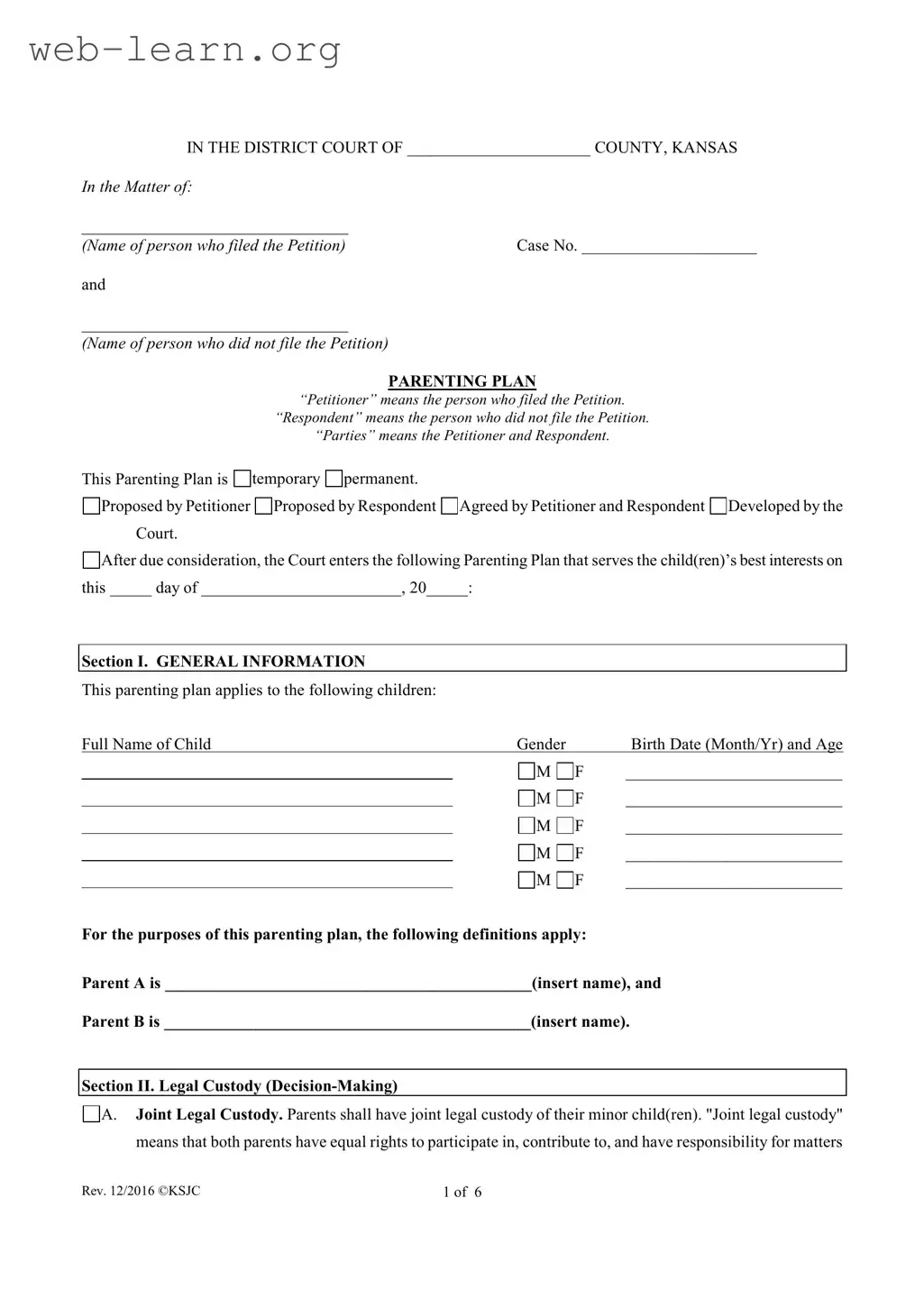
Creating a Kansas Parenting Plan is an essential step for parents navigating the complexities of co-parenting after a separation or divorce. This form outlines important details regarding the care and upbringing of children involved in the case. It includes sections for general information about the children, legal custody arrangements, and a parenting time schedule that specifies when each parent will spend time with their children. The plan can establish joint or sole legal custody, ensuring that both parents understand their rights and responsibilities. Additionally, it addresses how disputes will be resolved, particularly through mediation, and provides guidelines for communication during a parent's military deployment. The plan also requires parents to notify each other of any address changes or plans to remove children from the state, ensuring transparency and cooperation. By filling out this form, parents can create a structured framework that prioritizes the best interests of their children while fostering a cooperative parenting relationship.

IN THE DISTRICT COURT OF ______________________ COUNTY, KANSAS
In the Matter of: |
|
|
________________________________ |
|
|
(Name of person who filed the Petition) |
Case No. _____________________ |
|
and |
|
|
________________________________ |
|
|
(Name of person who did not file the Petition) |
|
|
|
PARENTING PLAN |
|
|
“Petitioner” means the person who filed the Petition. |
|
|
“Respondent” means the person who did not file the Petition. |
|
|
“Parties” means the Petitioner and Respondent. |
|
This Parenting Plan is |
temporary permanent. |
|
Proposed by Petitioner |
Proposed by Respondent |
Agreed by Petitioner and Respondent Developed by the |
Court. |
|
|
After due consideration, the Court enters the following Parenting Plan that serves the child(ren)’s best interests on
this _____ day of ________________________, 20_____: |
|
|
|
|
||
|
|
|
|
|
|
|
Section I. GENERAL INFORMATION |
|
|
|
|
||
This parenting plan applies to the following children: |
|
|
|
|
||
Full Name of Child |
Gender |
|
Birth Date (Month/Yr) and Age |
|||
|
|
|
M |
F |
__________________________ |
|
|
|
|
M |
F |
__________________________ |
|
|
|
|
M |
F |
__________________________ |
|
|
|
|
M |
F |
__________________________ |
|
|
|
|
M |
F |
__________________________ |
|
For the purposes of this parenting plan, the following definitions apply:
Parent A is ____________________________________________(insert name), and
Parent B is ____________________________________________(insert name).
Section II. Legal Custody
A. Joint Legal Custody. Parents shall have joint legal custody of their minor child(ren). "Joint legal custody" means that both parents have equal rights to participate in, contribute to, and have responsibility for matters
Rev. 12/2016 ©KSJC |
1 of 6 |

of health and education in their child(ren)'s best interests. Neither parent's rights are superior to the other parent's rights, and they should cooperate to determine what is in their children’s best interests.
B. Sole Legal Custody. Joint legal custody is not in the child(ren)’s best interests. “Sole legal custody” means that the parent granted sole legal custody has the primary right to decide matters of health and education in the child(ren)'s best interests. The parent not granted sole legal custody may make emergency decisions affecting the child(ren)’s health or safety when the child(ren) are in that parent's physical care and control. The grant of sole legal custody to one parent does not deprive the other parent of access to information
regarding the child(ren) unless the court specifically orders, stating the reasons for that determination.
1. Sole legal custody is granted to |
Parent A |
Parent B for the following reasons: |
|
|
|||||
|
a. |
Agreement of the parents. |
|
|
|
|
|
||
|
b. |
The other parent is unable or should not be allowed to exercise |
|||||||
|
_______________________________________________________________________________. |
||||||||
|
c. |
There is a danger to the child(ren) because:_____________________________________ |
|||||||
|
______________________________________________________________________________. |
||||||||
|
d. |
Other: __________________________________________________________________ |
|||||||
|
________________________________________________________________________________. |
||||||||
2. |
Restriction of Information Regarding the Child(ren) to Non Legal Custodian. |
|
|
||||||
|
The |
Parent A Parent B is restrained from accessing the child(ren)’s health, educational and |
|||||||
other |
personal |
information |
because |
of |
the |
following |
specific |
reasons |
|
:_____________________________________ |
|
|
|
|
|
||||
_____________________________________________________________________________________.
Section III. Parenting Time Schedule.
Parent A shall have parenting time beginning at ________am pm ending at ______am pm as follows:
Parent A’s Weekday Schedule:
___________________________________________________________________________________________
___________________________________________________________________________________________
Parent A’s Weekend Schedule:
___________________________________________________________________________________________
____________________________________________________________________________________________
Parent A’s Other Times:
___________________________________________________________________________________________
____________________________________________________________________________________________
Parent B shall have parenting time beginning at ________am pm ending at ______am pm as follows:
Parent B’s Weekday Schedule:
___________________________________________________________________________________________
Rev. 12/2016 ©KSJC |
2 of 6 |
____________________________________________________________________________________________
Parent B’s Weekend Schedule:
___________________________________________________________________________________________
____________________________________________________________________________________________
Parent B’s Other Times:
___________________________________________________________________________________________
____________________________________________________________________________________________
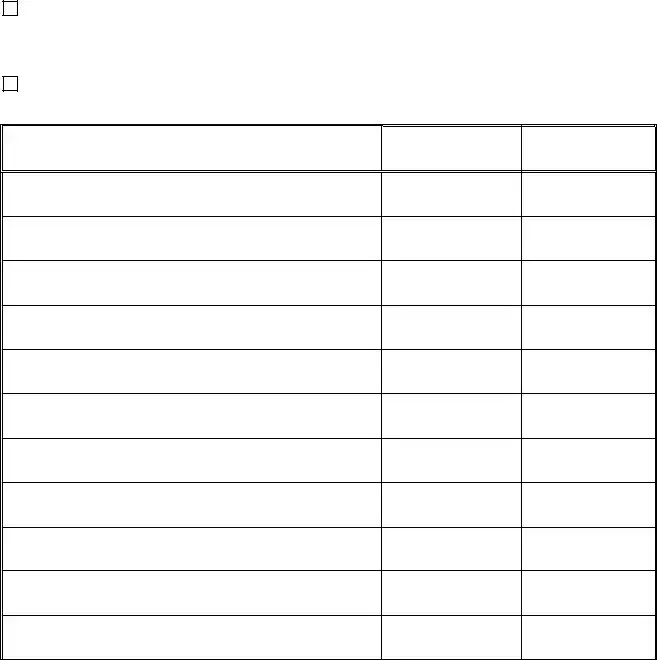
The holiday schedule as set out in the ______________________ (name county) Family Law Guidelines controls
holiday parenting time.
or
The holiday schedule is as follows:
HOLIDAY PARENTING SCHEDULE
Parent A
Even/Odd/Every
Parent B
Even/Odd/Every
New Year's Day: From ___________(day) at ______ (time)
until ________________(day) at ______ (time)
Spring Break: From ___________(day) at ______ (time) until
________________(day) at ______ (time)
Spring Break: From ___________(day) at ______ (time) until
________________(day) at ______ (time)
Memorial Day/weekend: From ___________(day) at
______ (time) until ________________(day) at ______ (time)
Mother’s Day: From ___________(day) at ______ (time) until
________________(day) at ______ (time)
Father’s Day/Weekend: From ___________(day) at
______ (time) until ________________(day) at ______ (time)
Independence Day: From ___________(day) at ______ (time)
until ________________(day) at ______ (time)
Labor Day/weekend: From ___________(day) at ______
(time) until ________________(day) at ______ (time)
Halloween: From ___________(day) at ______ (time) until
________________(day) at ______ (time)
Thanksgiving Day/weekend: From ___________(day) at
______ (time) until ________________(day) at ______ (time)
Winter Break: From ___________(day) at ______ (time) until
________________(day) at ______ (time)
Rev. 12/2016 ©KSJC |
3 of 6 |
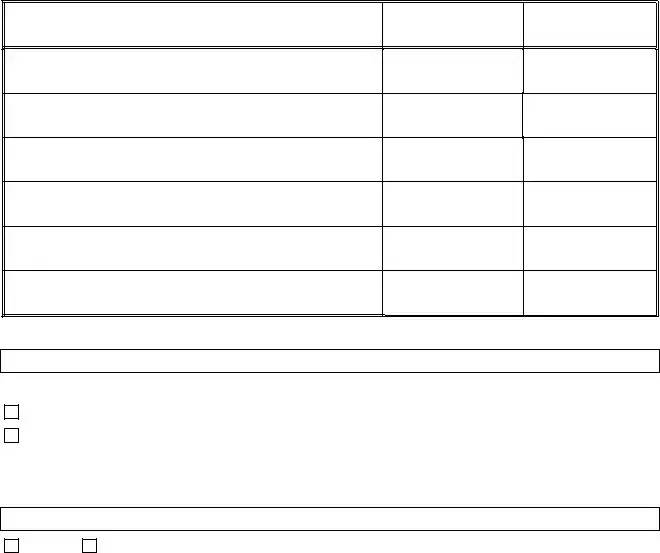
HOLIDAY PARENTING SCHEDULE
Parent A
Even/Odd/Every
Parent B
Even/Odd/Every
Winter Break: From ___________(day) at ______ (time) until
________________(day) at ______ (time)
Other: From ___________(day) at ______ (time) until
________________(day) at ______ (time)
Other: From ___________(day) at ______ (time) until
________________(day) at ______ (time)
Other: From ___________(day) at ______ (time) until
________________(day) at ______ (time)
Other: From ___________(day) at ______ (time) until
________________(day) at ______ (time)
Other: From ___________(day) at ______ (time) until
________________(day) at ______ (time)
Section IV. Dispute Resolution Process
Disputes between the parents, other than about child support, shall be submitted to:
Mediation by:______________________________________________________________(name of mediator)
The following dispute resolution method: _______________________________________________________.
Section V. Military Deployment, Mobilization, or Unaccompanied Tour
Parent A |
Parent B is a military servicemember and the following shall apply upon notice of deployment, |
mobilization, temporary duty, or unaccompanied tour:
1.A parent receiving deployment, mobilization, temporary duty or unaccompanied tour orders from the military shall be considered a “deployed parent.”
2.The absence, relocation or failure to comply with a parenting order by a “deployed parent,” shall not by itself constitute a material change in circumstances to make any permanent change to the parenting plan.
3.Any court order limiting previously ordered parenting rights due to the parent's deployment, mobilization, temporary duty, or unaccompanied tour shall state that event as its basis and shall constitute only a “temporary order.”
4.The nondeploying parent shall provide the court and deployed parent at least 30 days advance written notice of any change of address or telephone number.
5.The nondeploying parent shall reasonably accommodate the deployed parent’s leave schedule.
6.The nondeploying parent shall facilitate telephone and electronic communication between the children and the deployed parent.
Rev. 12/2016 ©KSJC |
4 of 6 |

7.The deployed parent shall provide the nondeployed parent with timely information about the deployed parent’s anticipated deployment, leave during deployment, and release from deployment.
8.During deployment, mobilization, temporary duty, or unaccompanied tour, the parents shall make decisions about the child(ren) by the following methods:
______________________________________________________
__________________________________________________________________________________________.
9.During deployment, mobilization, temporary duty, or unaccompanied tour, the child(ren) shall live with:
Parent A Parent B Other
___________________________________________________________and the deployed parent shall have the
following parenting time with the child when available: __________________
___________________________________________________________________________________________
___________________________________________________________________________________________
__________________________________________________________________________________________.
Section VI.
A. Each parent shall notify the other parent of any address change in writing no less than 30 days before changing address by sending written notice to the other parent by certified mail – restricted delivery, return receipt requested, at that other parent’s last known address.
B. Each parent shall notify the other parent of any plan to remove any child(ren) from the State of Kansas for more than 90 days by sending written notice to the other parent by certified mail – restricted delivery, return receipt requested, at that other parent’s last known address.
C. A parent is not required to give written notice of removal to the other parent under either (A) or (B) if the other parent has been convicted of a crime specified in Article 34 (crimes against persons), Article 35 (sex offenses), or Article 36 (crimes affecting family relationships and children) of Chapter 21 (Crimes and Punishments) of the Kansas Statutes Annotated to which the child(ren) was the victim.
Section VII. Other Requirements
Other requirements for this parenting plan: ______________________________________________________
_________________________________________________________________________________________
_________________________________________________________________________________________.
Section VIII. Signatures: Required if agreed upon by the parties.
Parent A |
Parent B |
Name: X____________________________________ |
Name: X______________________________________ |
(Signature) |
(Signature) |
Rev. 12/2016 ©KSJC |
5 of 6 |
Name: _____________________________________ |
Name: _______________________________________ |
(Printed) |
(Printed) |
Address: ___________________________________ |
Address: _____________________________________ |
___________________________________ |
_____________________________________ |
___________________________________ |
_____________________________________ |
Telephone: _________________________________ |
Telephone: ___________________________________ |
Date Signed: ________________________________ |
Date Signed: __________________________________ |
Attorney (if any): ____________________________ |
Attorney (if any): _______________________________ |
(Signature) |
(Signature) |
Attorney (if any): ____________________________ |
Attorney (if any): _______________________________ |
(Printed) |
(Printed) |
APPROVED THIS _____DAY OF ___________________, 20______.
______________________________________
DISTRICT JUDGE
Rev. 12/2016 ©KSJC |
6 of 6 |
| Fact Name | Description |
|---|---|
| Governing Law | The Kansas Parenting Plan form is governed by Kansas Statutes Annotated, Chapter 60, Article 16. |
| Purpose | This form outlines the custody and parenting time arrangements for children involved in a divorce or separation. |
| Legal Custody Types | Parents can choose between joint legal custody, where both parents share decision-making, or sole legal custody, where one parent has the primary decision-making authority. |
| Parenting Time Schedule | The form includes a section for detailing each parent's parenting time, specifying weekdays, weekends, and holidays. |
| Dispute Resolution | In case of disputes, the plan encourages mediation and outlines how parents can resolve disagreements outside of court. |
Completing the Kansas Parenting Plan form is essential for establishing a clear agreement on the care and custody of your children. Follow the steps below to ensure all necessary information is accurately filled out.
What is the purpose of the Kansas Parenting Plan form?
The Kansas Parenting Plan form is designed to outline the responsibilities and rights of each parent regarding the care and upbringing of their children. It serves as a framework for decision-making, parenting time, and communication between parents, ensuring that the children's best interests are prioritized.
Who should use the Kansas Parenting Plan form?
This form is intended for parents who are involved in a custody dispute or are seeking to establish a formal agreement regarding the care of their children. It is applicable to both parents, referred to as the Petitioner (the one who filed the petition) and the Respondent (the one who did not file the petition).
What information is required in the Parenting Plan?
The Parenting Plan requires general information about the children, including their names, genders, and birth dates. Additionally, it needs to specify the names of both parents, the type of legal custody arrangement (joint or sole), and a detailed parenting time schedule that outlines when each parent will spend time with the children.
What is the difference between joint and sole legal custody?
Joint legal custody means both parents share equal rights and responsibilities in making decisions about their children's health and education. Conversely, sole legal custody grants one parent the primary authority to make these decisions, while the other parent retains limited rights, typically for emergency situations. The court will determine which arrangement is in the best interests of the children.
How is parenting time scheduled?
The Parenting Plan includes a detailed schedule for parenting time, specifying when each parent will have the children. This includes weekday and weekend schedules, as well as holiday arrangements. Parents can agree on the schedule or the court may provide guidance based on local family law guidelines.
What happens if parents cannot agree on a parenting plan?
If parents cannot reach an agreement, they may be required to participate in mediation to resolve disputes. The Parenting Plan may also outline specific methods for dispute resolution, ensuring that disagreements are handled in a constructive manner.
What should parents do if one is a military servicemember?
Special provisions apply if one parent is a military servicemember. The Parenting Plan will address how deployment or mobilization affects custody arrangements, ensuring that the non-deployed parent accommodates the deployed parent's schedule and facilitates communication between the children and the deployed parent.
How can parents change the Parenting Plan?
Any changes to the Parenting Plan require written notice to the other parent at least 30 days in advance. This applies to address changes or plans to remove children from the state for more than 90 days. However, if there are concerns about safety due to a parent's criminal history, the notice requirement may not apply.
Filling out the Kansas Parenting Plan form can be a complex task, and many people make mistakes that can impact the outcome. One common error is incomplete information. Parents often forget to fill in all the required sections, such as the names and birth dates of their children. Missing this information can lead to delays in processing the plan or even require the court to ask for additional documentation later.
Another frequent mistake involves unclear custody arrangements. When parents select joint or sole legal custody, they must clearly explain their reasons. Some fail to provide sufficient detail, which can leave the court unsure about the best interests of the child. Clear and specific reasons help the court understand the situation better, making it easier to approve the plan.
Additionally, many parents overlook the importance of a detailed parenting time schedule. Vague terms like "as needed" or "flexible" do not provide a clear picture of when each parent will spend time with the child. A well-defined schedule helps avoid future disputes and ensures that both parents understand their responsibilities and rights.
Another mistake is not addressing dispute resolution methods. Parents often skip this section or select a method without understanding how it works. It’s crucial to choose a mediator or method that both parents agree on and feel comfortable with. This can prevent conflicts from escalating and provide a clear path for resolving issues.
Lastly, some parents fail to consider military deployment issues. If one parent is in the military, they must address how deployment will affect custody and parenting time. Not outlining these circumstances can lead to misunderstandings and legal complications later. Including specific provisions for communication and parenting during deployment is essential for maintaining a healthy relationship with the child.
The Kansas Parenting Plan form is a crucial document for parents navigating custody arrangements. However, several other forms and documents often accompany it to ensure a comprehensive approach to parenting and legal responsibilities. Below is a list of these essential documents.
Each of these documents plays a vital role in creating a clear and enforceable parenting plan. By understanding and utilizing them, parents can better navigate their responsibilities and ensure the well-being of their child(ren).
When filling out the Kansas Parenting Plan form, there are several important considerations to keep in mind. Below is a list of things you should and shouldn't do to ensure the process goes smoothly.
This form can be used by any parents who need to establish a parenting plan, whether they are married, divorced, or never married.
The plan is designed to be flexible. Parents can modify it if circumstances change and both parties agree.
Joint legal custody is common. This means both parents share decision-making responsibilities for their child’s health and education.
The plan explicitly states that it serves the child's best interests, guiding decisions about custody and parenting time.
While cooperation is encouraged, the court can develop a plan if parents cannot agree on specific terms.
It covers various aspects, including legal custody, decision-making, and dispute resolution processes, not just visitation.
The form is structured to be straightforward, allowing parents to fill in necessary information without excessive legal jargon.
When filling out and using the Kansas Parenting Plan form, it is essential to keep the following key takeaways in mind: