The Kansas Notice to Quit form serves as a crucial document in the landlord-tenant relationship, particularly when disputes arise over lease agreements. This form is typically utilized by landlords to formally notify tenants of their need to vacate the premises, often due to issues such as non-payment of rent or lease violations. It outlines essential information, including the specific reasons for the eviction, the timeframe within which the tenant must respond or vacate, and any applicable legal citations that support the landlord's position. The notice must be delivered in a manner that complies with state laws, ensuring that tenants receive adequate notice and an opportunity to address the issues at hand. Understanding the intricacies of this form is vital for both landlords and tenants, as it sets the stage for any subsequent legal proceedings and can significantly impact the outcome of an eviction process.
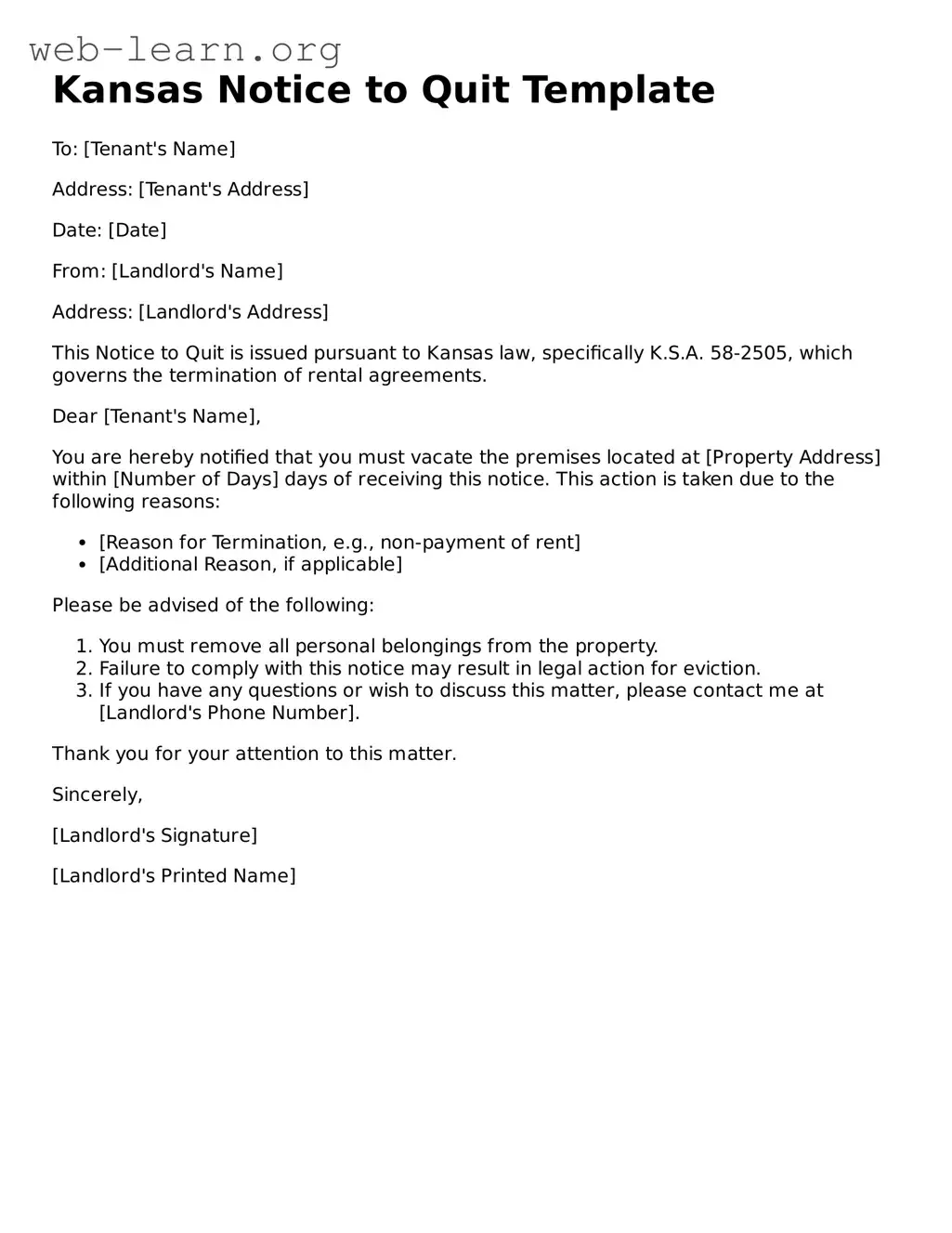
Kansas Notice to Quit Template
To: [Tenant's Name]
Address: [Tenant's Address]
Date: [Date]
From: [Landlord's Name]
Address: [Landlord's Address]
This Notice to Quit is issued pursuant to Kansas law, specifically K.S.A. 58-2505, which governs the termination of rental agreements.
Dear [Tenant's Name],
You are hereby notified that you must vacate the premises located at [Property Address] within [Number of Days] days of receiving this notice. This action is taken due to the following reasons:
Please be advised of the following:
Thank you for your attention to this matter.
Sincerely,
[Landlord's Signature]
[Landlord's Printed Name]
| Fact Name | Details |
|---|---|
| Purpose | The Kansas Notice to Quit form is used by landlords to inform tenants of the termination of their lease agreement. |
| Governing Law | This form is governed by Kansas Statutes Annotated, Chapter 58, Article 25, which outlines landlord-tenant relationships. |
| Delivery Method | The notice can be delivered in person, by mail, or through other means specified in the lease agreement. |
| Notice Period | Typically, landlords must provide a notice period of at least 30 days before the termination date, unless otherwise stated in the lease. |
| Tenant's Rights | Tenants have the right to contest the notice in court if they believe it is unjust or not in accordance with the lease terms. |
Filling out the Kansas Notice to Quit form is a crucial step in the process of terminating a tenancy. Once completed, this document will need to be served to the tenant, initiating the formal notice period required by law. Following these steps will ensure that you accurately fill out the form and comply with the necessary legal requirements.
After filling out the form, ensure that it is delivered to the tenant according to the legal requirements in Kansas. Proper service is essential for the notice to be valid and enforceable.
What is a Kansas Notice to Quit form?
The Kansas Notice to Quit form is a legal document used by landlords to formally notify tenants that they must vacate the rental property. This notice typically outlines the reason for eviction and provides a specific timeframe within which the tenant must leave. It is an important step in the eviction process and helps ensure that landlords follow the proper legal procedures.
When should a landlord use a Notice to Quit?
A landlord should use a Notice to Quit when a tenant has violated the lease agreement or when the landlord wishes to terminate the tenancy for other reasons. Common scenarios include non-payment of rent, lease violations, or the expiration of a lease term. It's crucial to provide this notice before proceeding with any further legal actions, such as filing for eviction in court.
How much notice is required?
The amount of notice required can vary based on the reason for the eviction:
Always check local laws, as they can provide additional requirements.
How should the Notice to Quit be delivered?
The Notice to Quit can be delivered in several ways. Common methods include:
It's important to keep a copy of the notice and any proof of delivery for your records.
What happens if the tenant does not leave?
If the tenant does not vacate the property by the deadline specified in the Notice to Quit, the landlord may proceed with filing an eviction lawsuit in court. This process typically involves submitting the necessary paperwork and attending a court hearing. If the court rules in favor of the landlord, a judgment will be issued, allowing the landlord to take further action to remove the tenant.
Can a tenant contest a Notice to Quit?
Yes, a tenant can contest a Notice to Quit. If they believe the notice was issued improperly or that they have a valid reason to stay, they can present their case in court. It's advisable for tenants to seek legal advice to understand their rights and options. Responding promptly to the notice is crucial to protect their interests.
Filling out the Kansas Notice to Quit form can be a straightforward process, but mistakes often occur. One common error is failing to include the correct date. The date is crucial as it marks the beginning of the notice period. Without it, the notice may be considered invalid, leading to further complications in the eviction process.
Another frequent mistake is not providing the tenant's full name. The form requires accurate identification of the tenant to ensure that the notice is directed to the right individual. Omitting or misspelling the tenant's name can result in delays or the notice being deemed ineffective.
In addition, some individuals neglect to specify the reason for the eviction. Kansas law mandates that the reason must be clearly stated, whether it is for non-payment of rent or another violation of the lease. Failing to articulate this can lead to confusion and may jeopardize the eviction proceedings.
Many also overlook the requirement for proper delivery of the notice. Simply filling out the form is not enough; it must be delivered in accordance with state laws. This may involve personal delivery, mailing, or posting on the property. Ignoring these protocols can invalidate the notice.
Finally, people often forget to sign the form. A signature is necessary to authenticate the notice. Without it, the document lacks legal weight and may not be recognized in court. Ensuring that all sections of the form are completed and signed is essential for a valid Notice to Quit.
When dealing with rental agreements in Kansas, the Notice to Quit form is an important document for landlords and tenants. However, there are several other forms and documents that may be used alongside it to ensure a smooth process. Here are a few commonly used forms:
Understanding these documents can help both landlords and tenants navigate their rights and responsibilities effectively. Proper documentation supports clear communication and can prevent misunderstandings in the rental process.
The Notice to Quit form is an important document in landlord-tenant relationships, particularly when it comes to terminating a lease. It shares similarities with several other legal documents. Here’s a look at six such documents and how they relate to the Notice to Quit:
When filling out the Kansas Notice to Quit form, it's important to follow certain guidelines to ensure that the process goes smoothly. Here are some dos and don'ts to keep in mind:
Misconceptions surrounding the Kansas Notice to Quit form can lead to confusion for both landlords and tenants. Understanding these misconceptions is crucial for navigating the rental process effectively. Below is a list of common misunderstandings, along with clarifications for each.
Understanding these misconceptions can empower both landlords and tenants to engage more effectively in the rental process. It is essential to be informed about the rights and responsibilities associated with the Notice to Quit in Kansas.
When dealing with a Notice to Quit in Kansas, it is essential to understand the process and implications involved. Here are key takeaways to consider:
Understanding these points can help both landlords and tenants navigate the eviction process with greater clarity and confidence.
Quick Notice Letter - Some jurisdictions require the Notice to Quit to be notarized or witnessed for it to be valid.
Florida Eviction Notice - It outlines the landlord's intention to terminate the rental agreement.
Eviction Notice Idaho - The notice can help clarify expectations moving forward in the rental relationship.
Arizona Eviction Process for Non Payment of Rent - Tenants should respond to the notice in writing if possible.