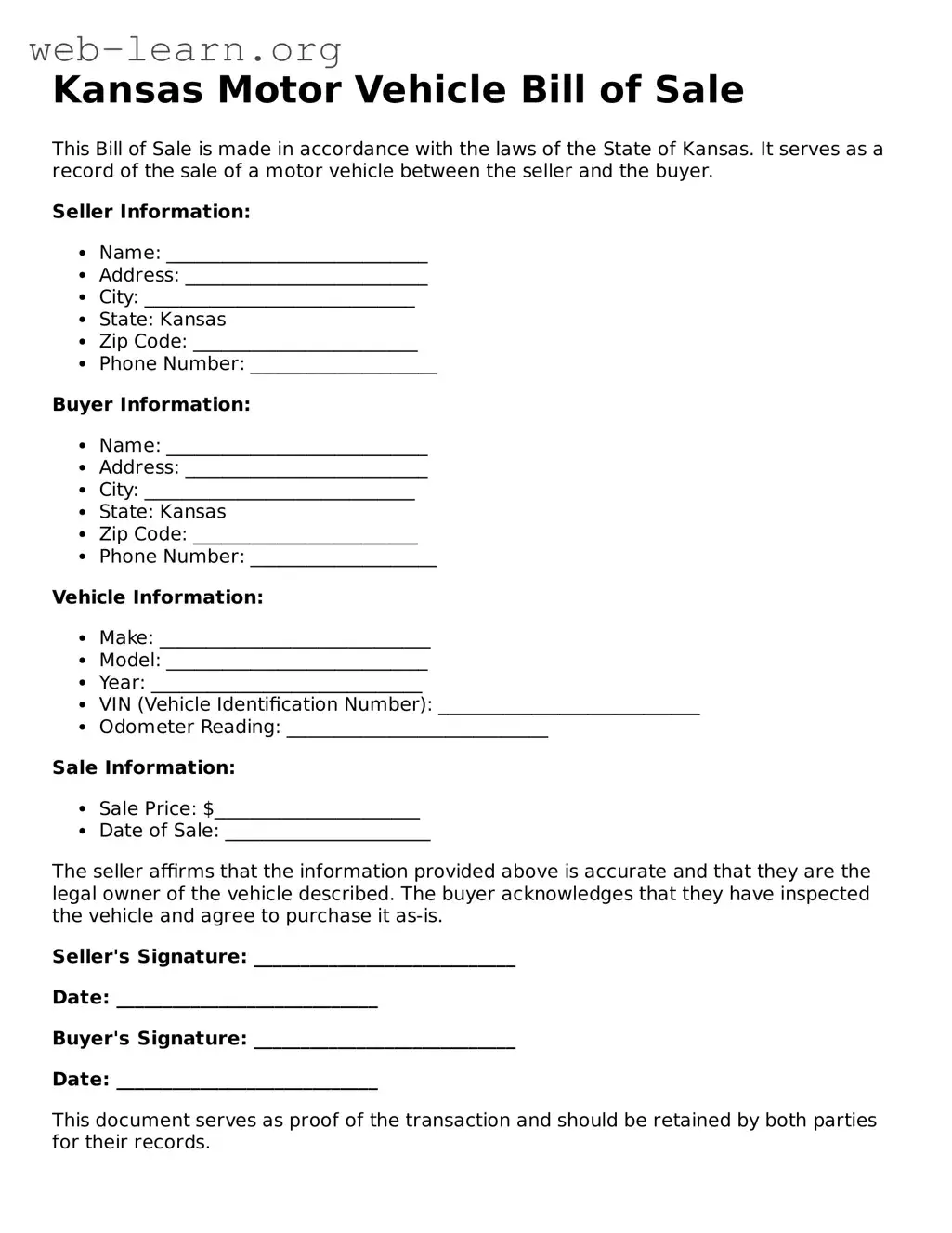
The Kansas Motor Vehicle Bill of Sale form serves as a crucial document in the transfer of ownership for vehicles within the state. When buying or selling a vehicle, this form provides essential details that protect both parties involved in the transaction. It typically includes information such as the vehicle's make, model, year, and Vehicle Identification Number (VIN), along with the sale price. Additionally, the form requires the names and addresses of both the seller and the buyer, ensuring clear identification of the parties involved. It may also include spaces for signatures, which formalize the agreement and indicate that both parties consent to the sale. By using this form, individuals can create a transparent record of the transaction, which can be beneficial for future reference, especially when it comes to registration or title transfer with the Kansas Department of Revenue. Understanding the components and importance of this form can help facilitate a smooth and legally sound vehicle sale.
Kansas Motor Vehicle Bill of Sale
This Bill of Sale is made in accordance with the laws of the State of Kansas. It serves as a record of the sale of a motor vehicle between the seller and the buyer.
Seller Information:
Buyer Information:
Vehicle Information:
Sale Information:
The seller affirms that the information provided above is accurate and that they are the legal owner of the vehicle described. The buyer acknowledges that they have inspected the vehicle and agree to purchase it as-is.
Seller's Signature: ____________________________
Date: ____________________________
Buyer's Signature: ____________________________
Date: ____________________________
This document serves as proof of the transaction and should be retained by both parties for their records.
| Fact Name | Description |
|---|---|
| Purpose | The Kansas Motor Vehicle Bill of Sale form is used to document the sale or transfer of ownership of a motor vehicle between a seller and a buyer. |
| Governing Law | This form is governed by the Kansas Statutes Annotated, specifically K.S.A. 8-135. |
| Required Information | Essential details include the vehicle's make, model, year, VIN (Vehicle Identification Number), and the names and addresses of both the buyer and seller. |
| Signatures | Both the seller and buyer must sign the form to validate the transaction, ensuring that both parties agree to the terms of the sale. |
Filling out the Kansas Motor Vehicle Bill of Sale form is an important step when buying or selling a vehicle. This document serves as proof of the transaction and helps protect both parties involved. After completing the form, you will need to ensure that both the buyer and seller retain copies for their records. Additionally, the buyer may need to present this document when registering the vehicle with the state.
What is a Kansas Motor Vehicle Bill of Sale?
A Kansas Motor Vehicle Bill of Sale is a legal document that records the sale of a vehicle between a buyer and a seller. This form includes essential information such as the vehicle's make, model, year, Vehicle Identification Number (VIN), and the sale price. It serves as proof of ownership transfer and can be important for registration purposes.
Is a Bill of Sale required in Kansas?
While it is not legally required to have a Bill of Sale for every vehicle transaction in Kansas, it is highly recommended. This document provides a clear record of the sale, which can help prevent disputes and is often required when registering the vehicle in the buyer's name.
What information is needed to complete the Bill of Sale?
To complete the Bill of Sale, you will need the following information:
Can I create my own Bill of Sale?
Yes, you can create your own Bill of Sale. However, it is important to ensure that it includes all necessary information to be valid. Using a template or form specifically designed for Kansas can help ensure you cover all required details.
Do I need to have the Bill of Sale notarized?
In Kansas, notarization of the Bill of Sale is not required. However, having it notarized can add an extra layer of authenticity and may be beneficial if there are any disputes in the future.
What should I do with the Bill of Sale after the sale?
After the sale, both the buyer and seller should keep a copy of the Bill of Sale for their records. The buyer will need it when registering the vehicle with the Kansas Department of Revenue.
How does the Bill of Sale affect vehicle registration?
The Bill of Sale is an important document when registering the vehicle in the buyer's name. It proves that the buyer has purchased the vehicle and provides the necessary details for the registration process.
What if the vehicle has a lien on it?
If the vehicle has a lien, it is crucial to address this before completing the sale. The seller should ensure that the lien is paid off and released. The Bill of Sale should also indicate if there is an existing lien, as this can affect the buyer's ownership rights.
Can I use the Bill of Sale for a gift transfer?
Yes, a Bill of Sale can be used for a gift transfer. In this case, the sale price would typically be listed as $0. However, it is still important to complete the form to document the transfer of ownership.
Where can I obtain a Kansas Motor Vehicle Bill of Sale form?
You can obtain a Kansas Motor Vehicle Bill of Sale form from various sources, including:
Filling out the Kansas Motor Vehicle Bill of Sale form can seem straightforward, but many people make common mistakes that can lead to complications down the line. One frequent error is neglecting to include all required information. Buyers and sellers must provide their names, addresses, and signatures, along with details about the vehicle, such as the make, model, year, and Vehicle Identification Number (VIN). Omitting any of this crucial information can render the document invalid.
Another mistake is failing to accurately record the sale price. The form asks for the purchase price, and it’s important to be truthful. Underreporting the price to save on taxes can lead to legal issues. It’s always better to be honest about the transaction. The state relies on this information for tax purposes, and discrepancies can cause headaches later.
Many people also overlook the date of the sale. This date is significant for both the buyer and the seller. It establishes when the ownership transfer occurred and can affect registration and insurance. Without a clear date, confusion may arise, leading to potential disputes.
Not having the form notarized is another common oversight. While notarization is not always mandatory, it can add an extra layer of protection for both parties. A notary public verifies the identities of those involved and ensures that the signatures are legitimate. This can be particularly important if any disputes arise in the future.
Lastly, some individuals forget to keep a copy of the completed form. After signing, both parties should retain a copy for their records. This document serves as proof of the transaction and can be useful if questions about the sale arise later. Keeping a copy ensures that both the buyer and seller have the necessary documentation to support their claims.
When completing a vehicle transaction in Kansas, several forms and documents may accompany the Motor Vehicle Bill of Sale to ensure a smooth process. Each of these documents serves a specific purpose and can help clarify ownership, registration, and legal responsibilities associated with the vehicle.
Having these documents ready can streamline the process of buying or selling a vehicle in Kansas. It’s always a good idea to check with local authorities or a legal expert to ensure all necessary paperwork is completed correctly.
When filling out the Kansas Motor Vehicle Bill of Sale form, it is essential to follow certain guidelines to ensure accuracy and compliance. Here are seven important dos and don'ts to keep in mind:
The Kansas Motor Vehicle Bill of Sale form is often misunderstood. Here are six common misconceptions:
Understanding these misconceptions can help individuals navigate the vehicle sales process more effectively.
When engaging in the sale or purchase of a vehicle in Kansas, understanding the Motor Vehicle Bill of Sale form is crucial. Here are some key takeaways to keep in mind:
By following these guidelines, both buyers and sellers can ensure a smooth and legally sound vehicle transaction in Kansas.
Az Dmv Bill of Sale - It is often recommended to have the vehicle inspected before finalizing the sale, with the results documented in the Bill of Sale.
Ct Dmv Bill of Sale - Buyers can use it to register the vehicle with their local DMV.
Oahu Dmv - Helps buyers feel more secure in their purchase by having documented proof.
Car Bill of Sale Printable - Can be customized to include additional terms of the sale.