When renting a property in Kansas, understanding the Kansas Lease Agreement form is crucial for both landlords and tenants. This document outlines the terms and conditions of the rental arrangement, ensuring that both parties are clear on their rights and responsibilities. Key aspects of the form include the duration of the lease, rental payment details, and security deposit requirements. It also addresses maintenance obligations, rules regarding pets, and procedures for terminating the lease. By clearly defining these elements, the lease agreement helps prevent disputes and fosters a positive rental experience. Whether you are a first-time renter or an experienced landlord, knowing the ins and outs of this form can save you time and money in the long run.
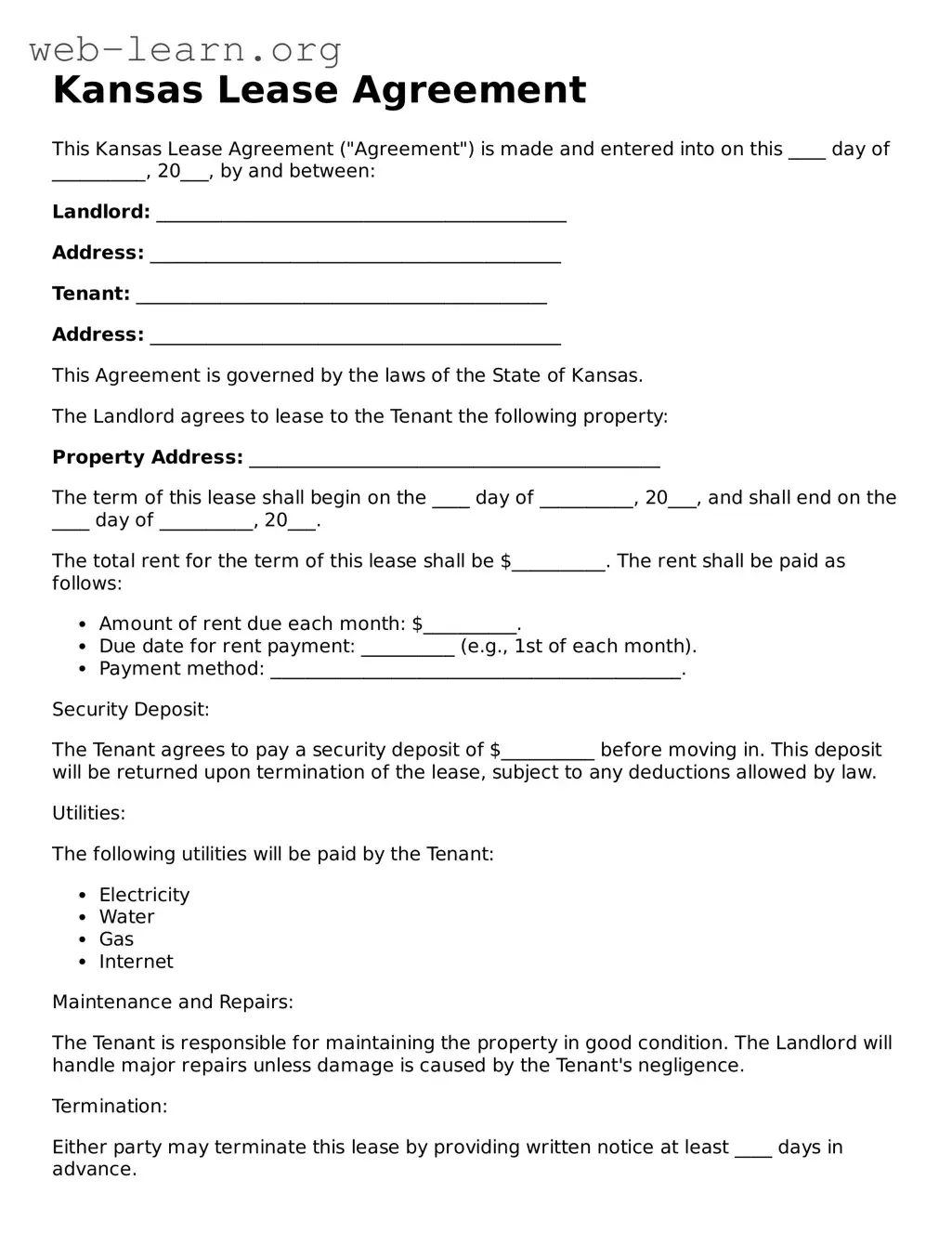
Kansas Lease Agreement
This Kansas Lease Agreement ("Agreement") is made and entered into on this ____ day of __________, 20___, by and between:
Landlord: ____________________________________________
Address: ____________________________________________
Tenant: ____________________________________________
Address: ____________________________________________
This Agreement is governed by the laws of the State of Kansas.
The Landlord agrees to lease to the Tenant the following property:
Property Address: ____________________________________________
The term of this lease shall begin on the ____ day of __________, 20___, and shall end on the ____ day of __________, 20___.
The total rent for the term of this lease shall be $__________. The rent shall be paid as follows:
Security Deposit:
The Tenant agrees to pay a security deposit of $__________ before moving in. This deposit will be returned upon termination of the lease, subject to any deductions allowed by law.
Utilities:
The following utilities will be paid by the Tenant:
Maintenance and Repairs:
The Tenant is responsible for maintaining the property in good condition. The Landlord will handle major repairs unless damage is caused by the Tenant's negligence.
Termination:
Either party may terminate this lease by providing written notice at least ____ days in advance.
Signatures:
By signing below, both parties agree to the terms of this lease.
Landlord Signature: ________________________________ Date: __________
Tenant Signature: ________________________________ Date: __________
| Fact Name | Description |
|---|---|
| Governing Law | The Kansas Lease Agreement is governed by the laws of the State of Kansas. |
| Parties Involved | The agreement typically involves a landlord and a tenant. |
| Lease Duration | Lease terms can vary, often ranging from month-to-month to one year or longer. |
| Security Deposit | Kansas law allows landlords to collect a security deposit, which is usually refundable at the end of the lease. |
| Written Requirement | A written lease agreement is recommended for clarity and legal protection for both parties. |
Completing the Kansas Lease Agreement form is an essential step in establishing a rental relationship. This document outlines the terms and conditions of the lease, ensuring both parties understand their rights and responsibilities. Follow these steps carefully to ensure accurate completion.
Once the form is completed and signed, both the landlord and tenant should keep a copy for their records. This ensures that both parties have access to the agreed-upon terms throughout the lease duration.
A Kansas Lease Agreement form is a legally binding document that outlines the terms and conditions under which a landlord rents property to a tenant. This agreement specifies details such as the rental amount, duration of the lease, responsibilities of both parties, and any rules regarding the property. It serves to protect the rights of both the landlord and the tenant.
Essential components of a Kansas Lease Agreement include:
While oral agreements can be legally binding, having a written lease agreement is strongly recommended. A written document provides clarity and serves as a reference in case of disputes. It also ensures that both parties are aware of their obligations and rights.
Termination of a lease in Kansas can occur in several ways:
If a tenant violates the lease agreement, the landlord may take several actions. These can include issuing a notice to cure the violation, which gives the tenant a chance to correct the issue, or proceeding with eviction if the violation is serious. It is crucial for landlords to follow the legal process to avoid complications.
Yes, a Kansas Lease Agreement can be modified. Any changes should be documented in writing and signed by both parties to ensure clarity and enforceability. Modifications can include changes to the rent amount, lease duration, or any specific terms outlined in the original agreement.
Filling out the Kansas Lease Agreement form can be straightforward, but many people make common mistakes that can lead to complications later. One frequent error is neglecting to include the full names of all tenants. All adult occupants must be listed to ensure that everyone is legally bound by the lease terms.
Another common mistake is failing to specify the rental amount clearly. It’s essential to write out both the numerical and written form of the rent. This helps prevent misunderstandings about payment amounts. Additionally, people often forget to include the due date for rent payments, which can lead to confusion and potential late fees.
Many individuals overlook the importance of defining the lease term. Whether it’s a month-to-month agreement or a fixed-term lease, clarity is key. Not specifying the start and end dates can create uncertainty about when the lease begins and ends.
Some tenants make the mistake of not understanding the security deposit requirements. The lease should clearly state the amount of the security deposit and the conditions for its return. This protects both the landlord and tenant from disputes at the end of the lease.
Another common oversight is failing to outline maintenance responsibilities. It’s crucial to specify who is responsible for repairs and maintenance. This helps avoid misunderstandings about who should handle issues like plumbing or electrical problems.
Many people also forget to address the issue of pets. If pets are allowed, the lease should specify any restrictions or additional deposits required. Not addressing this can lead to conflicts later on.
People often neglect to read the fine print. It’s important to understand all terms and conditions in the lease. Ignoring details can lead to unexpected obligations or restrictions.
Another mistake is not including the notice period for terminating the lease. Both parties should know how much notice is required if either side wishes to end the agreement. This protects everyone involved and ensures a smooth transition.
Some tenants fail to provide emergency contact information. Including this information in the lease can be vital in case of urgent situations that require immediate attention.
Lastly, many individuals forget to sign and date the lease. An unsigned lease may not hold up in court. Both parties must sign to validate the agreement and ensure that everyone is on the same page.
When entering into a lease agreement in Kansas, several additional forms and documents may be necessary to ensure clarity and compliance with local laws. These documents help both landlords and tenants understand their rights and responsibilities. Below is a list of commonly used forms alongside the Kansas Lease Agreement.
These documents play a vital role in the leasing process, providing essential information and establishing clear expectations between landlords and tenants. Properly completing and maintaining these forms can help prevent misunderstandings and legal disputes.
The Lease Agreement form shares similarities with several other documents commonly used in real estate and rental transactions. Here are five such documents and how they relate to a Lease Agreement:
When filling out the Kansas Lease Agreement form, it is crucial to ensure accuracy and clarity. Here are some important dos and don'ts to consider:
Following these guidelines can help prevent misunderstandings and ensure a smoother leasing process.
When it comes to the Kansas Lease Agreement form, many people hold misconceptions that can lead to confusion. Understanding the truth behind these myths is essential for both landlords and tenants. Here are six common misconceptions:
Many believe that lease agreements across states are identical. In reality, each state has its own laws and regulations that affect lease agreements. The Kansas Lease Agreement is tailored to comply with local laws.
Some individuals think that a verbal agreement holds the same weight as a written one. However, written leases provide clear documentation of terms and conditions, making them easier to enforce in case of disputes.
While many fees should be disclosed, some landlords may have the right to add additional fees later, such as for maintenance or repairs. It’s important to read the lease thoroughly to understand all potential costs.
People often think that leases are set in stone once signed. In fact, both parties can agree to modifications, but any changes should be documented in writing to avoid future misunderstandings.
Some tenants believe that landlords have unrestricted access to the rental property. However, landlords must provide notice and have valid reasons for entering, as outlined in the lease agreement.
There is a common belief that security deposits are always non-refundable. In Kansas, tenants can receive their deposit back if they meet the conditions specified in the lease, such as leaving the property in good condition.
Understanding these misconceptions can help both landlords and tenants navigate their agreements more effectively. Always take the time to read the lease carefully and ask questions if something is unclear.
Filling out and using the Kansas Lease Agreement form is an important step for both landlords and tenants. Here are key takeaways to keep in mind:
Review the completed lease carefully to ensure all information is accurate and clear. This will help prevent misunderstandings in the future.
Free Rental Agreement Template - The agreement can include provisions for the tenant's right to privacy.
Hawaii Residential Lease Agreement - It details the conditions under which the landlord can terminate the lease.