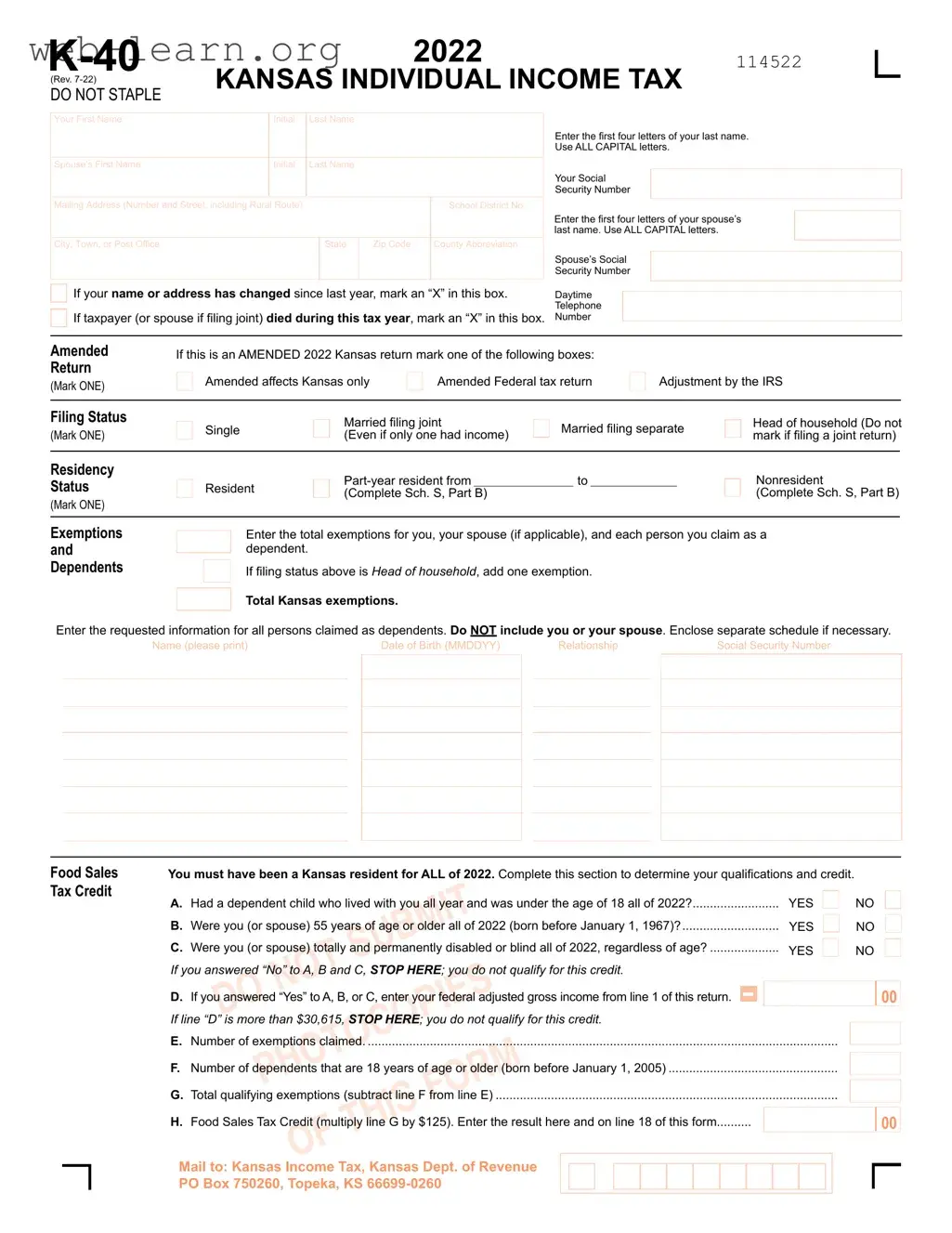
The Kansas K-40 form is an essential document for individuals filing their state income tax returns. This form captures various aspects of a taxpayer's financial situation, including personal information, residency status, and exemptions. It allows residents to report their federal adjusted gross income, calculate taxable income, and determine their total tax liability. Additionally, the K-40 provides sections for claiming credits, such as the Food Sales Tax Credit, which is designed to assist low-income families. Taxpayers can also indicate their filing status, whether single, married, or head of household, which influences their overall tax calculation. The K-40 form is not just a bureaucratic requirement; it serves as a tool for ensuring that individuals pay their fair share while potentially receiving credits that can ease their financial burden. Understanding the various components of this form can empower taxpayers to complete their returns accurately and efficiently, paving the way for a smoother tax season.

(Rev. |
KANSAS INDIVIDUAL INCOME TAX |
DO NOT STAPLE |
|
Your First Name |
Initial |
Last Name |
|
|
|
|
|
|
|
|
|
Spouse’s First Name |
Initial |
Last Name |
|
|
|
|
|
|
|
|
|
Mailing Address (Number and Street, including Rural Route) |
|
|
|
School District No. |
|
|
|
|
|
|
|
City, Town, or Post Office |
|
|
State |
Zip Code |
County Abbreviation |
|
|
|
|
|
|
If your name or address has changed since last year, mark an “X” in this box.
If taxpayer (or spouse if filing joint) died during this tax year, mark an “X” in this box.
Enter the first four letters of your last name. Use ALL CAPITAL letters.
Your Social
Security Number
Enter the first four letters of your spouse’s last name. Use ALL CAPITAL letters.
Spouse’s Social
Security Number
Daytime
Telephone
Number
Amended |
If this is an AMENDED 2022 Kansas return mark one of the following boxes: |
||
Return |
Amended affects Kansas only |
Amended Federal tax return |
|
(MARK ONE) |
|||
|
|
||
Adjustment by the IRS
Filing Status
(MARK ONE)
Single
Married filing joint
(Even if only one had income)
Married filing separate
Head of household (Do not mark if filing a joint return)
Residency |
|
|
|
|
|
|
Nonresident |
|
Status |
|
|
Resident |
|
|
|||
|
|
|
(Complete Sch. S, Part B) |
|
(Complete Sch. S, Part B) |
|||
(MARK ONE) |
|
|
|
|
|
|
|
|
|
|
|
|
|
|
|
|
|
Exemptions |
|
|
|
Enter the total exemptions for you, your spouse (if applicable), and each person you claim as a |
||||
|
|
|
||||||
and |
|
|
|
dependent. |
|
|
|
|
|
|
|
|
|
|
|
||
Dependents |
|
|
|
If filing status above is Head of household, add one exemption. |
|
|
||
Total Kansas exemptions.
Enter the requested information for all persons claimed as dependents. Do NOT include you or your spouse. Enclose separate schedule if necessary.
|
Name (please print) |
|
Date of Birth (MMDDYY) |
Relationship |
|
Social Security Number |
|
|
|
|
|
|
|
|
|
|
|
|
|
|
|
|
|
|
|
|
|
|
|
|
|
|
|
|
|
|
|
|
|
|
|
|
|
|
|
|
|
|
|
|
|
|
|
|
|
|
|
|
|
|
|
|
|
|
|
|
|
|
|
|
|
|
|
|
|
|
|
|
|
Food Sales Tax Credit
You must have been a Kansas resident for ALL of 2022. Complete this section to determine your qualifications and credit.
A. |
Had a dependent child who lived with you all year and was under the age of 18 all of 2022? |
YES |
NO |
B. Were you (or spouse) 55 years of age or older all of 2022 (born before January 1, 1967)? |
YES |
NO |
|
C. Were you (or spouse) totally and permanently disabled or blind all of 2022, regardless of age? |
|
|
|
|
|
YES |
NO |
If you answered “No” to A, B and C, STOP HERE; you do not qualify for this credit. |
|
|
|
D. If you answered “Yes” to A, B, or C, enter your federal adjusted gross income from line 1 of this return. |
|
00 |
|
If line “D” is more than $30,615, STOP HERE; you do not qualify for this credit. |
|
|
|
E. Number of exemptions claimed |
|
||
F. |
Number of dependents that are 18 years of age or older (born before January 1, 2005) |
|
|
G. |
Total qualifying exemptions (subtract line F from line E) |
|
|
H. |
Food Sales Tax Credit (multiply line G by $125). Enter the result here and on line 18 of this form |
|
00 |
Mail to: Kansas Income Tax, Kansas Dept. of Revenue PO Box 750260, Topeka, KS

|
|
|
|
|
|
|
ENTER AMOUNTS IN WHOLE DOLLARS ONLY |
|
|
|
|
|
|
114222 |
|
|
||||
|
|
|
|
|
|
|
|
|
|
|
|
|
|
|
|
|
||||
|
|
|
|
|
|
|
|
|
|
|
|
|
|
|
|
|
|
|
|
|
|
|
|
|
|
|
|
|
|
|
|
|
|
|
|
|
|
|
|
|
|
Income |
1. |
Federal adjusted gross income (as reported on your federal income tax return) |
|
1 |
|
|
|
|
|
00 |
|
|||||||||
Shade the box for |
2. |
.......................................Modifications (from Schedule S, line A25; enclose Schedule S) |
|
2 |
|
|
|
|
|
00 |
|
|||||||||
|
|
|
|
|
|
|
|
|
|
|
|
|
|
|
|
|||||
negative amounts. |
3. |
Kansas adjusted gross income (line 2 added to or subtracted from line 1) |
|
|
|
|
|
|
|
|
|
|
||||||||
Example: |
|
|
|
3 |
|
|
|
|
|
00 |
|
|||||||||
Deductions |
4. |
Standard deduction OR itemized deductions (if itemizing, complete Kansas Schedule A) |
... |
|
4 |
|
|
00 |
|
|||||||||||
|
|
|
|
|
5. |
Exemption allowance ($2,250 x number of exemptions claimed) |
|
|
|
5 |
|
|
00 |
|
||||||
|
|
|
|
|
6. |
Total deductions (add lines 4 and 5) |
|
|
|
6 |
|
|
00 |
|
||||||
|
|
|
|
|
7. |
.......................................Taxable income (subtract line 6 from line 3; if less than zero, enter 0) |
|
|
|
|
7 |
|
|
00 |
|
|||||
Tax |
8. |
Tax (from Tax Tables or Tax Computation Schedule) |
|
|
|
8 |
|
|
00 |
|
||||||||||
Computation |
9. |
Nonresident percentage (from Schedule S, line B23; or if 100%, enter 100.0000) |
|
|
|
9 |
|
|
|
|
||||||||||
|
|
|
|
|
|
|
|
|
|
|
|
|||||||||
|
|
|
|
|
10. |
Nonresident tax (multiply line 8 by line 9) |
|
|
|
10 |
|
|
00 |
|
||||||
|
|
|
|
|
11. |
Kansas tax on lump sum distributions (residents only - see instructions) |
|
|
|
11 |
|
|
00 |
|
||||||
|
|
|
|
|
12. |
TOTAL INCOME TAX (residents: add lines 8 & 11; nonresidents: enter amount from line 10).. |
|
12 |
|
|
00 |
|
||||||||
Credits |
13. |
Credit for taxes paid to other states (see instructions; enclose return(s) from other states) |
|
|
|
|
13 |
|
|
00 |
|
|||||||||
|
|
|
|
|
14. |
Credit for child and dependent care expenses (residents only - see instructions) |
|
|
|
14 |
|
|
00 |
|
||||||
|
|
|
|
|
15. |
Other credits (enclose all appropriate credit schedules) |
|
|
|
15 |
|
|
00 |
|
||||||
|
|
|
|
|
16. |
Subtotal (subtract lines 13, 14 and 15 from line 12) |
|
|
|
16 |
|
|
00 |
|
||||||
|
|
|
|
|
17. |
Earned income tax credit (from worksheet on page 8 of instructions) |
|
|
|
17 |
|
|
00 |
|
||||||
|
|
|
|
|
18. |
Food sales tax credit (from line H, front of this form) |
|
|
|
18 |
|
|
00 |
|
||||||
|
|
|
|
|
19. |
Total tax balance (subtract lines 17 and 18 from line 16; cannot be less than zero) |
|
|
|
|
19 |
|
|
00 |
|
|||||
Withholding |
20. |
Kansas income tax withheld from |
|
|
|
20 |
|
|
00 |
|
||||||||||
and |
21. |
Estimated tax paid |
|
|
|
|
|
|
21 |
|
|
00 |
|
|||||||
Payments |
22. |
Amount paid with Kansas extension |
|
|
|
22 |
|
|
00 |
|
||||||||||
If this is an AMENDED |
23. |
Refundable portion of earned income tax credit (from worksheet, page 8 of instructions).... |
|
|
|
23 |
|
|
00 |
|
||||||||||
return, complete lines |
24. |
Refundable portion of tax credits |
|
|
|
24 |
|
|
00 |
|
||||||||||
25, 26 and 27 |
|
|
|
|
|
|
||||||||||||||
|
|
|
|
|
25. |
Payments remitted with original return |
|
|
|
25 |
|
|
00 |
|
||||||
|
|
|
|
|
26. |
Credit for tax paid on the |
|
|
|
26 |
|
|
00 |
|
||||||
|
|
|
|
|
27. |
Overpayment from original return (this figure is a subtraction; see instructions) |
|
|
|
|
|
27 |
|
|
00 |
|
||||
|
|
|
|
|
|
|
|
|
|
|
||||||||||
|
|
|
|
|
28. |
...........................Total refundable credits (add lines 20 through 26; then subtract line 27) |
|
28 |
|
|
|
|
|
00 |
|
|||||
|
|
|
|
|
|
|
|
|
|
|||||||||||
Balance |
29. |
Underpayment (if line 19 is greater than line 28, enter the difference here) |
|
|
|
|
29 |
|
|
00 |
|
|||||||||
Due |
30. |
Interest (see instructions) |
|
|
|
|
|
|
30 |
|
|
00 |
|
|||||||
|
|
|
|
|
31. |
Penalty (see instructions) |
|
|
|
|
|
|
31 |
|
|
00 |
|
|||
|
|
|
|
|
32. |
Estimated Tax Penalty |
Mark box if engaged in commercial farming or fishing in 2022 .. |
|
32 |
|
|
00 |
|
|||||||
|
|
|
|
|
33. |
AMOUNT YOU OWE (add lines 29 through 32 and any entries on lines 36 through 42) |
|
|
|
33 |
|
|
00 |
|
||||||
Overpayment 34. |
Overpayment (if line 19 is less than line 28, enter the difference here) |
|
|
|
|
34 |
|
|
00 |
|
||||||||||
|
|
|
35 |
|
|
00 |
|
|||||||||||||
You may donate to any |
35. |
CREDIT FORWARD (enter amount you wish to be applied to your 2023 estimated tax) |
|
|
|
|
|
|
||||||||||||
of the programs on lines |
36. |
CHICKADEE CHECKOFF (Kansas Nongame Wildlife Improvement Program) |
|
|
|
36 |
|
|
00 |
|
||||||||||
36 through 42. |
|
|
|
|
|
|
||||||||||||||
|
|
|
37 |
|
|
00 |
|
|||||||||||||
The amount you enter |
37. |
SENIOR CITIZENS MEALS ON WHEELS CONTRIBUTION PROGRAM |
|
|
|
|
|
|
||||||||||||
will reduce your refund |
|
|
|
|
|
|
|
|
|
38 |
|
|
00 |
|
||||||
or increase the amount |
38. |
BREAST CANCER RESEARCH FUND |
|
|
|
|
|
|
||||||||||||
you owe. |
|
|
|
|
|
|
|
|
|
39 |
|
|
00 |
|
||||||
|
|
|
|
|
39. |
MILITARY EMERGENCY RELIEF FUND |
|
|
|
|
|
|
||||||||
|
|
|
|
|
40. |
KANSAS HOMETOWN HEROES FUND |
|
|
|
40 |
|
|
00 |
|
||||||
|
|
|
|
|
41. |
KANSAS CREATIVE ARTS INDUSTRY FUND |
|
|
|
41 |
|
|
00 |
|
||||||
|
|
|
|
|
42. |
LOCAL SCHOOL DISTRICT CONTRIBUTION FUND School District Number |
|
|
|
|
|
42 |
|
|
00 |
|
||||
|
|
|
|
|
|
|
|
|
|
|
|
|
|
|||||||
|
|
|
|
|
43. |
REFUND (subtract lines 35 through 42 from line 34) |
|
|
|
43 |
|
|
00 |
|
||||||
|
|
|
|
|
|
|
|
|
|
|
|
|
|
|
|
|
|
|
|
|
Signature(s) |
|
I authorize the Director of Taxation or the Director’s designee to discuss my return and enclosures with my preparer. |
|||||||||||||
|
|
|
|
|
|
I declare under the penalties of perjury that to the best of my knowledge this is a true, correct, and complete return. |
|||||||||
|
|
|
|
|
|
|
|
|
|
|
|
|
|
|
|
|
|
|
|
|
|
Signature of taxpayer |
Date |
|
Signature of preparer other than taxpayer |
|
Phone number of preparer |
||||
|
|
|
|
|
|
|
|
|
|
|
|
|
|
|
|
|
|
|
|
|
|
|
|
|
|
|
|
|
|
|
|
|
|
|
|
|
|
Signature of spouse if Married Filing Joint |
|
|
|
Tax Preparer’s PTIN, EIN or SSN |
|
|
|
||
|
|
|
|
|
|
|
|
|
|
|
|
||||
ENCLOSE any necessary documents with this form. DO NOT STAPLE.
| Fact Name | Description |
|---|---|
| Purpose | The Kansas K-40 form is used for filing individual income tax returns in the state of Kansas. |
| Filing Status Options | Taxpayers can choose from several filing statuses, including Single, Married Filing Joint, Married Filing Separate, and Head of Household. |
| Residency Status | The form allows individuals to indicate their residency status as Resident, Part-Year Resident, or Nonresident. |
| Food Sales Tax Credit | Eligibility for the Food Sales Tax Credit requires the taxpayer to have been a Kansas resident for the entire tax year and to meet specific criteria regarding dependents and age. |
| Governing Laws | The K-40 form is governed by the Kansas Statutes Annotated (K.S.A.) 79-3201 et seq., which outlines the state's income tax laws. |
Completing the Kansas K-40 form is essential for accurately filing your state income tax return. Follow these steps to ensure you fill out the form correctly.
Once you have completed the form, review it for accuracy. Mail it to the Kansas Department of Revenue at the specified address. Ensure all calculations are correct to avoid delays in processing your return.
What is the Kansas K-40 form?
The Kansas K-40 form is the state income tax return form used by residents of Kansas to report their income, calculate their tax liability, and claim any applicable credits or deductions. It is essential for individuals filing their state taxes for the year.
Who needs to file the K-40 form?
Any Kansas resident who earns income and is required to file a federal income tax return must also file the K-40 form. This includes individuals, married couples filing jointly, and those claiming dependents. Nonresidents who earn income in Kansas may also need to file, but they should complete the appropriate sections for nonresidents.
What information is required on the K-40 form?
The form requires personal information such as your name, address, Social Security number, and filing status. You will also need to provide details about your income, deductions, exemptions, and any credits you may be eligible for, such as the Food Sales Tax Credit.
What is the Food Sales Tax Credit?
The Food Sales Tax Credit is a benefit available to Kansas residents that helps offset the sales tax paid on food purchases. To qualify, you must meet specific criteria, including residency requirements and income limits. If eligible, you can calculate the credit using the instructions provided on the K-40 form.
How do I determine my filing status?
Your filing status is determined based on your marital status and family situation. The K-40 form provides options such as Single, Married Filing Joint, Married Filing Separate, and Head of Household. It's important to select the correct status, as it affects your tax rate and eligibility for certain credits.
What if I need to amend my K-40 form?
If you need to correct information on your original K-40 form, you can file an amended return. Mark the appropriate box on the K-40 form to indicate that it is an amended return. Ensure that you include any necessary documentation and explanations for the changes made.
Where do I send my completed K-40 form?
Once you have completed the K-40 form, mail it to the Kansas Department of Revenue at the following address:
Kansas Income Tax,
Kansas Dept. of Revenue,
PO Box 750260,
Topeka, KS 66699-0260.
What should I do if I owe taxes?
If your calculations show that you owe taxes, you must pay the amount due by the filing deadline to avoid penalties and interest. You can pay online, by mail, or through other approved methods. Ensure that you include any required forms or documentation with your payment.
How can I check the status of my K-40 form?
You can check the status of your K-40 form by contacting the Kansas Department of Revenue. They can provide updates on your filing status, any refunds due, or any issues that may have arisen with your return. Keep your information handy when you call for assistance.
Filling out the Kansas K-40 form can be straightforward, but mistakes can happen. One common error is not entering names and Social Security numbers correctly. Ensure that all names are in ALL CAPITAL LETTERS and double-check the Social Security numbers for accuracy. A small typo can delay your return or cause issues with your tax credits.
Another mistake is failing to mark the correct filing status. The K-40 form has specific options like "Single," "Married Filing Joint," and "Head of Household." Choosing the wrong status can affect your tax rate and the deductions you can claim. Always take a moment to review your filing status before submitting.
People often overlook the residency status section. It’s important to indicate whether you are a resident, part-year resident, or nonresident. Each status has different implications for your tax obligations. Missing this detail can lead to incorrect calculations and potential penalties.
Additionally, forgetting to include all dependents can be a costly mistake. Make sure to list each dependent's name, date of birth, and Social Security number. If you miss any dependents, you could miss out on valuable exemptions and credits.
Another frequent error involves the Food Sales Tax Credit. Many filers do not check all the eligibility questions carefully. If you answer "No" to all qualifying questions, you should stop there. Continuing to fill out the section can lead to confusion and incorrect claims.
When it comes to deductions, some people mix up standard and itemized deductions. If you choose to itemize, you must complete Part C of Schedule S. Failing to do so can lead to errors in your taxable income calculation.
It’s also important to ensure that all calculations are accurate. Double-check your math, especially when adding or subtracting lines on the form. Mistakes in calculations can lead to underpayment or overpayment of taxes.
Another common oversight is not enclosing the required schedules or documents. If you are claiming credits or making modifications, be sure to attach the necessary forms. Missing documents can delay your refund or result in a rejected return.
Lastly, don’t forget to sign and date your return. An unsigned form is considered incomplete. If you are filing jointly, both spouses must sign. This final step is crucial for ensuring your return is processed without issues.
The Kansas K-40 form is a vital document for individuals filing their state income tax returns. Along with this form, several other documents and forms may be required to ensure accurate reporting and compliance with Kansas tax laws. Below is a list of commonly used forms that accompany the K-40.
Each of these forms serves a specific purpose in the tax filing process and helps ensure that taxpayers accurately report their income and claim any eligible deductions or credits. Properly completing and submitting these documents can lead to a smoother tax filing experience and potentially reduce tax liabilities.
The Kansas K-40 form is an important document for individuals filing their state income tax returns. It shares similarities with several other tax-related documents, each serving a unique purpose but often containing overlapping information. Here are five documents that are similar to the Kansas K-40 form:
When filling out the Kansas K-40 form, it's essential to be careful and precise. Here are seven things to keep in mind:
Misconceptions about the Kansas K-40 form can lead to confusion and errors in tax filing. Here are six common misunderstandings:
Filing your Kansas K-40 form can seem daunting, but understanding the key points can simplify the process. Here are some important takeaways to keep in mind:
By keeping these points in mind, you can navigate the Kansas K-40 form more confidently and ensure that you meet your tax responsibilities accurately.