When it comes to planning for the future, understanding the Kansas Durable Power of Attorney form is essential. This legal document allows you to designate someone you trust to make decisions on your behalf if you become unable to do so. It covers a wide range of decisions, from financial matters to healthcare choices, ensuring that your wishes are honored even when you cannot communicate them. The form can be tailored to fit your specific needs, whether you want it to take effect immediately or only under certain circumstances. Importantly, it remains in effect even if you become incapacitated, providing peace of mind for both you and your loved ones. By taking the time to complete this form, you empower your chosen agent to act in your best interest, safeguarding your financial and personal well-being in times of uncertainty.
Kansas Durable Power of Attorney
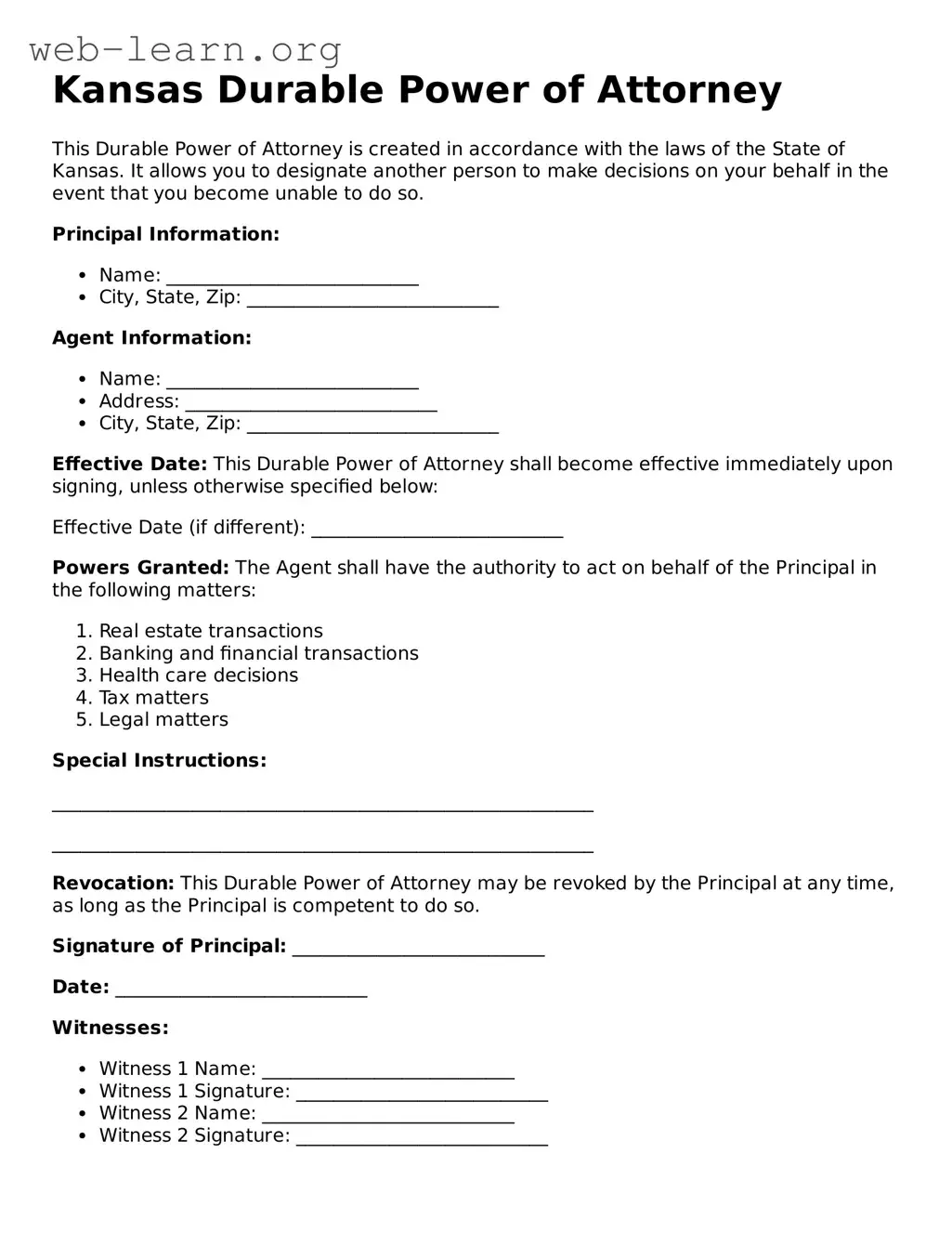
This Durable Power of Attorney is created in accordance with the laws of the State of Kansas. It allows you to designate another person to make decisions on your behalf in the event that you become unable to do so.
Principal Information:
Agent Information:
Effective Date: This Durable Power of Attorney shall become effective immediately upon signing, unless otherwise specified below:
Effective Date (if different): ___________________________
Powers Granted: The Agent shall have the authority to act on behalf of the Principal in the following matters:
Special Instructions:
__________________________________________________________
__________________________________________________________
Revocation: This Durable Power of Attorney may be revoked by the Principal at any time, as long as the Principal is competent to do so.
Signature of Principal: ___________________________
Date: ___________________________
Witnesses:
This document must be signed in the presence of two witnesses who are not related to the Principal or the Agent.
| Fact Name | Details |
|---|---|
| Definition | A Kansas Durable Power of Attorney allows an individual to appoint someone to make decisions on their behalf, even if they become incapacitated. |
| Governing Law | The form is governed by the Kansas Statutes Annotated, specifically K.S.A. 58-6501 et seq. |
| Durability | This document remains effective during the principal's incapacity, which distinguishes it from a regular power of attorney. |
| Principal and Agent | The person creating the document is known as the principal, while the person designated to act is called the agent or attorney-in-fact. |
| Scope of Authority | The principal can specify the powers granted to the agent, which may include financial decisions, healthcare choices, or both. |
| Execution Requirements | The form must be signed by the principal and witnessed by two individuals or notarized to be legally valid. |
| Revocation | A durable power of attorney can be revoked at any time by the principal, as long as they are mentally competent. |
| Importance | This document is crucial for ensuring that an individual’s wishes are respected in the event of incapacity, providing peace of mind for both the principal and their loved ones. |
Filling out the Kansas Durable Power of Attorney form is an important step in designating someone to make decisions on your behalf. This process requires careful attention to detail to ensure that your wishes are clearly articulated and legally recognized. Follow the steps below to complete the form accurately.
After completing these steps, review the form to ensure all information is accurate and complete. It may be helpful to consult with a trusted individual or a legal professional if you have any questions or concerns about the process.
What is a Kansas Durable Power of Attorney?
A Kansas Durable Power of Attorney is a legal document that allows you to appoint someone to make decisions on your behalf if you become unable to do so. This could be due to illness, injury, or any other reason that affects your ability to communicate your wishes.
Who can be appointed as an agent?
You can choose any adult you trust to be your agent. This person is often a family member, friend, or trusted advisor. It’s important to select someone who understands your values and will act in your best interest.
What powers can I grant to my agent?
You can grant your agent a wide range of powers, including:
Be specific about the powers you want to grant, as this ensures your agent knows their responsibilities.
How do I create a Durable Power of Attorney in Kansas?
To create a Durable Power of Attorney, you must fill out a form that meets Kansas state requirements. This form should be signed by you and notarized. It’s advisable to consult with a legal professional to ensure everything is completed correctly.
Can I revoke my Durable Power of Attorney?
Yes, you can revoke your Durable Power of Attorney at any time as long as you are mentally competent. To do so, you should provide written notice to your agent and any institutions or individuals who have a copy of the document.
Does the Durable Power of Attorney remain effective if I become incapacitated?
Yes, that is the key feature of a Durable Power of Attorney. It remains effective even if you become incapacitated. This is different from a regular Power of Attorney, which typically becomes invalid if you lose capacity.
Is a Durable Power of Attorney the same as a Living Will?
No, they are not the same. A Durable Power of Attorney allows someone to make financial and legal decisions for you, while a Living Will specifically addresses your healthcare wishes if you become unable to express them. Both are important, but they serve different purposes.
Do I need a lawyer to create a Durable Power of Attorney?
While it is not legally required to have a lawyer, it is highly recommended. A lawyer can help ensure that the document meets all legal requirements and accurately reflects your wishes. This can prevent potential issues in the future.
What happens if I don’t have a Durable Power of Attorney?
If you do not have a Durable Power of Attorney and become incapacitated, the court may appoint a guardian or conservator to make decisions on your behalf. This process can be lengthy and may not align with your wishes, making it beneficial to have a Durable Power of Attorney in place.
Filling out the Kansas Durable Power of Attorney form is a critical step in ensuring your financial and medical decisions are handled according to your wishes. However, many individuals make common mistakes that can lead to complications. Awareness of these pitfalls can save time and prevent issues down the line.
One frequent error is failing to clearly identify the agent. The person you choose to act on your behalf must be explicitly named in the document. Leaving this section vague or using an incorrect name can result in confusion and disputes when the time comes to execute the powers granted.
Another mistake involves not specifying the powers granted to the agent. It is essential to outline what decisions the agent can make on your behalf. Omitting specific powers can limit the agent’s ability to act effectively. This can lead to delays in critical situations where timely decisions are necessary.
Many people neglect to sign and date the form properly. In Kansas, the principal's signature is required for the document to be valid. Additionally, witnesses or a notary may need to sign as well. Failing to complete these steps can render the document invalid, leaving your wishes unfulfilled.
Some individuals mistakenly believe that a Durable Power of Attorney automatically revokes previous documents. This is not always the case. If you have older powers of attorney, it is important to explicitly revoke them in the new document to avoid conflicts and confusion.
Another common oversight is not discussing the decision with the chosen agent beforehand. It is crucial that the agent understands their responsibilities and is willing to take on this role. Without this conversation, the agent may be unprepared or unwilling to act when needed.
Finally, many people fail to keep copies of the completed form in accessible locations. Once the Durable Power of Attorney is executed, it should be shared with relevant parties, including the agent, financial institutions, and healthcare providers. Not having copies readily available can lead to delays and complications when the agent needs to act on your behalf.
A Kansas Durable Power of Attorney (DPOA) is a vital legal document that allows an individual to appoint someone to make decisions on their behalf, especially in the event of incapacitation. While the DPOA is crucial, there are other documents that often accompany it to ensure comprehensive planning and protection of one's interests. Below are four important forms and documents commonly used alongside the Kansas Durable Power of Attorney.
Having these documents in place can provide peace of mind. They work together with the Kansas Durable Power of Attorney to create a comprehensive plan for managing health and financial decisions, ensuring that your wishes are respected and upheld during challenging times.
When filling out the Kansas Durable Power of Attorney form, it’s important to approach the task with care. This document grants someone the authority to make decisions on your behalf, so accuracy is crucial. Here’s a list of things you should and shouldn’t do during the process.
By following these guidelines, you can help ensure that your Durable Power of Attorney is filled out correctly and serves your needs effectively.
Understanding the Kansas Durable Power of Attorney (DPOA) form can be challenging. Here are seven common misconceptions that people often have about this important legal document:
Many believe that a DPOA is limited to financial decisions. However, it can also cover healthcare decisions if specified. This means your agent can make medical choices on your behalf if you are unable to do so.
This is not true. You can revoke or modify your DPOA at any time, as long as you are mentally competent. It's essential to keep your documents updated to reflect your current wishes.
While many people think a DPOA is only activated upon incapacitation, you can choose for it to take effect immediately upon signing. This is known as a "springing" DPOA.
Your agent has a fiduciary duty to act in your best interest. They cannot use your assets for personal gain or make decisions that go against your wishes.
This misconception overlooks the fact that anyone can become incapacitated due to accidents or illnesses. Having a DPOA is a proactive step for individuals of all ages.
Each state has its own laws regarding DPOAs. What works in one state may not be valid in another, so it’s crucial to use the appropriate Kansas form and follow state-specific requirements.
While a DPOA can help with healthcare decisions, it’s still important to discuss your wishes with your agent and family. Open communication ensures that everyone understands your preferences.
When considering a Durable Power of Attorney (DPOA) in Kansas, it is essential to understand the key aspects of this important legal document. Here are eight important takeaways to keep in mind:
Understanding these key points can help you effectively utilize a Durable Power of Attorney, ensuring that your wishes are respected when you are unable to communicate them yourself.
Arkansas Durable Power of Attorney Form - It can be an essential tool for those with chronic illnesses or advanced age.
General Power of Attorney California - A Durable Power of Attorney can be tailored to your specific needs and preferences.
Power of Attorney Arizona - This document can be revoked at any time, as long as you are mentally competent to do so.