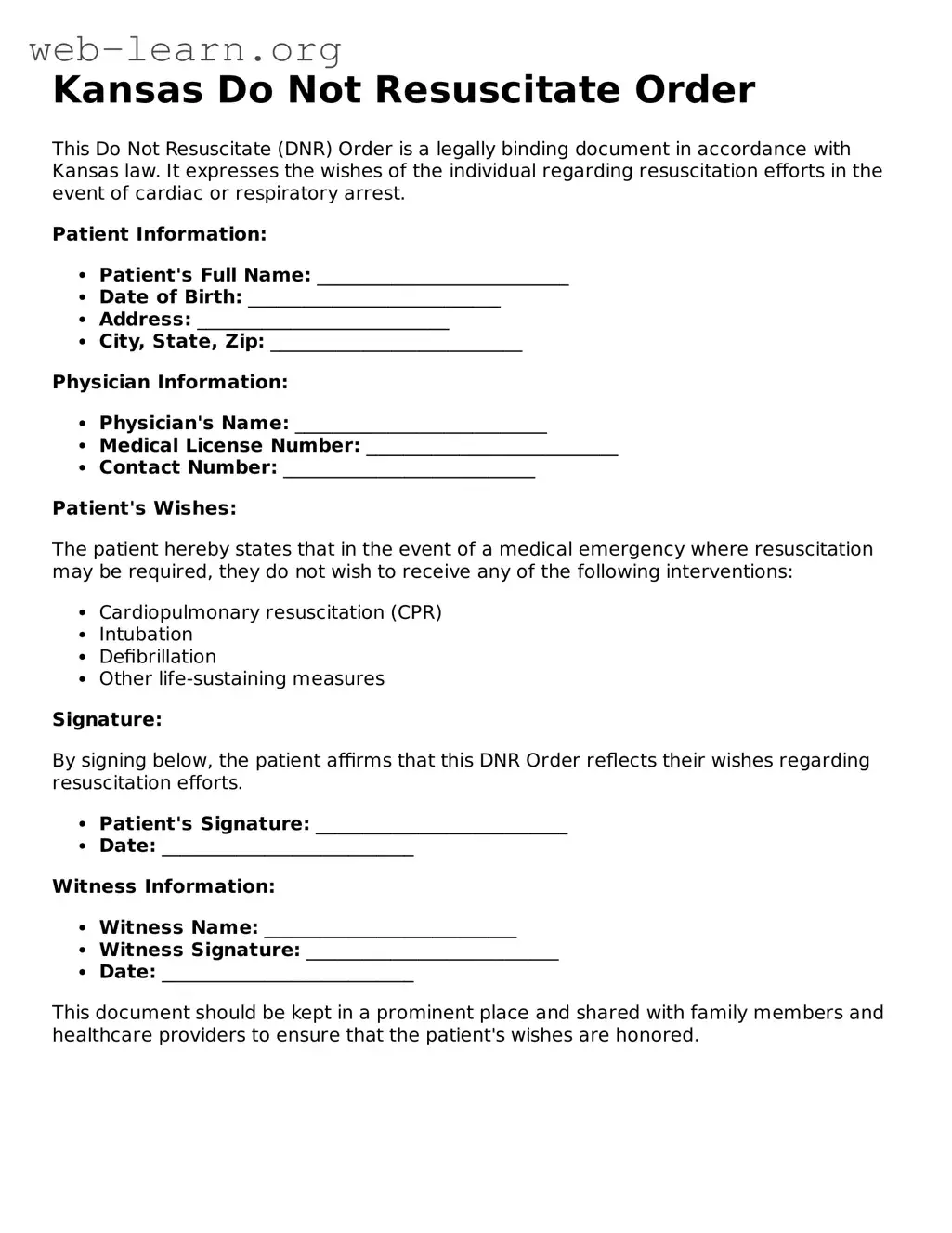
The Kansas Do Not Resuscitate (DNR) Order form is a critical document that allows individuals to express their wishes regarding medical treatment in emergency situations. This form is particularly significant for patients with terminal illnesses or those who wish to avoid aggressive resuscitation efforts. It provides clear instructions to healthcare providers about a patient's preference not to receive cardiopulmonary resuscitation (CPR) or other life-sustaining measures in the event of cardiac or respiratory arrest. The form must be signed by a physician and can be easily recognized by its distinctive bright pink color, which helps ensure that it is readily visible in emergency situations. Additionally, it is essential for individuals to understand that the DNR Order is not a directive for withholding other medical treatments, but specifically addresses resuscitation efforts. By completing this form, patients can maintain control over their medical care, providing peace of mind to both themselves and their families during challenging times.
Kansas Do Not Resuscitate Order
This Do Not Resuscitate (DNR) Order is a legally binding document in accordance with Kansas law. It expresses the wishes of the individual regarding resuscitation efforts in the event of cardiac or respiratory arrest.
Patient Information:
Physician Information:
Patient's Wishes:
The patient hereby states that in the event of a medical emergency where resuscitation may be required, they do not wish to receive any of the following interventions:
Signature:
By signing below, the patient affirms that this DNR Order reflects their wishes regarding resuscitation efforts.
Witness Information:
This document should be kept in a prominent place and shared with family members and healthcare providers to ensure that the patient's wishes are honored.
| Fact Name | Description |
|---|---|
| Definition | A Kansas Do Not Resuscitate Order (DNR) form is a legal document that allows a person to refuse resuscitation efforts in the event of a medical emergency. |
| Governing Law | The DNR form in Kansas is governed by the Kansas Statutes Annotated, specifically K.S.A. 65-4941 through K.S.A. 65-4943. |
| Eligibility | Any adult or legally authorized representative can complete a DNR order. This ensures that the individual's wishes are respected in medical situations. |
| Signature Requirement | The DNR form must be signed by the individual or their representative and a physician. This signature indicates that the medical professional has discussed the implications of the order with the individual. |
Completing the Kansas Do Not Resuscitate Order form is an important step for individuals who wish to express their healthcare preferences. This document allows you to communicate your wishes regarding resuscitation in the event of a medical emergency. It is essential to ensure that all information is accurately filled out to avoid any confusion in critical situations.
Once the form is completed, it is crucial to discuss your wishes with your healthcare provider and loved ones. This ensures that everyone is aware of your preferences and can act accordingly in a medical situation.
What is a Do Not Resuscitate (DNR) Order?
A Do Not Resuscitate Order is a legal document that allows a person to refuse certain life-saving medical treatments in the event of a cardiac arrest or respiratory failure. In Kansas, this order is specifically designed to inform healthcare providers that a patient does not wish to receive cardiopulmonary resuscitation (CPR) or other resuscitative measures.
Who can request a DNR Order in Kansas?
In Kansas, a DNR Order can be requested by a competent adult or a legally authorized representative. This could be a family member or a designated healthcare proxy. It’s important that the individual understands the implications of the order before making such a decision.
How do I obtain a DNR Order form in Kansas?
You can obtain a DNR Order form from various sources, including hospitals, healthcare providers, and online resources. The Kansas Department of Health and Environment also provides access to the official form. Make sure to use the most current version to ensure it meets legal requirements.
What information is needed to complete the DNR Order form?
The form requires basic information such as the patient’s name, date of birth, and a statement of their wishes regarding resuscitation. Additionally, it must be signed by the patient or their authorized representative and witnessed by a qualified individual. Proper completion is crucial for the order to be valid.
Is a DNR Order valid in all healthcare settings?
Yes, a properly executed DNR Order is valid in all healthcare settings in Kansas, including hospitals, nursing homes, and at home. However, it is advisable to inform all healthcare providers involved in the patient’s care about the existence of the DNR Order to ensure that it is honored.
Can a DNR Order be revoked?
Absolutely. A DNR Order can be revoked at any time by the patient or their authorized representative. To do this, simply destroy the original document and inform healthcare providers about the change in wishes. It’s essential to communicate any revocation clearly to ensure that the patient’s current preferences are understood.
Filling out the Kansas Do Not Resuscitate (DNR) Order form is a critical process for individuals who wish to express their preferences regarding medical treatment in emergencies. However, several common mistakes can lead to confusion or misinterpretation of the individual's wishes. Awareness of these pitfalls can help ensure that the form is completed correctly.
One frequent mistake is failing to provide adequate personal information. Individuals often neglect to include essential details such as their full name, date of birth, and contact information. This omission can complicate the identification of the person for whom the DNR order is intended. Accurate identification is vital for healthcare providers to honor the wishes expressed in the form.
Another common error involves misunderstanding the scope of the DNR order. Some individuals mistakenly believe that a DNR order applies to all medical situations, including non-cardiac emergencies. In reality, a DNR order specifically addresses resuscitation efforts during cardiac arrest. Therefore, it is important to clarify that other medical interventions may still be provided even if resuscitation is not pursued.
Additionally, individuals sometimes overlook the need for signatures. The Kansas DNR Order form requires the signatures of both the patient and a witness. In some cases, people may complete the form but fail to secure the necessary signatures, rendering the document invalid. Ensuring that all required signatures are present is crucial for the form to be legally recognized.
Another mistake involves the lack of discussion with healthcare providers. Individuals may fill out the DNR order without consulting their doctors or healthcare team. This can lead to misunderstandings about the implications of the order and the individual's health status. Engaging in a conversation with healthcare professionals can provide clarity and ensure that the DNR order aligns with the individual's medical condition and treatment preferences.
Finally, individuals sometimes forget to review and update their DNR orders regularly. As health conditions change, so too may a person's wishes regarding resuscitation. Failing to revisit the DNR order can result in outdated preferences being honored, which may not reflect the individual’s current desires. Regularly reviewing and, if necessary, updating the DNR order can help ensure that it accurately represents one’s wishes.
In addition to the Kansas Do Not Resuscitate (DNR) Order form, there are several other important documents that may be utilized to ensure a person’s healthcare preferences are honored. These documents help clarify medical decisions and provide guidance to healthcare providers and family members during critical situations. Below is a list of commonly used forms that complement a DNR order.
These documents play a vital role in healthcare planning and decision-making. By having these forms in place, individuals can ensure that their medical preferences are understood and honored, providing peace of mind for themselves and their loved ones.
A Do Not Resuscitate (DNR) Order is a medical document that indicates a person's wishes regarding resuscitation efforts in case of cardiac or respiratory arrest. There are several other documents that share similarities with the DNR Order. Here are nine of them:
When filling out the Kansas Do Not Resuscitate (DNR) Order form, it is essential to approach the process with care and understanding. Here are ten important dos and don'ts to keep in mind:
By following these guidelines, you can ensure that your DNR order reflects your wishes and is respected in a medical emergency.
The Kansas Do Not Resuscitate (DNR) Order form is often misunderstood. Here are four common misconceptions about this important document:
This is not true. A DNR order specifically addresses resuscitation efforts in the event of cardiac arrest. It does not prevent other medical treatments or interventions from being administered.
A DNR order can be beneficial for anyone who wishes to avoid resuscitation in specific circumstances, regardless of their overall health status. It’s a personal decision that reflects individual values and preferences.
In fact, a DNR order can be revoked or modified at any time. Individuals have the right to change their wishes as their health status or personal preferences evolve.
Kansas DNR orders are valid in various settings, including at home and in long-term care facilities. It is crucial for individuals to communicate their wishes to family members and healthcare providers to ensure they are honored.
The Kansas Do Not Resuscitate (DNR) Order form is an important legal document that allows individuals to express their wishes regarding resuscitation efforts in the event of a medical emergency. Here are key takeaways regarding the use and completion of this form:
Ct Dnr Form - Can be tailored to reflect the individual's specific health care preferences.
Can You Get a Dnr at Any Age - A DNR order may provide clarity and direction during emotionally charged medical situations.
Hawaii Do Not Resuscitate - The order must be signed by a physician to be valid and recognized by medical staff.
Can You Get a Dnr at Any Age - This form is designed to protect patient autonomy and ensure their preferences are honored.