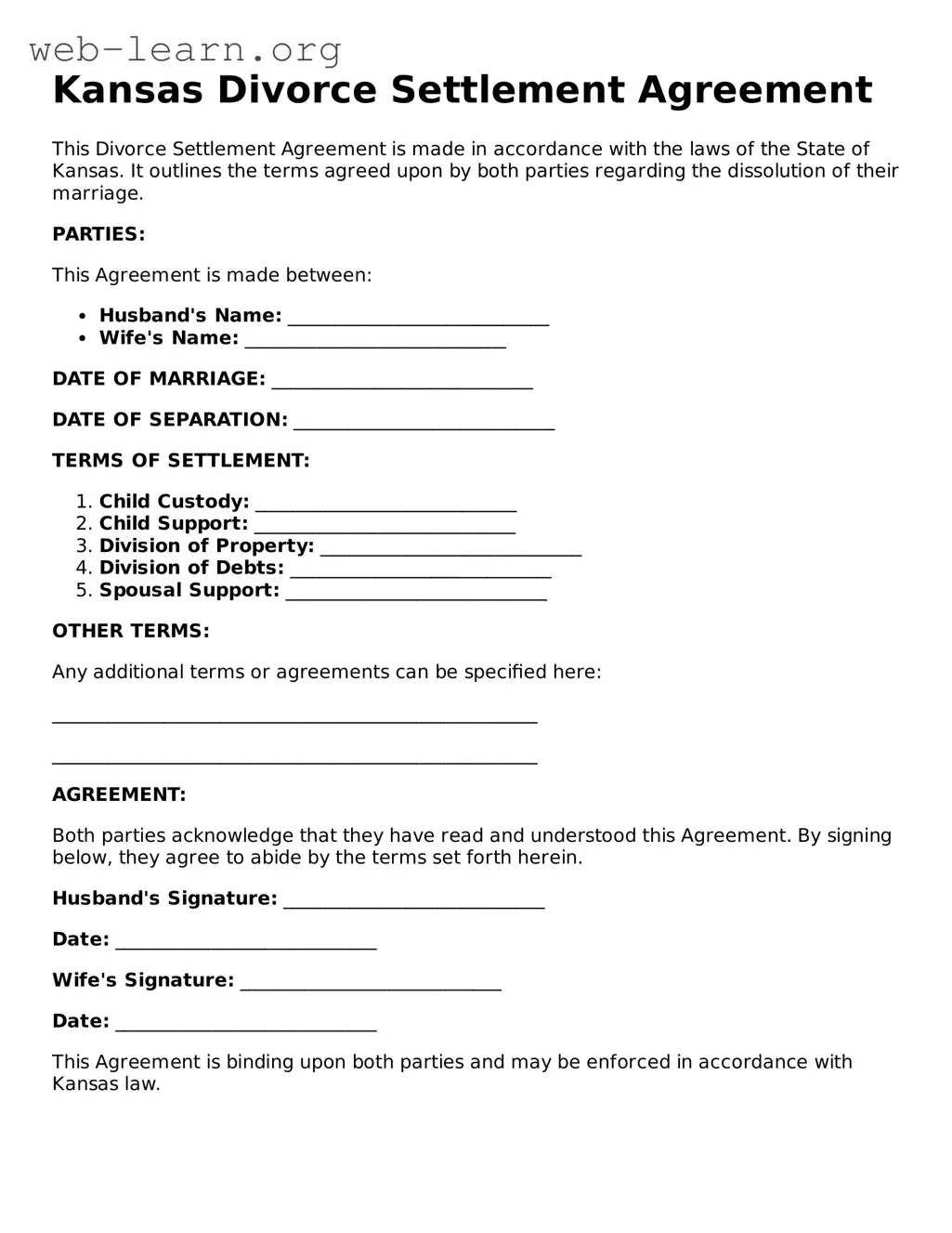
The Kansas Divorce Settlement Agreement form is a crucial document that outlines the terms of a divorce between two parties. It serves as a comprehensive record of the decisions made regarding various aspects of the dissolution of marriage, including the division of assets and debts, child custody arrangements, and support obligations. This form is designed to ensure that both parties have a clear understanding of their rights and responsibilities following the divorce. It addresses critical issues such as property division, which encompasses both marital and separate property, as well as the financial implications of the divorce, including alimony and child support. Additionally, the form may include provisions for visitation rights and parenting plans, ensuring that the best interests of any children involved are prioritized. By detailing these elements, the Kansas Divorce Settlement Agreement aims to facilitate a smoother transition for both parties, minimizing potential conflicts and misunderstandings in the future.
Kansas Divorce Settlement Agreement
This Divorce Settlement Agreement is made in accordance with the laws of the State of Kansas. It outlines the terms agreed upon by both parties regarding the dissolution of their marriage.
PARTIES:
This Agreement is made between:
DATE OF MARRIAGE: ____________________________
DATE OF SEPARATION: ____________________________
TERMS OF SETTLEMENT:
OTHER TERMS:
Any additional terms or agreements can be specified here:
____________________________________________________
____________________________________________________
AGREEMENT:
Both parties acknowledge that they have read and understood this Agreement. By signing below, they agree to abide by the terms set forth herein.
Husband's Signature: ____________________________
Date: ____________________________
Wife's Signature: ____________________________
Date: ____________________________
This Agreement is binding upon both parties and may be enforced in accordance with Kansas law.
| Fact Name | Description |
|---|---|
| Governing Law | The Kansas Divorce Settlement Agreement form is governed by Kansas state law. |
| Purpose | This form outlines the terms of a divorce settlement between spouses. |
| Property Division | The agreement addresses how marital property will be divided. |
| Debt Allocation | It specifies how debts incurred during the marriage will be handled. |
| Child Custody | If children are involved, the form includes custody arrangements. |
| Child Support | The agreement may outline child support obligations for one parent. |
| Spousal Support | It can also include provisions for spousal support or alimony. |
| Signature Requirement | Both parties must sign the agreement for it to be valid. |
After gathering the necessary information, you are ready to complete the Kansas Divorce Settlement Agreement form. This document is essential for outlining the terms of your divorce and ensuring that both parties are on the same page. Taking your time and being thorough will help avoid confusion later on.
What is a Kansas Divorce Settlement Agreement?
A Kansas Divorce Settlement Agreement is a legal document that outlines the terms of a divorce between spouses. It addresses key issues such as property division, child custody, visitation rights, and spousal support. This agreement serves as a roadmap for the divorce process and is typically submitted to the court for approval.
Who needs a Divorce Settlement Agreement?
Any couple seeking a divorce in Kansas should consider creating a Divorce Settlement Agreement. This document is particularly important for couples with children, shared assets, or debts. It helps ensure that both parties are in agreement on crucial matters, reducing the likelihood of disputes later on.
What should be included in the agreement?
The agreement should cover several key areas:
Including these elements helps ensure clarity and fairness for both parties.
How is the agreement enforced?
Once the Divorce Settlement Agreement is approved by the court, it becomes a legally binding document. If either party fails to comply with the terms, the other party can seek enforcement through the court. This may involve filing a motion for contempt or other legal actions to ensure compliance.
Can the agreement be modified after it is signed?
Yes, the Divorce Settlement Agreement can be modified after it is signed, but only under certain circumstances. Significant life changes, such as a job loss or relocation, may warrant a modification. Both parties must agree to the changes, and the new terms should be documented and submitted to the court for approval.
Do I need a lawyer to create a Divorce Settlement Agreement?
While it is not legally required to have a lawyer, it is highly recommended. A lawyer can provide valuable guidance, ensure that your rights are protected, and help you navigate complex legal issues. This can lead to a more equitable agreement and reduce the chances of future disputes.
How long does it take to finalize a Divorce Settlement Agreement?
The timeline for finalizing a Divorce Settlement Agreement varies. Factors include the complexity of the issues involved and the willingness of both parties to negotiate. On average, it may take several weeks to months to reach a final agreement, especially if disputes arise.
What if we cannot agree on the terms?
If both parties cannot reach an agreement, mediation may be a viable option. A neutral third party can help facilitate discussions and find common ground. If mediation fails, the case may need to go to court, where a judge will make decisions on contested issues.
Where can I obtain the Kansas Divorce Settlement Agreement form?
The Kansas Divorce Settlement Agreement form can typically be obtained from the Kansas Judicial Branch website or your local courthouse. It is essential to ensure that you are using the most current version of the form to comply with state requirements.
Completing the Kansas Divorce Settlement Agreement form can be a complex process. Many individuals encounter common pitfalls that may delay the proceedings or lead to misunderstandings. One frequent mistake is failing to provide complete and accurate information. Omitting details about assets, debts, or income can lead to complications later on. It is essential to ensure that all relevant financial information is included.
Another common error is not clearly specifying the terms of child custody and support. Ambiguities in these areas can result in disputes post-divorce. It is important to outline the arrangement for parenting time and responsibilities clearly. This includes details on visitation schedules and financial obligations related to child support.
Some individuals overlook the necessity of including both parties' signatures on the agreement. Without both signatures, the document may not be considered valid. This can lead to additional legal challenges down the line. Ensure that both parties review and sign the document in the appropriate sections.
Additionally, failing to address the division of marital property is a significant mistake. Both parties should agree on how to divide assets and debts acquired during the marriage. If this is not explicitly stated, it may result in disputes later. Listing each item clearly can help prevent confusion.
People often neglect to consider tax implications of their settlement. Certain decisions regarding asset division can have tax consequences that affect both parties. Consulting a tax professional can provide clarity on potential impacts and help avoid unexpected liabilities.
Another mistake involves not understanding the difference between legal separation and divorce. Some individuals may mistakenly believe that a legal separation offers the same finality as a divorce. Clarifying these terms and their implications is crucial for making informed decisions.
Lastly, individuals sometimes fail to seek legal advice before finalizing the agreement. While it is possible to complete the form without an attorney, having legal guidance can help ensure that all aspects of the settlement are fair and compliant with Kansas law. This can ultimately lead to a smoother process and better outcomes for both parties.
When navigating a divorce in Kansas, several documents may accompany the Divorce Settlement Agreement. Each of these forms serves a specific purpose, ensuring that all aspects of the divorce are addressed comprehensively. Below is a list of commonly used documents that may be required during the divorce process.
Understanding these documents can simplify the divorce process. Each plays a vital role in ensuring that the divorce is conducted fairly and legally, addressing the needs of both parties and any children involved. Being prepared with the necessary forms can help streamline the proceedings and reduce stress during this challenging time.
Separation Agreement: This document outlines the terms of separation between spouses before a divorce is finalized. Similar to a Divorce Settlement Agreement, it addresses issues such as asset division, child custody, and support obligations.
Child Custody Agreement: This agreement focuses specifically on the arrangements for children after a divorce. Like the Divorce Settlement Agreement, it details custody arrangements, visitation schedules, and child support, ensuring the welfare of the children involved.
Property Settlement Agreement: This document is designed to divide marital property and debts. It shares similarities with the Divorce Settlement Agreement by specifying how assets will be distributed, including real estate, bank accounts, and personal belongings.
Alimony Agreement: This agreement addresses spousal support and maintenance payments. It is akin to a Divorce Settlement Agreement in that it outlines the amount and duration of support, ensuring that both parties understand their financial responsibilities post-divorce.
Marital Settlement Agreement: This comprehensive document encompasses all aspects of a divorce, including child custody, property division, and support arrangements. It is closely related to the Divorce Settlement Agreement, as both serve to finalize the terms of a divorce and facilitate a smoother transition for both parties.
When filling out the Kansas Divorce Settlement Agreement form, it's essential to approach the task with care and attention to detail. Here are some important dos and don'ts to consider:
By following these guidelines, you can navigate the Kansas Divorce Settlement Agreement form more effectively, ensuring that your submission is both complete and accurate.
When navigating the Kansas Divorce Settlement Agreement form, several misconceptions can lead to confusion. Here are five common misunderstandings, along with clarifications.
This is not true. The Kansas Divorce Settlement Agreement can be used by couples without children. It addresses the division of assets and debts, regardless of whether children are involved.
While some cases do go to court, many couples can reach an agreement outside of court. The form allows for private negotiations and can be submitted to the court once both parties agree.
This is misleading. Although the agreement is binding once approved by the court, modifications can be made later if both parties consent and the court agrees to the changes.
The form provides a framework for agreement, but fairness depends on the negotiations between the parties. It is important for each party to understand their rights and seek legal advice if needed.
While legal assistance can be beneficial, individuals can fill out the form themselves. However, they should ensure they fully understand the implications of their agreements.
When filling out and using the Kansas Divorce Settlement Agreement form, it is essential to keep several key points in mind. Understanding these aspects can help ensure a smoother process and a clearer agreement between parties.
By paying attention to these key takeaways, individuals can navigate the divorce process more effectively and reach an agreement that serves both parties' interests.
How Is Property Divided in Divorce - It specifies child custody arrangements and visitation rights.
How Much Is a Divorce in Arkansas - The agreement can facilitate smoother transitions for children post-divorce.