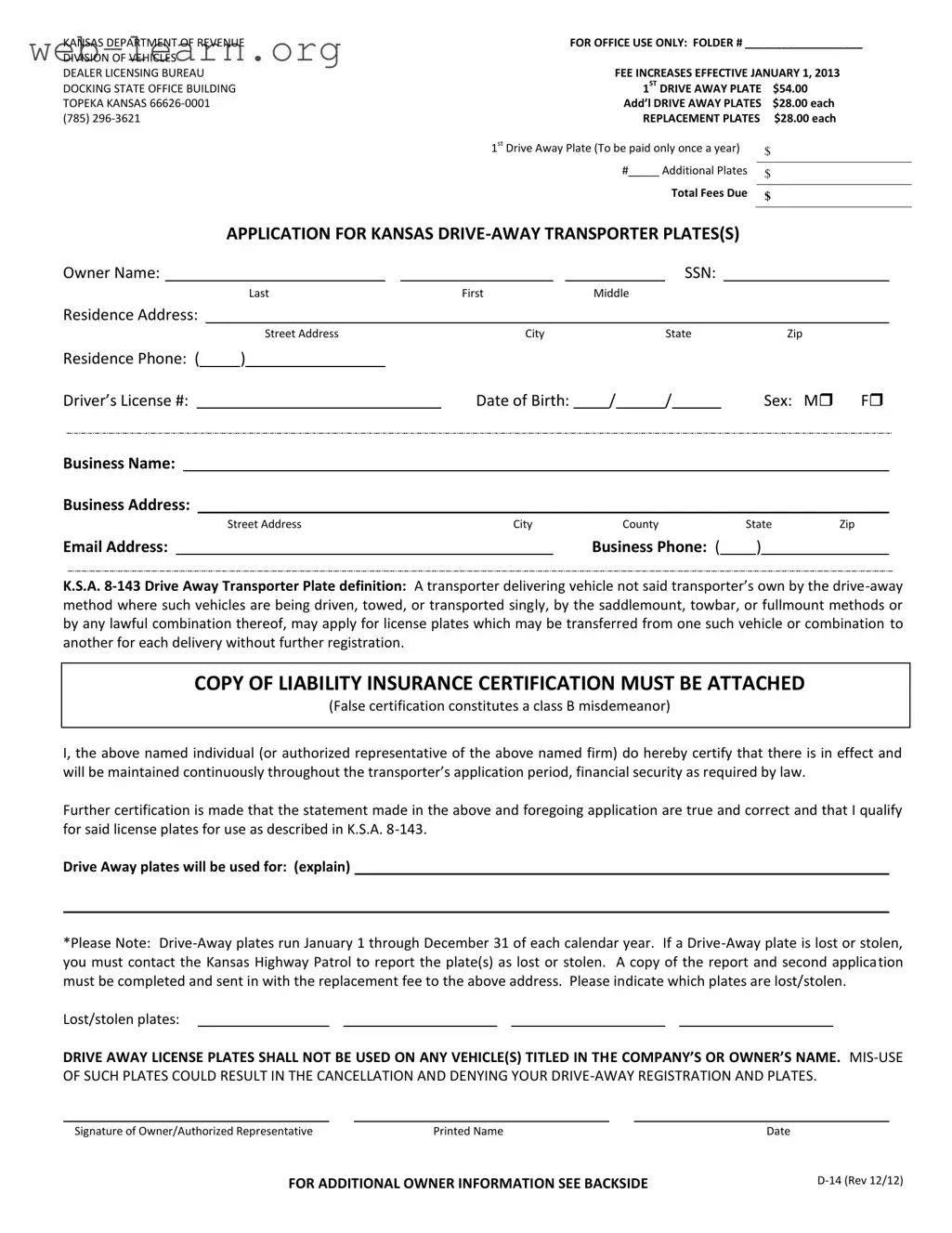
The Kansas D 14 form is an essential document for individuals and businesses involved in the transportation of vehicles within the state. This form specifically caters to those applying for Drive-Away Transporter Plates, which allow for the legal movement of vehicles without the need for individual registration for each vehicle being transported. Key aspects of the form include the owner’s personal details, such as their name, address, and social security number, as well as business information if applicable. Additionally, applicants must provide a certification of liability insurance, ensuring that they meet the state’s legal requirements for financial security during the transportation period. The form also outlines the fees associated with obtaining these plates, including costs for the initial plate and any additional plates needed. It’s important to note that Drive-Away plates are valid for a calendar year, running from January 1 to December 31, and misuse of these plates can lead to serious consequences, including the cancellation of the registration. Furthermore, if a plate is lost or stolen, there are specific steps that must be taken to report and replace it. By understanding the nuances of the Kansas D 14 form, applicants can navigate the process more effectively and ensure compliance with state regulations.
KANSAS DEPARTMENT OF REVENUE |
|
|
|
|
FOR OFFICE USE ONLY: FOLDER # ___________________ |
|||||||||||||||||||||||||||||
DIVISION OF VEHICLES |
|
|
|
|
|
|
|
|
|
|
|
|
|
|
|
|
|
|
|
|
|
|
|
|
|
|
|
|
||||||
DEALER LICENSING BUREAU |
|
|
|
|
|
|
|
|
|
|
|
|
FEE INCREASES EFFECTIVE JANUARY 1, 2013 |
|
|
|||||||||||||||||||
DOCKING STATE OFFICE BUILDING |
|
|
|
|
|
|
|
|
1ST DRIVE AWAY PLATE |
$54.00 |
|
|
||||||||||||||||||||||
TOPEKA KANSAS |
|
|
|
|
|
|
|
|
|
|
|
|
|
|
Add’l DRIVE AWAY PLATES |
$28.00 each |
|
|
||||||||||||||||
(785) |
|
|
|
|
|
|
|
|
|
|
|
|
|
|
|
|
|
|
|
|
REPLACEMENT PLATES |
$28.00 each |
|
|
||||||||||
|
|
|
|
|
|
|
|
|
|
|
|
|
1st Drive Away Plate (To be paid only once a year) |
|
|
|
|
$ |
|
|
|
|||||||||||||
|
|
|
|
|
|
|
|
|
|
|
|
|
|
|
|
|
|
|
|
|
|
|
|
|
|
|
|
|
|
|
|
|
|
|
|
|
|
|
|
|
|
|
|
|
|
|
|
|
|
|
|
|
|
|
|
#_____ Additional Plates |
$ |
|
|
|
|||||||||
|
|
|
|
|
|
|
|
|
|
|
|
|
|
|
|
|
|
|
|
|
|
|
|
|
|
|
|
|
|
|
|
|
|
|
|
|
|
|
|
|
|
|
|
|
|
|
|
|
|
|
|
|
|
|
|
|
Total Fees Due |
$ |
|
|
|
||||||||
|
|
|
|
|
|
|
APPLICATION FOR KANSAS |
|
|
|
|
|
|
|
|
|||||||||||||||||||
|
|
|
|
|
|
|
|
|
|
|
|
|
|
|
||||||||||||||||||||
Owner Name: |
|
|
|
|
|
|
|
|
|
|
|
|
|
|
|
|
|
SSN: |
|
|
|
|
|
|
|
|
|
|||||||
|
|
|
|
|
|
|
|
|
Last |
First |
|
Middle |
|
|
|
|
|
|
|
|
||||||||||||||
Residence Address: |
|
|
|
|
|
|
|
|
|
|
|
|
|
|
|
|
|
|
|
|
|
|
|
|
|
|
|
|
||||||
|
|
|
|
|
|
|
|
|
Street Address |
City |
|
|
|
|
|
State |
|
|
|
|
Zip |
|
|
|||||||||||
Residence Phone: ( |
) |
|
|
|
|
|
|
|
|
|
|
|
|
|
|
|
|
|
|
|
|
|
|
|
|
|
||||||||
D i e ’s Li e se #: |
|
|
|
|
|
|
|
|
Date of Birth: |
|
/ |
/ |
|
|
|
|
|
|
|
Sex: |
M |
F |
||||||||||||
Business Name: |
|
|
|
|
|
|
|
|
|
|
|
|
|
|
|
|
|
|
|
|
|
|
|
|
|
|
|
|
|
|
||||
Business Address: |
|
|
|
|
|
|
|
|
|
|
|
|
|
|
|
|
|
|
|
|
|
|
|
|
|
|
|
|
||||||
|
|
|
|
|
|
|
Street Address |
City |
|
|
|
|
County |
State |
Zip |
|
|
|||||||||||||||||
Email Address: |
|
|
|
|
|
|
|
|
|
|
|
|
Business Phone: ( |
) |
|
|
|
|
||||||||||||||||
|
|
|
|
|
|
|
|
|
|
|
|
|||||||||||||||||||||||
K.S.A. |
spo te deli e i g |
|
ehi le |
ot said t a spo te ’s o |
y the d i |
|||||||||||||||||||||||||||||
method where such vehicles are being driven, towed, or transported singly, by the saddlemount, towbar, or fullmount methods or by any lawful combination thereof, may apply for license plates which may be transferred from one such vehicle or combination to another for each delivery without further registration.
COPY OF LIABILITY INSURANCE CERTIFICATION MUST BE ATTACHED
(False certification constitutes a class B misdemeanor)
I, the above named individual (or authorized representative of the above named firm) do hereby certify that there is in effect and ill e ai tai ed o ti uously th oughout the t a spo te ’s appli atio pe iod, fi a ial se u ity as e ui ed y la .
Further certification is made that the statement made in the above and foregoing application are true and correct and that I qualify for said license plates for use as described in K.S.A.
Drive Away plates will be used for: (explain)
*Please Note:
Lost/stolen plates:
DRIVE AWAY LICENSE PLATES SHALL NOT BE USED ON ANY VEHICLE(S) TITLED IN THE COMPANY’S OR OWNER’S NAME.
OF SUCH PLATES COULD RESULT IN THE CANCELLATION AND DENYING YOUR
Signature of Owner/Authorized Representative |
Printed Name |
Date |
FOR ADDITIONAL OWNER INFORMATION SEE BACKSIDE |

ADDITIONAL OWNER INFORMATION
Name
LastFirstMiddle
Residence/Address
|
|
|
|
|
Street |
|
|
City |
|
|
County |
|
State |
Zip |
|
|
Phone Number ( |
) |
|
|
D i e ’s Li e |
se Nu |
e |
|
|
|
|
|
|||||
|
|
|
|
|
|
|
|
|
|
|
|
|
|
|
|
|
Date of Birth |
|
/ |
/ |
Social Security # |
|
|
|
|
Sex: |
M |
F |
|||||
|
|
|
|
|
|
|
|
|
|
|
|
|
|
|
|
|
|
|
|
|
|
|
|
|
|
|
|
|
|
|
|
|
|
Name |
|
|
|
|
|
|
|
|
|
|
|
|
|
|||
|
|
|
|
Last |
|
|
|
First |
|
|
|
Middle |
|
|
|
|
Residence/Address |
|
|
|
|
|
|
|
|
|
|
|
|
|
|||
|
|
|
|
|
Street |
|
|
City |
|
|
County |
|
State |
Zip |
|
|
Phone Number ( |
) |
|
|
D i e ’s Li e |
se Nu |
e |
|
|
|
|
|
|||||
|
|
|
|
|
|
|
|
|
|
|
|
|
|
|
|
|
Date of Birth |
|
/ |
/ |
Social Security # |
|
|
|
|
Sex: |
M |
F |
|||||
|
|
|
|
|
|
|
|
|
|
|
|
|
|
|
|
|
|
|
|
|
|
|
|
|
|
|
|
|
|
|
|
|
|
Name |
|
|
|
|
|
|
|
|
|
|
|
|
|
|||
|
|
|
|
Last |
|
|
|
First |
|
|
|
Middle |
|
|
|
|
Residence/Address |
|
|
|
|
|
|
|
|
|
|
|
|
|
|||
|
|
|
|
|
Street |
|
|
City |
|
|
County |
|
State |
Zip |
|
|
Phone Number ( |
) |
|
|
D i e ’s Li e |
se Nu |
e |
|
|
|
|
|
|||||
|
|
|
|
|
|
|
|
|
|
|
|
|
|
|
|
|
Date of Birth |
|
/ |
/ |
Social Security # |
|
|
|
|
Sex: |
M |
F |
|||||
|
|
|
|
|
|
|
|
|
|
|
|
|
|
|
|
|
|
|
|
|
|
|
|
|
|
|
|
|
|
|
|
|
|
Name |
|
|
|
|
|
|
|
|
|
|
|
|
|
|||
|
|
|
|
Last |
|
|
|
First |
|
|
|
Middle |
|
|
|
|
Residence/Address |
|
|
|
|
|
|
|
|
|
|
|
|
|
|||
|
|
|
|
|
Street |
|
|
City |
|
|
County |
|
State |
Zip |
|
|
Phone Number ( |
|
) |
|
|
D i e ’s Li e |
se Nu |
e |
|
|
|
|
|
|
|||
Date of Birth |
/ |
/ |
Social Security # |
|
|
|
|
Sex: |
M |
F |
||||||
|
|
|
|
|
|
|
|
|
|
|
|
|
|
|
|
|
| Fact Name | Details |
|---|---|
| Governing Law | K.S.A. 8-143 governs the use of Drive-Away Transporter Plates in Kansas. |
| Fee for First Plate | The fee for the first Drive-Away plate is $54.00. |
| Additional Plates Fee | Each additional Drive-Away plate costs $28.00. |
| Replacement Plates Fee | The fee for replacing a lost or stolen plate is $28.00. |
| Application Period | Drive-Away plates are valid from January 1 through December 31 each year. |
| Insurance Requirement | A copy of liability insurance certification must be attached to the application. |
| Misuse Consequences | Improper use of Drive-Away plates may lead to cancellation and denial of registration. |
| Owner Information | Additional owner information can be provided on the backside of the D-14 form. |
| Contact for Lost Plates | If a plate is lost or stolen, the Kansas Highway Patrol must be contacted. |
Filling out the Kansas D 14 form requires careful attention to detail. This form is necessary for obtaining Drive-Away Transporter Plates in Kansas. Ensure you have all the required information ready before you begin the process. Once the form is completed and submitted, it will be reviewed by the appropriate authorities.
What is the Kansas D 14 form?
The Kansas D 14 form is an application used to obtain Drive-Away Transporter Plates in the state of Kansas. These plates allow individuals or businesses to transport vehicles without registering each one individually. Instead, the plates can be transferred from one vehicle to another during deliveries.
Who can apply for Drive-Away Transporter Plates?
Any individual or business that delivers vehicles using the drive-away method can apply for these plates. The law defines this method as transporting vehicles singly or in combination using various lawful methods, such as towing or saddlemounting.
What information is required on the form?
The form requires several key pieces of information, including:
What are the fees associated with the Kansas D 14 form?
The fees for obtaining Drive-Away Plates are as follows:
Make sure to include the total fees due when submitting the application.
What happens if a Drive-Away Plate is lost or stolen?
If a Drive-Away Plate is lost or stolen, it is crucial to report it to the Kansas Highway Patrol immediately. After reporting, you must complete a second application and include a copy of the report along with the replacement fee when submitting your request for a new plate.
What is the duration of Drive-Away Plates?
Drive-Away Plates are valid from January 1 through December 31 of each calendar year. It is important to renew them annually to ensure compliance with state regulations.
What is the consequence of misusing Drive-Away Plates?
Using Drive-Away Plates on vehicles titled in the owner’s or company’s name is strictly prohibited. Misuse can lead to cancellation of the registration and denial of future applications for Drive-Away Plates.
Is liability insurance required?
Yes, a copy of liability insurance certification must be attached to the application. Falsely certifying the existence of insurance is considered a class B misdemeanor in Kansas, highlighting the importance of honesty in this process.
Can additional owners be listed on the form?
Yes, the form allows for additional owner information to be provided. Each additional owner must also submit their name, residence address, phone number, driver's license number, date of birth, Social Security number, and sex.
Filling out the Kansas D 14 form can be a straightforward process, but many applicants make common mistakes that can lead to delays or complications. One frequent error is failing to provide complete personal information. Applicants often neglect to fill in all fields, such as the middle name or full address. Omitting details can create confusion and may necessitate additional communication with the Department of Revenue.
Another mistake involves incorrect Social Security numbers (SSNs). Applicants sometimes transpose numbers or provide outdated information. An accurate SSN is crucial for processing the application, and errors can result in rejection or delays. Double-checking this information before submission can save time and hassle.
Many people also overlook the requirement to attach proof of liability insurance. The form explicitly states that a copy of the insurance certification must be included. Failing to do so may result in the application being deemed incomplete, leading to further delays in obtaining the necessary plates.
In addition, applicants often misinterpret the purpose of the drive-away plates. Some individuals mistakenly think they can use these plates on any vehicle owned by the business or themselves. However, drive-away plates are specifically for vehicles not titled in the owner's name, and misuse can lead to serious consequences, including cancellation of the registration.
Another common error is not signing the application. The signature of the owner or an authorized representative is required to validate the application. An unsigned form will not be processed, which can lead to frustration and delays in receiving the plates.
People frequently forget to specify the purpose of the drive-away plates. The application includes a section for this explanation, and leaving it blank can raise questions during the review process. Providing clear and concise information about the intended use of the plates helps streamline the approval.
Additionally, applicants may fail to calculate the total fees accurately. Miscalculating the fees due can lead to underpayment or overpayment, both of which complicate the processing of the application. Ensuring that all fees are correctly totaled and included is essential for a smooth submission.
Lastly, many individuals do not keep copies of their submitted forms. Retaining a copy is vital for personal records and can be useful if any issues arise during the processing of the application. Having this documentation on hand can facilitate communication with the Department of Revenue if questions or concerns come up.
The Kansas D 14 form is essential for individuals and businesses seeking Drive-Away Transporter Plates in Kansas. However, it is often accompanied by other important documents that help facilitate the application process. Below is a list of four commonly used forms and documents that may be required alongside the Kansas D 14 form.
Each of these documents plays a vital role in ensuring compliance with Kansas vehicle regulations. Properly preparing and submitting them alongside the Kansas D 14 form can streamline the application process and help avoid potential issues down the line.
The Kansas D 14 form is used for applying for Drive-Away Transporter Plates. It shares similarities with several other documents related to vehicle registration and licensing. Here are four documents that are similar to the Kansas D 14 form:
When filling out the Kansas D 14 form, there are important guidelines to follow. Here’s a list of things you should and shouldn’t do to ensure your application is processed smoothly.
By following these dos and don’ts, you can help ensure that your application for Kansas drive-away transporter plates is completed correctly and efficiently.
There are several misconceptions surrounding the Kansas D 14 form, which can lead to confusion for those looking to obtain Drive-Away Transporter Plates. Below are some common misunderstandings along with clarifications.
This form can be used by both individuals and businesses. Anyone who qualifies under the regulations can apply for Drive-Away Transporter Plates.
Drive-Away plates are specifically not allowed on vehicles titled in the company’s or owner’s name. Using them improperly may result in penalties, including cancellation of the registration.
After submission, the application must be reviewed and approved. Only then will the Drive-Away Transporter Plates be issued.
A copy of liability insurance certification must be attached to the application. Failing to provide this could lead to legal consequences.
Drive-Away plates are valid only for the calendar year, running from January 1 to December 31. Renewal is necessary each year.
If a Drive-Away plate is lost or stolen, it must be reported to the Kansas Highway Patrol. A copy of the report is required for the replacement application.
When filling out the Kansas D 14 form, it is essential to keep several key points in mind. Below are important takeaways that can guide you through the process:
By adhering to these guidelines, you can navigate the Kansas D 14 form process more effectively and ensure compliance with state regulations.