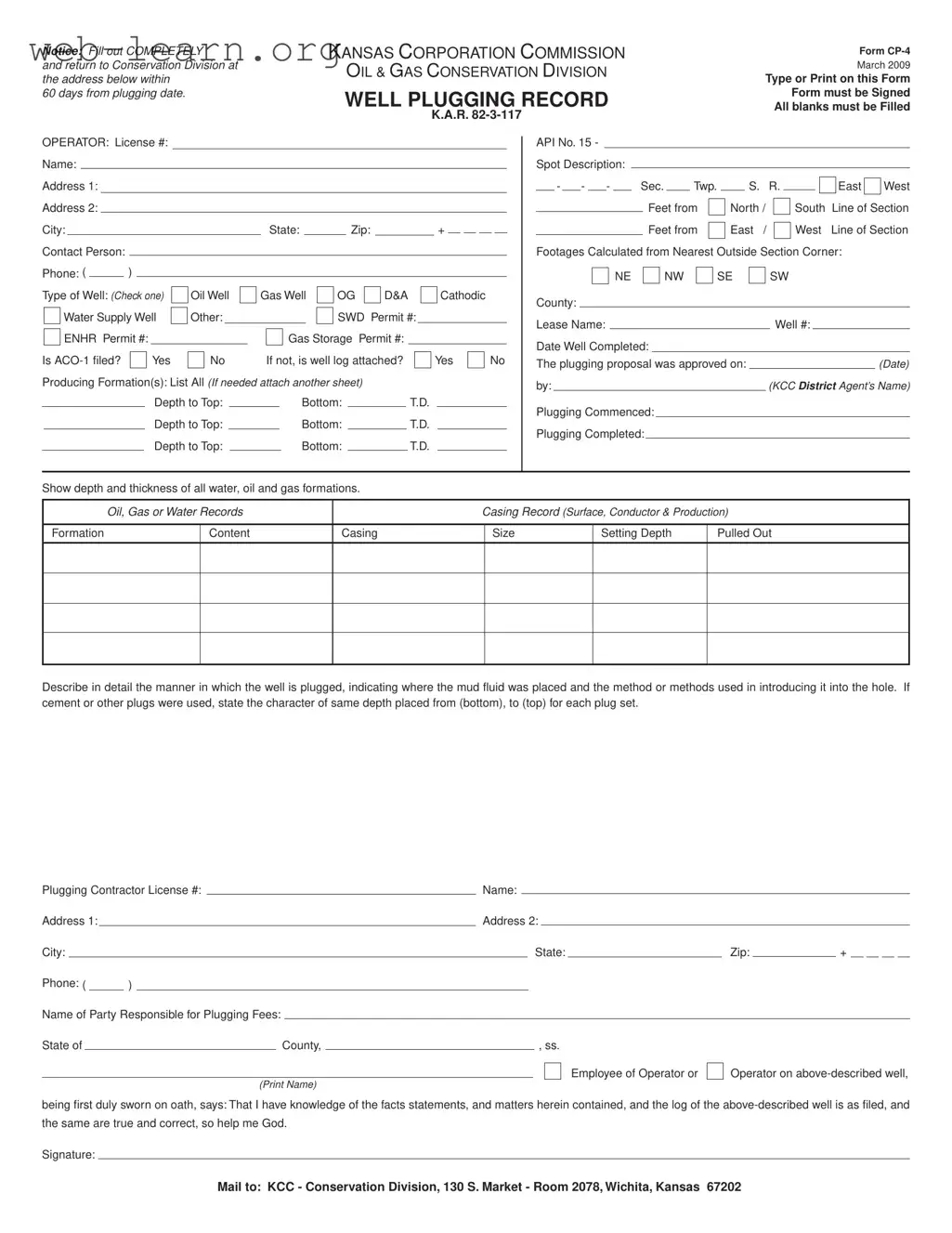
The Kansas CP-4 form plays a crucial role in the oil and gas industry, particularly in ensuring the safe and environmentally responsible plugging of wells. This form, issued by the Kansas Corporation Commission's Oil and Gas Conservation Division, must be filled out completely and returned within 60 days of the well's plugging date. It requires operators to provide essential information, including their contact details, the type of well, and the specific permits associated with the operation. The form also mandates operators to document the well's plugging process in detail, including the depths of various formations and the methods used to introduce plugging materials. Furthermore, the CP-4 form emphasizes accountability by requiring signatures from responsible parties, ensuring that all statements made are accurate and truthful. This meticulous approach not only aids in regulatory compliance but also helps protect Kansas's natural resources and public safety.

Fill out COMPLETELY
and return to Conservation Division at the address below within
60 days from plugging date.
KANSAS CORPORATION COMMISSION |
Form |
|
OIL & GAS CONSERVATION DIVISION |
March 2009 |
|
Type or Print on this Form |
||
|
||
WELL PLUGGING RECORD |
Form must be Signed |
|
All blanks must be Filled |
||
K.A.R. |
|
OPERATOR: License #:
Name:
Address 1:
Address 2:
City: |
|
|
|
|
|
|
|
|
|
|
|
|
|
|
|
|
|
|
|
State: |
|
|
|
Zip: |
|
|
|
|
+ |
|
|
|
|
|
|
|
|
|
||||||||||||
|
|
|
|
|
|
|
|
|
|
|
|
|
|
|
|
|
|
|
|
|
|
|
|
|
|
|
|
|
|
|
||||||||||||||||||||
Contact Person: |
|
|
|
|
|
|
|
|
|
|
|
|
|
|
|
|
|
|
|
|
|
|
|
|
|
|
|
|
|
|
|
|
|
|
|
|
|
|
|
|
|
|
|
|
|
|
||||
Phone: ( |
|
|
) |
|
|
|
|
|
|
|
|
|
|
|
|
|
|
|
|
|
|
|
|
|
|
|
|
|
|
|
|
|
|
|
|
|
|
|
|
|
|
|
|
|
|
|
|
|||
|
|
|
|
|
|
|
|
Oil Well |
|
|
|
Gas Well |
|
OG |
|
|
D&A |
|
|
|
|
|
|
Cathodic |
|
|
||||||||||||||||||||||||
Type of Well: (Check one) |
|
|
|
|
|
|
|
|
|
|
|
|
|
|
|
|
||||||||||||||||||||||||||||||||||
|
Water Supply Well |
|
|
|
Other: |
|
|
|
|
|
|
|
|
|
|
|
|
SWD Permit #: |
|
|
|
|||||||||||||||||||||||||||||
|
ENHR Permit #: |
|
|
|
|
|
|
|
|
|
|
|
|
Gas Storage Permit #: |
|
|
|
|
|
|
|
|
|
|
|
|
|
|
|
|
||||||||||||||||||||
|
|
|
|
|
|
|
|
|
|
|
|
|
|
|
|
|
|
|
|
|
|
|
|
|
|
|
|
|
||||||||||||||||||||||
|
|
|
|
|
|
|
|
|
|
|
|
|
|
|
|
|
|
|
|
|
|
|
|
|
|
|
|
|
|
|
|
|
|
|
|
|
|
|
|
|
|
|
|
|
|
|
|
|
|
|
Is |
|
|
|
|
|
Yes |
|
|
No |
|
|
|
|
|
If not, is well log attached? |
|
|
|
|
|
Yes |
|
|
|
|
No |
||||||||||||||||||||||||
|
|
|
|
|
|
|
|
|
|
|
|
|
|
|
|
|
|
|
|
|
||||||||||||||||||||||||||||||
Producing Formation(s): List All (If needed attach another sheet) |
|
|
|
|
|
|
|
|
|
|
|
|
|
|
|
|
|
|
|
|||||||||||||||||||||||||||||||
|
|
|
|
|
|
|
|
|
|
Depth to Top: |
|
|
|
|
|
|
|
Bottom: |
|
|
|
|
|
T.D. |
|
|
|
|
|
|
|
|
||||||||||||||||||
|
|
|
|
|
|
|
|
|
|
|
|
|
|
|
|
|
|
|
|
|
|
|
|
|
|
|
|
|||||||||||||||||||||||
|
|
|
|
|
|
|
|
|
|
Depth to Top: |
|
|
|
|
|
|
|
|
Bottom: |
|
|
|
|
T.D. |
|
|
|
|||||||||||||||||||||||
|
|
|
|
|
|
|
|
|
|
Depth to Top: |
|
|
|
|
|
|
|
Bottom: |
|
|
|
|
|
T.D. |
|
|
|
|
|
|
|
|
||||||||||||||||||
API No. 15 - |
|
|
|
|
|
|
|
|
|
|
|
|
|
|
|
|
|
|
|
|
|
|
|
|
|
|
|
|
|
|
|
|
|
|
|
|||||||
Spot Description: |
|
|
|
|
|
|
|
|
|
|
|
|
|
|
|
|
|
|
|
|
|
|
|
|
|
|
|
|
|
|
|
|||||||||||
|
- |
|
|
- |
|
|
|
- |
|
|
Sec. |
|
|
Twp. |
|
|
|
|
S. |
R. |
|
|
|
|
|
East |
|
|
West |
|||||||||||||
|
|
|
|
|
|
|
|
|
|
|
|
|
|
|
|
|
|
|
|
|
|
|
||||||||||||||||||||
|
|
|
|
|
|
|
|
|
|
|
|
|
|
|
|
|
|
|
|
|
|
|
|
|
|
|
|
|
|
|
|
|
|
|
|
|
|
|
|
|
|
|
|
|
|
|
|
|
|
|
|
|
|
|
|
|
Feet from |
|
|
|
|
North / |
|
|
|
|
South |
Line of Section |
|||||||||||||||||
|
|
|
|
|
|
|
|
|
|
|
|
|
|
|
|
|
|
|
|
|
|
|||||||||||||||||||||
|
|
|
|
|
|
|
|
|
|
|
|
|
|
|
||||||||||||||||||||||||||||
|
|
|
|
|
|
|
|
|
|
|
|
|
|
|
|
|
|
|
|
|
|
|
|
|
|
|
|
|
|
|
||||||||||||
|
|
|
|
|
|
|
|
|
|
|
|
|
|
Feet from |
|
|
|
East / |
|
|
|
|
West |
Line of Section |
||||||||||||||||||
|
|
|
|
|
|
|
|
|
|
|
|
|
|
|||||||||||||||||||||||||||||
Footages Calculated from Nearest Outside Section Corner: |
|
|
|
|||||||||||||||||||||||||||||||||||||||
|
|
|
|
|
|
|
|
|
|
|
NE |
|
|
|
|
|
|
NW |
|
|
SE |
|
|
SW |
|
|
|
|
|
|||||||||||||
|
|
|
|
|
|
|
|
|
|
|
|
|
|
|
|
|
|
|
|
|
|
|
|
|
|
|||||||||||||||||
County: |
|
|
|
|
|
|
|
|
|
|
|
|
|
|
|
|
|
|
|
|
|
|
|
|
|
|
|
|
|
|
|
|
|
|
|
|
|
|
|
|||
Lease Name: |
|
|
|
|
|
|
|
|
|
|
|
|
|
|
|
|
|
|
|
|
|
|
|
Well #: |
|
|
|
|
|
|
|
|
||||||||||
Date Well Completed: |
|
|
|
|
|
|
|
|
|
|
|
|
|
|
|
|
|
|
|
|
|
|
|
|
|
|
||||||||||||||||
The plugging proposal was approved on: |
|
|
|
|
|
|
|
|
|
|
|
|
(Date) |
|||||||||||||||||||||||||||||
by: |
|
|
|
|
|
|
|
|
|
|
|
|
|
|
|
|
|
|
|
|
|
|
|
|
|
|
|
(KCC DISTRICT Agent’s Name) |
||||||||||||||
Plugging Commenced: |
|
|
|
|
|
|
|
|
|
|
|
|
|
|
|
|
|
|
|
|
|
|
|
|
|
|
||||||||||||||||
Plugging Completed: |
|
|
|
|
|
|
|
|
|
|
|
|
|
|
|
|
|
|
|
|
|
|
|
|
|
|
||||||||||||||||
Show depth and thickness of all water, oil and gas formations.
|
Oil, Gas or Water Records |
|
Casing Record (Surface, Conductor & Production) |
||||
|
|
|
|
|
|
|
|
Formation |
|
Content |
Casing |
|
Size |
Setting Depth |
Pulled Out |
|
|
|
|
|
|
|
|
|
|
|
|
|
|
|
|
|
|
|
|
|
|
|
|
|
|
|
|
|
|
|
|
|
|
|
|
|
|
|
|
Describe in detail the manner in which the well is plugged, indicating where the mud fluid was placed and the method or methods used in introducing it into the hole. If cement or other plugs were used, state the character of same depth placed from (bottom), to (top) for each plug set.
Plugging Contractor License #: |
|
|
|
Name: |
|
|
|
|
|
|
|
|
|
|
|
|
|
|
|
|||||||
Address 1: |
|
|
|
|
|
|
|
Address 2: |
|
|
|
|
|
|
|
|
|
|
|
|
||||||
City: |
|
|
|
|
|
|
|
|
|
|
|
State: |
|
Zip: |
|
+ |
|
|
|
|
|
|
|
|||
Phone: ( |
|
|
) |
|
|
|
|
|
|
|
|
|
|
|
|
|
|
|
|
|
|
|
|
|
||
Name of Party Responsible for Plugging Fees: |
|
|
|
|
|
|
|
|
|
|
|
|
|
|
|
|
|
|||||||||
State of |
|
|
|
|
|
|
County, |
|
|
|
|
, ss. |
|
|
|
|
|
|
|
|
|
|
|
|||
Employee of Operator or
(Print Name)
Operator on
being first duly sworn on oath, says: That I have knowledge of the facts statements, and matters herein contained, and the log of the
Signature:
Mail to: KCC - Conservation Division, 130 S. Market - Room 2078, Wichita, Kansas 67202
| Fact Name | Details |
|---|---|
| Filing Deadline | The completed Kansas CP-4 form must be returned to the Conservation Division within 60 days from the plugging date. |
| Governing Law | This form is governed by the Kansas Administrative Regulations (K.A.R.) 82-3-117. |
| Required Information | All sections of the form must be filled out completely, including operator details and plugging records. |
| Submission Address | The form should be mailed to KCC - Conservation Division, 130 S. Market - Room 2078, Wichita, Kansas 67202. |
Completing the Kansas CP-4 form requires careful attention to detail. This form must be filled out completely and returned to the Conservation Division within 60 days from the date the well was plugged. Ensure all required information is accurate and legible.
What is the purpose of the Kansas CP-4 form?
The Kansas CP-4 form serves as a well plugging record for oil and gas wells. It is a crucial document that provides detailed information about the plugging process, ensuring that wells are properly sealed to prevent contamination of groundwater and other environmental hazards. By requiring operators to fill out this form completely, the Kansas Corporation Commission (KCC) can maintain oversight and ensure compliance with state regulations.
Who is responsible for completing and submitting the CP-4 form?
The operator of the well is responsible for completing the Kansas CP-4 form. This includes providing all necessary information, such as the well's location, depth, and the methods used for plugging. Once filled out, the form must be submitted to the Conservation Division of the KCC within 60 days from the date of plugging. Failure to do so may result in penalties or delays in compliance.
What information must be included in the CP-4 form?
The CP-4 form requires a variety of information, including:
Each section must be filled out accurately to ensure the KCC has a complete record of the well's status.
What happens if the CP-4 form is not submitted on time?
If the Kansas CP-4 form is not submitted within the required 60-day timeframe, the operator may face consequences. These can include fines, increased scrutiny from regulatory authorities, or even legal action. Timely submission is essential to demonstrate compliance with state regulations and to protect the environment.
Filling out the Kansas CP-4 form requires attention to detail. One common mistake people make is leaving sections incomplete. Every blank must be filled out. Omitting even one detail can lead to delays in processing or rejection of the form.
Another frequent error is neglecting to sign the form. The signature serves as a declaration of the truthfulness of the information provided. Without it, the form is not valid and cannot be accepted by the Kansas Corporation Commission.
Many individuals also fail to provide accurate contact information. Listing an incorrect phone number or address can hinder communication between the Conservation Division and the operator. This mistake can create unnecessary complications in the approval process.
When indicating the type of well, some people mistakenly check multiple boxes instead of selecting just one. This confusion can lead to misclassification and may affect the regulatory requirements for the well.
Another oversight involves the depth measurements. Some applicants do not provide complete depth information for all formations. This lack of detail can result in insufficient data for the Conservation Division to assess the well's condition properly.
People often forget to include the plugging proposal approval date. This date is crucial for tracking compliance with the plugging timeline. Without it, the form may be considered incomplete.
Additionally, some individuals do not attach the necessary well log when the ACO-1 form is not filed. This omission can lead to questions about the well's history and condition, complicating the review process.
Another mistake is failing to describe the plugging process in sufficient detail. Applicants should clearly outline how the well was plugged, including the materials used and their placement. A vague description may not meet regulatory standards.
Finally, individuals sometimes overlook the requirement to provide the name of the party responsible for plugging fees. This information is essential for accountability and financial tracking. Missing this detail can lead to confusion about who bears the costs associated with the plugging process.
The Kansas CP-4 form is essential for documenting the plugging of oil and gas wells. It is often accompanied by other forms and documents that provide additional information or fulfill regulatory requirements. Below are five common documents used alongside the Kansas CP-4 form.
Each of these documents plays a crucial role in ensuring the proper and legal plugging of oil and gas wells in Kansas. Together, they help maintain safety and environmental standards in the industry.
When completing the Kansas CP-4 form, there are several important guidelines to follow. Adhering to these practices can help ensure that your submission is processed smoothly and efficiently.
Following these dos and don'ts will help facilitate a successful submission of the Kansas CP-4 form to the Conservation Division.
This is incorrect. The CP 4 form must be filled out completely and submitted to the Conservation Division within 60 days from the plugging date. It is a required document for compliance.
In reality, the form must be signed by the party responsible for the plugging fees as well. This ensures that all parties involved acknowledge the completion of the plugging process.
This is misleading. The form requires comprehensive details about the well, including the depths of various formations and the methods used for plugging. This information is crucial for regulatory purposes.
This is false. Failing to submit the form within the 60-day window can lead to penalties or delays in regulatory approval. Timely submission is essential for maintaining compliance.
This is not true. The form applies to various types of wells, including gas wells, water supply wells, and others. It is important to select the correct type of well on the form to ensure proper processing.
When dealing with the Kansas CP-4 form, it’s essential to understand its purpose and requirements. This form is critical for documenting the plugging of oil and gas wells in Kansas. Below are key takeaways to keep in mind:
By following these key takeaways, you can navigate the process of filling out and submitting the Kansas CP-4 form more effectively. Adhering to the guidelines will help ensure compliance with state regulations and facilitate smoother operations in the oil and gas industry.