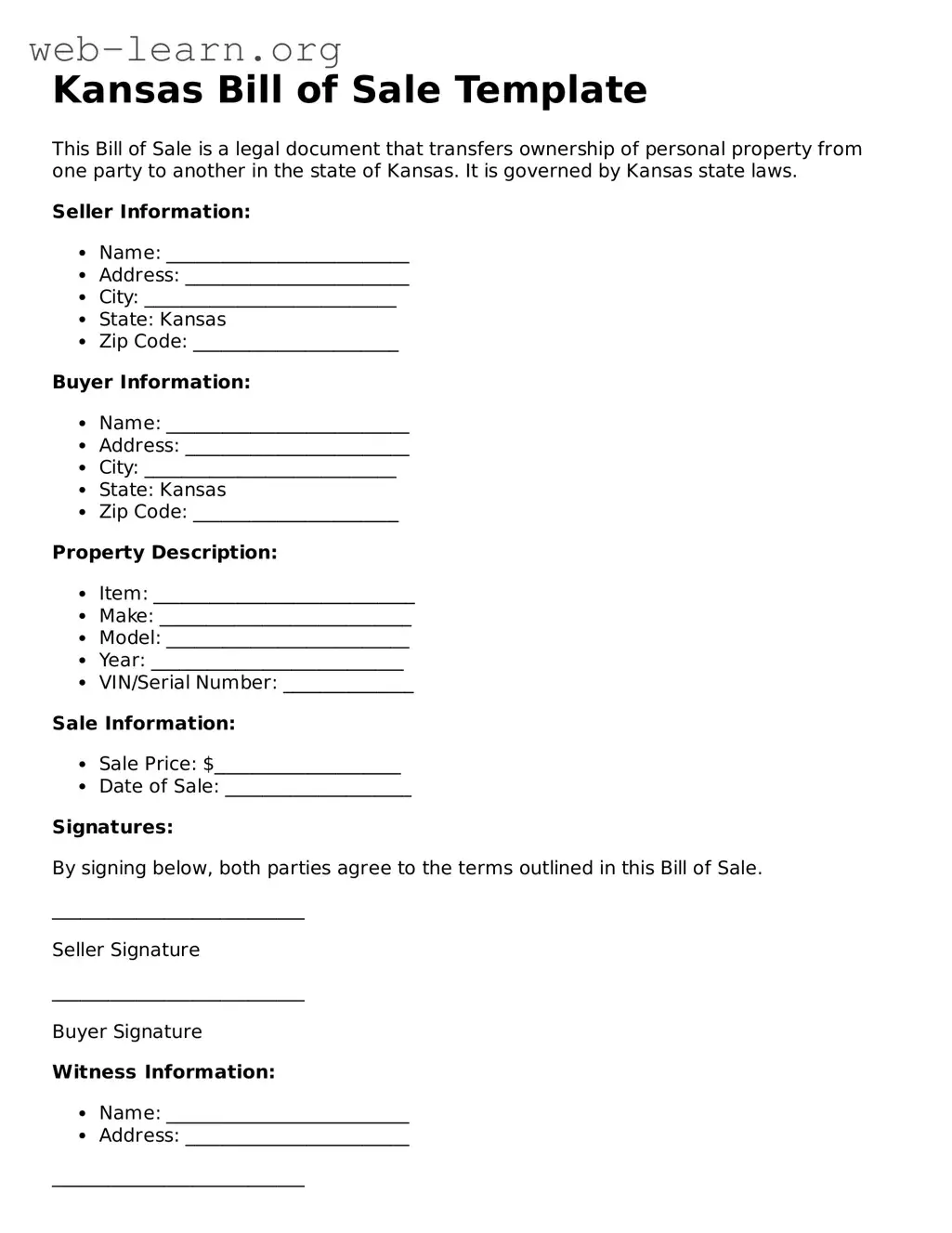
The Kansas Bill of Sale form serves as a crucial document in the process of transferring ownership of personal property, such as vehicles, equipment, or other tangible items. This form outlines essential details, including the names and addresses of both the seller and buyer, a description of the item being sold, and the sale price. It may also include information about the condition of the item, any warranties or guarantees, and the date of the transaction. By providing a clear record of the sale, the Bill of Sale helps protect both parties involved, ensuring that the transaction is legally recognized and can be referenced in the future if disputes arise. In Kansas, while not always required, having a Bill of Sale can simplify the process of registration and title transfer, particularly for vehicles. Understanding the components and importance of this document is vital for anyone engaging in a sale or purchase within the state.
Kansas Bill of Sale Template
This Bill of Sale is a legal document that transfers ownership of personal property from one party to another in the state of Kansas. It is governed by Kansas state laws.
Seller Information:
Buyer Information:
Property Description:
Sale Information:
Signatures:
By signing below, both parties agree to the terms outlined in this Bill of Sale.
___________________________
Seller Signature
___________________________
Buyer Signature
Witness Information:
___________________________
Witness Signature
This document serves as proof of the sale and transfer of ownership. Ensure that both parties retain a copy for their records.
| Fact Name | Description |
|---|---|
| Purpose | A Kansas Bill of Sale form is used to document the transfer of ownership of personal property from one party to another. |
| Requirements | The form must include the names and addresses of both the buyer and seller, a description of the item, and the purchase price. |
| Governing Laws | The Kansas Bill of Sale is governed by the Kansas Statutes Annotated, specifically under K.S.A. 84-2-201. |
| Notarization | While notarization is not required for all sales, it is recommended to ensure the document is legally binding and recognized. |
Once you have your Kansas Bill of Sale form ready, it’s time to fill it out accurately. This form is essential for documenting the transfer of ownership of an item, such as a vehicle or personal property. Follow these steps to complete the form correctly.
After completing the form, make copies for both parties. This ensures that everyone has a record of the transaction. Keep the original form in a safe place, as it may be needed for future reference.
What is a Kansas Bill of Sale?
A Kansas Bill of Sale is a legal document that serves as proof of the transfer of ownership of personal property from one party to another. This document is particularly important for transactions involving vehicles, boats, and other significant items. It outlines the details of the sale, including the buyer, seller, item description, and purchase price.
Is a Bill of Sale required in Kansas?
While a Bill of Sale is not legally required for all transactions in Kansas, it is highly recommended. For certain items, like vehicles, having a Bill of Sale can simplify the registration process and provide legal protection for both the buyer and seller. It serves as a record of the transaction and can be useful if any disputes arise in the future.
What information should be included in a Kansas Bill of Sale?
A comprehensive Kansas Bill of Sale should include the following details:
Including this information helps ensure clarity and can prevent misunderstandings later on.
Do I need to have the Bill of Sale notarized?
In Kansas, notarization is not a requirement for a Bill of Sale to be valid. However, having the document notarized can add an extra layer of authenticity and may be beneficial if you ever need to prove the transaction took place. It can be especially helpful for high-value items or in situations where trust between parties is a concern.
Can I create my own Bill of Sale?
Yes, you can create your own Bill of Sale in Kansas. There are many templates available online that you can use as a guide. Just make sure to include all the necessary information and details specific to your transaction. Alternatively, you can consult with a legal professional to ensure that your document meets all legal requirements.
What should I do after completing the Bill of Sale?
After completing the Bill of Sale, both the buyer and seller should keep a copy for their records. If the transaction involves a vehicle, the seller should provide the buyer with the Bill of Sale when transferring the title. The buyer may also need to present it when registering the vehicle with the Kansas Department of Revenue.
What if there are issues after the sale?
If problems arise after the sale, such as disputes over the condition of the item or payment issues, the Bill of Sale can serve as an important piece of evidence. It outlines the agreed-upon terms and can help resolve conflicts. In some cases, it may be necessary to seek legal advice or mediation to address the issues.
When filling out the Kansas Bill of Sale form, individuals often overlook crucial details that can lead to complications later on. One common mistake is failing to provide complete and accurate information about the buyer and seller. It is essential to include full names, addresses, and contact information for both parties. Incomplete details can create confusion and may hinder the transfer of ownership.
Another frequent error is neglecting to specify the item being sold. The form should clearly describe the item, including its make, model, year, and any unique identifiers like a Vehicle Identification Number (VIN) for vehicles. Without this information, the transaction may lack clarity, leading to potential disputes.
People sometimes forget to include the sale price. This detail is vital not only for the transaction itself but also for tax purposes. Leaving this blank can result in misunderstandings about the value of the item and may complicate future legal matters.
Additionally, signatures are often missing or incorrectly placed. Both the buyer and seller must sign the document for it to be valid. It's important to ensure that signatures are dated as well. A missing signature can render the Bill of Sale ineffective, causing issues in proving ownership.
Some individuals may not consider the need for witnesses or notarization. While not always required, having a witness or a notary can add an extra layer of legitimacy to the document. This can be particularly beneficial if disputes arise later regarding the sale.
Another mistake is not keeping a copy of the completed Bill of Sale. After the form is filled out and signed, both parties should retain a copy for their records. This serves as proof of the transaction and can be crucial if any questions about the sale come up in the future.
People may also overlook the importance of understanding the terms of the sale. If the item is sold "as-is," it should be clearly stated in the Bill of Sale. This protects both parties by clarifying the condition of the item and the responsibilities of the buyer and seller.
Finally, failing to check for any additional local requirements can lead to complications. Different counties or municipalities may have specific regulations regarding the sale of certain items. It is advisable to verify these requirements to ensure compliance and avoid any potential legal issues.
The Kansas Bill of Sale form serves as an essential document in the transfer of ownership for various items, such as vehicles or personal property. However, it is often accompanied by other forms and documents that facilitate a smoother transaction and ensure that all legal requirements are met. Below is a list of five common forms that may be used alongside the Kansas Bill of Sale.
Utilizing these additional forms alongside the Kansas Bill of Sale can help ensure that all aspects of the transaction are properly documented and legally binding. This not only protects the interests of both parties but also fosters transparency and trust throughout the process.
When filling out the Kansas Bill of Sale form, it is important to follow certain guidelines to ensure the document is accurate and legally valid. Here are some dos and don'ts to consider:
By following these guidelines, individuals can help ensure that the Bill of Sale serves its intended purpose effectively.
Understanding the Kansas Bill of Sale form is essential for anyone involved in buying or selling personal property in the state. However, several misconceptions often arise. Here’s a list of common misunderstandings:
Being informed about these misconceptions can help ensure that you navigate the process of buying or selling property in Kansas smoothly and legally.
When filling out and using the Kansas Bill of Sale form, keep the following key takeaways in mind:
Online Bill of Sale - A Bill of Sale can enhance the credibility of the transaction for both parties.
Generic Bill of Sale Template - It is advisable to keep a copy of the Bill of Sale for personal records.
Vehicle Bill of Sale Arizona - A Bill of Sale can serve as a receipt for the buyer's purchase.