The Kansas Application for Concealed Carry Handgun License (CCHL) is an essential document for individuals seeking to carry a concealed firearm in the state. This application requires applicants to provide comprehensive personal information, including residency status, age, and proof of handgun training. Applicants must submit two checks for application fees, along with a recent passport-style photograph and copies of identification that demonstrate lawful presence in the United States. The application process mandates that individuals submit their completed forms to the local Sheriff’s Office, where fingerprints will be taken. The Sheriff will then forward the application to the Attorney General, who has up to 90 days to approve or deny the request. It is crucial to note that all application fees are nonrefundable, and applicants should retain copies of their submissions, as originals will not be returned. Additionally, the form includes a sworn statement that affirms the accuracy of the provided information and outlines the consequences of false statements. Understanding the requirements and adhering to the instructions can streamline the process for obtaining a CCHL in Kansas.
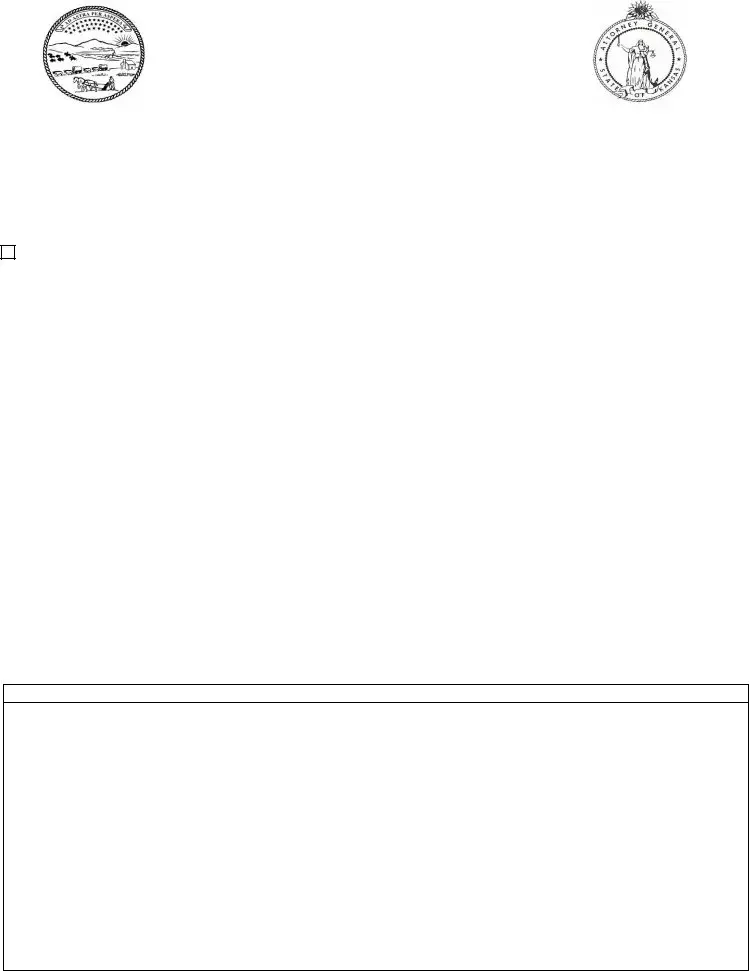
Office of Attorney General Derek Schmidt
Kansas Application for Concealed Carry Handgun License
and Qualifying Information (Updated 05/2021)
Instructions for Application
Please complete this concealed carry handgun license (CCHL) application in full by typing or printing (in ink) all requested information, and attaching items required by 1 through 5 of this page. Submit the completed application to the Sheriff’s Office in your county of residence where your fingerprints will be taken and the application will be forwarded to the Attorney General (AG) within 7 days. By law, the AG is allowed 90 days to approve or deny a completed application. If approved, you will receive a notice of approval in the mail and be directed to a State driver’s license station to obtain the CCHL. You must pay any additional fees the Department of Revenue requires in order to issue
the CCHL card. ALL APPLICATION FEES ARE NONREFUNDABLE. Keep a copy of your completed application and attachments for your records; once submitted, the CCLU will NOT return originals or provide copies of those materials to the applicant.
□Check this box if this is a reapplication after a prior “permanent expiration.” (See, pg. 4 definition)
1.Two money orders, cashier’s checks or personal checks: For new applications (or
2.Unless submitting a reapplication, proof of sufficient handgun training from one of the following (see, K.S.A.
□Completion of the Kansas CCHL training course (attach a photocopy of a certificate or affidavit signed by an AG- approved instructor showing the applicant’s completion of the course);
□“retired law enforcement officer” letter; (see description on pg. 4);
□Kansas corrections or parole officer; or federal bureau of prisons corrections officer (attach proof of active employment with the agency and proof of handgun qualification with the agency in the 12 months immediately preceding application); or
□other sufficient handgun training from another jurisdiction, e.g., a handgun course used to obtain a
3.A 2” x 2” frontal view (head & shoulders, no sunglasses or hats),
4.A clear photocopy of: (A) your Kansas driver’s license or nondriver’s identification card; as well as (B) any documentation necessary showing lawful presence in the United States if the applicant was born outside of the United States or one of its territories (U.S. citizen born abroad, certificate of naturalization, permanent resident alien card).
5.For an active duty military member (ADM) or a “dependent” of an ADM, see the “ADM considerations” on pg. 4. DO NOT attach a photocopy of a MILITARY ID or CAC card to this application.
Section I: Sworn Statement
WARNING: This application is executed under oath. A false statement or answer in sections I, II, or III of this application, or submission of a false document, may subject the applicant to prosecution for the crime of perjury, K.S.A.
I hereby declare under penalty of perjury that all of the statements made in this application are true and correct and that:
1.I have received a copy of the Kansas Personal and Family Protection Act (KPFPA) and I am familiar with its provisions;
2.I have complied with the criteria in K.S.A.
3.I desire a Kansas CCHL as a means of
4.I understand that a state and national criminal history records check will be conducted and may include access to expunged records, and that other investigations may be conducted to determine my eligibility for a Kansas CCHL.
Applicant Signature:___________________________ Date: __________ Print Name:___________________________
1
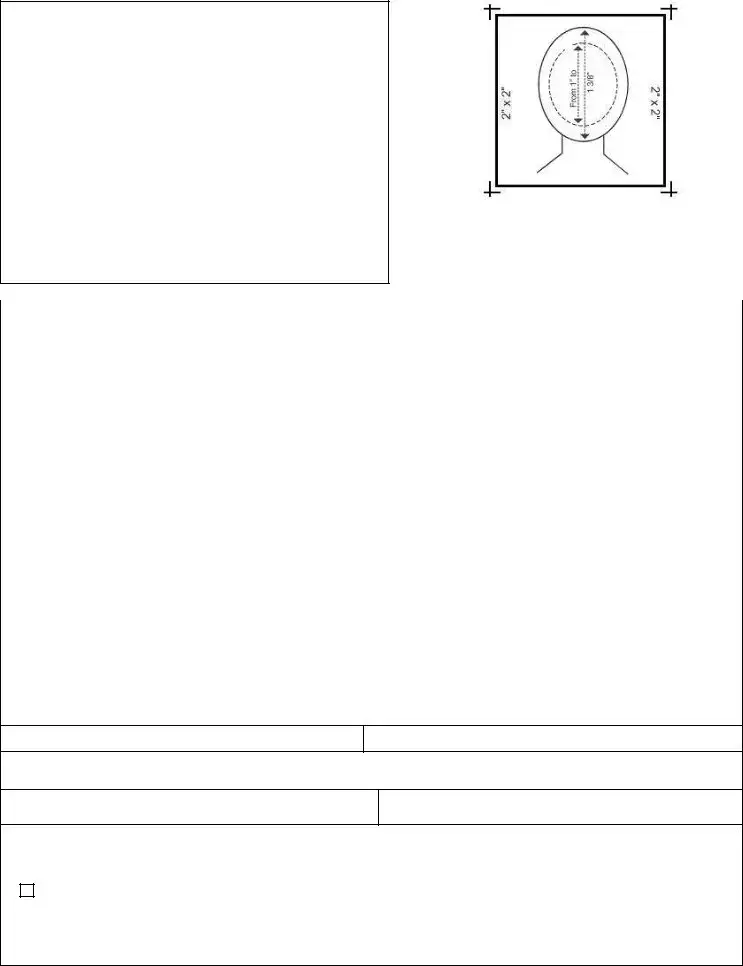
Sheriff’s Verification
Date Received _____/______/_____
Received by ______________________________________
County: __________________________________________
Fingerprints Transmitted Electronically to KBI: Yes ____No ____
Verify: (1) Applicant has a Kansas DL or ID |
_______ |
(Copy of DL or ID is attached ) |
|
(2)Active Duty Military (verify military ID) _______
(Copy of state DL or ID is attached)
(3) Signed Training Certificate Attached _______
Application Fee (7/1/21 - 6/30/22): $79.50+$32.50=$112.00 ________
Application Fee (before 7/1/2021 or after 6/30/2022): $100.00+$32.50=$132.50 _______
Attach Photo With Clear
Tape Across The Top and Bottom
Section II: Applicant Information |
|
|
|
Date Stamp – Attorney General |
||||||||
|
|
|
|
|
|
|
|
|
|
|
|
|
Name: Last |
|
|
First |
|
|
|
Middle |
|
Jr., Sr., etc. |
|||
|
|
|
|
|
|
|
|
|
|
|
|
|
Aliases/Maiden Name/Other Names Used: |
|
|
|
|
Citizenship – Enter Name |
of Country: (If born outside of U.S., |
you must attach a |
|||||
|
|
|
|
|
|
copy of your |
||||||
|
|
|
|
|
|
naturalization) |
|
|
|
|
|
|
|
|
|
|
|
|
|
|
|
|
|
||
Current Residence Address: |
|
|
|
|
|
City: |
State: |
|
County: |
Zip Code: |
||
|
|
|
|
|
|
|
|
|
|
|||
Mailing Address: (If different from residence) |
|
City: |
State: |
|
County: |
Zip Code: |
||||||
|
|
|
|
|
|
|
|
|
|
|||
Previous Addresses Within Last 5 Years: |
|
City: |
State: |
|
County: |
Zip Code: |
||||||
From:_______, 20___ to ________, 20____ |
|
|
|
|
|
|
|
|
||||
(Add additional page if more than one address) |
|
|
|
|
|
|
|
|
||||
|
|
|
|
|
|
|
|
|
|
|||
Date of Birth: (Month/Day/Year) |
Provisional status: |
|
|
Place of Birth: (City, |
State, Country) |
|
|
|
||||
|
Check box if |
|
|
|
|
|
|
|
|
|
|
|
|
under age 21 |
|
|
|
|
|
|
|
|
|
|
|
|
|
|
|
|
|
|
|
|
|
|
|
|
KS Driver’s License or Identification Card #: |
|
Social Security Number:* |
|
|
|
|
||||||
|
|
|
|
|
|
|
||||||
Telephone:** |
|
|
|
|
|
Email:***(please check box below to consent to electronic communication, optional) |
||||||
|
|
|
|
|
|
|
|
|
|
|
|
|
description on pg. 4, attach to this application a copy of any
State of Issuance: |
Alien Status: (If you are a permanent resident alien or nonimmigrant alien you must provide your
Active Duty Military or Dependent:
(Include State)
Active Duty Military or Dependent Identification #
*SSN is used to verify your identity and confirm your eligibility for a CCHL
**Providing your telephone number is voluntary. This information is helpful when it is necessary to contact an applicant.
***
By checking this box, I hereby consent to receive electronic (email) communication regarding the status of my application and my CCHL. This
includes, but is not limited to: missing information requests, required fees, or renewal reminders. I understand providing my email address may speed up processing of my application. If I change my email address, I will notify the Attorney General’s Office promptly. The Attorney General’s Office is not responsible for any information sent to incorrectly provided or outdated email contact information.
Applicant Signature:_____________________________________ |
Date:_________________________ |
2
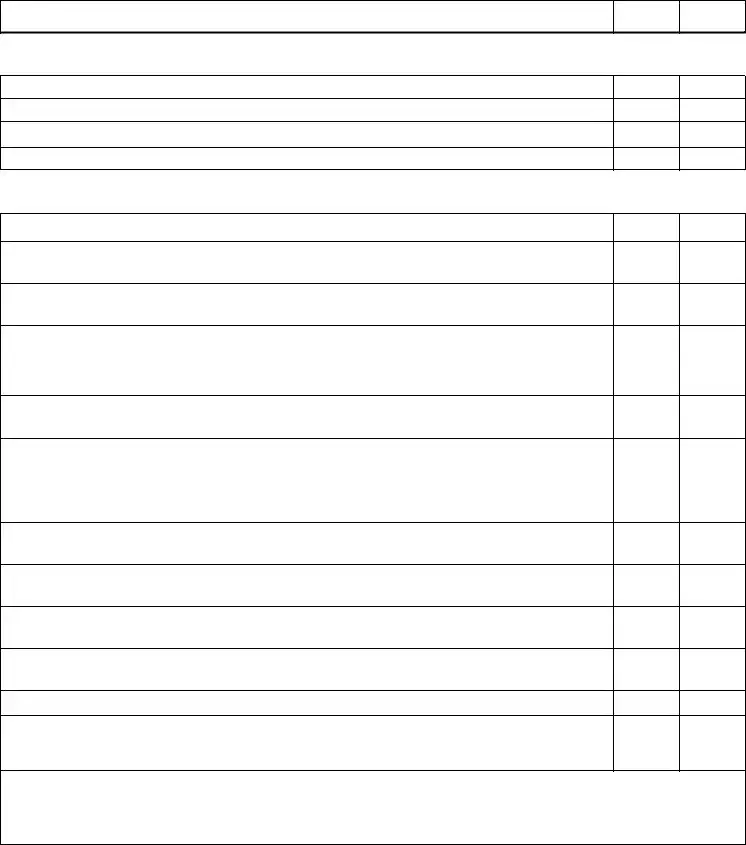
Section III: Qualifications (K.S.A.
‘no’ answer to the following questions. You must answer all questions numbered 1 through 16.
Yes
No
Answering ‘no’ to questions 1 through 4 could result in denial of your application.
1.Are you eighteen (18) years of age or older at the time of application?
2.Are you
3.Are you a resident of Kansas? (Or residing in Kansas while serving on active duty in the military?)
4.Are you a resident of the county where you are applying?
Answering ‘yes’ to questions numbered 5 through 16 could result in denial of your application.
5. Have you fled from a jurisdiction to avoid prosecution for a crime or to avoid giving testimony?
6. Are you under charges, indictment or information (including a diversion agreement) in any court for a felony, misdemeanor or any other crime?
7. Have you ever been convicted as an adult or adjudicated as a juvenile in any court of any felony crime.
See pg. 4 for information relating to felony disqualifiers.
8. Have you ever been convicted in any court of any misdemeanor crime involving domestic violence? This includes convictions for domestic battery, battery, disorderly conduct or others.
See pg. 4 for definition of “misdemeanor crime involving domestic violence.”
9. Are you subject to a court ordered restraining order involving an “intimate partner” or child of such a partner?
See pg. 4 for a definition of “restraining order.”
10. Are you an unlawful user of, or addicted to, marijuana or any depressant, stimulant, narcotic drug, or any other controlled substance? (Among other instances, this includes: being convicted in the last year or being currently under a diversion for a controlled substance offense; positive drug test in the last year;
paraphernalia that tests positive for a controlled substance; admissions of controlled substance use within the past year.) See pg. 4 for the definition of “unlawful user or addicted.”
11. Have you ever been adjudicated mentally defective? See pg. 4 for definition of “mental defective.” If answer is “yes,” attach a written explanation to this application.
12. Have you ever been involuntarily committed to a mental institution?
If answer is “yes,” attach a written explanation to this application.
13. Are you or have you ever been a “mentally ill person subject to involuntary commitment” or “person with an alcohol or substance abuse problem subject to involuntary commitment”
14. Have you been discharged from the Armed Forces under dishonorable conditions? (This includes being
dismissed by general court martial if served as Commissioned Officer).
15. Are you an alien illegally or unlawfully in the United States?
16. Are you a permanent resident alien residing in Kansas? If so, attach a copy of your
Applicant Signature: ____________________________________ |
Date: _________________________ |
3

Section IV: Definitions
Felony disqualifications: Any prior felony conviction as an adult, as well as any
NOTES: Anyone with a prior felony history should consult with private legal counsel to determine their CCHL eligibility. The AG cannot offer legal advice or interpretation to individual citizens about their CCHL eligibility or their ability to lawfully possess firearms in general. Again, pending felony charges, to include a pending diversion agreement for a felony violation, likely prohibit an applicant from obtaining a CCHL.
“Misdemeanor crime involving domestic violence” means: (1) A misdemeanor under, Federal, State or Tribal law; (2) that has as an element the use
of force, attempted use of force or threatened use of a deadly weapon; (3) that was committed by: a current or former spouse, parent or guardian of the victim; a person who shares a child with the victim; a person who is living with or has lived with the victim as a spouse, parent or guardian; or a person who is similarly situated to a spouse, parent or guardian to the victim.
NOTES: The misdemeanor being violated DOES NOT have to have the term “domestic” in it at all (this means a simple assault, battery or disorderly conduct can be sufficient even if pled down from a “domestic” assault, battery, or disorderly conduct charge). Again, please seek private legal counsel with any questions about a firearms prohibition due to domestic violence conviction.
“Adjudicated as a mental defective” means: a finding by a court, board, commission or other lawful authority that a person, as a result of marked
subnormal intelligence, or mental illness, incompetency, condition or disease: (a) Is a danger to himself or to others; or (b) Lacks the mental capacity to
contract or manage his own affairs. The term shall include: a finding of insanity by a court in a criminal case; and those persons found incompetent to stand trial or found not guilty by reason of lack of mental responsibility pursuant to articles 50a and 72b of the Uniform Code of Military Justice, 10 U.S.C. 850a, 872b.
“Restraining order” means: a court order that restrains the person from: (a) harassing, stalking or threatening (i) an intimate partner or (ii) child of the intimate partner or the restrained person; or (b) engaging in conduct that places the intimate partner or child in reasonable fear of bodily injury. The order must be one issued after the restrained person received notice and had an opportunity to be heard and must include a finding that the restrained person poses a credible threat to the physical safety of the intimate partner or child; or the order must include a specific prohibition on the use, attempted use or threatened use of physical force against the intimate partner or child.
“Retired law enforcement officer” means: a “law enforcement officer,” as defined by K.S.A.
New Resident & Prior Handgun Training: A new resident to Kansas may lawfully continue to carry concealed handguns with or without a valid CCHL so long as they are at least 18 years of age and otherwise lawful to possess firearms. Additionally, persons applying for a Kansas CCHL, whether previously licensed in another jurisdiction or not, may qualify for an exemption from the Kansas CCHL training course if they can provide documentary proof (i.e., training certificate with a course outline) of prior handgun training from another jurisdiction which was “equal to or greater than” the Kansas CCHL training course. At a minimum, documentation must show that the prior,
ADM considerations: A “dependent” of an ADM is a resident of the household of an ADM who financially depends on the ADM in whole or substantial part. An ADM or dependent stationed in Kansas may still apply for a Kansas CCHL even if their permanent State of residence (PSR) is other than Kansas; they must simply submit a photocopy of their
“Unlawful user of or addicted to any controlled substance” means: A person who uses a controlled substance and has lost the power of
Permanently Expired Licenses: A Kansas CCHL is permanently expired if not renewed within six (6) months following the expiration date. A person with a permanently expired Kansas CCHL must submit a new application through the Sheriff in the county where they reside.
4
| Fact Name | Description |
|---|---|
| Application Submission | Applicants must complete the Kansas Application for Concealed Carry Handgun License in full and submit it to their county's Sheriff’s Office, where fingerprints will also be taken. The Sheriff will forward the application to the Attorney General within 7 days. |
| Processing Time | By law, the Attorney General has up to 90 days to approve or deny a completed application. If approved, applicants will receive a notice in the mail directing them to obtain their license at a State driver’s license station. |
| Fees | For applications submitted from July 1, 2021, to June 30, 2022, the total fee is $112.00, which includes $79.50 payable to the Attorney General and $32.50 to the local Sheriff. Fees are nonrefundable. |
| Governing Law | The application process is governed by the Kansas Personal and Family Protection Act (K.S.A. 75-7c04) and related statutes, which outline eligibility and training requirements for applicants. |
Completing the Kansas Application for a Concealed Carry Handgun License (CCHL) requires careful attention to detail. Follow these steps to ensure your application is filled out correctly and submitted properly.
Once submitted, the Sheriff’s Office will forward your application to the Attorney General. Be prepared for a wait, as the approval process can take up to 90 days. Keep a copy of your application and documents for your records, as originals will not be returned.
To apply for a Kansas CCHL, complete the application form fully, either by typing or printing in ink. Attach the required documents, including proof of handgun training, a passport-type photograph, and copies of your identification. Submit the application to your county's Sheriff’s Office, where your fingerprints will be taken. The Sheriff will forward your application to the Attorney General (AG) within seven days.
The application requires two payments: one for the AG and one for the Sheriff. For applications submitted between July 1, 2021, and June 30, 2022, the fees are $79.50 to the AG and $32.50 to the Sheriff. After this period, the AG fee increases to $100.00. Remember, all application fees are nonrefundable.
Applicants must provide proof of sufficient handgun training, which can be achieved through:
The Attorney General has up to 90 days to approve or deny a completed application. If approved, you will receive a notice by mail directing you to a State driver’s license station to obtain your CCHL.
If your application is denied, you will receive a notification detailing the reasons for the denial. You may wish to consult with legal counsel to understand your options and whether you can reapply.
Applicants must disclose any felony convictions or misdemeanor crimes involving domestic violence. A felony conviction may disqualify you from obtaining a CCHL. It is advisable to consult with legal counsel if you have concerns about your eligibility due to a criminal record.
Required documents include:
If your Kansas CCHL has permanently expired, you must submit a new application through the Sheriff in your county of residence. Ensure you follow the same application process as a new applicant.
Filling out the Kansas Application for Concealed Carry Handgun License can be straightforward, but there are common mistakes that applicants often make. One frequent error is failing to provide the correct payment. Applicants must submit two checks: one for $79.50 made out to the Office of the Attorney General and another for $32.50 to the Sheriff of their county. If the payments are incorrect or not included, the application will not be processed.
Another mistake involves not attaching the required proof of handgun training. The application requires documentation showing completion of an approved training course or other qualifying experience. Many applicants overlook this requirement, which can lead to delays or outright denial of the application.
Inaccurate personal information is also a common issue. Applicants need to ensure that all details, such as their name, address, and date of birth, are correct. Any discrepancies can cause confusion and may lead to rejection. Additionally, applicants sometimes forget to include their Social Security number, which is essential for verifying identity and eligibility.
Photograph requirements can be easily overlooked. The application specifies that a recent 2” x 2” color photo must be attached. If the photo does not meet the guidelines—such as being taken within the last 30 days or not showing the applicant clearly—it may be rejected. This can cause significant delays in processing.
Some applicants fail to check the box indicating if they are reapplying after a prior permanent expiration. This oversight can complicate the application process and may lead to unnecessary delays. It is essential to provide accurate information regarding prior applications.
Lastly, not understanding the legal implications of the sworn statement can lead to serious consequences. The application is executed under oath, and providing false information can result in prosecution for perjury. Applicants should carefully read and understand all sections before signing to ensure compliance with the law.
When applying for a Kansas Concealed Carry Handgun License (CCHL), several other forms and documents may be required or helpful in the process. Understanding these documents can streamline your application and ensure you meet all necessary requirements. Here is a list of common forms and documents that you may encounter:
Familiarizing yourself with these documents can help ensure a smoother application process for your Kansas Concealed Carry Handgun License. Each piece of information plays a vital role in verifying your eligibility and commitment to responsible gun ownership. Taking the time to gather and prepare these documents will ultimately benefit you in your pursuit of a CCHL.
The Kansas Application for Concealed Carry Handgun License shares similarities with several other documents. Below is a list of six such documents and how they are alike:
When filling out the Kansas Application for a Concealed Carry Handgun License (CCHL), it is essential to follow specific guidelines to ensure a smooth application process. Below is a list of nine important do's and don'ts to consider.
Understanding the Kansas Application for Concealed Carry Handgun License (CCHL) can be challenging, especially with the various misconceptions that often arise. Here are six common misconceptions, along with clarifications to help you navigate the application process more effectively.
This is not true. Applicants must physically submit their completed application to the Sheriff’s Office in their county of residence. This includes providing fingerprints, which cannot be done online.
In fact, all application fees are nonrefundable. If you decide to withdraw your application or if it is denied, you will not receive your fees back.
This is incorrect. Applicants must provide proof of sufficient handgun training unless they are submitting a reapplication. Acceptable proof includes completion of an approved training course or documentation from a law enforcement agency.
Applicants should be aware that the CCHL application process requires photocopies of documents. Originals will not be returned, so it is essential to keep copies for your records.
This is not the case. The application specifically requires a 2” x 2” passport-type color photograph taken within the last 30 days. The photo must show a frontal view of the applicant without sunglasses or hats.
This is a common misunderstanding. The Attorney General's Office cannot offer legal advice regarding individual eligibility for a CCHL or the ability to possess firearms. It is advisable to consult with private legal counsel if there are any questions about eligibility.
Complete the Kansas Application for Concealed Carry Handgun License thoroughly. Use either typing or clear handwriting in ink for all requested information.
Submit your application to the Sheriff’s Office in your county. This must be done within 7 days of completing the application. Fingerprints will be taken at this time.
Include all required fees. For new applications submitted between July 1, 2021, and June 30, 2022, two checks are needed: one for $79.50 to the Attorney General and another for $32.50 to your county sheriff.
Attach necessary documentation, including proof of handgun training and a recent passport-style photograph. Ensure that all attachments are clear and legible.
Keep a copy of your completed application and all attachments for your records. The Sheriff’s Office will not return originals or provide copies once submitted.