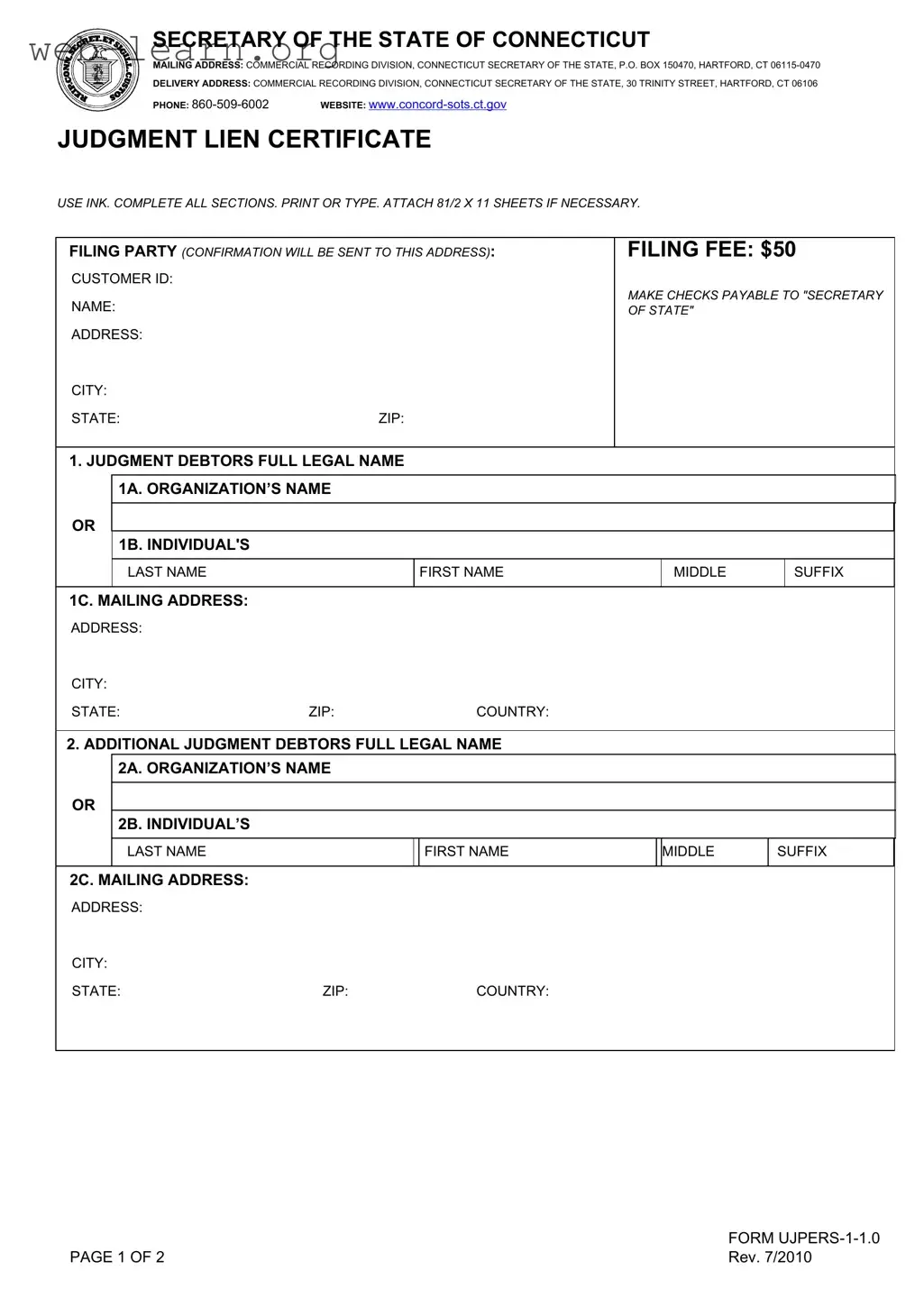
The Judgment Lien Certificate form in Connecticut serves as an essential document for individuals and organizations seeking to secure their interests in a debtor's property following a court judgment. This form requires careful completion, as it gathers critical information about both the judgment debtor and creditor, including their full legal names and mailing addresses. It also necessitates details regarding the court that issued the judgment, the date it was rendered, and the amounts involved, such as the original judgment amount and any outstanding balance. A filing fee of $50 is required, and the completed form must be submitted to the Commercial Recording Division of the Connecticut Secretary of the State, either by mail or in person. Accurate and thorough completion of all sections is crucial, as additional sheets can be attached if necessary. The form emphasizes the need for clarity, instructing users to print or type their entries in ink. By understanding the components and requirements of the Judgment Lien Certificate, individuals can better navigate the process of protecting their legal rights in Connecticut.

SECRETARY OF THE STATE OF CONNECTICUT
MAILING ADDRESS: COMMERCIAL RECORDING DIVISION, CONNECTICUT SECRETARY OF THE STATE, P.O. BOX 150470, HARTFORD, CT
DELIVERY ADDRESS: COMMERCIAL RECORDING DIVISION, CONNECTICUT SECRETARY OF THE STATE, 30 TRINITY STREET, HARTFORD, CT 06106
|
PHONE: |
WEBSITE: |
|
|
|
|
|
||
JUDGMENT LIEN CERTIFICATE |
|
|
|
|
|
||||
USE INK. COMPLETE ALL SECTIONS. PRINT OR TYPE. ATTACH 81/2 X 11 SHEETS IF NECESSARY. |
|
|
|||||||
|
|
|
|
|
|
|
|
|
|
FILING PARTY (CONFIRMATION WILL BE SENT TO THIS ADDRESS): |
FILING FEE: $50 |
||||||||
CUSTOMER ID: |
|
|
|
|
|
|
|
|
|
NAME: |
|
|
|
MAKE CHECKS PAYABLE TO "SECRETARY |
|||||
|
|
|
OF STATE" |
|
|
||||
|
|
|
|
|
|
|
|||
ADDRESS: |
|
|
|
|
|
|
|
|
|
CITY: |
|
|
|
|
|
|
|
|
|
STATE: |
ZIP: |
|
|
|
|
|
|
|
|
|
|
|
|
|
|
|
|
|
|
1. JUDGMENT DEBTORS FULL LEGAL NAME |
|
|
|
|
|
|
|
||
|
|
|
|
|
|
|
|
|
|
|
1A. ORGANIZATION’S NAME |
|
|
|
|
|
|
|
|
OR |
|
|
|
|
|
|
|
|
|
|
|
|
|
|
|
|
|
|
|
|
1B. INDIVIDUAL'S |
|
|
|
|
|
|
|
|
|
|
|
|
|
|
|
|
|
|
|
LAST NAME |
|
|
FIRST NAME |
|
|
MIDDLE |
|
SUFFIX |
|
|
|
|
|
|
|
|
|
|
1C. MAILING ADDRESS: |
|
|
|
|
|
|
|
|
|
ADDRESS: |
|
|
|
|
|
|
|
|
|
CITY: |
|
|
|
|
|
|
|
|
|
STATE: |
ZIP: |
|
COUNTRY: |
|
|
|
|
|
|
|
|
|
|
|
|
|
|
|
|
2. ADDITIONAL JUDGMENT DEBTORS FULL LEGAL NAME |
|
|
|
|
|
||||
|
|
|
|
|
|
|
|
|
|
|
2A. ORGANIZATION’S NAME |
|
|
|
|
|
|
|
|
OR |
|
|
|
|
|
|
|
|
|
|
|
|
|
|
|
|
|
|
|
|
|
|
|
|
|
|
|
|
|
|
2B. INDIVIDUAL’S |
|
|
|
|
|
|
|
|
|
|
|
|
|
|
|
|
|
|
|
LAST NAME |
|
|
FIRST NAME |
|
|
MIDDLE |
SUFFIX |
|
|
|
|
|
|
|
|
|
|
|
2C. MAILING ADDRESS: |
|
|
|
|
|
|
|
|
|
ADDRESS: |
|
|
|
|
|
|
|
|
|
CITY: |
|
|
|
|
|
|
|
|
|
STATE: |
ZIP: |
|
COUNTRY: |
|
|
|
|
|
|
|
|
|
|
|
|
|
|
|
|
|
FORM |
PAGE 1 OF 2 |
Rev. 7/2010 |

3. JUDGMENT CREDITORS FULL LEGAL NAME
3A. ORGANIZATION’S NAME
OR |
|
|
|
|
|
|
3B. INDIVIDUAL’S |
|
|
|
|
|
|
|
|
|
|
|
|
|
|
|
|
|
|
|
|
|
LAST NAME |
|
FIRST NAME |
MIDDLE |
SUFFIX |
|
|
|
|
|
|
|
|
3C. MAILING ADDRESS: |
|
|
|
|
|
|
ADDRESS: |
|
|
|
|
|
|
CITY: |
|
|
|
|
|
|
STATE: |
ZIP: |
|
COUNTRY: |
|
|
|
|
|
|
|
|
|
|
4. ADDITIONAL JUDGMENT CREDITORS FULL LEGAL NAME |
|
|
||||
|
|
|
|
|
|
|
|
4A. ORGANIZATION’S NAME |
|
|
|
|
|
OR |
|
|
|
|
|
|
|
|
|
|
|
|
|
4B. INDIVIDUAL’S |
|
|
|
|
|
|
|
|
|
|
|
|
|
|
|
|
|
|
|
|
|
LAST NAME |
|
FIRST NAME |
MIDDLE |
SUFFIX |
|
|
|
|
|
|
|
|
4C. MAILING ADDRESS: |
|
|
|
|
|
|
ADDRESS: |
|
|
|
|
|
|
CITY: |
|
|
|
|
|
|
STATE: |
ZIP: |
|
COUNTRY: |
|
|
|
|
|
|
|
|
|
|
5. COURT IN WHICH JUDGMENT WAS RENDERED |
|
|
||||
|
|
|
|
|
|
|
6. DATE OF JUDGMENT |
|
|
|
|
|
|
|
|
|
|
|
|
|
7. ORIGINAL JUDGMENT AMOUNT |
|
8. AMOUNT DUE |
|
|
||
|
|
|
|
|
|
|
9. PERSONAL PROPERTY ON WHICH LIEN IS PLACED |
|
|
||||
|
|
|
|
|
|
|
10. JUDGMENT CREDITOR SIGNATURE: |
|
11. DATE: |
|
|
||
|
|
|
|
|
|
|
|
FORM |
PAGE 2 OF 2 |
Rev. 7/2010 |
| Fact Name | Details |
|---|---|
| Governing Law | Connecticut General Statutes, Section 52-326 |
| Filing Fee | $50 |
| Filing Party Confirmation | A confirmation will be sent to the address provided by the filing party. |
| Mailing Address | Commercial Recording Division, Connecticut Secretary of the State, P.O. Box 150470, Hartford, CT 06115-0470 |
| Delivery Address | Commercial Recording Division, Connecticut Secretary of the State, 30 Trinity Street, Hartford, CT 06106 |
| Required Information | Complete all sections, including judgment debtors and creditors' full legal names. |
Once you have gathered all the necessary information, you're ready to fill out the Judgment Lien Certificate form for Connecticut. This form is essential for recording a judgment lien, and accuracy is key. After completing the form, you will need to submit it along with the required filing fee to the appropriate office.
After completing the form, double-check all entries for accuracy. Attach any additional sheets if necessary, and then submit the form along with your payment to the Connecticut Secretary of State’s office. Ensure you keep a copy for your records.
What is a Judgment Lien Certificate in Connecticut?
A Judgment Lien Certificate is a legal document that establishes a lien against a debtor's property in Connecticut. This lien arises from a court judgment that orders the debtor to pay a specified amount to the creditor. By filing this certificate, creditors can secure their interest in the debtor's property, which may include personal property, ensuring they have a legal claim to the asset until the debt is satisfied.
How do I complete the Judgment Lien Certificate form?
The form requires careful attention to detail. Start by using ink and ensure all sections are completed. You can print or type the information. Key details include the full legal names of both the judgment debtor and creditor, their mailing addresses, and specifics regarding the judgment itself, such as the court where it was rendered and the judgment date. If additional space is needed, attach 8½ x 11 sheets as necessary.
What is the filing fee for the Judgment Lien Certificate?
The filing fee for submitting a Judgment Lien Certificate in Connecticut is $50. Payment should be made by check, payable to the "Secretary of State." Ensure that your check is included with the completed form when you submit it to the appropriate address.
Where do I send the completed Judgment Lien Certificate?
Send the completed form to the Commercial Recording Division of the Connecticut Secretary of the State. The mailing address is P.O. Box 150470, Hartford, CT 06115-0470. If you prefer to deliver it in person, you can go to 30 Trinity Street, Hartford, CT 06106. For any questions, you can reach the office at 860-509-6002.
What happens after I file the Judgment Lien Certificate?
Once filed, a confirmation will be sent to the address provided by the filing party. The lien will be officially recorded, which means it becomes part of the public record. This action secures the creditor's claim against the debtor's property, allowing them to pursue collection efforts if the debt remains unpaid.
Filling out the Judgment Lien Certificate in Connecticut can be straightforward, but many people make mistakes that can delay the process. One common error is providing incomplete names for the judgment debtors and creditors. It's essential to include the full legal name, including any middle names or suffixes. Omitting even a small part of the name can lead to confusion and potential legal issues.
Another frequent mistake involves incorrect addresses. The form requires complete mailing addresses for all parties involved. Failing to include the city, state, or ZIP code can result in the form being returned or rejected. Always double-check that each address is accurate and complete to avoid unnecessary delays.
Many individuals also overlook the importance of the court information. Section 5 asks for the court in which the judgment was rendered. Leaving this blank or providing inaccurate information can cause complications. Ensure that the court name is correct and matches the official documentation related to the judgment.
People often forget to sign and date the form. The signature of the judgment creditor is crucial for the form to be valid. Without a signature, the filing will not be processed. Remember to sign in the designated area and include the date to confirm when the form was completed.
Lastly, some filers neglect to include the filing fee. The form specifies a fee of $50, and checks should be made payable to the "Secretary of State." Failing to include the correct payment can lead to rejection of the application. Always verify that the payment is included before submitting the form to ensure a smooth filing process.
When dealing with a Judgment Lien Certificate in Connecticut, several additional forms and documents may be necessary to ensure all legal aspects are properly addressed. Each of these documents plays a crucial role in the process and helps clarify the details of the judgment and lien. Below is a list of commonly used forms and documents that accompany the Judgment Lien Certificate.
Understanding these additional documents can significantly aid in navigating the complexities surrounding a Judgment Lien Certificate. Each form serves a distinct purpose and contributes to a more comprehensive understanding of the legal landscape involved in judgment liens.
The Judgment Lien Certificate in Connecticut serves a specific purpose in the realm of legal documentation. Several other documents share similarities with it, each serving unique functions but often overlapping in context. Below is a list of nine documents that are similar to the Judgment Lien Certificate:
When filling out the Judgment Lien Certificate form in Connecticut, it is essential to follow specific guidelines to ensure the process goes smoothly. Here are some do's and don'ts to keep in mind:
Understanding the Judgment Lien Certificate in Connecticut is crucial for anyone involved in a legal judgment process. However, several misconceptions exist that can lead to confusion. Here’s a breakdown of nine common misunderstandings:
Awareness of these misconceptions can help individuals navigate the filing process more effectively and ensure that their interests are protected.
When filling out the Judgment Lien Certificate in Connecticut, keep these key takeaways in mind:
By following these guidelines, you can ensure a smoother filing process for your Judgment Lien Certificate in Connecticut.