The Investment Letter of Intent (LOI) is a crucial document in the world of finance and investment, serving as a preliminary agreement between parties interested in a potential investment opportunity. This form outlines the basic terms and conditions that the parties intend to negotiate further, providing a framework for the transaction. Typically, it includes key details such as the amount of investment, the nature of the investment, and the timeline for closing the deal. Additionally, the LOI may address confidentiality agreements, exclusivity provisions, and any contingencies that must be met before finalizing the investment. By clearly stating these intentions, the Investment Letter of Intent helps to establish a mutual understanding and can facilitate smoother negotiations moving forward. Understanding the components of this form is essential for anyone looking to navigate the investment landscape effectively.
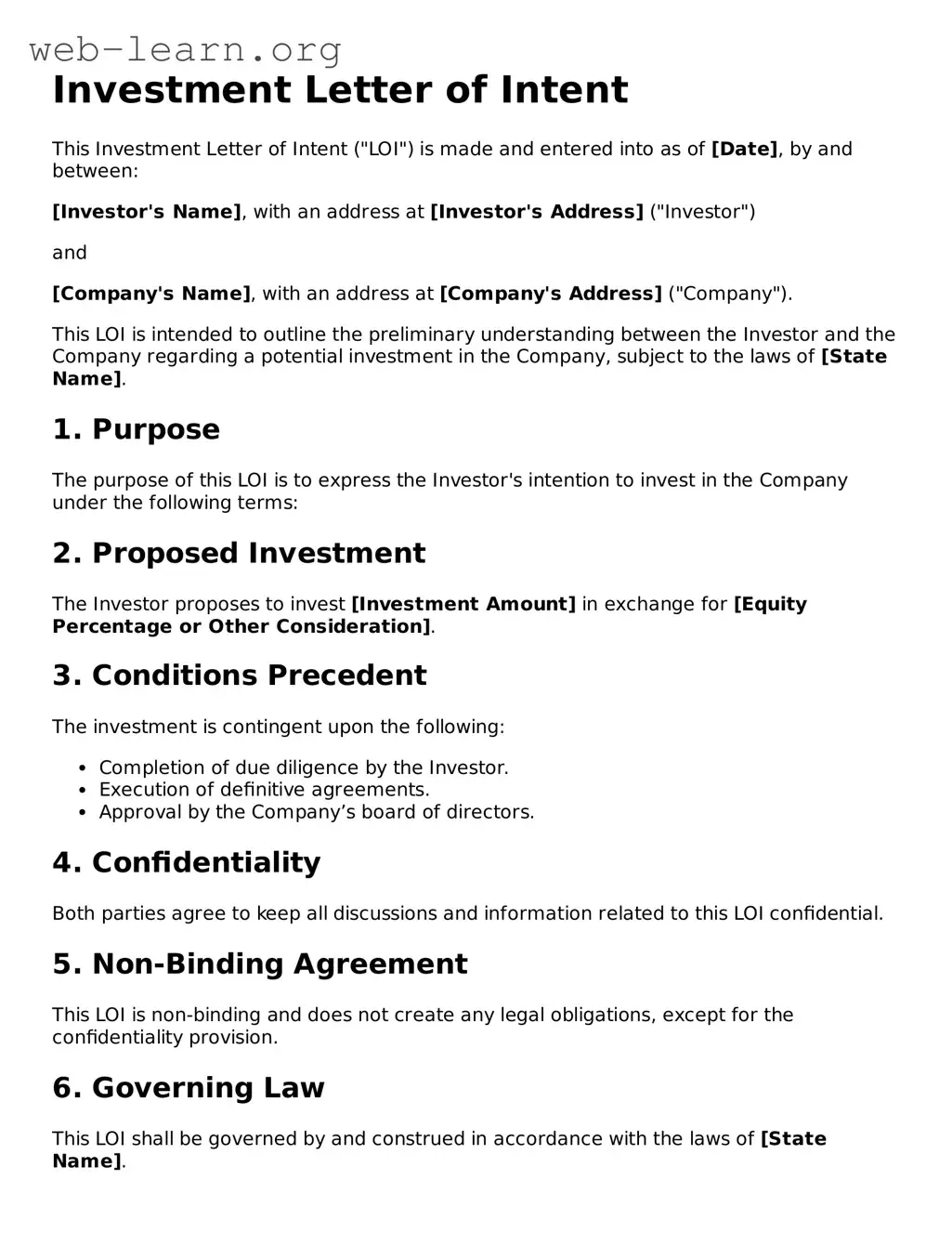
Investment Letter of Intent
This Investment Letter of Intent ("LOI") is made and entered into as of [Date], by and between:
[Investor's Name], with an address at [Investor's Address] ("Investor")
and
[Company's Name], with an address at [Company's Address] ("Company").
This LOI is intended to outline the preliminary understanding between the Investor and the Company regarding a potential investment in the Company, subject to the laws of [State Name].
1. Purpose
The purpose of this LOI is to express the Investor's intention to invest in the Company under the following terms:
2. Proposed Investment
The Investor proposes to invest [Investment Amount] in exchange for [Equity Percentage or Other Consideration].
3. Conditions Precedent
The investment is contingent upon the following:
4. Confidentiality
Both parties agree to keep all discussions and information related to this LOI confidential.
5. Non-Binding Agreement
This LOI is non-binding and does not create any legal obligations, except for the confidentiality provision.
6. Governing Law
This LOI shall be governed by and construed in accordance with the laws of [State Name].
7. Acceptance
If the terms outlined above are acceptable, please sign below:
_________________________
[Investor's Name]
_________________________
[Company's Name]
Date: [Date]
| Fact Name | Description |
|---|---|
| Definition | An Investment Letter of Intent is a document that outlines the preliminary agreement between parties interested in investing in a project or business. |
| Purpose | This form serves as a starting point for negotiations, detailing the terms and conditions that will guide the investment process. |
| Non-Binding Nature | Typically, the terms outlined in the letter of intent are non-binding, meaning that they do not create a legal obligation for the parties involved. |
| Governing Law | The governing law for the Investment Letter of Intent may vary by state. For example, in California, it is governed by California Commercial Code. |
| Key Components | Common components include the investment amount, timeline, and any conditions that must be met before the investment is finalized. |
| Confidentiality | Many letters of intent include confidentiality clauses to protect sensitive information shared during negotiations. |
| Signatures | While not always required, having signatures from all parties involved can strengthen the commitment to the terms discussed. |
Completing the Investment Letter of Intent form is a crucial step in moving forward with your investment plans. After you fill out the form, it will be reviewed by the relevant parties, and you will receive further instructions based on your submission.
What is an Investment Letter of Intent (LOI)?
An Investment Letter of Intent is a document that outlines the preliminary understanding between parties who intend to enter into a formal investment agreement. It serves as a non-binding agreement that indicates the intent to negotiate terms and conditions for an investment.
What are the key components of an Investment LOI?
The key components typically include:
Is the Investment LOI legally binding?
Generally, the Investment LOI is non-binding, meaning it does not create enforceable obligations. However, certain sections, such as confidentiality or exclusivity clauses, may be binding. Always clarify which parts of the LOI are intended to be binding.
Why is an Investment LOI important?
The LOI is crucial because it establishes a framework for negotiations. It helps both parties align their expectations and ensures that key terms are agreed upon before entering into a detailed investment agreement. This can save time and resources in the long run.
How do I fill out an Investment LOI?
To fill out an Investment LOI, follow these steps:
Can I modify the Investment LOI after submission?
Yes, you can modify the LOI after submission. Both parties must agree to any changes, and it is advisable to document these modifications in writing to avoid misunderstandings.
What should I do if I have further questions about the Investment LOI?
If you have further questions, consult with a legal professional who specializes in investment agreements. They can provide guidance tailored to your specific situation and help ensure that your interests are protected.
When individuals fill out the Investment Letter of Intent form, several common mistakes can lead to complications or delays in the investment process. Awareness of these pitfalls can help ensure a smoother experience. One prevalent error is failing to provide accurate personal information. This includes names, addresses, and contact details. Incomplete or incorrect information can result in difficulties in communication or even legal issues down the line.
Another frequent mistake is neglecting to read the instructions thoroughly. Each section of the form often has specific requirements. Skipping over these can lead to omissions or misunderstandings about what is needed. For example, some sections may require additional documentation, and failing to include this can cause delays in processing.
Many individuals also underestimate the importance of clarity in their intentions. When stating the purpose of the investment, vague language can lead to confusion. Instead, being explicit about the intended use of funds or the goals of the investment can provide clarity for all parties involved.
Additionally, people often overlook the significance of signatures and dates. A common oversight is submitting the form without proper signatures. This simple mistake can render the document invalid. Furthermore, not dating the form can lead to questions about the timeline of the investment.
In some cases, individuals may not fully disclose their financial background or investment history. Transparency is crucial. Omitting relevant financial information can raise red flags and may lead to complications in securing the investment.
Another mistake is failing to consult with legal or financial advisors. While it may seem straightforward, the implications of an investment can be complex. Advisors can provide valuable insights that help avoid pitfalls and ensure compliance with regulations.
Moreover, individuals sometimes neglect to keep copies of the submitted form and any accompanying documents. Retaining these records is essential for future reference and can be invaluable if any disputes arise later.
Lastly, impatience can lead to errors. Rushing through the form often results in mistakes that could have been easily avoided. Taking the time to review the completed form carefully can save individuals from potential headaches in the future.
The Investment Letter of Intent (LOI) is a crucial document that outlines the preliminary understanding between parties involved in an investment opportunity. It sets the stage for future negotiations and agreements. Along with the LOI, several other forms and documents are often utilized to ensure a comprehensive approach to the investment process.
Utilizing these documents in conjunction with the Investment Letter of Intent can help streamline the investment process and mitigate risks. Each document plays a specific role in ensuring clarity and protecting the interests of all parties involved.
The Investment Letter of Intent (LOI) serves as a preliminary agreement outlining the terms and conditions of a potential investment. Several other documents share similarities with the LOI in their purpose and structure. Here are four such documents:
When filling out the Investment Letter of Intent form, attention to detail is crucial. Here are some dos and don'ts to guide you through the process.
Understanding the Investment Letter of Intent form is crucial for anyone looking to make investments. However, several misconceptions can lead to confusion. Here are four common misconceptions:
Being aware of these misconceptions can help you navigate the investment process more effectively. Always consider seeking guidance if you have questions or concerns about the Investment Letter of Intent form.
When filling out and using the Investment Letter of Intent (LOI) form, there are several important points to consider. These takeaways can help ensure clarity and effectiveness in the investment process.
Letter of Intent for Business - A Letter of Intent to Purchase Business outlines the buyer's intention to acquire a business.
When to Send Letter of Intent Residency - Motivated to explore the impact of social determinants on health and medication adherence.