The Inspection Contingency Addendum is a crucial document in real estate transactions, providing buyers with a safety net during the home-buying process. This form allows buyers to conduct inspections on a property before finalizing the purchase, ensuring that they are fully aware of any potential issues. It typically outlines the timeline for inspections, the types of inspections to be performed, and the process for addressing any findings. By including this addendum, buyers can negotiate repairs or even reconsider their offer based on the inspection results. Sellers also benefit, as it clarifies expectations and can help avoid disputes later on. Overall, the Inspection Contingency Addendum serves as a protective measure, fostering transparency and confidence for both parties involved in the transaction.
Inspection Contingency Addendum
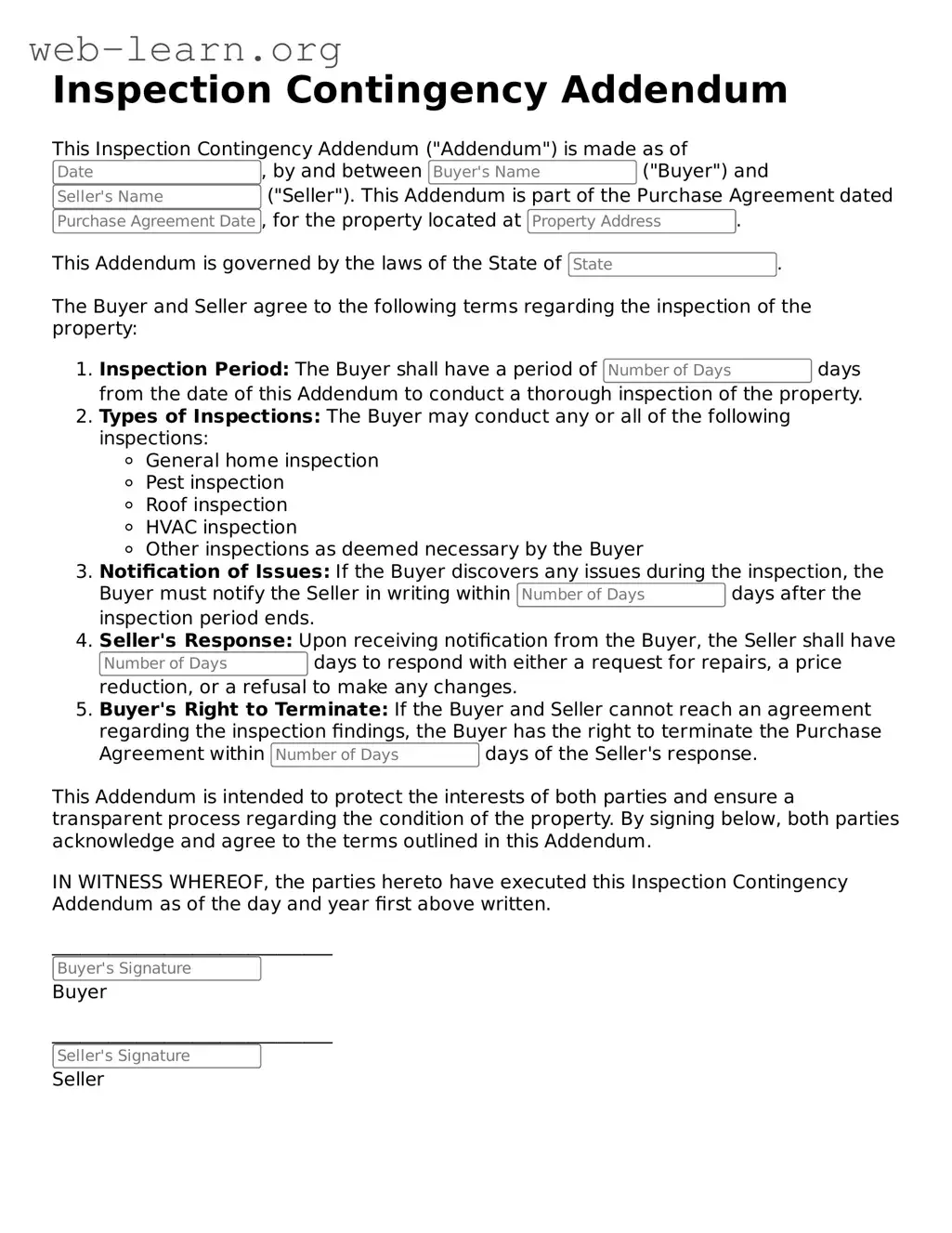
This Inspection Contingency Addendum ("Addendum") is made as of , by and between ("Buyer") and ("Seller"). This Addendum is part of the Purchase Agreement dated , for the property located at .
This Addendum is governed by the laws of the State of .
The Buyer and Seller agree to the following terms regarding the inspection of the property:
This Addendum is intended to protect the interests of both parties and ensure a transparent process regarding the condition of the property. By signing below, both parties acknowledge and agree to the terms outlined in this Addendum.
IN WITNESS WHEREOF, the parties hereto have executed this Inspection Contingency Addendum as of the day and year first above written.
______________________________
Buyer
______________________________
Seller
| Fact Name | Description |
|---|---|
| Purpose | The Inspection Contingency Addendum allows buyers to conduct inspections on a property before finalizing the purchase. |
| Buyer Rights | This form grants buyers the right to negotiate repairs or request credits based on the inspection findings. |
| Timeframe | Typically, buyers must complete inspections within a specified period, often outlined in the addendum. |
| Seller Obligations | Sellers are usually required to provide access to the property for inspections during the agreed timeframe. |
| State-Specific Forms | Each state may have its own version of the Inspection Contingency Addendum, governed by local real estate laws. |
| Negotiation Process | After inspections, buyers can negotiate repairs or price adjustments based on the inspection report. |
| Contingency Removal | Once negotiations are complete, buyers may need to formally remove the contingency to proceed with the purchase. |
| Legal Implications | Failing to adhere to the terms outlined in the addendum may lead to disputes or complications in the sale process. |
Completing the Inspection Contingency Addendum form is a straightforward process. Follow the steps carefully to ensure all necessary information is accurately provided. This will help facilitate the next steps in your transaction.
What is the purpose of the Inspection Contingency Addendum?
The Inspection Contingency Addendum serves as a protective measure for buyers during a real estate transaction. It allows buyers to conduct a thorough inspection of the property before finalizing the purchase. If significant issues are discovered, the buyer has the option to negotiate repairs, request credits, or, in some cases, withdraw from the deal without penalty.
What should a buyer include in the Inspection Contingency Addendum?
Buyers should clearly outline the terms of the inspection in the addendum. This includes:
Being specific helps avoid misunderstandings later in the process.
How long does a buyer typically have to conduct an inspection?
The duration for conducting an inspection can vary, but it is commonly set between 7 to 14 days from the date the addendum is signed. This timeframe allows buyers to schedule inspections and review reports without undue pressure. However, buyers should negotiate this period based on their specific needs and circumstances.
What happens if the inspection reveals significant issues?
If the inspection uncovers serious problems, the buyer has several options. They can:
Buyers should review their rights and obligations carefully to ensure they act within the agreed-upon terms.
Can a seller refuse to comply with repair requests?
Yes, a seller can refuse to comply with repair requests. However, the buyer's response will depend on the terms outlined in the Inspection Contingency Addendum. If the seller declines to make repairs, the buyer may choose to negotiate further or exercise their right to withdraw from the transaction if such a provision exists in the addendum.
Filling out the Inspection Contingency Addendum form can be a straightforward process, but many people make common mistakes that can lead to complications down the line. One frequent error is failing to clearly define the inspection period. Buyers should specify the exact number of days they have to conduct inspections. If this period is vague or left blank, it can create confusion and potentially jeopardize the buyer's ability to negotiate repairs or withdraw from the contract.
Another common mistake is neglecting to list all necessary inspections. Buyers often focus solely on general home inspections and overlook specialized inspections, such as pest or roof inspections. Omitting these can result in unexpected issues after the sale is finalized, leading to costly repairs that the buyer may not be prepared to handle.
Inaccurate descriptions of the property can also lead to problems. When filling out the form, it is essential to provide precise details about the property being inspected. If the description is incorrect or incomplete, it may cause disputes later regarding which property was actually inspected and what issues were identified.
Additionally, many individuals fail to understand the implications of the inspection findings. The form should clearly outline how the parties will respond to inspection results. Buyers may mistakenly assume that all issues will be addressed, while sellers may not be obligated to make any repairs. Clarity in this section can prevent misunderstandings and ensure both parties have aligned expectations.
Another frequent oversight involves the signatures and dates. Buyers and sellers must ensure that all parties sign the form and that dates are filled in correctly. A missing signature or incorrect date can render the addendum unenforceable, leaving buyers without the protections they intended to secure.
Lastly, some people overlook the importance of consulting with a real estate professional. Filling out the Inspection Contingency Addendum without guidance can lead to errors that might have been easily avoided. Engaging with an experienced agent or attorney can provide valuable insights and help ensure that the form is completed accurately and comprehensively.
The Inspection Contingency Addendum is a crucial document in real estate transactions, allowing buyers to negotiate repairs or price adjustments based on the findings from a property inspection. However, several other forms and documents often accompany this addendum, ensuring a comprehensive understanding of the transaction and protecting both parties' interests. Below is a list of commonly used forms that complement the Inspection Contingency Addendum.
Incorporating these documents into the transaction process not only clarifies expectations but also helps to streamline negotiations. A well-prepared buyer and seller can navigate the complexities of real estate transactions with greater confidence, ensuring a smoother experience for everyone involved.
The Inspection Contingency Addendum form is a crucial part of real estate transactions, particularly for buyers who want to ensure that the property they are purchasing meets certain standards. There are several other documents that share similarities with this addendum, each serving its own purpose in the transaction process. Here’s a look at seven documents that are comparable to the Inspection Contingency Addendum:
When completing the Inspection Contingency Addendum form, it is important to follow certain guidelines to ensure clarity and compliance. Below are nine recommendations, divided into things to do and things to avoid.
Things to Do:
Things to Avoid:
The Inspection Contingency Addendum is an important part of real estate transactions, but several misconceptions can lead to confusion. Here are nine common misconceptions about this form:
Understanding these misconceptions can help both buyers and sellers navigate the real estate process more effectively.
When dealing with the Inspection Contingency Addendum form, there are several important points to keep in mind. This form can be a crucial part of the home buying process, allowing buyers to protect their interests. Here are six key takeaways to consider:
By understanding these key aspects of the Inspection Contingency Addendum, buyers can navigate the home purchasing process with greater confidence and security.