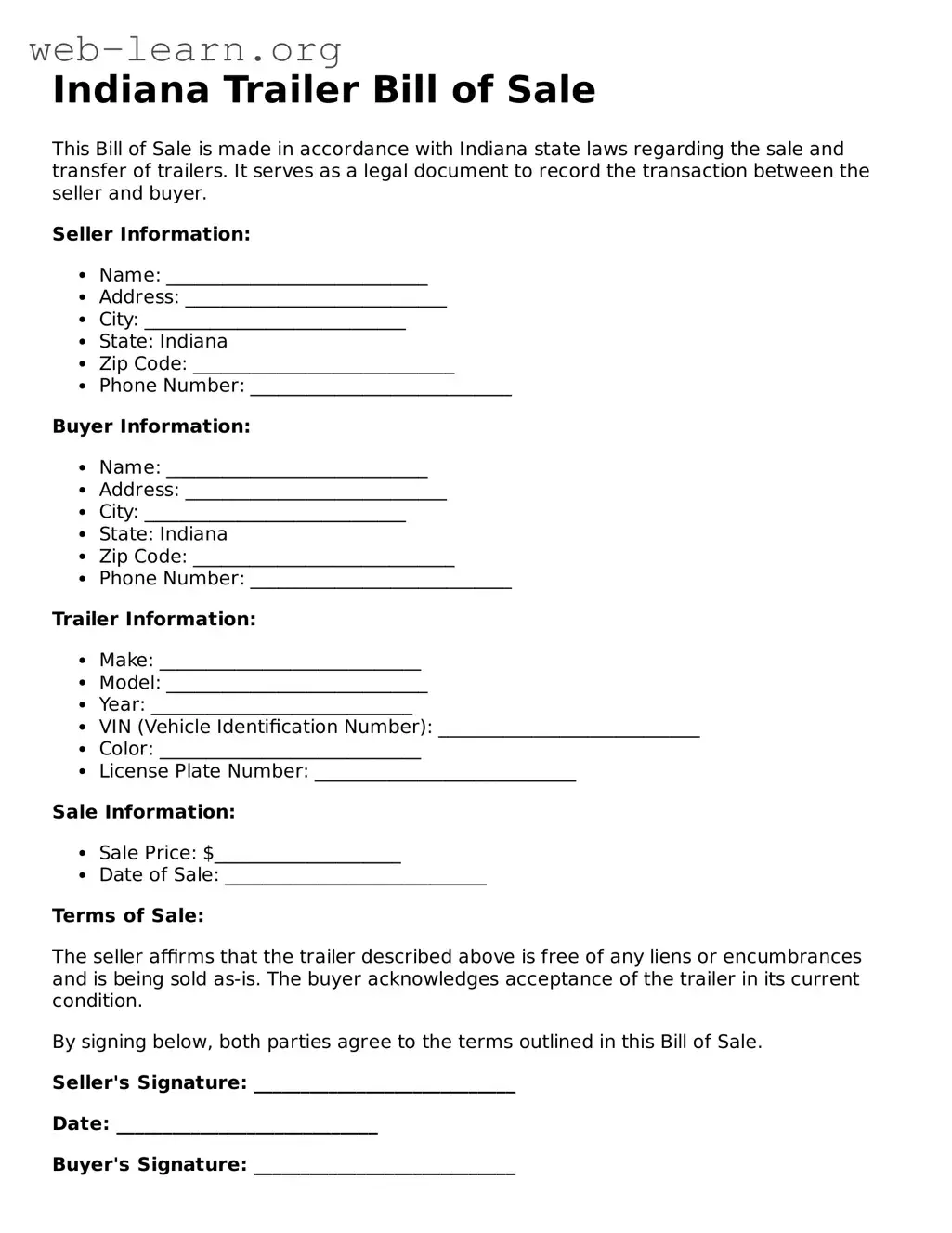
The Indiana Trailer Bill of Sale form serves as a vital document in the transfer of ownership for trailers within the state. This form captures essential information, including the names and addresses of both the seller and buyer, along with the trailer's specific details, such as its make, model, year, and vehicle identification number (VIN). By providing a clear record of the transaction, the form helps protect the rights of both parties involved. It also includes sections for the sale price and any warranties or conditions that may apply to the sale. Completing this form is crucial for ensuring that the transaction is legally recognized and can facilitate the registration process with the Indiana Bureau of Motor Vehicles (BMV). Understanding the importance of this document can streamline the buying or selling process and contribute to a smoother ownership transfer experience.
Indiana Trailer Bill of Sale
This Bill of Sale is made in accordance with Indiana state laws regarding the sale and transfer of trailers. It serves as a legal document to record the transaction between the seller and buyer.
Seller Information:
Buyer Information:
Trailer Information:
Sale Information:
Terms of Sale:
The seller affirms that the trailer described above is free of any liens or encumbrances and is being sold as-is. The buyer acknowledges acceptance of the trailer in its current condition.
By signing below, both parties agree to the terms outlined in this Bill of Sale.
Seller's Signature: ____________________________
Date: ____________________________
Buyer's Signature: ____________________________
Date: ____________________________
This document should be kept by both parties for their records.
| Fact Name | Description |
|---|---|
| Purpose | The Indiana Trailer Bill of Sale form is used to document the sale of a trailer between a buyer and a seller. |
| Governing Law | This form is governed by Indiana state laws regarding the sale and transfer of personal property. |
| Required Information | It requires details such as the trailer's make, model, year, VIN, and the sale price. |
| Signatures | Both the seller and buyer must sign the form to validate the transaction. |
| Notarization | While notarization is not required, it is recommended to enhance the document's authenticity. |
| Transfer of Ownership | The completed form serves as proof of ownership transfer for the trailer. |
| Record Keeping | Both parties should keep a copy of the completed form for their records. |
| Usage | This form is commonly used when buying or selling trailers, including utility and recreational types. |
Once you have the Indiana Trailer Bill of Sale form in hand, you can proceed to fill it out. This form is essential for documenting the sale of a trailer and ensuring that both the buyer and seller have a record of the transaction. Completing it accurately helps avoid potential disputes in the future.
What is the Indiana Trailer Bill of Sale form?
The Indiana Trailer Bill of Sale form is a legal document that records the sale and transfer of ownership of a trailer. It includes essential details about the trailer, the seller, and the buyer, ensuring that both parties have a clear understanding of the transaction.
Why do I need a Bill of Sale for my trailer?
A Bill of Sale serves as proof of ownership and provides legal protection for both the buyer and the seller. It can help resolve disputes and is often required for registration purposes with the Indiana Bureau of Motor Vehicles (BMV).
What information is required on the form?
The form typically requires the following information:
Is the Bill of Sale required to register my trailer?
Yes, the Indiana BMV requires a Bill of Sale for trailer registration. It verifies the transaction and confirms that the buyer is the new owner.
Can I create my own Bill of Sale?
Yes, you can create your own Bill of Sale as long as it includes all necessary information. However, using a standard form can simplify the process and ensure that you don't miss any critical details.
Do I need to have the Bill of Sale notarized?
Notarization is not typically required for the Indiana Trailer Bill of Sale. However, having it notarized can add an extra layer of security and authenticity to the document.
How do I complete the form?
To complete the form, fill in all required fields with accurate information. Both the seller and buyer should review the document, sign it, and keep a copy for their records.
What if the trailer has a lien?
If there is a lien on the trailer, the seller must disclose this information. The lien must be satisfied before the sale can proceed, or the buyer may assume the lien obligations.
Where can I obtain the Indiana Trailer Bill of Sale form?
You can obtain the form from the Indiana BMV website or through various online legal document providers. Ensure that you use the most current version of the form.
What should I do after completing the Bill of Sale?
After completing the Bill of Sale, both parties should retain a signed copy. The buyer should take the document to the BMV to register the trailer in their name.
When completing the Indiana Trailer Bill of Sale form, individuals often overlook key details, which can lead to complications down the line. One common mistake is failing to provide accurate information about the trailer itself. This includes the trailer's Vehicle Identification Number (VIN), make, model, and year. Missing or incorrect details can create confusion and may even result in legal issues regarding ownership.
Another frequent error is neglecting to include the full names and addresses of both the buyer and the seller. This information is crucial for establishing a clear record of the transaction. If these details are incomplete or incorrect, it can complicate future registration processes or lead to disputes about ownership.
Some people also forget to date the bill of sale. A date is essential as it signifies when the ownership transfer took place. Without this information, it may be difficult to determine the timeline of the transaction, which can be problematic for both parties involved.
Additionally, individuals sometimes fail to include the purchase price. This detail is not just a formality; it serves as a record of the transaction's value and can be important for tax purposes. Omitting this information can lead to misunderstandings or disputes later on.
Lastly, many people do not sign the form. A signature is a vital component of the bill of sale, as it indicates that both parties agree to the terms outlined in the document. Without signatures, the bill of sale may not be considered valid, leaving both the buyer and seller vulnerable to potential legal challenges.
When selling or purchasing a trailer in Indiana, the Trailer Bill of Sale form is essential. However, it is often accompanied by other important documents to ensure a smooth transaction and proper registration. Below are some commonly used forms and documents that you may need.
Having these documents ready can streamline the buying or selling process, ensuring that all legal requirements are met. Always double-check that you have everything in order before finalizing your transaction.
When filling out the Indiana Trailer Bill of Sale form, attention to detail is crucial. Here are some important do's and don'ts to keep in mind:
Following these guidelines will help ensure a smooth transaction and protect both parties involved in the sale.
When it comes to buying or selling a trailer in Indiana, many people encounter the Trailer Bill of Sale form. However, several misconceptions can lead to confusion. Here are five common misunderstandings about this important document:
Understanding these misconceptions can help ensure a smoother transaction when buying or selling a trailer in Indiana. Always take the time to complete the Bill of Sale accurately and keep a copy for your records.
When filling out and using the Indiana Trailer Bill of Sale form, there are several important points to keep in mind. Here are key takeaways to ensure a smooth transaction:
Following these guidelines will help facilitate a successful sale and ensure that both parties are protected throughout the process.
How to Write a Bill of Sale for a Car in Idaho - In some cases, a Trailer Bill of Sale can include warranties or guarantees from the seller.
Hawaii Bill of Sale for a Trailer - Includes information about the sale price and payment method.
Does a Bill of Sale Have to Be Notarized in Georgia - Helps prevent disputes over ownership after the sale.
Oregon Trailer Registration Requirements - Requires signatures from both the seller and the buyer to be valid.