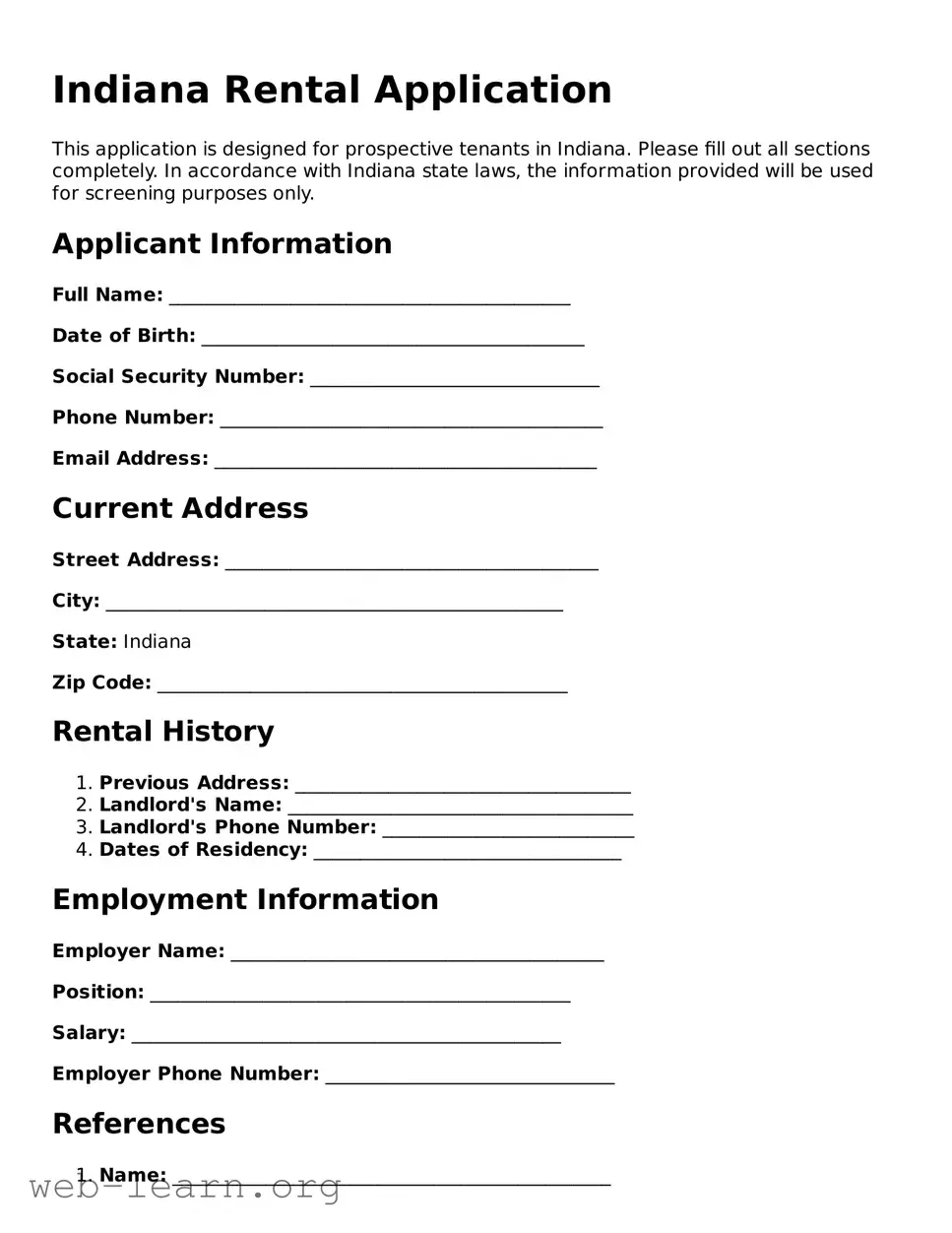
When seeking a rental property in Indiana, the rental application form plays a crucial role in the leasing process. This form typically requires essential information from prospective tenants, including personal details, employment history, and references. Landlords often use this information to assess the suitability of applicants. Additionally, the form may include sections for financial information, such as income and credit history, which help landlords gauge the applicant's ability to pay rent consistently. It's important for potential renters to complete the form accurately and thoroughly, as any discrepancies can lead to delays or even denial of the application. Understanding the key components of the Indiana rental application form can empower applicants to present themselves in the best light and increase their chances of securing their desired rental property.
Indiana Rental Application
This application is designed for prospective tenants in Indiana. Please fill out all sections completely. In accordance with Indiana state laws, the information provided will be used for screening purposes only.
Applicant Information
Full Name: ___________________________________________
Date of Birth: _________________________________________
Social Security Number: _______________________________
Phone Number: _________________________________________
Email Address: _________________________________________
Current Address
Street Address: ________________________________________
City: _________________________________________________
State: Indiana
Zip Code: ____________________________________________
Rental History
Employment Information
Employer Name: ________________________________________
Position: _____________________________________________
Salary: ______________________________________________
Employer Phone Number: _______________________________
References
Consent
By signing below, you authorize the landlord to conduct a background check and verify the information provided in this application.
Applicant Signature: _____________________________________
Date: _________________________________________________
Additional Information
Please list any additional information you believe is relevant to your application:
Comments: ______________________________________________
Application Fee
A non-refundable application fee of $_________ is required to process this application.
Thank you for your interest in renting with us. We look forward to reviewing your application!
| Fact Name | Description |
|---|---|
| Purpose | The Indiana Rental Application form is used by landlords to screen potential tenants. |
| Information Required | Applicants typically provide personal details, rental history, employment information, and references. |
| Governing Law | The form is governed by Indiana Code Title 32, Article 31, which outlines landlord-tenant relationships. |
| Application Fee | Landlords may charge an application fee to cover the cost of background checks and processing. |
Filling out the Indiana Rental Application form is an important step in securing your new home. Once completed, this form will provide the landlord with necessary information to assess your application. It’s essential to be thorough and accurate, as this will help in expediting the approval process.
After completing the application, submit it to the landlord or property manager along with any required fees. Be ready to provide additional documentation if requested, such as proof of income or identification. Good luck with your rental search!
What is the purpose of the Indiana Rental Application form?
The Indiana Rental Application form is designed to help landlords gather essential information about potential tenants. It typically includes sections for personal details, employment history, income verification, and rental history. This information assists landlords in making informed decisions about whom to rent their properties to.
What information do I need to provide on the application?
When filling out the rental application, you will generally need to provide:
Providing accurate and complete information is crucial, as it can affect your application approval.
Is there a fee to submit the rental application?
Many landlords charge an application fee to cover the costs of background checks and processing. This fee can vary widely, often ranging from $25 to $75. Be sure to inquire about the fee before submitting your application, as it may not be refundable, even if you are not approved for the rental.
How long does it take to process the rental application?
The processing time for a rental application can differ based on the landlord or property management company. Typically, you can expect a response within a few days to a week. However, if the landlord needs to conduct a more thorough background check or if there are multiple applications, it may take longer. It’s advisable to follow up if you haven’t received any communication within a reasonable timeframe.
What happens if my application is denied?
If your application is denied, the landlord is generally required to provide you with a reason for the denial. Common reasons include insufficient income, poor rental history, or negative background checks. If you believe the denial was based on incorrect information, you can request a copy of the report used in the decision. This allows you to address any inaccuracies and potentially reapply in the future.
Filling out a rental application can be a straightforward process, but many people make common mistakes that can lead to delays or even disqualification. One frequent error is incomplete information. Applicants often forget to fill out sections or leave questions unanswered. This can raise red flags for landlords who are looking for thorough and honest applicants.
Another mistake is providing inaccurate information. Some individuals might exaggerate their income or misrepresent their rental history. This can backfire, as landlords often verify the details provided. If discrepancies are found, it can result in the application being denied.
Many applicants also fail to check their references before submitting the application. It’s essential to ensure that references are aware they might be contacted. A landlord might receive a lukewarm response from a reference who wasn’t prepared to speak on the applicant’s behalf.
People sometimes overlook the importance of credit history. A poor credit score can be a dealbreaker for many landlords. It’s wise to review your credit report before applying. This way, you can address any issues that might arise during the landlord’s review process.
Another common mistake is not providing proof of income. Landlords typically want to see that you can afford the rent. Failing to include pay stubs or bank statements can lead to delays or rejection of your application.
Some applicants neglect to read the fine print of the rental application. Terms and conditions can vary widely. Understanding these details can prevent misunderstandings later on. Always take the time to read through everything carefully.
Additionally, people often submit applications without paying attention to deadlines. Rental markets can be competitive. Missing a deadline can mean losing out on a great rental opportunity. It’s important to stay organized and submit applications promptly.
Finally, many forget to follow up after submitting their application. A quick check-in can demonstrate interest and keep you on the landlord’s radar. It shows that you are proactive and serious about securing the rental.
When prospective tenants apply for rental properties in Indiana, they often need to submit additional forms and documents alongside the Indiana Rental Application. These documents help landlords assess the applicant's suitability and financial stability. Below is a list of commonly required forms and documents.
These documents collectively assist landlords in making informed decisions about potential tenants, ensuring a smooth rental process for all parties involved.
The Rental Application form serves as a critical document in the process of securing a rental property. Several other documents share similarities with it, often serving complementary purposes in the rental process. Here’s a list of those documents:
Each of these documents plays a vital role in the rental process, ensuring that both landlords and tenants have a clear understanding of expectations and responsibilities.
When filling out the Indiana Rental Application form, it is important to follow certain guidelines to ensure your application is processed smoothly. Here are some dos and don'ts to keep in mind:
When it comes to renting in Indiana, many people have misunderstandings about the rental application process. Here are nine common misconceptions about the Indiana Rental Application form, along with clarifications to help you navigate the process more effectively.
Landlords can vary in what they ask for on a rental application. While many will request similar information, such as employment history and references, specific requirements may differ.
Submitting an application does not guarantee that you will be approved for the rental. Landlords review applications based on various criteria, including credit history and income verification.
While credit history is important, landlords also consider rental history, income stability, and personal references. A strong rental history can sometimes outweigh a less-than-perfect credit score.
Some landlords may charge application fees that are non-refundable, but others may apply the fee toward your first month’s rent or security deposit if you are approved.
While landlords must follow fair housing laws, they can deny applications for legitimate reasons, such as insufficient income or poor rental history. However, they should be prepared to explain their decision if asked.
Falsifying information on a rental application can lead to immediate denial or eviction if discovered later. Honesty is crucial for a successful rental experience.
Many landlords allow applicants to update their information before a decision is made. If your circumstances change, communicate with the landlord promptly.
Current tenants may also be required to complete a new application if they are renewing their lease or if there are changes in ownership of the property.
Not all landlords perform background checks. Some may rely solely on the information provided in the application. However, many do conduct checks to ensure tenant reliability.
Understanding these misconceptions can help you approach the rental application process with greater confidence and clarity.
When filling out and using the Indiana Rental Application form, keep the following key takeaways in mind: