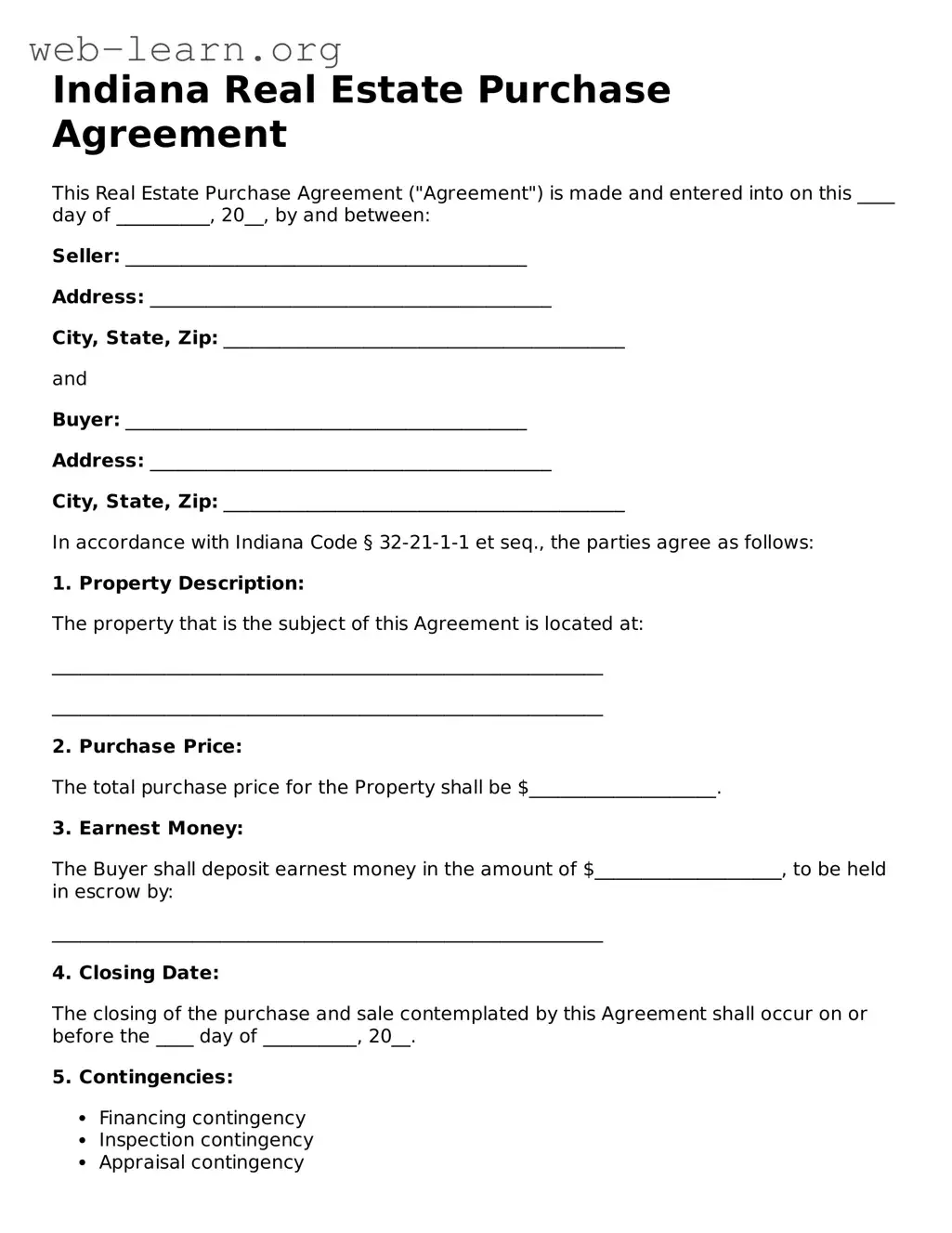
The Indiana Real Estate Purchase Agreement form serves as a crucial document in the process of buying and selling property within the state. This legally binding agreement outlines the terms and conditions agreed upon by both the buyer and the seller, ensuring clarity and mutual understanding. Key aspects of the form include the identification of the parties involved, a detailed description of the property, and the purchase price. Additionally, it addresses contingencies such as financing, inspections, and the timeline for closing the transaction. The agreement also specifies the responsibilities of each party regarding repairs, title transfer, and any potential disputes. By clearly defining these elements, the Indiana Real Estate Purchase Agreement helps facilitate a smoother transaction and protects the interests of all parties involved.
Indiana Real Estate Purchase Agreement
This Real Estate Purchase Agreement ("Agreement") is made and entered into on this ____ day of __________, 20__, by and between:
Seller: ___________________________________________
Address: ___________________________________________
City, State, Zip: ___________________________________________
and
Buyer: ___________________________________________
Address: ___________________________________________
City, State, Zip: ___________________________________________
In accordance with Indiana Code § 32-21-1-1 et seq., the parties agree as follows:
1. Property Description:
The property that is the subject of this Agreement is located at:
___________________________________________________________
___________________________________________________________
2. Purchase Price:
The total purchase price for the Property shall be $____________________.
3. Earnest Money:
The Buyer shall deposit earnest money in the amount of $____________________, to be held in escrow by:
___________________________________________________________
4. Closing Date:
The closing of the purchase and sale contemplated by this Agreement shall occur on or before the ____ day of __________, 20__.
5. Contingencies:
6. Title and Conveyance:
The Seller agrees to convey good and marketable title to the Property by Warranty Deed, free and clear of all liens and encumbrances, except as disclosed in this Agreement.
7. Governing Law:
This Agreement shall be governed by and construed in accordance with the laws of the State of Indiana.
8. Signatures:
IN WITNESS WHEREOF, the parties have executed this Agreement as of the date first above written.
Seller's Signature: ___________________________ Date: __________
Buyer's Signature: ___________________________ Date: __________
| Fact Name | Description |
|---|---|
| Governing Law | The Indiana Real Estate Purchase Agreement is governed by Indiana state law. |
| Purpose | This form is used to outline the terms and conditions of a real estate transaction in Indiana. |
| Parties Involved | The agreement typically involves a buyer and a seller, both of whom must be clearly identified. |
| Key Components | It includes essential details such as purchase price, property description, and closing date. |
Once you have the Indiana Real Estate Purchase Agreement form in hand, it’s essential to fill it out accurately to ensure a smooth transaction. This form serves as a binding agreement between the buyer and seller, outlining the terms of the sale. Follow these steps to complete the form correctly.
After completing the form, review it carefully for accuracy. Any errors or omissions could lead to complications down the line. Once confirmed, share the agreement with all parties involved to finalize the process.
What is the Indiana Real Estate Purchase Agreement?
The Indiana Real Estate Purchase Agreement is a legal document that outlines the terms and conditions under which a buyer agrees to purchase property from a seller. This agreement serves as a binding contract once both parties sign it, detailing important aspects such as the purchase price, financing arrangements, and contingencies. By clearly defining the expectations of both the buyer and seller, it helps to facilitate a smooth transaction process.
What key components are included in the agreement?
The agreement typically includes several essential components:
How does the earnest money work?
Earnest money is a deposit made by the buyer to show their serious intent to purchase the property. This amount is typically held in escrow until the closing of the sale. If the transaction goes through, the earnest money is applied to the purchase price. However, if the buyer fails to meet the conditions outlined in the agreement, they may risk losing this deposit. Therefore, it is crucial to understand the terms associated with earnest money before making a commitment.
What happens if either party breaches the agreement?
If either the buyer or seller fails to fulfill their obligations under the agreement, it is considered a breach. The non-breaching party may have several options, including:
It is essential to consult with a legal professional to understand the best course of action in such situations.
Can the agreement be modified after it is signed?
Yes, the Indiana Real Estate Purchase Agreement can be modified after it is signed, but both parties must agree to any changes. Modifications should be documented in writing and signed by both the buyer and seller to ensure clarity and enforceability. It is advisable to consult with a real estate professional or attorney when making modifications to ensure that all changes are legally sound and properly recorded.
When filling out the Indiana Real Estate Purchase Agreement form, many individuals make common mistakes that can lead to confusion or even legal issues down the line. Understanding these pitfalls can help ensure that the process goes smoothly and that all parties are protected. Here are nine mistakes to watch out for.
One frequent error is failing to include all necessary parties. It’s essential to list every individual or entity involved in the transaction. If a spouse or co-owner is omitted, it could create problems later when trying to enforce the agreement.
Another mistake is not clearly defining the property. The agreement should specify the address and legal description of the property being sold. Ambiguities in this section can lead to disputes about what exactly is being purchased.
People often overlook the purchase price. While it may seem straightforward, ensuring that the correct amount is clearly stated is crucial. Any errors here can lead to misunderstandings and complications during the closing process.
Additionally, some individuals neglect to include contingencies. Contingencies are conditions that must be met for the sale to proceed, such as securing financing or passing a home inspection. Omitting these can leave buyers vulnerable if issues arise.
Another common issue is incomplete dates. The agreement should specify important dates, including the date of acceptance and the closing date. Missing or vague dates can create uncertainty and delay the transaction.
Buyers and sellers sometimes fail to address earnest money deposits. This deposit shows the buyer's commitment to the purchase. If the amount and conditions surrounding this deposit are not clearly outlined, it can lead to disputes later on.
Many people also make the mistake of not reviewing the terms of the sale thoroughly. This includes understanding all aspects of the agreement, from repairs to what fixtures are included in the sale. Taking the time to review can prevent future disagreements.
Furthermore, not consulting a real estate professional can be a significant oversight. While the form may seem straightforward, having an expert review the agreement can help catch mistakes and provide valuable insights.
Lastly, individuals sometimes forget to sign the document or fail to provide all required signatures. A missing signature can render the agreement invalid, which can lead to wasted time and effort. Ensuring that all parties sign the agreement is essential for its enforceability.
By being aware of these common mistakes, individuals can approach the Indiana Real Estate Purchase Agreement with greater confidence and clarity. Taking the time to fill out the form correctly can save both time and potential legal headaches in the future.
When engaging in real estate transactions in Indiana, several key documents often accompany the Indiana Real Estate Purchase Agreement. These documents help clarify terms, protect parties' interests, and ensure compliance with state regulations. Below is a list of commonly used forms and documents in conjunction with the purchase agreement.
These documents work together to facilitate a smooth real estate transaction. Ensure all necessary forms are completed accurately to protect your interests throughout the process.
When filling out the Indiana Real Estate Purchase Agreement form, it is important to approach the process with care. Below are some essential dos and don'ts to keep in mind:
By adhering to these guidelines, you can help ensure a smoother transaction and protect your interests in the real estate process.
When navigating the Indiana Real Estate Purchase Agreement form, several misconceptions can arise. Understanding these misconceptions is crucial for both buyers and sellers to ensure a smooth transaction process. Below are four common misunderstandings.
Many believe that the Indiana Real Estate Purchase Agreement is exclusively for residential transactions. In reality, this form can be utilized for various types of real estate, including commercial properties, land, and investment properties. It is adaptable to meet the needs of different real estate transactions.
Another common belief is that signing the agreement immediately creates a binding contract. While the signed agreement is a significant step, it often requires additional conditions to be fulfilled, such as inspections or financing approvals, before it becomes fully enforceable.
Some individuals assume that every term within the agreement is open to negotiation. While many terms can be discussed and modified, certain legal requirements and standard practices may limit flexibility. Understanding which elements are negotiable is essential for effective communication between parties.
Lastly, there is a belief that simply using the Indiana Real Estate Purchase Agreement guarantees a successful sale or purchase. However, a successful transaction depends on various factors, including market conditions, proper disclosures, and effective negotiation. The form is a tool, but it does not replace the need for due diligence and careful planning.
When engaging in real estate transactions in Indiana, understanding the Indiana Real Estate Purchase Agreement form is essential. Here are seven key takeaways to consider:
By paying attention to these key aspects, both buyers and sellers can navigate the real estate transaction process more effectively.
Residential Purchase Agreement - It may require the buyer to obtain insurance before closing.
Connecticut Housing Sales Contract - The form can provide a framework for resolving disputes that may arise during the sale.
For Sale by Owner Contract Arkansas - Details the process for handling title insurance and title searches.
How to Make a Purchase Agreement - Provides a timeline for the completion of the transaction.