In the realm of marital preparations, a prenuptial agreement serves as a vital tool for couples contemplating marriage in Indiana. This legally binding document outlines the financial and property rights of each partner, ensuring clarity and protection for both parties in the event of a divorce or separation. The Indiana Prenuptial Agreement form encompasses essential elements such as the disclosure of assets and debts, which fosters transparency and trust between partners. Additionally, it addresses how property will be divided, the handling of spousal support, and any other specific provisions that the couple wishes to include. By establishing these terms before the marriage, individuals can mitigate potential conflicts and uncertainties that may arise in the future. Furthermore, this form must comply with Indiana state laws to be enforceable, emphasizing the importance of proper drafting and legal guidance. Couples can approach this process thoughtfully, considering their unique circumstances and goals, thereby laying a solid foundation for their future together.
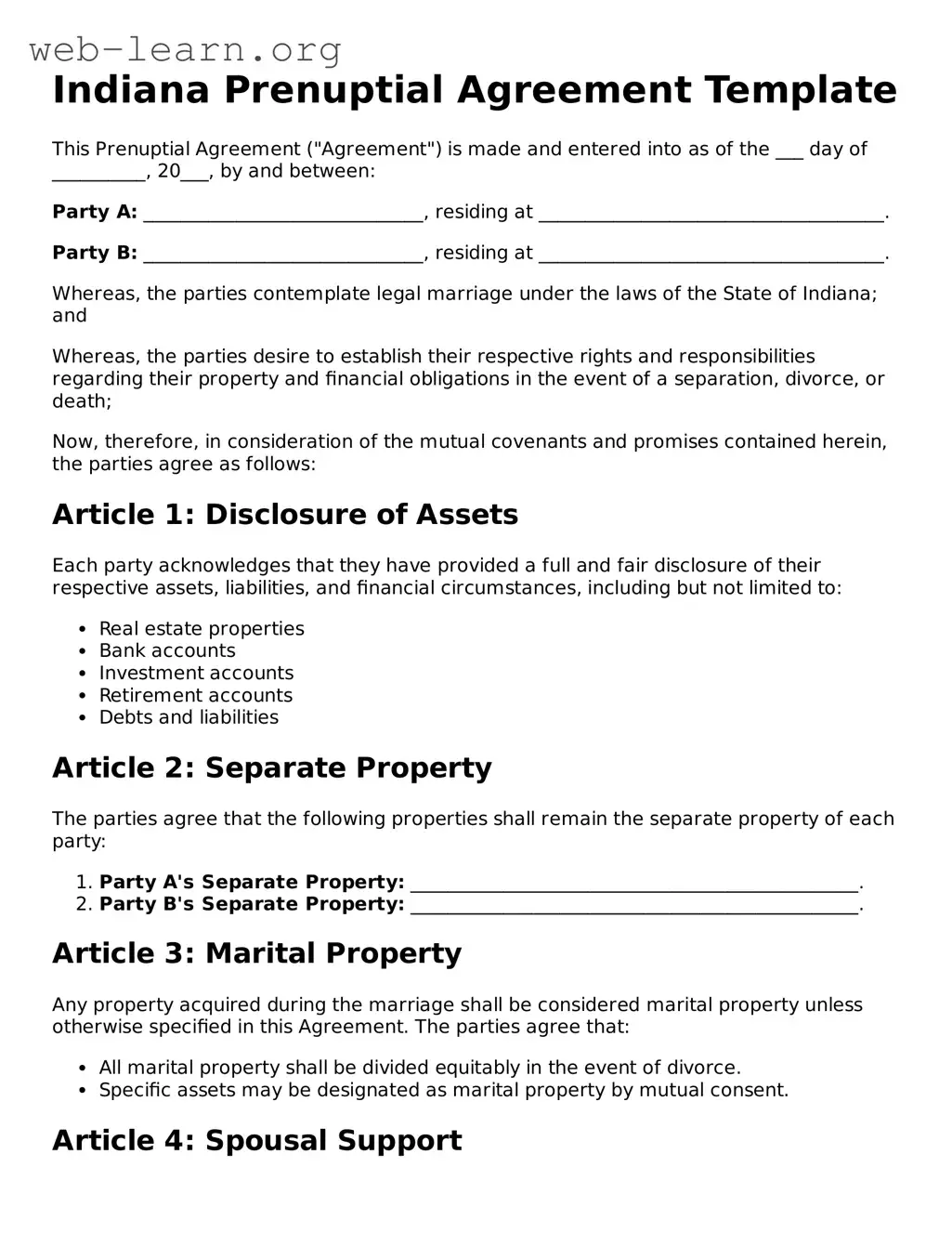
Indiana Prenuptial Agreement Template
This Prenuptial Agreement ("Agreement") is made and entered into as of the ___ day of __________, 20___, by and between:
Party A: ______________________________, residing at _____________________________________.
Party B: ______________________________, residing at _____________________________________.
Whereas, the parties contemplate legal marriage under the laws of the State of Indiana; and
Whereas, the parties desire to establish their respective rights and responsibilities regarding their property and financial obligations in the event of a separation, divorce, or death;
Now, therefore, in consideration of the mutual covenants and promises contained herein, the parties agree as follows:
Article 1: Disclosure of Assets
Each party acknowledges that they have provided a full and fair disclosure of their respective assets, liabilities, and financial circumstances, including but not limited to:
Article 2: Separate Property
The parties agree that the following properties shall remain the separate property of each party:
Article 3: Marital Property
Any property acquired during the marriage shall be considered marital property unless otherwise specified in this Agreement. The parties agree that:
Article 4: Spousal Support
The parties agree that in the event of divorce, spousal support shall be determined as follows:
Article 5: Miscellaneous Provisions
This Agreement constitutes the entire understanding between the parties. It supersedes all prior negotiations, discussions, or agreements. Any amendments to this Agreement must be made in writing and signed by both parties.
This Agreement shall be governed by and construed in accordance with the laws of the State of Indiana.
IN WITNESS WHEREOF, the parties have executed this Prenuptial Agreement as of the date first above written.
______________________________
Party A Signature
______________________________
Party B Signature
______________________________
Witness Signature
______________________________
Witness Signature
| Fact Name | Description |
|---|---|
| Definition | An Indiana Prenuptial Agreement is a legal document created by two individuals intending to marry, outlining the division of assets and responsibilities in the event of divorce or separation. |
| Governing Laws | Indiana prenuptial agreements are governed by Indiana Code Title 31, Article 11, which addresses marital property and agreements. |
| Enforceability | For a prenuptial agreement to be enforceable in Indiana, it must be in writing and signed by both parties before marriage. |
| Full Disclosure | Both parties are required to provide a full and fair disclosure of their financial situations, including assets and debts, prior to signing the agreement. |
| Legal Representation | While not mandatory, it is advisable for each party to have independent legal representation to ensure that their interests are adequately protected. |
| Modification and Revocation | Indiana prenuptial agreements can be modified or revoked at any time, provided both parties agree to the changes in writing. |
Filling out the Indiana Prenuptial Agreement form is an important step for couples looking to clarify their financial rights and responsibilities before marriage. This process involves gathering necessary information and carefully completing the form to ensure that it reflects both parties' intentions.
Once you have completed these steps, the Indiana Prenuptial Agreement form will be ready for use. It is advisable to consult with a legal professional to ensure that the agreement meets all legal requirements and adequately protects both parties' interests.
A prenuptial agreement, often called a "prenup," is a legal document that a couple creates before getting married. This agreement outlines how assets and debts will be handled in the event of a divorce or separation. In Indiana, a prenup can help clarify financial responsibilities and protect individual interests, making it a useful tool for couples entering marriage.
While each prenup can be tailored to the couple’s specific needs, several key elements are commonly included:
Including these elements can provide clarity and help avoid disputes in the future.
To create a valid prenuptial agreement in Indiana, both parties must voluntarily agree to the terms. Here are the essential steps:
Following these steps can help ensure that the agreement is enforceable in court.
Yes, a prenuptial agreement can be modified or revoked after marriage, but this requires mutual consent from both parties. Any changes should be documented in writing and signed by both individuals. It’s advisable to consult with a legal professional to ensure that the new agreement is valid and enforceable.
Filling out a prenuptial agreement in Indiana can be a straightforward process, but many people stumble along the way. One common mistake is failing to fully disclose assets and debts. Transparency is crucial. If one party hides significant financial information, the agreement could be challenged in court later on. Both partners should take the time to list all assets and liabilities honestly.
Another frequent error involves using vague language. Clarity is key in any legal document. Terms that are ambiguous can lead to misunderstandings and disputes in the future. Each party should ensure that the agreement clearly defines what is included in the marital estate and what is considered separate property.
Many couples neglect to consider the future implications of their agreement. Life changes, such as the birth of children or career advancements, can affect financial situations. It’s wise to include provisions that account for potential future changes. This foresight can help prevent conflicts down the line.
People also often overlook the importance of having the agreement reviewed by legal professionals. While it might seem tempting to save on legal fees, this could lead to costly mistakes. A qualified attorney can provide valuable insights and ensure that the document complies with Indiana laws.
Additionally, failing to sign the agreement in the presence of witnesses can invalidate it. This step is not just a formality; it’s a legal requirement in many cases. Couples should ensure that they follow all procedural rules to avoid any complications later.
Another mistake is not discussing the agreement openly with each other. Prenuptial agreements can be sensitive topics, but open communication is essential. Couples should engage in honest discussions about their financial expectations and concerns. This dialogue can strengthen their relationship and lead to a more mutually agreeable contract.
Finally, some individuals may rush through the process. Taking the time to thoughtfully consider each clause can make a significant difference. A well-prepared prenuptial agreement can provide peace of mind and clarity for both partners as they embark on their marriage journey.
A prenuptial agreement is an important document for couples planning to marry. In addition to this agreement, there are several other forms and documents that can be useful during the marriage planning process. Here’s a list of some commonly used documents that may accompany a prenuptial agreement in Indiana.
Each of these documents plays a significant role in protecting the interests of both parties. Understanding them can help couples navigate their financial and legal responsibilities more effectively.
When filling out the Indiana Prenuptial Agreement form, it is important to approach the task carefully. Here are some guidelines to help you navigate the process effectively.
Many people hold misconceptions about prenuptial agreements, especially in Indiana. Understanding these misconceptions can help couples make informed decisions about their future. Here are six common misunderstandings:
By dispelling these misconceptions, couples can approach prenuptial agreements with a clearer understanding of their benefits and limitations. Open discussions about finances and future plans can lead to a stronger partnership.
When considering a prenuptial agreement in Indiana, it’s important to understand the process and implications. Here are key takeaways to keep in mind:
Following these guidelines can help create a strong prenuptial agreement that protects both parties' interests.
Idaho Prenup - This agreement helps couples clarify financial rights and responsibilities before marriage.
Connecticut Prenup - A prenuptial agreement can protect family heirlooms and inheritances.