The Indiana Power of Attorney form is an important legal document that allows individuals to appoint someone they trust to make decisions on their behalf. This form can cover a wide range of decisions, from financial matters to healthcare choices, ensuring that your preferences are respected even when you cannot communicate them yourself. In Indiana, there are different types of Power of Attorney forms, including durable and medical, each serving a specific purpose. A durable Power of Attorney remains effective even if the principal becomes incapacitated, while a medical Power of Attorney specifically grants authority over healthcare decisions. It is crucial to understand the responsibilities and limitations that come with this authority, as the appointed agent must act in the best interest of the principal. Additionally, the form requires proper execution, including signatures and witnesses, to ensure its validity. Overall, the Indiana Power of Attorney form is a vital tool for planning ahead and safeguarding your wishes in times of need.
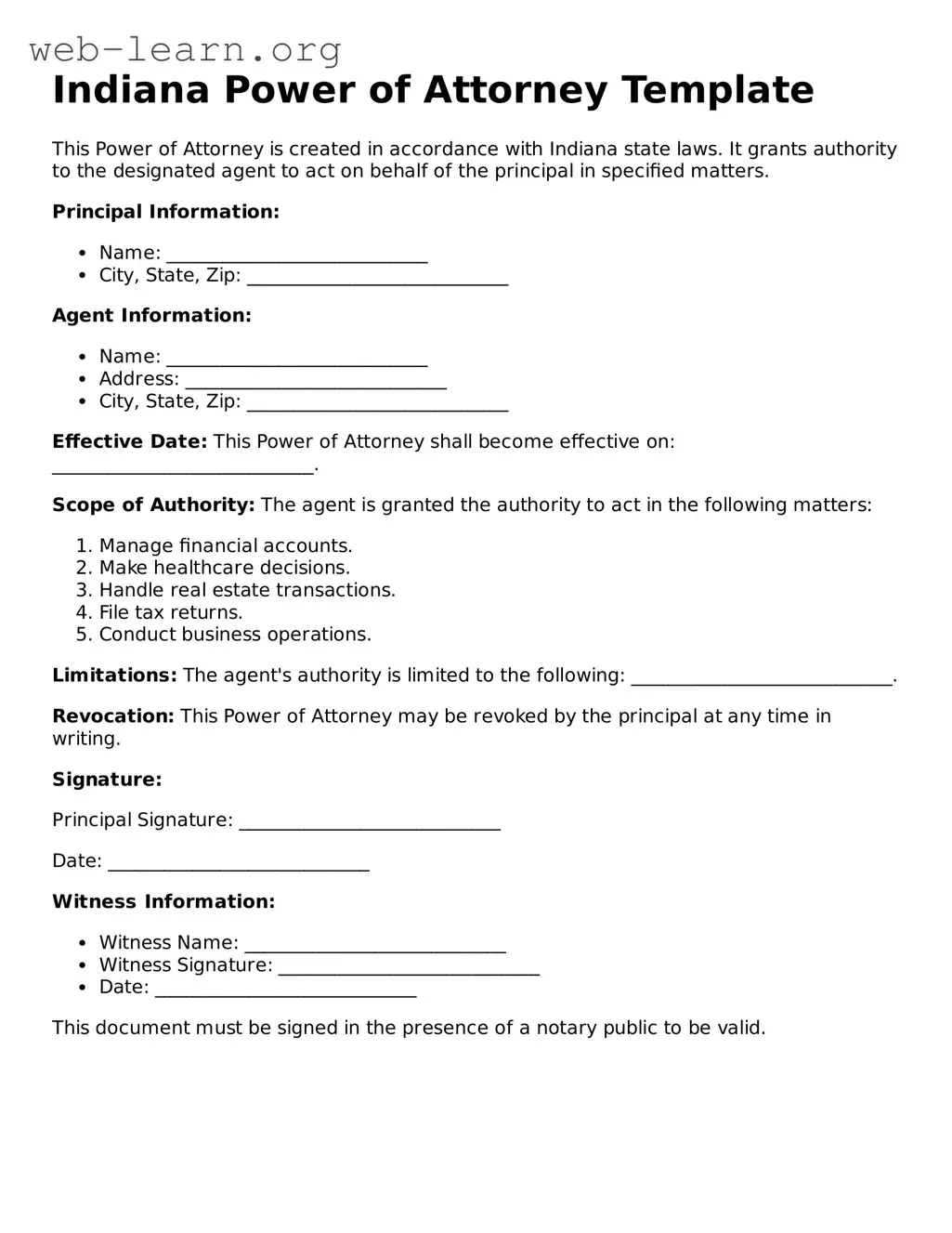
Indiana Power of Attorney Template
This Power of Attorney is created in accordance with Indiana state laws. It grants authority to the designated agent to act on behalf of the principal in specified matters.
Principal Information:
Agent Information:
Effective Date: This Power of Attorney shall become effective on: ____________________________.
Scope of Authority: The agent is granted the authority to act in the following matters:
Limitations: The agent's authority is limited to the following: ____________________________.
Revocation: This Power of Attorney may be revoked by the principal at any time in writing.
Signature:
Principal Signature: ____________________________
Date: ____________________________
Witness Information:
This document must be signed in the presence of a notary public to be valid.
| Fact Name | Description |
|---|---|
| Purpose | The Indiana Power of Attorney form allows an individual to designate someone else to make decisions on their behalf regarding financial and legal matters. |
| Governing Law | This form is governed by Indiana Code Title 30, Article 5, which outlines the rules and regulations for powers of attorney in the state. |
| Types | Indiana recognizes both general and limited powers of attorney. A general power grants broad authority, while a limited power restricts authority to specific tasks. |
| Durability | The Indiana Power of Attorney can be durable, meaning it remains effective even if the principal becomes incapacitated. |
| Signing Requirements | The form must be signed by the principal and witnessed by at least one person or notarized to be legally valid. |
| Revocation | The principal can revoke the power of attorney at any time, provided they are mentally competent to do so. |
| Agent's Responsibilities | The agent must act in the best interest of the principal and follow any specific instructions outlined in the document. |
Filling out the Indiana Power of Attorney form is an important step in designating someone to handle your financial or legal matters. After completing the form, you'll need to sign it in front of a notary public to make it official. Here’s how to fill out the form step-by-step.
What is a Power of Attorney (POA) in Indiana?
A Power of Attorney is a legal document that allows one person, known as the "principal," to appoint another person, called the "agent" or "attorney-in-fact," to make decisions on their behalf. In Indiana, this document can be used for various purposes, including financial, medical, or legal matters, depending on the type of POA established.
What types of Power of Attorney are available in Indiana?
Indiana recognizes several types of Power of Attorney, including:
How do I create a Power of Attorney in Indiana?
To create a Power of Attorney in Indiana, you must follow these steps:
Do I need a lawyer to create a Power of Attorney?
While it's not mandatory to hire a lawyer to create a Power of Attorney in Indiana, consulting one can be beneficial. A legal professional can help ensure that the document meets all legal requirements and accurately reflects your wishes.
Can I revoke a Power of Attorney in Indiana?
Yes, you can revoke a Power of Attorney in Indiana at any time, as long as you are mentally competent. To do so, you must create a written revocation document, sign it, and notify your agent and any relevant third parties who may have relied on the original POA.
What happens if my agent cannot serve or is unavailable?
If your designated agent is unable to serve, the Power of Attorney may include an alternate agent. If no alternate is named, the POA may become ineffective until a new agent is appointed. It is wise to consider naming a backup agent in your document.
Can I limit my agent's powers in the Power of Attorney?
Yes, you can specify the powers you want to grant your agent in the Power of Attorney document. If you choose a Limited Power of Attorney, you can clearly outline the specific tasks or decisions the agent is authorized to handle.
Is a Power of Attorney valid if I move to another state?
A Power of Attorney created in Indiana may be recognized in other states, but this can vary. It is advisable to check the laws of the new state or consult a local attorney to ensure that your Indiana POA remains valid and effective.
What should I do with my Power of Attorney once it is completed?
Once your Power of Attorney is completed and signed, keep the original document in a safe place. Provide copies to your agent, family members, and any institutions or individuals who may need to rely on it, such as banks or healthcare providers.
Can I use a Power of Attorney for healthcare decisions?
Yes, you can use a specific type of Power of Attorney, known as a Medical Power of Attorney, to designate someone to make healthcare decisions on your behalf. This document allows your agent to make choices regarding your medical treatment and care if you are unable to do so.
Filling out the Indiana Power of Attorney form is a critical step in ensuring that your financial and healthcare decisions can be managed by someone you trust. However, many individuals make mistakes that can lead to complications down the road. Awareness of these common pitfalls can help you avoid unnecessary issues.
One frequent mistake is not specifying the powers granted. The form allows for a variety of powers to be delegated, but if these are not clearly outlined, the agent may not have the authority needed to act on your behalf. Vague language can lead to confusion and disputes among family members or institutions.
Another common error is failing to date the document. A Power of Attorney that is not dated can raise questions about its validity. Always ensure that you include the date on which the form is signed to avoid any potential challenges in the future.
Many people also overlook the importance of not having the form notarized. In Indiana, notarization is often required to ensure that the document is legally binding. Without this step, your Power of Attorney may not be recognized by banks, healthcare providers, or other entities.
Additionally, some individuals forget to provide a backup agent. Life is unpredictable, and your primary agent may not always be available. Designating a secondary agent can help ensure that your wishes are honored, even if your first choice is unable to act.
Another mistake is not discussing your wishes with your agent beforehand. It’s essential that your chosen agent understands your preferences and values. Having an open conversation can prevent misunderstandings and ensure that they are prepared to act in your best interest.
People often fail to review the form for errors before submission. Typos, incorrect names, or missing signatures can invalidate the document. Taking the time to carefully review the form can save you from significant headaches later on.
Some individuals mistakenly believe that once the Power of Attorney is signed, it cannot be changed. This is not true. You have the right to revoke or amend the document at any time, as long as you are of sound mind. Keeping your Power of Attorney up to date is crucial as your circumstances change.
Another oversight is not considering state-specific requirements. Each state has its own laws regarding Powers of Attorney. Familiarizing yourself with Indiana's specific requirements can prevent complications and ensure that your document is compliant.
Lastly, many people fail to store the document safely. After filling out the Power of Attorney form, it’s important to keep it in a secure yet accessible location. Inform your agent and trusted family members about where to find the document when needed. This ensures that your wishes can be honored promptly.
By being mindful of these common mistakes, you can create a Power of Attorney that accurately reflects your wishes and protects your interests. Take the time to complete the form carefully, and consult with a professional if you have any doubts.
When creating a Power of Attorney (POA) in Indiana, several other forms and documents may complement it. These additional documents can help clarify your intentions and ensure your wishes are honored. Below is a list of commonly used forms that often accompany a Power of Attorney.
These documents can work together to provide a comprehensive approach to managing your health care and financial decisions. It is essential to consider each of these forms carefully to ensure your intentions are clear and legally binding.
When filling out the Indiana Power of Attorney form, it’s important to be thorough and careful. Here are some key things to consider:
Understanding the Indiana Power of Attorney form is essential for anyone considering this legal document. However, several misconceptions can lead to confusion. Below is a list of ten common misconceptions along with explanations to clarify them.
Being informed about these misconceptions can help individuals make better decisions regarding their Power of Attorney needs in Indiana.
When considering the Indiana Power of Attorney form, it’s important to understand several key points to ensure effective use and compliance with state laws.
Understanding these points can help ensure that the Power of Attorney serves its intended purpose effectively.
Florida Power of Attorney - It is essential to ensure that the agent understands their responsibilities and limitations.
New York Power of Attorney - A Power of Attorney allows someone to make decisions on your behalf.
Colorado Power of Attorney Requirements - This form can be tailored to cover financial, medical, or legal matters.
How to Get Power of Attorney in Idaho - The Power of Attorney can be revoked at any time by the principal.