When it comes to ensuring the well-being of a child in Indiana, the Power of Attorney for a Child form serves as a vital tool for parents and guardians. This legal document allows a parent to grant another adult the authority to make important decisions regarding the child's care, education, and medical needs when the parent is unavailable. By designating a trusted individual, parents can provide peace of mind, knowing that their child's best interests are being prioritized. The form covers essential aspects such as the duration of the authority, the specific powers granted, and any limitations that may apply. Furthermore, it requires signatures from both the parent and the designated agent, ensuring that all parties are in agreement. This form not only facilitates smooth decision-making in times of need but also helps to establish clear communication between caregivers and parents, fostering a supportive environment for the child. Understanding how to properly complete and utilize this form can empower families to navigate unforeseen circumstances with confidence.
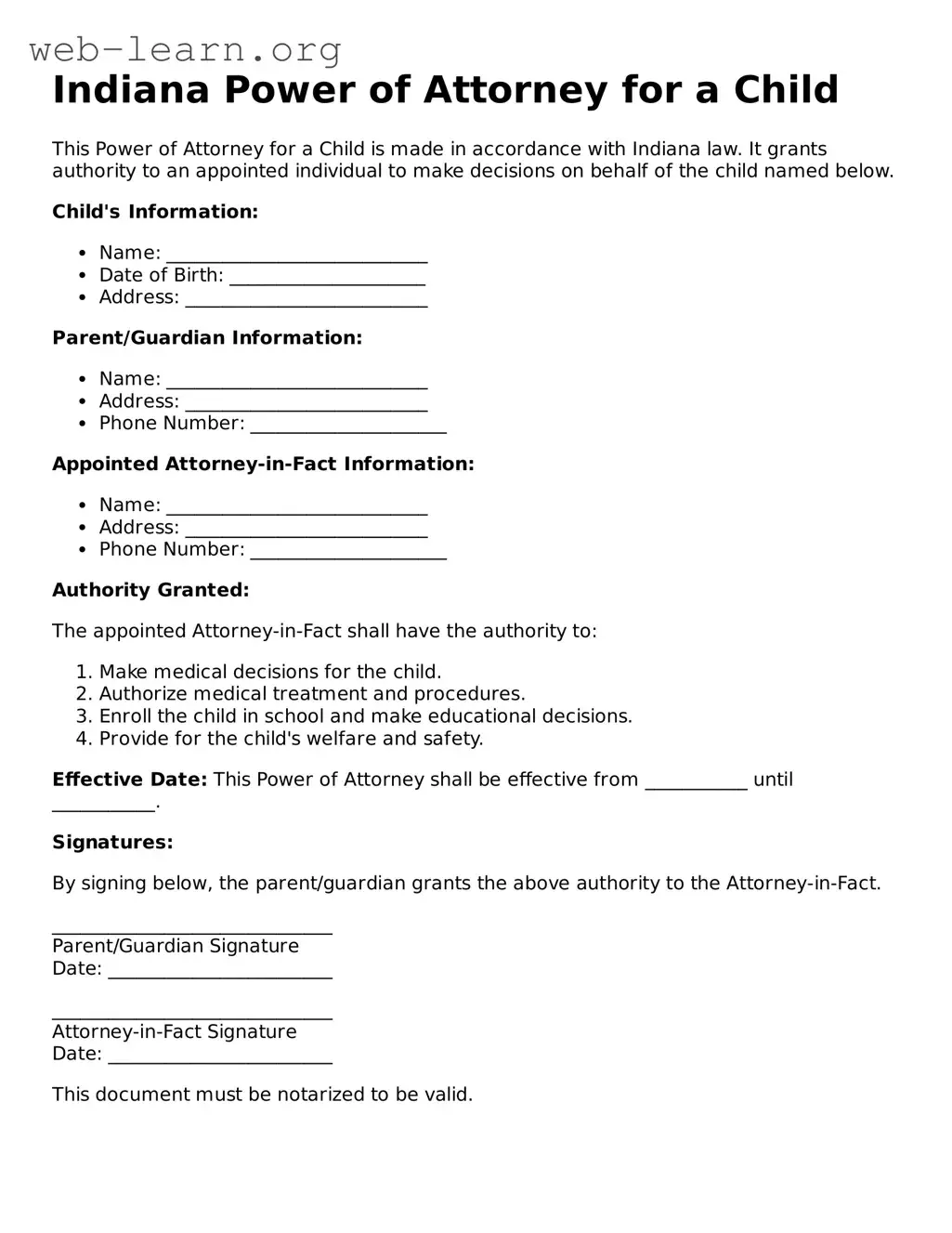
Indiana Power of Attorney for a Child
This Power of Attorney for a Child is made in accordance with Indiana law. It grants authority to an appointed individual to make decisions on behalf of the child named below.
Child's Information:
Parent/Guardian Information:
Appointed Attorney-in-Fact Information:
Authority Granted:
The appointed Attorney-in-Fact shall have the authority to:
Effective Date: This Power of Attorney shall be effective from ___________ until ___________.
Signatures:
By signing below, the parent/guardian grants the above authority to the Attorney-in-Fact.
______________________________
Parent/Guardian Signature
Date: ________________________
______________________________
Attorney-in-Fact Signature
Date: ________________________
This document must be notarized to be valid.
| Fact Name | Description |
|---|---|
| Purpose | The Indiana Power of Attorney for a Child form allows a parent or legal guardian to grant temporary authority to another adult to make decisions for their child. |
| Duration | This power of attorney can be effective for a specified period, typically up to one year, unless revoked earlier. |
| Eligibility | Any adult can be designated as the agent, provided they are trustworthy and capable of making decisions in the child's best interest. |
| Governing Law | This form is governed by Indiana Code § 30-5-1-1 through § 30-5-1-15, which outlines the legal framework for powers of attorney in the state. |
| Revocation | The parent or guardian can revoke the power of attorney at any time, provided they do so in writing and notify the agent. |
| Limitations | The agent does not have the authority to consent to marriage or adoption of the child, nor can they make medical decisions without additional documentation. |
After obtaining the Indiana Power of Attorney for a Child form, you will need to carefully fill it out to ensure that all necessary information is provided. This form requires specific details about both the child and the person being granted power of attorney. Follow these steps to complete the form accurately.
Once the form is completed and notarized, it is advisable to keep a copy for your records. The original should be given to the person who will be acting as the attorney-in-fact for the child. This ensures that they have the legal authority to make decisions on behalf of the child as specified in the document.
What is a Power of Attorney for a Child in Indiana?
The Indiana Power of Attorney for a Child form is a legal document that allows a parent or legal guardian to designate another adult to make decisions on behalf of their child. This can include decisions related to education, healthcare, and general welfare. This arrangement is particularly useful when parents are unable to care for their child temporarily due to work, travel, or other commitments.
Who can be appointed as an agent in the Power of Attorney for a Child?
In Indiana, any responsible adult can be appointed as an agent in the Power of Attorney for a Child. This could be a relative, family friend, or neighbor. It’s important to choose someone you trust, as they will have the authority to make significant decisions regarding your child's well-being.
How long does the Power of Attorney for a Child remain valid?
The Power of Attorney for a Child remains valid until the specified expiration date outlined in the document, or until the parent or guardian revokes it. If no expiration date is provided, the authority generally lasts until the child turns 18. However, it is advisable to review and update the document periodically to ensure it meets your current needs.
Do I need to have the Power of Attorney for a Child notarized?
Yes, in Indiana, the Power of Attorney for a Child must be signed in the presence of a notary public. This step helps to verify the identities of the parties involved and ensures that the document is legally binding. Notarization adds an extra layer of protection and credibility to the document.
Can the Power of Attorney for a Child be revoked?
Absolutely. A parent or legal guardian can revoke the Power of Attorney for a Child at any time, as long as they are of sound mind. To revoke the authority, it is advisable to create a written revocation document and notify the appointed agent as well as any institutions or individuals who were relying on the original Power of Attorney.
Filling out the Indiana Power of Attorney for a Child form is an important task that can provide peace of mind for parents and guardians. However, mistakes can easily occur during the process. One common error is failing to specify the duration of the power of attorney. It’s crucial to indicate how long the authority will last. Without this detail, the arrangement may become unclear, leading to confusion later.
Another frequent mistake is not including the full names of both the child and the agent. Using nicknames or abbreviations can create ambiguity. Always ensure that the legal names are clearly written to avoid any potential issues regarding identification.
Many people overlook the need for notarization. In Indiana, the Power of Attorney for a Child form must be signed in front of a notary public. Skipping this step can render the document invalid. It’s a simple step that can save a lot of trouble down the line.
Another error is neglecting to provide specific instructions regarding the powers granted. Vague language can lead to misunderstandings. Clearly outlining what the agent can and cannot do helps ensure that everyone is on the same page.
Some individuals forget to check the box indicating whether the power of attorney is durable. This designation is important, especially if the parent or guardian becomes incapacitated. Without this specification, the authority may end if the parent is unable to make decisions.
Additionally, failing to update the form when circumstances change can be a significant oversight. Life events such as divorce, relocation, or changes in relationships may necessitate a new form. Keeping the document current is vital for ensuring that it reflects the current situation.
Another mistake involves not discussing the arrangement with the child. It’s important for children, especially older ones, to understand who will be making decisions on their behalf. This conversation can help ease any concerns they may have.
Some people also forget to keep copies of the signed document. Having multiple copies ensures that the agent, the child, and any relevant parties have access to the information when needed. It’s a good practice to store these copies in a safe but accessible location.
Lastly, individuals sometimes fail to consider the implications of granting power of attorney. It’s essential to think through the responsibilities and potential challenges that may arise. Understanding the weight of this decision can help in making an informed choice.
By being aware of these common mistakes, you can navigate the process of filling out the Indiana Power of Attorney for a Child form more effectively. Taking the time to ensure accuracy and clarity can make a significant difference in the well-being of the child involved.
The Indiana Power of Attorney for a Child form allows a parent or legal guardian to designate another adult to make decisions for their child. This form is often used alongside other documents to ensure comprehensive care and legal authority. Here are some commonly associated forms and documents:
Having these documents in place can help streamline care and decision-making for a child, ensuring their well-being is prioritized in various situations.
When completing the Indiana Power of Attorney for a Child form, it is essential to follow specific guidelines to ensure that the document is valid and effective. Below is a list of things to do and avoid during this process.
By adhering to these guidelines, individuals can help ensure that the Power of Attorney for a Child form is filled out correctly and serves its intended purpose.
Many people have misunderstandings about the Indiana Power of Attorney for a Child form. It is important to clarify these misconceptions to ensure that parents and guardians make informed decisions. Below are four common misconceptions:
Understanding these misconceptions can help parents navigate their responsibilities and ensure their child's well-being while they are unable to be present.
When filling out and using the Indiana Power of Attorney for a Child form, it is important to keep several key points in mind. This document allows a parent or guardian to grant temporary authority to another adult to make decisions on behalf of a child. Here are some essential takeaways:
By following these key takeaways, you can ensure that the Indiana Power of Attorney for a Child form serves its intended purpose effectively and provides peace of mind for both you and your child.
Does a Power of Attorney Need to Be Notarized in Arizona - It may need to be notarized, depending on state requirements.
Michigan Power of Attorney - This document can help clarify authority and responsibilities during temporary absences.
Power of Attorney for Child Traveling With Grandparents - Parents can specify limitations on the authority granted in the document.