When establishing a limited liability company (LLC) in Indiana, one of the most critical documents you will need is the Operating Agreement. This form serves as the backbone of your business structure, outlining the roles, responsibilities, and rights of each member involved. It addresses key aspects such as the management structure—whether the LLC will be managed by members or appointed managers—as well as the distribution of profits and losses among members. Additionally, the Operating Agreement provides guidance on how decisions are made, including voting procedures and the process for admitting new members or handling the departure of existing ones. Having a well-drafted Operating Agreement not only helps prevent disputes among members but also ensures that your LLC operates smoothly and in accordance with Indiana state laws. As you navigate the complexities of forming your LLC, understanding the importance of this document is essential to safeguarding your business interests and fostering a collaborative environment among members.
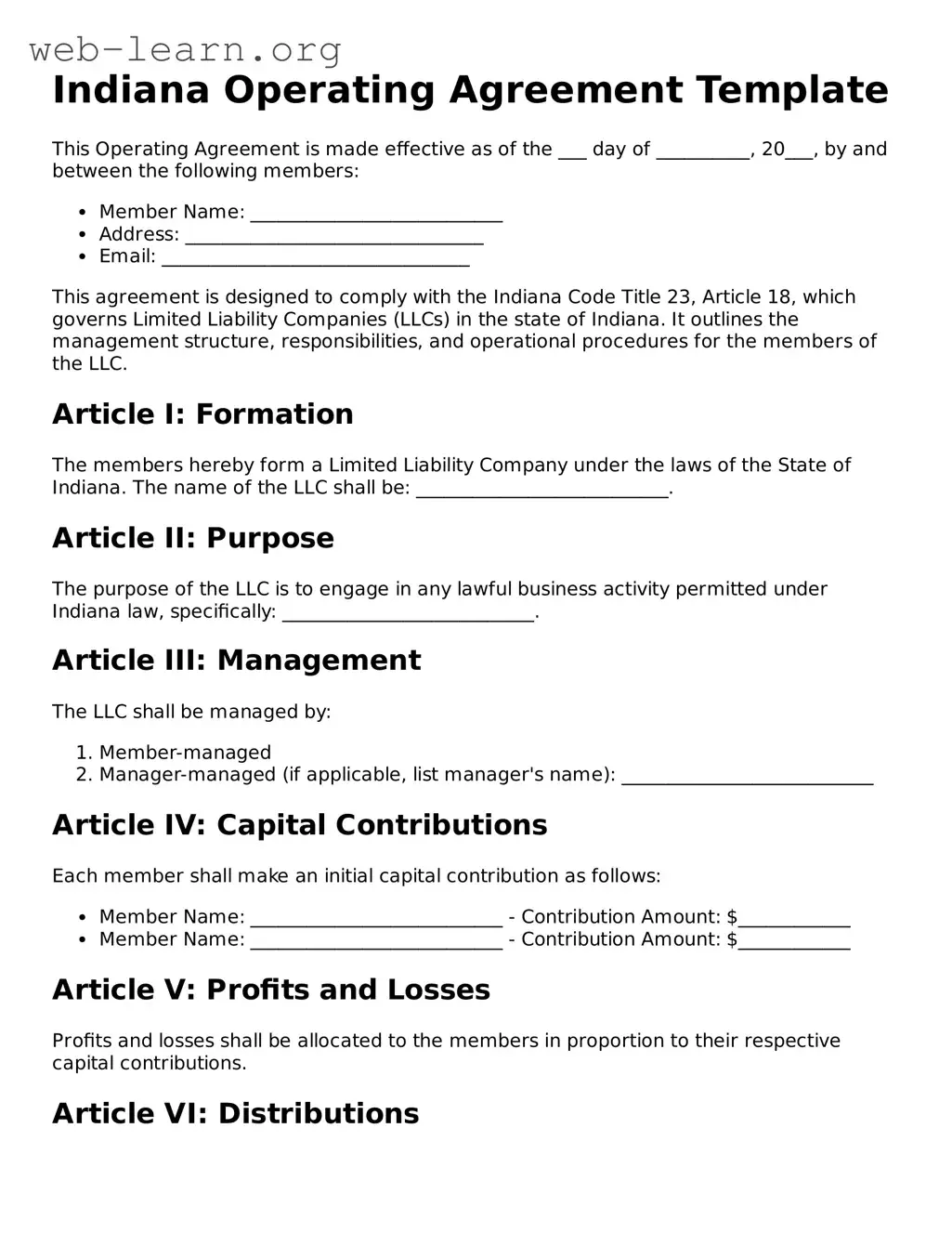
Indiana Operating Agreement Template
This Operating Agreement is made effective as of the ___ day of __________, 20___, by and between the following members:
This agreement is designed to comply with the Indiana Code Title 23, Article 18, which governs Limited Liability Companies (LLCs) in the state of Indiana. It outlines the management structure, responsibilities, and operational procedures for the members of the LLC.
Article I: Formation
The members hereby form a Limited Liability Company under the laws of the State of Indiana. The name of the LLC shall be: ___________________________.
Article II: Purpose
The purpose of the LLC is to engage in any lawful business activity permitted under Indiana law, specifically: ___________________________.
Article III: Management
The LLC shall be managed by:
Article IV: Capital Contributions
Each member shall make an initial capital contribution as follows:
Article V: Profits and Losses
Profits and losses shall be allocated to the members in proportion to their respective capital contributions.
Article VI: Distributions
Distributions shall be made to the members at the discretion of the management, and shall be based on the following schedule: ___________________________.
Article VII: Meetings
Regular meetings of the members shall be held at least once a year. Special meetings may be called by any member upon written notice to all members.
Article VIII: Amendments
This Operating Agreement may be amended only by a written agreement signed by all members.
Article IX: Governing Law
This Agreement shall be governed by and construed in accordance with the laws of the State of Indiana.
IN WITNESS WHEREOF, the members have executed this Operating Agreement as of the date first above written.
| Fact Name | Description |
|---|---|
| Purpose | The Indiana Operating Agreement outlines the management structure and operational guidelines for a limited liability company (LLC). |
| Governing Law | This agreement is governed by the Indiana Code Title 23, Article 18, which covers LLCs. |
| Member Rights | It defines the rights and responsibilities of members, ensuring clarity in decision-making processes. |
| Profit Distribution | The agreement specifies how profits and losses will be distributed among members. |
| Amendments | Members can amend the agreement, but it typically requires a majority vote. |
| Duration | The operating agreement can specify a duration for the LLC, or it may state that it exists indefinitely. |
| Dispute Resolution | It often includes provisions for resolving disputes among members, which can help avoid lengthy litigation. |
Filling out the Indiana Operating Agreement form is an important step in establishing the framework for your business. Once you have completed the form, you will be ready to move forward with organizing your business and ensuring that all members are on the same page regarding operations and responsibilities.
What is an Indiana Operating Agreement?
An Indiana Operating Agreement is a legal document that outlines the management structure and operating procedures of a Limited Liability Company (LLC) in Indiana. This agreement is crucial for defining the roles and responsibilities of members, as well as how profits and losses will be distributed.
Is an Operating Agreement required in Indiana?
No, Indiana does not legally require LLCs to have an Operating Agreement. However, it is highly recommended. Having an Operating Agreement can help clarify internal processes and protect the limited liability status of the members.
What should be included in an Operating Agreement?
While the specifics can vary, a comprehensive Operating Agreement typically includes:
Can I create my own Operating Agreement?
Yes, you can draft your own Operating Agreement. Many templates are available online, but it’s wise to tailor the document to fit your specific needs. Consulting with a legal professional can also ensure that your agreement complies with Indiana laws and adequately protects your interests.
How does an Operating Agreement protect members?
An Operating Agreement can serve as a shield against misunderstandings among members. By clearly outlining roles and responsibilities, it minimizes the risk of disputes. Additionally, it reinforces the limited liability status of the LLC, helping to protect personal assets from business liabilities.
Do all members need to sign the Operating Agreement?
Yes, all members should sign the Operating Agreement to ensure that everyone agrees to the terms laid out in the document. This signature not only signifies agreement but also strengthens the enforceability of the agreement in case of future disputes.
How often should the Operating Agreement be updated?
It’s advisable to review and update the Operating Agreement periodically, especially when significant changes occur within the business. Changes might include adding new members, altering management structures, or adjusting profit-sharing arrangements. Keeping the document current helps maintain clarity and legal compliance.
What happens if we don’t have an Operating Agreement?
Without an Operating Agreement, your LLC will be governed by Indiana’s default laws regarding LLCs. This can lead to unintended consequences, such as default profit-sharing arrangements or management structures that do not align with the members' intentions. Having no agreement may also complicate dispute resolution.
Where can I find an Indiana Operating Agreement template?
Templates for Indiana Operating Agreements can be found online through various legal websites and resources. Additionally, local business organizations or legal professionals may provide templates or assistance in drafting a customized agreement that meets your specific needs.
Filling out the Indiana Operating Agreement form is an important step for business owners, but it’s easy to make mistakes along the way. One common error is neglecting to include all members of the LLC. Every member should be listed clearly to avoid confusion later. If a member is inadvertently left out, it could lead to disputes or complications regarding ownership and profit sharing.
Another frequent mistake is failing to specify the management structure of the LLC. Some individuals assume that the default management structure will apply, but it’s crucial to outline whether the LLC will be managed by members or appointed managers. Not providing this information can lead to misunderstandings about who has the authority to make decisions.
Inadequate detail in the profit-sharing section is also a common pitfall. It’s essential to clearly define how profits and losses will be distributed among members. If this section is vague or incomplete, it may result in disagreements down the line. Clarity here helps ensure that everyone understands their financial stake in the business.
Another mistake involves overlooking the importance of the amendment process. Many people fill out the form without including provisions for how changes can be made to the Operating Agreement in the future. Without a clear amendment process, any necessary updates could become cumbersome and lead to disputes among members.
Some individuals also forget to date the agreement. While it may seem minor, failing to include a date can create confusion regarding when the agreement was established. This is particularly important for legal and tax purposes, as it establishes the timeline for the LLC’s operations.
Finally, one of the most significant mistakes is not having the agreement reviewed by a legal professional. Many people believe they can handle the form on their own, but having an expert review the document can help catch errors and ensure compliance with state laws. An experienced consultant can provide valuable insights that may prevent costly mistakes in the future.
When forming a limited liability company (LLC) in Indiana, several key documents complement the Indiana Operating Agreement. These documents help clarify the structure, responsibilities, and operations of the LLC. Below are some essential forms often used alongside the Operating Agreement.
Having these documents in place helps ensure that your LLC runs smoothly and complies with state regulations. Proper documentation can prevent misunderstandings among members and provide a clear framework for business operations.
An Operating Agreement is a vital document for limited liability companies (LLCs), outlining the management structure and operational procedures. It shares similarities with several other documents. Here are four documents that are comparable to an Operating Agreement:
Understanding these documents can help clarify the roles and responsibilities within a business structure, ensuring smooth operations and minimizing conflicts.
When filling out the Indiana Operating Agreement form, attention to detail is crucial. Here are five things you should and shouldn't do:
Understanding the Indiana Operating Agreement form is crucial for anyone involved in a business partnership or limited liability company (LLC). However, several misconceptions can lead to confusion. Below is a list of eight common misconceptions about this form, along with clarifications for each.
While having an Operating Agreement is highly recommended for LLCs in Indiana, it is not legally required. However, without one, members may face challenges in managing the business and resolving disputes.
This is not true. The Operating Agreement is an internal document that does not need to be submitted to the state. It should be kept on file for reference and legal purposes.
While it is common for members to draft the agreement, they can also seek assistance from legal professionals. This can help ensure that the document meets all necessary legal standards.
This misconception is misleading. An Operating Agreement can be amended as needed, provided that the process for making changes is outlined within the document itself.
This is incorrect. While financial matters are important, the Operating Agreement also covers management structure, member roles, and procedures for decision-making and dispute resolution.
It is ideal for members to reach a consensus, but the agreement can be structured to allow for majority decisions on certain issues, depending on what the members decide.
These are distinct documents. The Articles of Organization are filed with the state to officially form the LLC, while the Operating Agreement governs the internal workings of the business.
While an Operating Agreement is an important tool for establishing the LLC's structure, it does not automatically protect members from personal liability. Proper business practices must also be followed to maintain that protection.
By addressing these misconceptions, individuals can better understand the importance and function of the Indiana Operating Agreement form in the context of managing an LLC.
When filling out and using the Indiana Operating Agreement form, keep these key takeaways in mind:
Creating an Operating Agreement - An Operating Agreement outlines the management structure of a business entity.
How to Create an Operating Agreement - This document can help protect personal assets from business liabilities.
Florida Operating Agreement Template - The Operating Agreement can specify the duration of the LLC's existence.
Llc Operating Agreement Arizona - It can help to mitigate risks associated with misunderstandings or miscommunications among members.