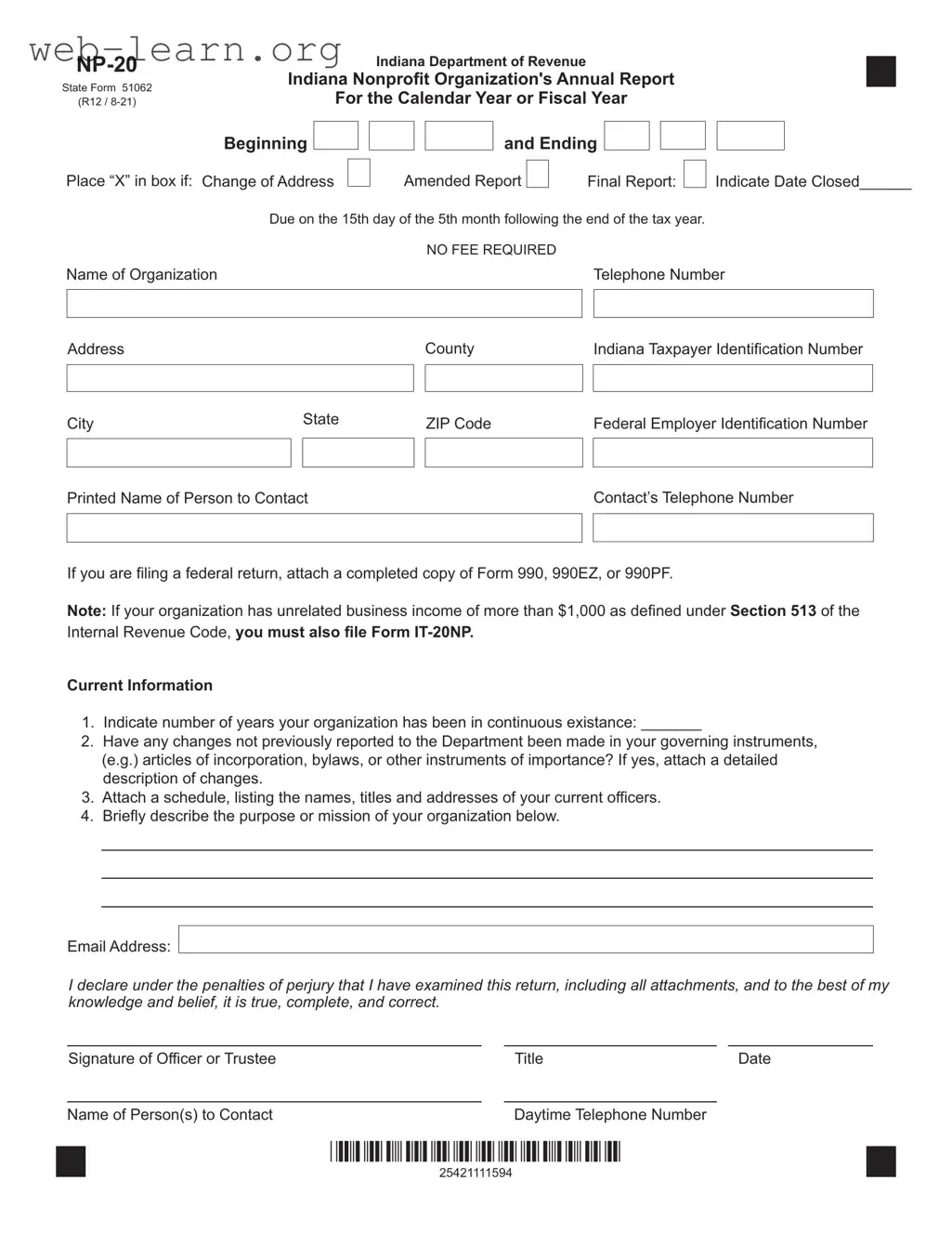
The Indiana NP-20 form serves as an essential tool for nonprofit organizations operating within the state, facilitating their annual reporting requirements. This form, officially titled the Indiana Nonprofit Organization's Annual Report, must be submitted by organizations to the Indiana Department of Revenue, typically due on the 15th day of the fifth month following the end of their tax year. Organizations must indicate if they are submitting an amended or final report, or if there has been a change of address. Key components of the NP-20 include basic organizational information, such as the name, address, and taxpayer identification numbers, alongside crucial details about the organization’s governance and purpose. Nonprofits are also required to disclose any significant changes in their governing documents and provide a list of current officers. Furthermore, if the organization has unrelated business income exceeding $1,000, they must file an additional form, IT-20NP. By completing the NP-20, nonprofits not only comply with state regulations but also affirm their commitment to transparency and accountability in their operations.

|
|
|
|
|
Indiana Department of Revenue |
|
|
|
|
|
||||||
State Form 51062 |
Indiana Nonprofit Organization's Annual Report |
|||||||||||||||
(R12 / |
|
|
For the Calendar Year or Fiscal Year |
|||||||||||||
|
Beginning |
|
|
|
|
|
|
|
and Ending |
|
|
|
|
|||
|
|
|
|
|
|
|
|
|
|
|
|
|||||
Place “X” in box if: Change of Address |
|
|
|
|
|
|
|
|
||||||||
|
|
|
Amended Report |
|
|
Final Report: |
|
|||||||||
Indicate Date Closed______
Due on the 15th day of the 5th month following the end of the tax year.
|
|
|
|
NO FEE REQUIRED |
|
|
Name of Organization |
|
|
|
|
Telephone Number |
|
|
|
|
|
|
|
|
|
|
|
|
|
|
|
Address |
|
|
County |
|
Indiana Taxpayer Identification Number |
|
|
|
|
|
|
|
|
|
|
|
|
|
|
|
City |
State |
ZIP Code |
|
Federal Employer Identification Number |
||
|
|
|
|
|
|
|
|
|
|
|
|
|
|
Printed Name of Person to Contact |
|
|
Contact’s Telephone Number |
|||
|
|
|
|
|
|
|
|
|
|
|
|
|
|
If you are filing a federal return, attach a completed copy of Form 990, 990EZ, or 990PF.
Note: If your organization has unrelated business income of more than $1,000 as defined under Section 513 of the
Internal Revenue Code, you must also file Form
Current Information
1.Indicate number of years your organization has been in continuous existance: _______
2.Have any changes not previously reported to the Department been made in your governing instruments, (e.g.) articles of incorporation, bylaws, or other instruments of importance? If yes, attach a detailed description of changes.
3.Attach a schedule, listing the names, titles and addresses of your current officers.
4.Briefly describe the purpose or mission of your organization below.
Email Address:
I declare under the penalties of perjury that I have examined this return, including all attachments, and to the best of my knowledge and belief, it is true, complete, and correct.
Signature of Officer or Trustee |
Title |
Date |
|
|
|
|
|
Name of Person(s) to Contact |
Daytime Telephone Number |
|
|
*25421111594*
25421111594
| Fact Name | Details |
|---|---|
| Form Title | Indiana Nonprofit Organization's Annual Report (NP-20) |
| Governing Law | Indiana Code Title 23, Article 17 |
| Filing Deadline | Due on the 15th day of the 5th month following the end of the tax year. |
| Fees | No fee is required for filing this form. |
| Address Change | Indicate changes by placing an "X" in the designated box. |
| Amended Report | If applicable, indicate it by marking the appropriate box. |
| Final Report | Mark the box if this is the final report and provide the closure date. |
| Federal Attachments | Attach a completed copy of Form 990, 990EZ, or 990PF if filing a federal return. |
| Unrelated Business Income | File Form IT-20NP if unrelated business income exceeds $1,000. |
| Declaration | Signature of an officer or trustee is required, affirming the accuracy of the information. |
Filling out the Indiana NP-20 form is an important step for nonprofit organizations to report their annual activities. After completing the form, you will need to submit it to the Indiana Department of Revenue by the due date, which is the 15th day of the 5th month following the end of your tax year. Make sure to gather all necessary information before you begin.
What is the Indiana NP-20 form?
The Indiana NP-20 form is the annual report that nonprofit organizations must file with the Indiana Department of Revenue. This report provides essential information about the organization, including its address, contact details, and any changes to its governing documents.
Who needs to file the NP-20 form?
All nonprofit organizations operating in Indiana are required to file the NP-20 form. This includes organizations that have been in continuous existence for a year or more. If your organization has unrelated business income exceeding $1,000, you must also file Form IT-20NP.
When is the NP-20 form due?
The NP-20 form is due on the 15th day of the 5th month following the end of your organization’s tax year. For example, if your fiscal year ends on December 31, the form would be due on May 15 of the following year.
What information do I need to provide on the NP-20 form?
The NP-20 form requires several pieces of information, including:
What should I do if my organization has made changes to its governing instruments?
If there have been any changes not previously reported, you must provide a detailed description of those changes with your NP-20 form. This includes updates to articles of incorporation, bylaws, or any other important documents.
Is there a fee to file the NP-20 form?
No, there is no fee required to file the NP-20 form. However, it is essential to ensure that the form is completed accurately and submitted on time to avoid any penalties.
What happens if I do not file the NP-20 form on time?
Failure to file the NP-20 form by the due date may result in penalties. It is crucial to submit the form on time to maintain good standing with the Indiana Department of Revenue.
Can I file the NP-20 form electronically?
Currently, the NP-20 form must be filed in paper format. Ensure that you complete the form accurately and send it to the appropriate address provided by the Indiana Department of Revenue.
Who can I contact for help with the NP-20 form?
If you have questions or need assistance with the NP-20 form, you can reach out to the Indiana Department of Revenue directly. They can provide guidance on completing the form and address any specific concerns you may have.
Filling out the Indiana NP-20 form can be straightforward, but many people make common mistakes that can lead to delays or issues. One frequent error is failing to indicate whether the organization is changing its address, submitting an amended report, or filing a final report. This information is crucial for the state to process the form correctly.
Another mistake is not providing a complete and accurate name for the organization. The name must match exactly with what is registered with the state. Any discrepancies can cause confusion and may lead to rejection of the form.
Many individuals overlook the importance of including the correct Indiana Taxpayer Identification Number and the Federal Employer Identification Number. These numbers are essential for the state to identify the organization properly. Omitting or miswriting them can result in processing delays.
People often forget to attach the required copies of federal returns, such as Form 990, 990EZ, or 990PF. If the organization has unrelated business income exceeding $1,000, it must also include Form IT-20NP. Not including these documents can lead to incomplete submissions.
Another common issue is neglecting to provide a schedule listing the names, titles, and addresses of current officers. This information is necessary for transparency and accountability. If this section is left blank or incomplete, it may raise questions from the reviewing agency.
Describing the organization’s purpose or mission is a critical part of the form. Some people write vague descriptions or skip this section entirely. A clear and concise explanation helps convey the organization's goals and can impact its standing with the state.
Additionally, failing to sign the form or not including the date can lead to rejection. The declaration of truthfulness under penalties of perjury is a serious statement. Without a signature, the form is considered incomplete.
Lastly, some individuals forget to include contact information for someone who can answer questions about the form. Providing a daytime telephone number ensures that the state can reach out if there are any issues or clarifications needed.
The Indiana NP-20 form is an essential document for nonprofit organizations in Indiana, serving as their annual report. Along with this form, several other documents may be required to ensure compliance with state and federal regulations. Below is a list of commonly used forms and documents that often accompany the NP-20.
Understanding these forms and documents is crucial for maintaining compliance and ensuring the smooth operation of nonprofit organizations in Indiana. Keeping accurate records and submitting the necessary paperwork on time can help organizations focus on their missions and serve their communities effectively.
The Indiana NP-20 form serves as an essential document for nonprofit organizations in Indiana, allowing them to report their annual activities and financial information. Several other documents share similarities with the NP-20 form in terms of purpose, structure, and requirements. Below is a list of nine such documents:
Understanding these documents can help nonprofit organizations ensure compliance with state and federal regulations, promoting transparency and accountability in their operations.
When filling out the Indiana NP-20 form, attention to detail is crucial. Here’s a guide on what you should and shouldn't do to ensure a smooth process.
Following these guidelines will help ensure that your NP-20 form is filled out correctly and submitted on time, allowing your organization to remain compliant with Indiana's regulations.
The Indiana NP-20 form is a crucial document for nonprofit organizations in the state, but several misconceptions surround it. Here are four common misunderstandings:
Understanding these misconceptions can help ensure that nonprofit organizations remain compliant and avoid potential penalties. It’s always best to stay informed and proactive when it comes to filing necessary documents.