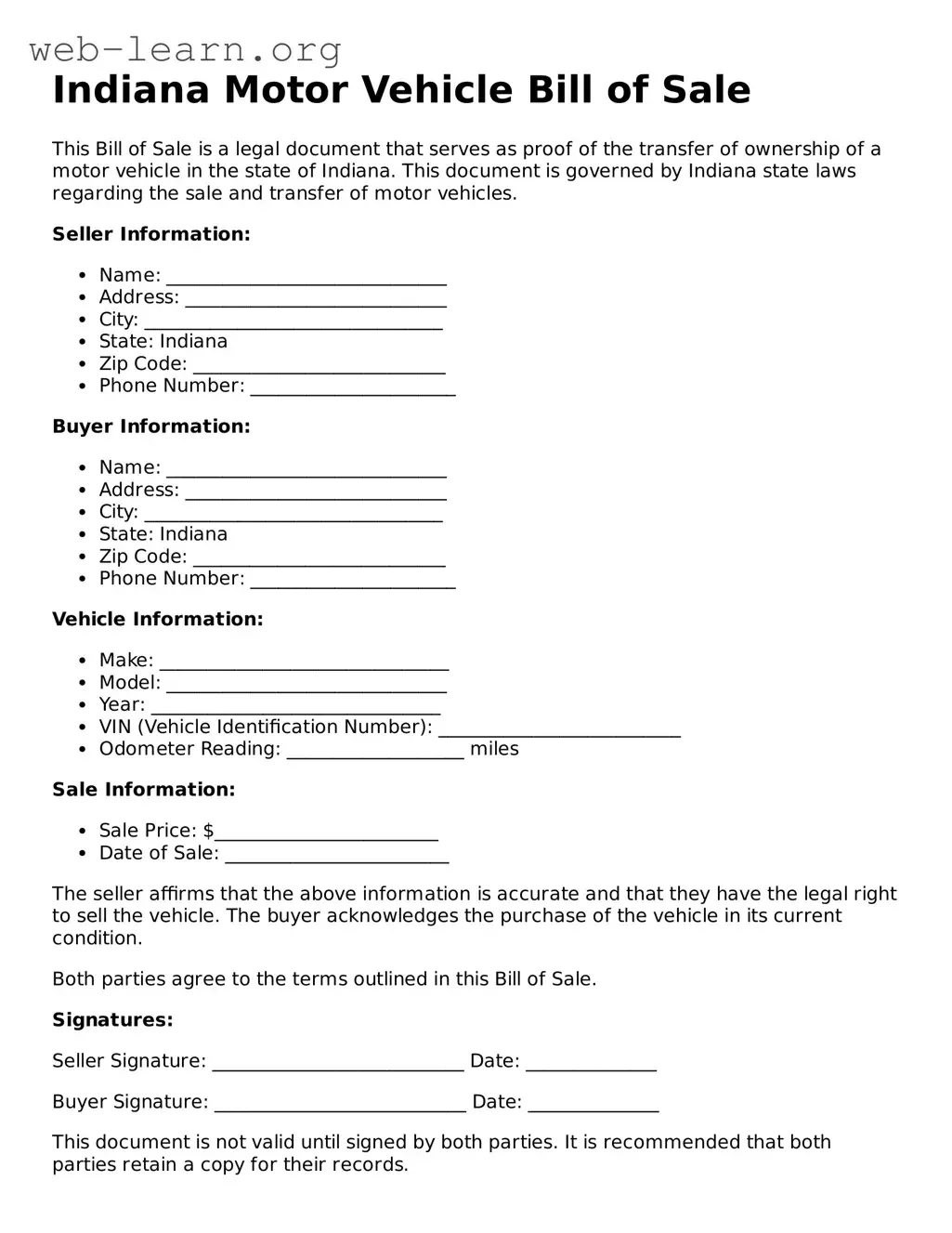
When it comes to buying or selling a vehicle in Indiana, having the right documentation is crucial for a smooth transaction. One of the essential documents in this process is the Indiana Motor Vehicle Bill of Sale form. This form serves as a legal record of the sale, capturing vital information about the vehicle and the parties involved. It typically includes details such as the vehicle's make, model, year, and Vehicle Identification Number (VIN), ensuring that both the buyer and seller have a clear understanding of what is being exchanged. Additionally, the form outlines the purchase price and any terms of the sale, which can help prevent misunderstandings down the line. Notably, both parties must sign the form to validate the transaction, making it an important step in transferring ownership. Whether you're a seasoned car dealer or a first-time buyer, understanding the nuances of this form can protect your interests and streamline the vehicle transfer process.
Indiana Motor Vehicle Bill of Sale
This Bill of Sale is a legal document that serves as proof of the transfer of ownership of a motor vehicle in the state of Indiana. This document is governed by Indiana state laws regarding the sale and transfer of motor vehicles.
Seller Information:
Buyer Information:
Vehicle Information:
Sale Information:
The seller affirms that the above information is accurate and that they have the legal right to sell the vehicle. The buyer acknowledges the purchase of the vehicle in its current condition.
Both parties agree to the terms outlined in this Bill of Sale.
Signatures:
Seller Signature: ___________________________ Date: ______________
Buyer Signature: ___________________________ Date: ______________
This document is not valid until signed by both parties. It is recommended that both parties retain a copy for their records.
| Fact Name | Description |
|---|---|
| Purpose | The Indiana Motor Vehicle Bill of Sale form is used to document the sale or transfer of ownership of a motor vehicle between a seller and a buyer. |
| Governing Laws | This form is governed by Indiana Code Title 9, Article 17, which outlines the requirements for vehicle registration and ownership transfer. |
| Required Information | The form requires details such as the vehicle identification number (VIN), make, model, year, and the sale price. |
| Signatures | Both the seller and buyer must sign the form to validate the transaction and confirm the transfer of ownership. |
| Usage | It is essential for registering the vehicle in the new owner's name and for providing proof of purchase if needed in the future. |
After obtaining the Indiana Motor Vehicle Bill of Sale form, you'll need to provide specific details about the vehicle and the transaction. This form serves as a crucial record for both the buyer and seller, ensuring a smooth transfer of ownership. Follow these steps carefully to complete the form accurately.
Once the form is completed and signed, both parties should retain a copy for their records. This will serve as proof of the transaction and can be helpful for future reference, especially when registering the vehicle or addressing any potential disputes.
A Motor Vehicle Bill of Sale is a legal document that records the transfer of ownership of a vehicle from one party to another. It serves as proof of the transaction and includes important details about the vehicle and the buyer and seller.
A Bill of Sale is essential for several reasons. It protects both the buyer and seller by documenting the sale. It can help resolve disputes regarding ownership and serves as proof of purchase for the buyer, especially when registering the vehicle with the state.
The Bill of Sale should include:
While a Bill of Sale is not legally required in Indiana, it is highly recommended. Having one can simplify the registration process and provide legal protection for both parties involved in the transaction.
Yes, you can create your own Bill of Sale. However, it is crucial to ensure that all necessary information is included. You can also use templates available online to make the process easier.
Notarization is not required for a Bill of Sale in Indiana, but it can add an extra layer of security. Having it notarized can help verify the identities of the parties involved and the authenticity of the document.
To register the vehicle, the buyer should present the Bill of Sale, along with other required documents, to the local Bureau of Motor Vehicles (BMV). The Bill of Sale will help establish proof of ownership and the sale price for tax purposes.
If the vehicle has a lien, it is essential to address this before completing the sale. The seller should ensure the lien is paid off, or the buyer should be informed about the lien status. The Bill of Sale should reflect any lien information if applicable.
If you lose the Bill of Sale, you may need to create a new one. Both parties should sign the new document to confirm the transaction. Keeping a copy of the Bill of Sale is always a good practice to avoid future issues.
Yes, a Bill of Sale can be used for various types of vehicles, including motorcycles, boats, and trailers. Just make sure to include all relevant information specific to the type of vehicle being sold.
Filling out the Indiana Motor Vehicle Bill of Sale form can seem straightforward, but many people make common mistakes that can lead to complications down the line. Understanding these pitfalls can save you time and hassle. Here are seven frequent errors to watch out for.
One common mistake is failing to include all necessary information. The form requires specific details about the vehicle, such as the Vehicle Identification Number (VIN), make, model, year, and odometer reading. Omitting any of this information can cause issues when registering the vehicle or transferring ownership.
Another frequent error is not having both the buyer and seller sign the document. It’s essential that both parties provide their signatures to validate the transaction. Without the proper signatures, the bill of sale may not hold up in legal situations or when you need to prove ownership.
People often overlook the importance of the date. It may seem minor, but including the correct date of the transaction is crucial. This date serves as the official record of when the sale took place and can impact tax obligations and registration timelines.
Some individuals mistakenly assume that the bill of sale is the only document needed for a vehicle transfer. In Indiana, additional paperwork, such as the title and possibly a lien release, is also required. Neglecting to gather all necessary documents can delay the transfer process.
Another common mistake is not keeping a copy of the bill of sale. After the transaction is complete, both the buyer and seller should retain a copy for their records. This document serves as proof of the sale and can be vital if any disputes arise in the future.
Many people also fail to provide accurate contact information. It’s important that both the buyer and seller include their current addresses and phone numbers. This information facilitates communication if there are any questions or issues that arise after the sale.
Finally, some individuals rush through the process and fail to read the entire form carefully. Each section of the bill of sale has a purpose, and understanding what is required can prevent mistakes. Taking the time to review the form ensures that all necessary information is complete and accurate.
When completing a vehicle transaction in Indiana, several documents may accompany the Motor Vehicle Bill of Sale to ensure a smooth transfer of ownership. Each document serves a unique purpose and helps protect both the buyer and seller during the process.
Gathering these documents ensures a comprehensive and legally sound transaction. Each plays a crucial role in protecting the interests of all parties involved in the sale of a vehicle in Indiana.
When filling out the Indiana Motor Vehicle Bill of Sale form, it is important to follow certain guidelines to ensure accuracy and compliance. Here are some dos and don'ts:
When it comes to the Indiana Motor Vehicle Bill of Sale form, there are several misconceptions that can lead to confusion. Let’s clarify these common misunderstandings.
Understanding these misconceptions can help make the buying or selling process smoother and ensure that all parties are protected. Always take the time to review the requirements and ensure that you have the correct documentation.
When filling out and using the Indiana Motor Vehicle Bill of Sale form, several key points should be considered to ensure a smooth transaction.
Arkansas Dmv Online - This form serves as proof of ownership transfer for cars, trucks, motorcycles, and other motor vehicles.
Free Printable Bill of Sale for Car Georgia - The form can specify if the vehicle is sold "as is" or with warranties.