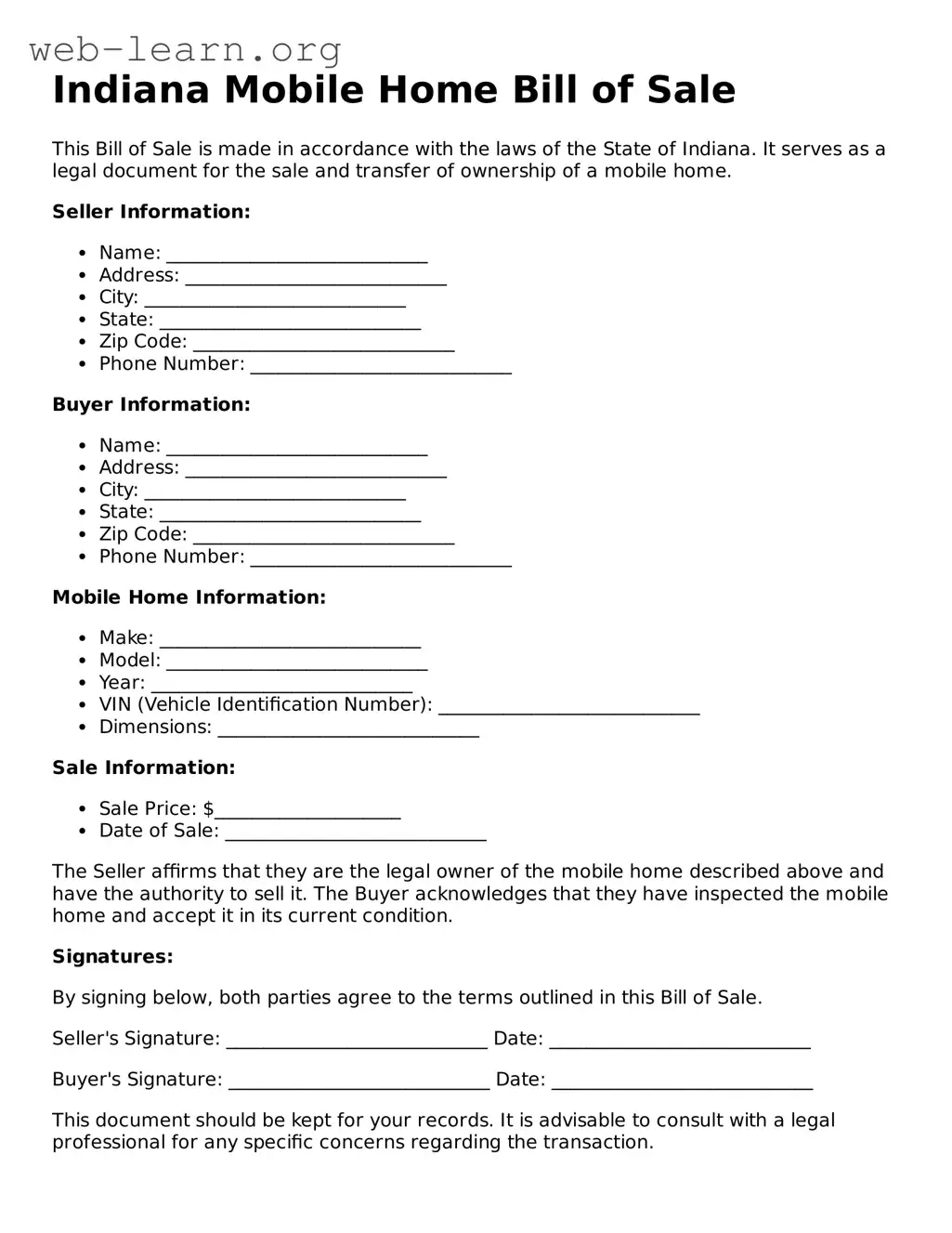
When it comes to buying or selling a mobile home in Indiana, having the right documentation is crucial for a smooth transaction. The Indiana Mobile Home Bill of Sale form serves as a vital record that outlines the details of the sale, including the names and addresses of both the buyer and seller, a description of the mobile home being transferred, and the sale price. This form not only provides proof of ownership but also protects the interests of both parties involved. It typically includes spaces for important information such as the Vehicle Identification Number (VIN), the year, make, and model of the mobile home, ensuring that all specifics are captured accurately. Additionally, the form often requires signatures from both the buyer and seller, signifying their agreement to the terms laid out. By utilizing this form, individuals can navigate the complexities of mobile home transactions with confidence, knowing they have a legal document that reflects their agreement.
Indiana Mobile Home Bill of Sale
This Bill of Sale is made in accordance with the laws of the State of Indiana. It serves as a legal document for the sale and transfer of ownership of a mobile home.
Seller Information:
Buyer Information:
Mobile Home Information:
Sale Information:
The Seller affirms that they are the legal owner of the mobile home described above and have the authority to sell it. The Buyer acknowledges that they have inspected the mobile home and accept it in its current condition.
Signatures:
By signing below, both parties agree to the terms outlined in this Bill of Sale.
Seller's Signature: ____________________________ Date: ____________________________
Buyer's Signature: ____________________________ Date: ____________________________
This document should be kept for your records. It is advisable to consult with a legal professional for any specific concerns regarding the transaction.
| Fact Name | Description |
|---|---|
| Purpose | The Indiana Mobile Home Bill of Sale form is used to document the sale and transfer of ownership of a mobile home in Indiana. |
| Governing Law | This form is governed by Indiana Code Title 32, Article 31, which outlines the laws regarding the sale and ownership of mobile homes. |
| Required Information | The form typically requires details such as the names of the buyer and seller, the mobile home's identification number, and the sale price. |
| Signatures | Both the seller and buyer must sign the form to validate the transaction, ensuring that both parties agree to the terms of the sale. |
| Record Keeping | It is advisable for both parties to keep a copy of the completed Bill of Sale for their records, as it serves as proof of the transaction. |
After obtaining the Indiana Mobile Home Bill of Sale form, you will need to complete it accurately to ensure a smooth transfer of ownership. This document serves as proof of the sale and will be essential for both the buyer and the seller. Follow these steps carefully to fill out the form.
Once the form is filled out, ensure that both parties retain a copy for their records. This document will be crucial for registering the mobile home and for any future transactions related to the property.
The Indiana Mobile Home Bill of Sale form is a legal document that facilitates the transfer of ownership of a mobile home from one party to another. This form is essential for documenting the sale and ensuring that both the buyer and seller have a clear record of the transaction. It includes important details such as the names and addresses of both parties, a description of the mobile home, and the sale price.
Using a Bill of Sale is crucial for several reasons. First, it provides legal proof of the transaction, which can protect both the buyer and seller in case of disputes. Second, it helps to establish a clear chain of ownership, which is particularly important when registering the mobile home with the state. Lastly, having a properly completed Bill of Sale can simplify the process of obtaining financing or insurance for the mobile home.
The form should include the following key information:
In Indiana, it is not a legal requirement to have the Bill of Sale notarized. However, having it notarized can add an extra layer of protection for both parties. A notary public can verify the identities of the signers, which may help prevent fraud. If you plan to register the mobile home with the state, check with local authorities to see if they recommend notarization.
After completing the Bill of Sale, the next step is to register the mobile home with the Indiana Bureau of Motor Vehicles (BMV). You will need to provide the completed Bill of Sale, proof of identification, and any applicable fees. It's advisable to contact your local BMV office for specific instructions and to ensure you have all necessary documentation before visiting.
Filling out the Indiana Mobile Home Bill of Sale form can be straightforward, but many people make common mistakes that can lead to complications down the road. Understanding these pitfalls is essential for a smooth transaction. Here are seven mistakes to avoid when completing this important document.
One frequent error is incomplete information. Sellers often forget to provide all necessary details about the mobile home, such as the make, model, year, and Vehicle Identification Number (VIN). Omitting any of this information can create confusion and delay the transfer of ownership.
Another common mistake is incorrect dates. It's crucial to ensure that the date of the sale is accurate. A simple typo can lead to disputes later on, especially if the transaction is questioned for any reason. Always double-check the date before finalizing the document.
Many individuals also neglect to sign the form. Both the seller and buyer must sign the Bill of Sale for it to be valid. Without these signatures, the document is incomplete, and the transaction may not be legally recognized.
Not including the purchase price is another oversight. Clearly stating the amount agreed upon helps to establish the terms of the sale. Leaving this section blank can lead to misunderstandings and may complicate future legal matters.
Additionally, some people fail to provide contact information. It's important to include phone numbers and addresses for both parties. This information can be vital if there are any questions or issues that arise after the sale.
Another mistake involves not keeping copies of the completed form. After signing, both parties should retain a copy for their records. This step is often overlooked but is essential for future reference and proof of the transaction.
Lastly, many individuals do not check for local regulations regarding mobile home sales. Indiana may have specific requirements that differ from other states. Familiarizing yourself with these local laws can prevent potential legal issues and ensure a smooth transfer of ownership.
When completing the sale or transfer of a mobile home in Indiana, several other forms and documents may be necessary to ensure a smooth transaction. These documents provide essential information and protect the interests of both the buyer and the seller. Below is a list of commonly used forms that accompany the Indiana Mobile Home Bill of Sale.
Having these documents prepared and organized can greatly streamline the process of buying or selling a mobile home. Ensure that all necessary paperwork is completed accurately to protect your interests and comply with Indiana regulations.
When filling out the Indiana Mobile Home Bill of Sale form, it is essential to follow certain guidelines to ensure accuracy and compliance. Here are ten important dos and don'ts to consider:
By adhering to these guidelines, you can help ensure a smooth transaction when completing the Indiana Mobile Home Bill of Sale form.
When it comes to the Indiana Mobile Home Bill of Sale form, there are several misconceptions that can lead to confusion. Understanding these myths is essential for a smooth transaction. Here are four common misconceptions:
By debunking these misconceptions, individuals can navigate the process of buying or selling a mobile home in Indiana with greater confidence and clarity.
When it comes to transferring ownership of a mobile home in Indiana, using the Mobile Home Bill of Sale form is essential. Here are some key takeaways to keep in mind:
Filling out the Indiana Mobile Home Bill of Sale form accurately and completely is vital for a smooth transfer of ownership. Take your time to ensure all information is correct, as this document can have long-lasting implications.
Do Mobile Homes Have a Title - The document should be kept in a safe place for future reference.
Bill of Sale for Mobile Home - The Mobile Home Bill of Sale can facilitate the process of moving the mobile home.
Bill of Sale Ct - Some states may require the Mobile Home Bill of Sale to be notarized.
Manufactured Home Title Transfer Oregon - Documents the condition of the mobile home at the time of sale.