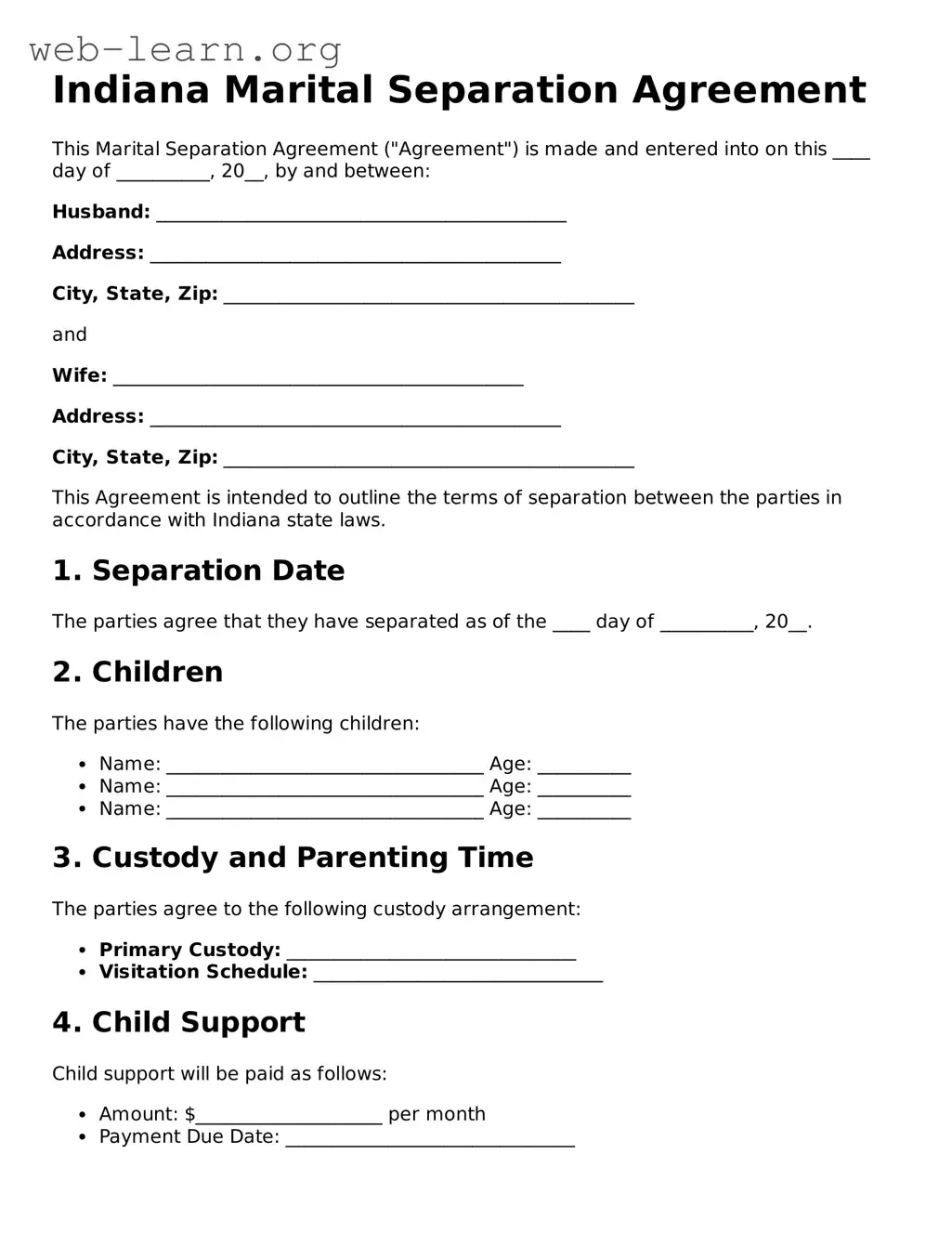
When couples decide to separate, navigating the emotional and logistical complexities can be daunting. In Indiana, a Marital Separation Agreement serves as a crucial tool for couples who wish to outline the terms of their separation while maintaining clarity and order. This form covers essential aspects such as the division of assets and debts, child custody arrangements, and spousal support. By detailing these elements, the agreement helps to minimize misunderstandings and conflicts during a challenging time. It’s important for both parties to communicate openly and honestly, ensuring that the agreement reflects their mutual intentions and needs. Understanding the intricacies of this document can empower individuals to make informed decisions, paving the way for a smoother transition into their new lives.
Indiana Marital Separation Agreement
This Marital Separation Agreement ("Agreement") is made and entered into on this ____ day of __________, 20__, by and between:
Husband: ____________________________________________
Address: ____________________________________________
City, State, Zip: ____________________________________________
and
Wife: ____________________________________________
Address: ____________________________________________
City, State, Zip: ____________________________________________
This Agreement is intended to outline the terms of separation between the parties in accordance with Indiana state laws.
1. Separation Date
The parties agree that they have separated as of the ____ day of __________, 20__.
2. Children
The parties have the following children:
3. Custody and Parenting Time
The parties agree to the following custody arrangement:
4. Child Support
Child support will be paid as follows:
5. Property Division
The parties agree to the following division of property:
6. Debts
The parties agree to the following responsibility for debts:
7. Spousal Support
Spousal support will be provided as follows:
8. Miscellaneous
Both parties agree to the following terms:
9. Acknowledgment
By signing below, both parties acknowledge that they understand and agree to the terms of this Agreement.
Husband's Signature: _______________________________ Date: ______________
Wife's Signature: _______________________________ Date: ______________
This Agreement is binding upon the parties and may be enforced in accordance with Indiana law.
| Fact Name | Details |
|---|---|
| Purpose | The Indiana Marital Separation Agreement outlines the terms of separation between spouses, including property division, debt allocation, and child custody arrangements. |
| Governing Laws | This agreement is governed by Indiana state laws, particularly under Indiana Code Title 31, which covers family law. |
| Filing Requirements | While the agreement itself does not need to be filed with the court, it is important to keep it as part of your personal records. It may be referenced in divorce proceedings. |
| Legal Advice | It is advisable for both parties to seek legal counsel before signing the agreement to ensure that their rights are protected and the terms are fair. |
Completing the Indiana Marital Separation Agreement form is an important step for couples who have decided to separate. This document outlines the terms of the separation and helps clarify the rights and responsibilities of each party moving forward. Once the form is filled out, it should be reviewed carefully before being signed and submitted as required.
What is a Marital Separation Agreement in Indiana?
A Marital Separation Agreement is a legal document that outlines the terms of a couple's separation. It details how assets, debts, and responsibilities will be handled while the couple lives apart. This agreement can help prevent misunderstandings and conflicts during the separation process.
Is a Marital Separation Agreement legally binding in Indiana?
Yes, once both parties sign the Marital Separation Agreement, it becomes legally binding. This means that both individuals must adhere to the terms outlined in the document. If one party fails to comply, the other may seek legal remedies.
What should be included in the Marital Separation Agreement?
The agreement should cover several key areas:
Including these elements helps ensure clarity and reduces the potential for disputes later on.
Can the Marital Separation Agreement be modified?
Yes, the agreement can be modified if both parties agree to the changes. It’s important to document any modifications in writing and have both parties sign the updated agreement to ensure its validity.
Do I need a lawyer to create a Marital Separation Agreement?
While it’s not legally required to have a lawyer, it is highly recommended. A lawyer can help ensure that the agreement is fair, comprehensive, and complies with Indiana laws. They can also provide guidance on any legal rights and obligations you may have.
How is a Marital Separation Agreement different from divorce?
A Marital Separation Agreement is not the same as a divorce. It allows couples to live separately while still legally married. A divorce, on the other hand, is the legal dissolution of the marriage. The separation agreement can be a step towards divorce, but it does not end the marriage.
What happens if we reconcile after signing the Marital Separation Agreement?
If you and your spouse reconcile after signing the agreement, you can choose to void the agreement. It’s advisable to create a new document that outlines any new terms or conditions if necessary. Always consult with a lawyer to ensure that the reconciliation is properly documented.
When completing the Indiana Marital Separation Agreement form, individuals often overlook important details that can lead to complications down the line. One common mistake is failing to provide accurate personal information. This includes names, addresses, and dates of birth. Inaccuracies can delay the processing of the agreement or even lead to legal challenges.
Another frequent error is neglecting to include all assets and debts. It is crucial to list everything, including property, bank accounts, and loans. Omitting items may result in disputes later, as one party could claim they were unaware of certain assets or debts.
People sometimes forget to specify the terms of child custody and support. Clear agreements regarding these matters are essential for the well-being of the children involved. Ambiguity can create confusion and conflict in the future.
Additionally, individuals may not fully understand the implications of signing the agreement. It is important to read and comprehend all terms before signing. Rushing through the process can lead to agreements that are not in one’s best interest.
Another mistake is failing to have the agreement notarized. A notarized document carries more weight in legal situations, and not having it can weaken its enforceability. Always ensure that the document is properly signed and notarized.
Some people overlook the importance of including a dispute resolution clause. This clause can provide a clear path for resolving disagreements without resorting to litigation, saving time and money in the long run.
Inaccurate or vague language can also be problematic. It is essential to use clear and precise wording to avoid misinterpretations. Ambiguity can lead to differing opinions about what the agreement entails.
Another mistake is not considering tax implications. Certain decisions made in the agreement can affect tax liabilities. Consulting with a financial advisor or tax professional can help avoid unforeseen consequences.
People often forget to update their estate plans after signing the agreement. Changes in marital status can affect wills and trusts, so it is wise to review and update these documents accordingly.
Finally, neglecting to keep copies of the signed agreement can lead to difficulties in the future. It is essential to retain a copy for personal records and to provide copies to relevant parties. Keeping thorough records is a vital step in ensuring compliance with the agreement.
A Marital Separation Agreement in Indiana is often accompanied by various other documents to ensure that all aspects of the separation are properly addressed. These documents help clarify responsibilities, rights, and obligations during the separation process. Below is a list of forms and documents that are commonly used alongside the Indiana Marital Separation Agreement.
Utilizing these documents alongside the Indiana Marital Separation Agreement can help ensure a smoother transition during the separation process. Each form serves a specific purpose and contributes to a comprehensive understanding of rights and obligations for both parties involved.
A Marital Separation Agreement is a crucial document for couples who decide to live apart but are not yet ready to divorce. It outlines the terms of their separation, including financial responsibilities and child custody arrangements. Here are eight documents that share similarities with the Marital Separation Agreement:
When filling out the Indiana Marital Separation Agreement form, it is important to be thorough and accurate. Here are ten things to keep in mind, divided into what you should and shouldn’t do:
When it comes to the Indiana Marital Separation Agreement form, several misconceptions often arise. Understanding these can help individuals navigate their separation more effectively. Below are four common misconceptions:
Being aware of these misconceptions can help individuals make informed decisions during a challenging time. It is advisable to consult with a legal professional to ensure that all aspects of the separation are handled appropriately.
When navigating the Indiana Marital Separation Agreement form, it is essential to understand the key aspects involved in the process. Here are some important takeaways to consider:
By keeping these points in mind, individuals can approach the Indiana Marital Separation Agreement with greater confidence and clarity.
What Is a Wife Entitled to in a Divorce in Kentucky - Having a written agreement can prevent misunderstandings in the future.
Disadvantages of Legal Separation in Illinois - Provides a basis for establishing individual financial independence.