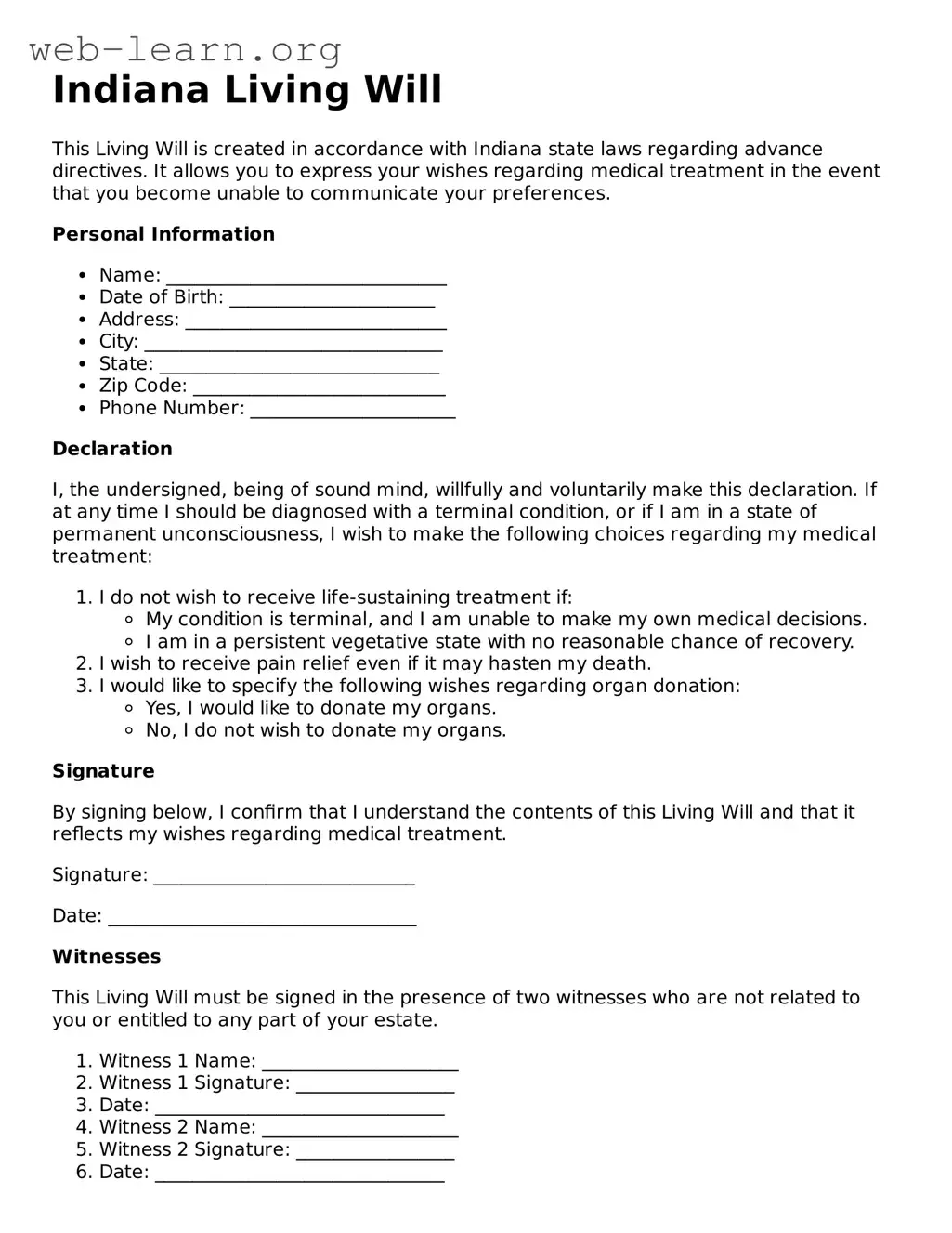
In Indiana, the Living Will form serves as a vital tool for individuals to express their healthcare preferences in the event they become unable to communicate their wishes. This legal document allows you to outline your desires regarding medical treatment, particularly in situations involving terminal illness or irreversible conditions. By specifying your choices about life-sustaining measures, you empower your loved ones and healthcare providers to make informed decisions that align with your values. Additionally, the form includes provisions for appointing a healthcare representative, ensuring that someone you trust can advocate on your behalf. Understanding the nuances of this form is essential for anyone looking to take control of their medical future and ensure that their wishes are honored, even when they cannot voice them directly.
Indiana Living Will
This Living Will is created in accordance with Indiana state laws regarding advance directives. It allows you to express your wishes regarding medical treatment in the event that you become unable to communicate your preferences.
Personal Information
Declaration
I, the undersigned, being of sound mind, willfully and voluntarily make this declaration. If at any time I should be diagnosed with a terminal condition, or if I am in a state of permanent unconsciousness, I wish to make the following choices regarding my medical treatment:
Signature
By signing below, I confirm that I understand the contents of this Living Will and that it reflects my wishes regarding medical treatment.
Signature: ____________________________
Date: _________________________________
Witnesses
This Living Will must be signed in the presence of two witnesses who are not related to you or entitled to any part of your estate.
| Fact Name | Details |
|---|---|
| Definition | The Indiana Living Will form allows individuals to express their wishes regarding medical treatment in the event they become unable to communicate their preferences. |
| Governing Law | The Indiana Living Will is governed by Indiana Code Title 16, Article 36, which outlines the legal framework for advance directives in the state. |
| Eligibility | Any adult who is at least 18 years old and of sound mind can complete a Living Will in Indiana. |
| Witness Requirements | The form must be signed in the presence of at least two witnesses who are not related to the individual and who will not inherit from them. |
| Revocation | Individuals have the right to revoke their Living Will at any time, provided that they communicate their decision to healthcare providers. |
| Scope of Decisions | The Living Will specifically addresses end-of-life decisions, such as the refusal of life-sustaining treatments and resuscitation efforts. |
Once you have your Indiana Living Will form, you will need to complete it carefully. This document is important for expressing your wishes regarding medical treatment in case you cannot communicate them yourself. Follow these steps to ensure that the form is filled out correctly.
After completing the form, keep it in a safe place and inform your loved ones about its location. It’s also advisable to discuss your wishes with them to ensure everyone understands your preferences. Regularly review the document to ensure it still reflects your current wishes.
A Living Will is a legal document that allows individuals to express their wishes regarding medical treatment in the event that they become unable to communicate their preferences. This typically occurs in situations where a person is terminally ill or in a persistent vegetative state. By creating a Living Will, you can ensure that your healthcare preferences are known and respected.
Any adult who is at least 18 years old and of sound mind can create a Living Will in Indiana. This means that you must be capable of understanding the nature and consequences of your decisions regarding medical treatment. It’s important to take the time to consider your wishes carefully before completing the document.
Your Living Will should clearly outline your preferences for medical treatment. This may include decisions about:
Be specific about the types of treatments you do or do not want, and consider discussing your wishes with your healthcare provider and loved ones.
To create a Living Will, you can use a standard form provided by the state or consult with an attorney to draft a personalized document. The form must be signed in the presence of two witnesses or notarized to be legally valid. It’s essential to ensure that your witnesses are not related to you or have any financial interest in your estate.
Yes, you have the right to change or revoke your Living Will at any time, as long as you are mentally competent. To make changes, you can complete a new Living Will or write a statement indicating your desire to revoke the previous document. It’s advisable to inform your healthcare providers and family members of any changes you make.
If you do not have a Living Will and become unable to communicate your medical preferences, your family members or healthcare providers will make decisions on your behalf. This may lead to uncertainty and potential disagreements among loved ones about what you would have wanted. Having a Living Will can provide clarity and peace of mind for both you and your family.
Filling out the Indiana Living Will form is an important step in ensuring that your healthcare preferences are honored in the event you cannot communicate them yourself. However, many people make mistakes during this process that can lead to confusion or misinterpretation of their wishes. Understanding these common pitfalls can help you avoid them.
One significant mistake is not being specific enough about medical treatments. Individuals often use vague language, which can lead to uncertainty among healthcare providers. It is crucial to clearly outline your preferences regarding life-sustaining treatments, resuscitation, and other medical interventions.
Another common error is failing to update the document as circumstances change. Life events such as marriage, divorce, or the diagnosis of a serious illness can affect your healthcare preferences. Regularly reviewing and updating your Living Will ensures that it accurately reflects your current wishes.
Some individuals neglect to discuss their Living Will with family members or healthcare proxies. This lack of communication can result in confusion and conflict among loved ones during a critical time. Open discussions can help clarify your intentions and ensure that everyone understands your choices.
Many people also overlook the importance of signatures and witnesses. The Indiana Living Will must be signed by you and, in some cases, witnessed by two individuals or notarized. Failing to follow these requirements can render the document invalid, leaving your healthcare decisions unprotected.
Another mistake is not designating a healthcare representative. While a Living Will outlines your wishes, it does not appoint someone to make decisions on your behalf if you cannot. Designating a trusted individual can ensure that your preferences are followed, even if your situation becomes complicated.
Some individuals make the mistake of relying solely on online templates without fully understanding the implications of their choices. While templates can be helpful, they may not address specific personal circumstances or preferences. It is advisable to seek guidance or legal advice when completing your Living Will.
Additionally, people often fail to consider the implications of their choices. For example, some may not fully understand what "do not resuscitate" means or the potential outcomes of refusing certain treatments. Taking the time to research and reflect on these decisions is essential for making informed choices.
Lastly, individuals sometimes forget to keep copies of their Living Will in accessible places. If the document is not readily available when needed, it may not be honored. Ensure that copies are provided to your healthcare proxy, family members, and stored with your medical records.
When individuals in Indiana consider their end-of-life preferences, they often utilize the Living Will form as a critical component of their advance care planning. However, there are several other forms and documents that may complement the Living Will, ensuring that one’s wishes are clearly communicated and respected. Below is a list of these important documents, each serving a unique purpose.
Each of these documents plays a significant role in ensuring that a person's wishes regarding health care and end-of-life decisions are respected. By preparing these forms, individuals can provide clarity and peace of mind for themselves and their loved ones during challenging times.
A Living Will is a crucial document that outlines your preferences for medical treatment in situations where you cannot communicate your wishes. It is similar to several other legal documents that serve to express your healthcare preferences or appoint someone to make decisions on your behalf. Here are ten documents that share similarities with a Living Will:
Understanding these documents can empower you to make informed decisions about your healthcare and end-of-life wishes. Each serves a unique purpose but collectively ensures that your preferences are honored when you cannot express them yourself.
When preparing to fill out the Indiana Living Will form, it's essential to approach the task thoughtfully. Here are some important dos and don'ts to keep in mind:
By following these guidelines, you can help ensure that your Living Will accurately reflects your wishes and is legally binding.
Understanding the Indiana Living Will form is essential for anyone considering end-of-life decisions. However, several misconceptions can lead to confusion. Here are nine common misunderstandings about this important document:
This is not true. Anyone, regardless of age, can benefit from having a Living Will. Unexpected medical situations can arise at any age, making it wise to have your wishes documented.
While both documents deal with medical decisions, they serve different purposes. A Living Will outlines your wishes regarding end-of-life care, whereas a Power of Attorney designates someone to make decisions on your behalf.
This misconception is false. You can modify or revoke your Living Will at any time as long as you are mentally competent to do so.
A Living Will can address various medical conditions, not just terminal illnesses. It can specify your preferences for life-sustaining treatments in different scenarios.
While health care providers are generally obligated to honor your Living Will, they may also consider other factors, including your current medical condition and treatment options.
This is a misconception. It's advisable for everyone to have a Living Will, regardless of their current health status, to ensure their wishes are respected in any situation.
Assuming your family understands your preferences can lead to confusion and conflict. A Living Will clearly documents your wishes, reducing the burden on loved ones during difficult times.
This is incorrect. In Indiana, a properly executed Living Will is a legally binding document, meaning your health care providers are required to follow your stated wishes.
A DNR order is specific to resuscitation efforts, while a Living Will covers a broader range of medical decisions. Having both documents can provide comprehensive guidance for your medical care.
Clearing up these misconceptions can help individuals make informed decisions about their end-of-life care and ensure their wishes are respected. Having a Living Will is a proactive step in managing your health care preferences.
Filling out and using the Indiana Living Will form is an important step in planning for future medical care. Here are some key takeaways to consider:
Can I Write My Own Will in New York State - By specifying your wishes in a Living Will, you can help ensure that your treatment aligns with your personal beliefs and values.
Does an Advance Directive Need to Be Notarized - This form can provide specific instructions regarding hydration and nutrition in end-of-life scenarios.
Michigan Living Will - A Living Will can be tailored to reflect your personal beliefs about medical treatment and quality of life.