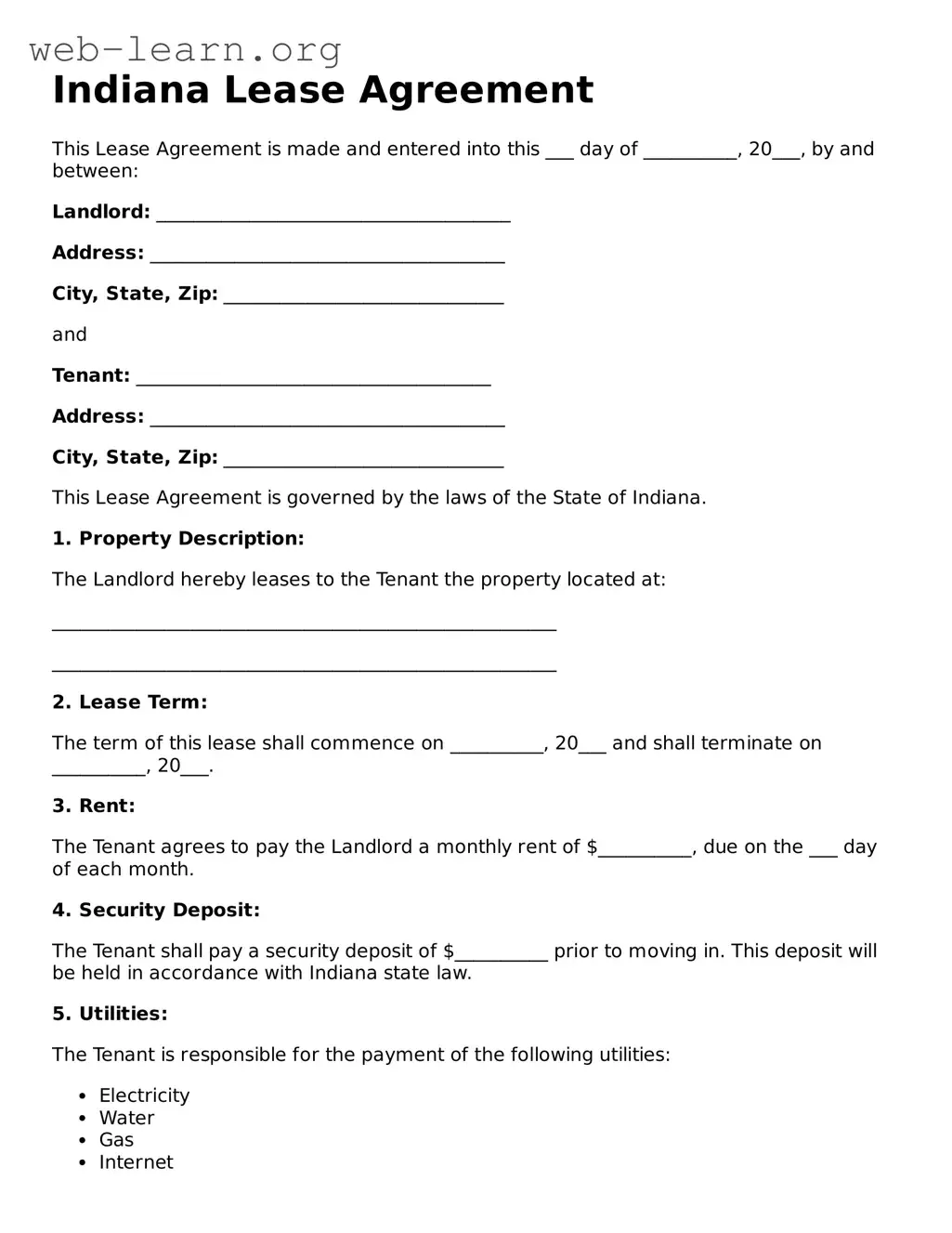
When entering into a rental arrangement in Indiana, understanding the Lease Agreement form is essential for both landlords and tenants. This document serves as a comprehensive guide that outlines the rights and responsibilities of each party. Key components include the duration of the lease, the amount of rent due, and the security deposit requirements. Additionally, the form addresses maintenance responsibilities, rules regarding pets, and the procedures for terminating the lease. By clearly delineating these terms, the Lease Agreement helps prevent misunderstandings and fosters a positive rental experience. Whether you are a seasoned property owner or a first-time renter, familiarizing yourself with this form can make a significant difference in your leasing journey.
Indiana Lease Agreement
This Lease Agreement is made and entered into this ___ day of __________, 20___, by and between:
Landlord: ______________________________________
Address: ______________________________________
City, State, Zip: ______________________________
and
Tenant: ______________________________________
Address: ______________________________________
City, State, Zip: ______________________________
This Lease Agreement is governed by the laws of the State of Indiana.
1. Property Description:
The Landlord hereby leases to the Tenant the property located at:
______________________________________________________
______________________________________________________
2. Lease Term:
The term of this lease shall commence on __________, 20___ and shall terminate on __________, 20___.
3. Rent:
The Tenant agrees to pay the Landlord a monthly rent of $__________, due on the ___ day of each month.
4. Security Deposit:
The Tenant shall pay a security deposit of $__________ prior to moving in. This deposit will be held in accordance with Indiana state law.
5. Utilities:
The Tenant is responsible for the payment of the following utilities:
6. Maintenance and Repairs:
The Tenant agrees to keep the premises in a clean and sanitary condition. The Landlord will be responsible for major repairs unless damage is caused by the Tenant's negligence.
7. Termination:
Either party may terminate this lease by providing a written notice of ___ days prior to the desired termination date.
8. Governing Law:
This Lease Agreement shall be governed by the laws of the State of Indiana.
9. Signatures:
By signing below, both parties agree to the terms outlined in this Lease Agreement.
Landlord Signature: ___________________________ Date: ____________
Tenant Signature: ____________________________ Date: ____________
| Fact Name | Description |
|---|---|
| Governing Law | The Indiana Lease Agreement is governed by Indiana state law, specifically the Indiana Code Title 32, Article 31. |
| Parties Involved | The agreement typically involves a landlord and a tenant, both of whom must be identified in the document. |
| Property Description | The lease must include a clear description of the rental property, including the address and any specific details about the premises. |
| Lease Term | The duration of the lease should be specified, whether it is a fixed-term lease or a month-to-month arrangement. |
| Rent Amount | The agreement must state the amount of rent due, the due date, and the method of payment. |
| Security Deposit | Indiana law requires the lease to outline the security deposit amount and the conditions under which it may be withheld. |
| Utilities Responsibility | The lease should clarify which utilities are the responsibility of the tenant and which are covered by the landlord. |
| Maintenance Obligations | Responsibilities for maintenance and repairs should be clearly defined to avoid disputes during the lease term. |
| Termination Conditions | The lease must specify the conditions under which either party may terminate the agreement, including notice requirements. |
Filling out the Indiana Lease Agreement form is a straightforward process that requires attention to detail. Once completed, this form will serve as a binding contract between the landlord and the tenant, outlining the terms of the rental arrangement.
What is an Indiana Lease Agreement form?
The Indiana Lease Agreement form is a legal document that outlines the terms and conditions between a landlord and a tenant for renting a residential property in Indiana. This agreement details the rights and responsibilities of both parties, including rent payment, maintenance obligations, and the duration of the lease.
What key elements should be included in the lease?
A comprehensive Indiana Lease Agreement should include:
How long does a lease last in Indiana?
The duration of a lease in Indiana can vary. It may be a fixed-term lease, typically lasting one year, or a month-to-month agreement. A fixed-term lease automatically ends at the conclusion of the term, while a month-to-month lease continues until either party provides notice to terminate, usually 30 days in advance.
Can a landlord increase rent during the lease term?
Generally, a landlord cannot increase rent during the lease term unless the lease specifically allows for it. For month-to-month leases, landlords can raise rent but must provide proper notice, typically 30 days. Always check the lease agreement for any specific provisions regarding rent increases.
What happens if a tenant wants to break the lease?
If a tenant needs to break the lease early, they should first review the lease agreement for any clauses related to early termination. Often, tenants may be required to provide written notice and may have to pay a penalty or forfeit the security deposit. It’s best to communicate with the landlord to discuss options and minimize potential consequences.
Filling out the Indiana Lease Agreement form can be straightforward, but many individuals make common mistakes that can lead to complications later on. One prevalent error is failing to include all necessary parties in the agreement. Both the landlord and tenant must be clearly identified. Omitting a party can create confusion and potential disputes.
Another frequent mistake is neglecting to specify the rental amount and payment terms. Clearly stating the monthly rent, due date, and acceptable payment methods is crucial. Without this information, misunderstandings may arise, leading to payment issues.
People often overlook the importance of detailing the lease term. Not specifying whether the lease is month-to-month or for a fixed term can lead to uncertainty about the duration of the agreement. This can create challenges for both landlords and tenants when it comes to renewal or termination.
Additionally, failing to outline the security deposit terms is a common oversight. The lease should specify the amount of the deposit, the conditions for its return, and any deductions that may be made. This clarity helps protect both parties' interests.
Another mistake is not including maintenance responsibilities. It is essential to define who is responsible for repairs and maintenance. This can prevent disputes over who should handle issues like plumbing or electrical problems during the lease period.
Some individuals do not take the time to read the entire agreement before signing. This can result in agreeing to terms that one may not fully understand or accept. It is advisable to review the document thoroughly and ask questions if anything is unclear.
Moreover, failing to comply with local laws and regulations can lead to legal issues. Each state has specific requirements regarding lease agreements, and not adhering to these can invalidate the contract. It is important to ensure that the lease complies with Indiana law.
People sometimes forget to include provisions for early termination. Life circumstances can change, and having a clear process for ending the lease early can save both parties from unexpected complications.
Another common error is not documenting the condition of the property before moving in. A walkthrough with both parties present can help note any existing damages. This documentation can be invaluable when it comes time to return the security deposit.
Finally, some individuals do not keep copies of the signed lease agreement. Having a copy is essential for reference and can provide protection if disputes arise. Both parties should retain a signed version for their records.
When entering into a lease agreement in Indiana, several other forms and documents may also be necessary. These documents help clarify terms, protect rights, and ensure compliance with local laws. Below is a list of commonly used forms that complement the Indiana Lease Agreement.
Understanding these additional documents can enhance the leasing experience for both landlords and tenants. Each form plays a vital role in fostering clear communication and protecting everyone involved in the rental process.
Rental Agreement: Similar to a lease, a rental agreement outlines the terms under which a tenant rents property from a landlord. It typically covers duration, payment terms, and responsibilities of both parties.
Sublease Agreement: This document allows a tenant to rent out their leased property to another individual. It includes terms regarding the duration of the sublease and the responsibilities of the original tenant and subtenant.
Month-to-Month Agreement: A month-to-month agreement is a flexible rental arrangement that allows either party to terminate the lease with proper notice. It shares similarities with a lease but typically does not have a fixed term.
Commercial Lease Agreement: This type of lease is used for renting commercial properties. It outlines terms specific to business use, including rent, duration, and maintenance responsibilities, similar to residential leases.
Real Estate Purchase Agreement: While primarily for buying property, this document shares similarities with leases in that it outlines terms and conditions for the transfer of property ownership, including price and closing date.
Property Management Agreement: This document establishes the relationship between a property owner and a management company. It details responsibilities, fees, and management duties, akin to the landlord-tenant relationship in a lease.
When filling out the Indiana Lease Agreement form, attention to detail is crucial. Here are six guidelines to follow and avoid:
Understanding the Indiana Lease Agreement form can be challenging. Here are ten common misconceptions that people often have:
Understanding these misconceptions can help both landlords and tenants navigate their agreements more effectively.
When filling out and using the Indiana Lease Agreement form, it's important to keep a few key points in mind. Here are some takeaways that can help ensure a smooth process:
Rental Agreement Paper - It may specify restrictions on subletting or guests.
Michigan Standard Lease Agreement - The document specifies any utilities that are included in the rent.
Free Lease Agreement Florida - Addresses the handling of unforeseen circumstances affecting the lease.