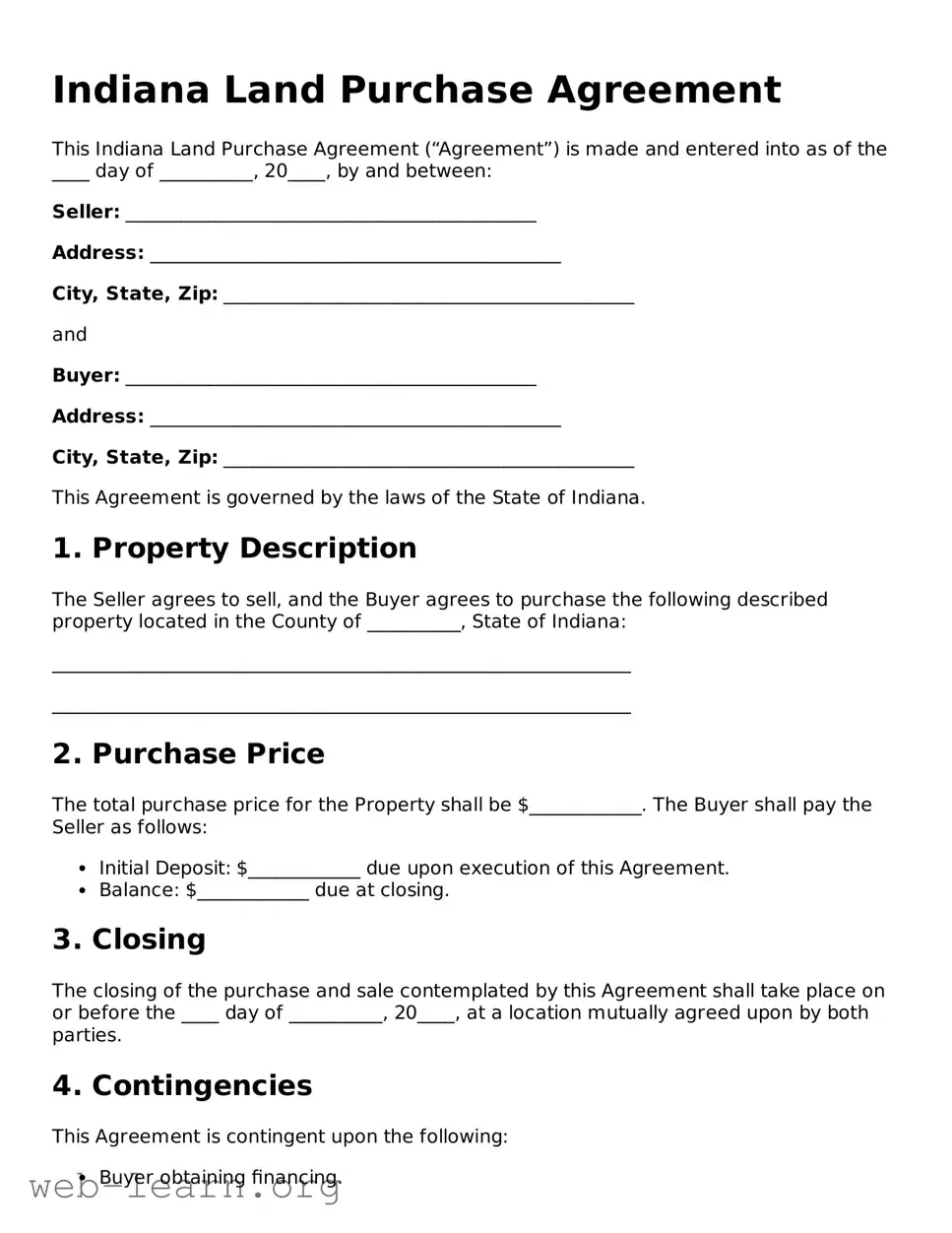
The Indiana Land Purchase Agreement form serves as a crucial document in real estate transactions, providing a structured framework for both buyers and sellers. This form outlines essential details, such as the purchase price, property description, and terms of sale, ensuring that both parties are on the same page throughout the process. Additionally, it addresses contingencies, which may include financing and inspections, allowing buyers to secure their investment while protecting their interests. The agreement also specifies the responsibilities of each party, from disclosures to closing costs, fostering transparency and minimizing misunderstandings. By clearly defining the timeline for closing and any applicable legal obligations, the Indiana Land Purchase Agreement form lays the groundwork for a smooth transaction, making it an indispensable tool for anyone involved in buying or selling real estate in the state.
Indiana Land Purchase Agreement
This Indiana Land Purchase Agreement (“Agreement”) is made and entered into as of the ____ day of __________, 20____, by and between:
Seller: ____________________________________________
Address: ____________________________________________
City, State, Zip: ____________________________________________
and
Buyer: ____________________________________________
Address: ____________________________________________
City, State, Zip: ____________________________________________
This Agreement is governed by the laws of the State of Indiana.
1. Property Description
The Seller agrees to sell, and the Buyer agrees to purchase the following described property located in the County of __________, State of Indiana:
______________________________________________________________
______________________________________________________________
2. Purchase Price
The total purchase price for the Property shall be $____________. The Buyer shall pay the Seller as follows:
3. Closing
The closing of the purchase and sale contemplated by this Agreement shall take place on or before the ____ day of __________, 20____, at a location mutually agreed upon by both parties.
4. Contingencies
This Agreement is contingent upon the following:
5. Representations and Warranties
The Seller represents and warrants that:
6. Governing Law
This Agreement shall be governed by and construed in accordance with the laws of the State of Indiana.
7. Signatures
IN WITNESS WHEREOF, the parties hereto have executed this Agreement as of the date first above written.
Seller Signature: ___________________________ Date: ____________
Buyer Signature: ___________________________ Date: ____________
| Fact Name | Details |
|---|---|
| Purpose | The Indiana Land Purchase Agreement form is used to outline the terms of a real estate transaction between a buyer and a seller. |
| Governing Law | This agreement is governed by the laws of the State of Indiana. |
| Parties Involved | The form includes sections for both the buyer and the seller to provide their information. |
| Property Description | A detailed description of the property being sold is required, including its address and legal description. |
| Purchase Price | The total purchase price must be clearly stated in the agreement. |
| Deposit Amount | Information about any deposit or earnest money should be included, specifying the amount and terms. |
| Closing Date | The agreement should specify the closing date when the transaction will be finalized. |
| Contingencies | Buyers may include contingencies, such as financing or inspection requirements, in the agreement. |
| Signatures | Both parties must sign the agreement for it to be legally binding. |
Once you have the Indiana Land Purchase Agreement form in hand, it's time to begin the process of filling it out accurately. This form is essential for documenting the terms of the land purchase. Ensure that you have all necessary information at hand to avoid delays.
After completing the form, review it carefully for accuracy. Both parties should retain a copy for their records. It’s advisable to consult with a real estate professional to ensure all terms are clear and understood.
An Indiana Land Purchase Agreement is a legal document that outlines the terms and conditions under which a buyer agrees to purchase real estate from a seller in Indiana. This agreement serves as a binding contract and details important aspects such as the purchase price, payment terms, and any contingencies that must be met before the sale is finalized.
Both buyers and sellers of real estate in Indiana should use a Land Purchase Agreement. It protects the interests of both parties by clearly defining the terms of the sale. Without this agreement, misunderstandings or disputes may arise, leading to potential legal issues.
A comprehensive Indiana Land Purchase Agreement should include:
Yes, using a template can be a helpful starting point. However, it’s important to ensure that the template complies with Indiana laws and meets your specific needs. Customizing the template to reflect the details of your transaction is crucial.
While it’s not legally required, having a lawyer review your Land Purchase Agreement is highly recommended. A legal expert can help identify potential issues, ensure compliance with local laws, and provide peace of mind for both parties.
If one party fails to meet their obligations as outlined in the agreement, the other party may have legal recourse. This could include seeking damages or enforcing the terms of the contract through the courts. It’s important to understand the consequences of non-compliance before signing.
Termination of a Land Purchase Agreement typically requires mutual consent from both parties. If there are specific contingencies outlined in the agreement, such as failing an inspection, either party may have the right to terminate the contract. Always refer to the agreement for guidance on termination procedures.
The closing process involves several steps, including:
It’s advisable to work with a real estate agent or attorney during this process to ensure everything goes smoothly.
You can find the Indiana Land Purchase Agreement form through various sources, including legal websites, real estate agencies, or local government offices. Ensure that you are using the most current version of the form to comply with Indiana regulations.
When completing the Indiana Land Purchase Agreement form, attention to detail is crucial. One common mistake is failing to provide accurate property descriptions. This includes not specifying the correct parcel number or legal description. An incomplete or incorrect description can lead to disputes later on, making it essential to double-check this information.
Another frequent error is neglecting to include all parties involved in the transaction. Both the buyer and seller must be clearly identified, along with any necessary co-signers. Omitting a party can complicate the agreement and potentially invalidate it, causing delays in the purchasing process.
People often overlook the importance of specifying the purchase price. While it may seem straightforward, ensuring that the price is clearly stated and agreed upon is vital. Any ambiguity can lead to misunderstandings and disputes, so clarity here is key.
Additionally, many individuals fail to account for contingencies in the agreement. This might include financing conditions, inspections, or other factors that could affect the sale. Including these contingencies protects all parties and helps prevent future complications.
Another mistake is not thoroughly reviewing the terms of the agreement. It’s easy to rush through the form, but understanding the implications of each clause is essential. Misinterpretations can lead to unexpected obligations or rights, so take the time to read and comprehend each section.
Many buyers and sellers also forget to sign and date the agreement. Without signatures, the document lacks legal validity. This seemingly small oversight can derail the entire transaction, so it’s critical to ensure that all necessary signatures are present.
People sometimes neglect to consult with a real estate professional or attorney. While it may seem like an additional expense, expert guidance can help avoid costly mistakes. Professionals can provide insights and ensure that the agreement complies with local laws and regulations.
Lastly, failing to keep copies of the signed agreement can lead to significant problems down the line. All parties should retain a copy for their records. This ensures that everyone has access to the same information and can refer back to the agreement as needed.
When engaging in a real estate transaction in Indiana, various documents accompany the Land Purchase Agreement. Each of these forms serves a specific purpose, ensuring that both parties are protected and that the transaction proceeds smoothly. Below is a list of common forms and documents that are often used alongside the Indiana Land Purchase Agreement.
Each of these documents plays a crucial role in the real estate transaction process. By understanding their purpose and significance, both buyers and sellers can navigate the complexities of property transactions with greater confidence and clarity.
The Land Purchase Agreement form shares similarities with several other legal documents related to real estate transactions. Here are four such documents, each with its own specific purpose but comparable in structure and function:
When filling out the Indiana Land Purchase Agreement form, it’s essential to approach the process with care. Here’s a list of things you should and shouldn’t do to ensure a smooth transaction.
By following these guidelines, you can help ensure that your land purchase process is as straightforward as possible. Remember, taking the time to get it right now can save you from potential headaches down the road.
Misconceptions about the Indiana Land Purchase Agreement form can lead to confusion for both buyers and sellers. Understanding these misconceptions is crucial for a smooth transaction. Here are six common misunderstandings:
This is not true. The Indiana Land Purchase Agreement is essential for any real estate transaction, regardless of size. It protects both parties and outlines the terms of the sale.
Many believe that a verbal agreement is enough to secure a deal. However, without a written contract, it can be challenging to enforce the terms if disputes arise.
While having an attorney can be beneficial, it is not a legal requirement for all transactions. Buyers and sellers can complete the agreement on their own, though legal advice is recommended for complex situations.
This misconception overlooks the fact that different types of properties may require specific clauses or adjustments. Always ensure the form is tailored to the particular property type.
In reality, parties can amend the agreement if both agree to the changes. Modifications should be documented in writing to avoid future disputes.
Both the buyer and seller must sign the agreement for it to be legally binding. Each party's signature confirms their acceptance of the terms outlined in the document.
The Indiana Land Purchase Agreement is a legal document used to outline the terms of a real estate transaction.
Both the buyer and seller must sign the agreement for it to be legally binding.
It is essential to include the legal description of the property being purchased.
Clearly state the purchase price and any earnest money deposit in the agreement.
Specify the closing date to avoid misunderstandings between the parties.
Disclosures regarding the property condition should be included to protect both parties.
Any contingencies, such as financing or inspections, must be clearly outlined.
Consulting with a real estate attorney can help ensure the agreement complies with Indiana law.
Keep a copy of the signed agreement for your records after the transaction is complete.
Review the agreement carefully before signing to ensure all terms are acceptable.