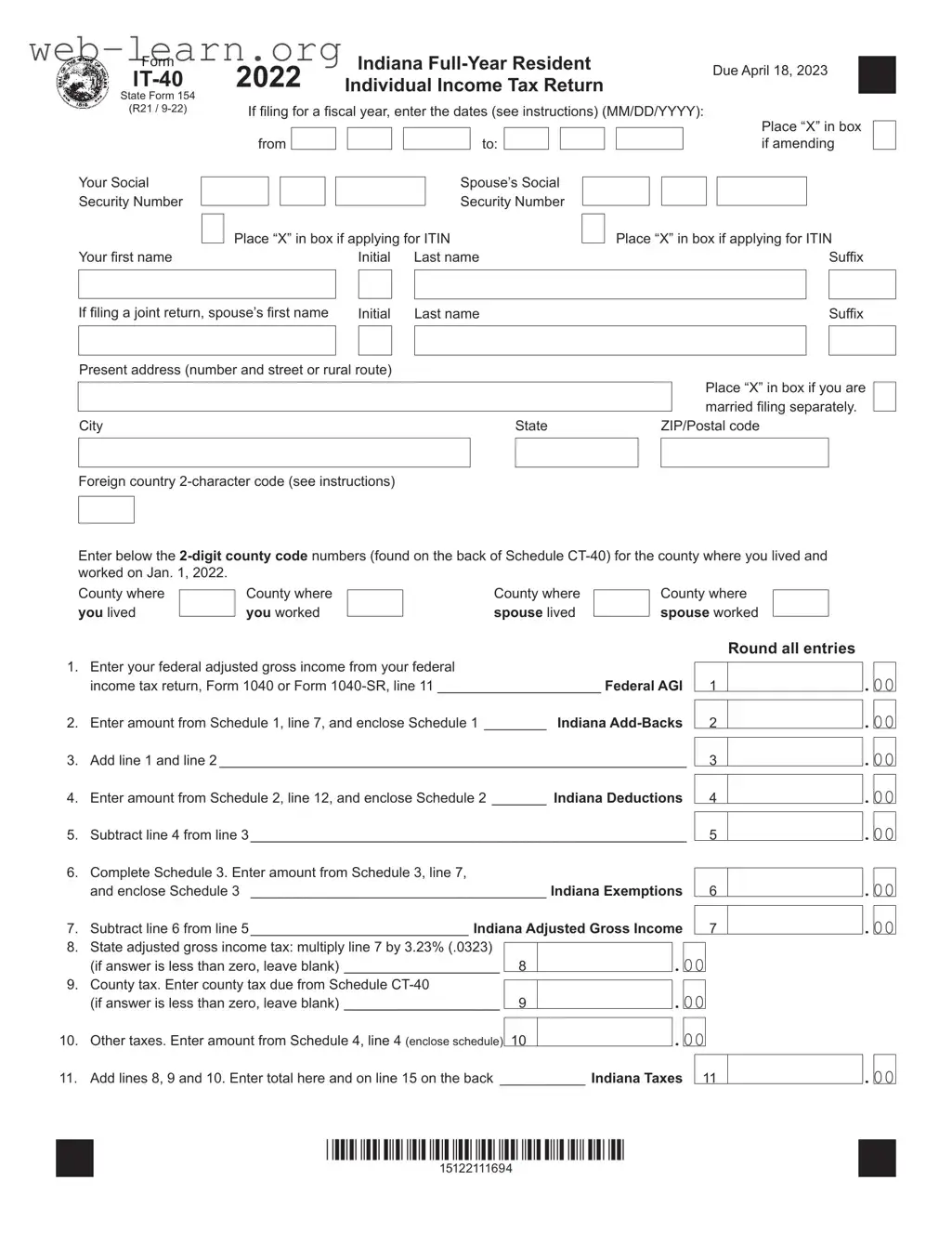
The Indiana IT-40 form serves as a crucial tool for full-year residents of Indiana to report their individual income tax. This form is designed for those who have earned income throughout the year and need to calculate their tax obligations accurately. It encompasses several key sections, including personal information, federal adjusted gross income, and various deductions and credits that may apply. Taxpayers will need to provide details such as their Social Security numbers, marital status, and county codes, which help determine local tax responsibilities. The form also guides users through calculations for state adjusted gross income tax, county tax, and potential refunds or amounts owed. By meticulously filling out the IT-40, individuals can ensure compliance with state tax regulations while maximizing their eligible deductions and credits. It’s essential to file this form by the due date, typically April 15, to avoid any penalties. Understanding the nuances of this form can lead to a smoother tax filing experience and potentially greater financial benefits.

Form
State Form 154
(R21 /
Your Social Security Number
Your first name
2022 |
Indiana |
Due April 18, 2023 |
|
Individual Income Tax Return |
|
||
|
|
If filing for a fiscal year, enter the dates (see instructions) (MM/DD/YYYY):
|
|
|
|
|
|
|
|
|
|
|
|
|
|
|
|
|
|
|
|
|
|
|
|
|
|
Place “X” in box |
|
||
|
|
|
|
|
|
|
|
|
|
|
|
|
|
|
|
|
|
|
|
|
|
|
|
|
|
|
|||
|
|
|
|
|
|
|
|
|
|
|
|
|
|
|
|
|
|
|
|
|
|
|
|||||||
|
|
from |
|
|
|
|
|
|
|
|
|
to: |
|
|
|
|
|
|
|
|
|
|
|
if amending |
|
||||
|
|
|
|
|
|
|
|
|
|
|
|
|
Spouse’s Social |
|
|
|
|
|
|
|
|
|
|
|
|||||
|
|
|
|
|
|
|
|
|
|
|
|
|
|
|
|
|
|
|
|
|
|
|
|
||||||
|
|
|
|
|
|
|
|
|
|
|
|
|
Security Number |
|
|
|
|
|
|
|
|
|
|
|
|||||
|
|
|
|
|
|
|
|
|
|
|
|
|
|
|
|
|
|
|
|
|
|
|
|
||||||
|
|
Place “X” in box if applying for ITIN |
|
|
|
Place “X” in box if applying for ITIN |
|||||||||||||||||||||||
|
|
|
|
|
|||||||||||||||||||||||||
|
|
|
|
||||||||||||||||||||||||||
|
|
|
|
|
|
|
|
Initial |
|
|
Last name |
|
|
|
|
|
|
|
|
Suffix |
|||||||||
|
|
|
|
|
|
|
|
|
|
|
|
|
|
|
|
|
|
|
|
|
|
|
|
|
|
|
|
|
|
|
|
|
|
|
|
|
|
|
|
|
|
|
|
|
|
|
|
|
|
|
|
|
|
|
|
|
|
|
|
If filing a joint return, spouse’s first name |
Initial |
|
Last name |
|
|
|
|
Suffix |
||||
|
|
|
|
|
|
|
|
|
|
|
|
|
|
|
|
|
|
|
|
|
|
|
|
|
|
Present address (number and street or rural route) |
|
|
|
|
|
|
Place “X” in box if you are |
|
||||
|
|
|
|
|
|
|
|
|
|
|||
|
|
|
|
|
|
|
|
|
|
|||
|
|
|
|
|
|
|
|
|
married filing separately. |
|
||
|
|
|
|
|
|
|
|
|
|
|||
City |
|
|
|
|
|
State |
|
ZIP/Postal code |
||||
|
|
|
|
|
|
|
|
|
|
|
|
|
|
|
|
|
|
|
|
|
|
|
|
|
|
Foreign country
Enter below the
County where you lived
County where you worked
County where spouse lived
County where spouse worked
Round all entries
1. |
Enter your federal adjusted gross income from your federal |
|
|
|
|
|
|
|
|
|
|
|
|
|
|
||
|
income tax return, Form 1040 or Form |
|
1 |
|||||
2. |
Enter amount from Schedule 1, line 7, and enclose Schedule 1 ________ |
|
2 |
|||||
Indiana |
|
|||||||
|
|
|
||||||
3. |
Add line 1 and line 2 ____________________________________________________________ |
|
3 |
|||||
|
|
|
||||||
4. |
Enter amount from Schedule 2, line 12, and enclose Schedule 2 _______ Indiana Deductions |
|
4 |
|||||
|
|
|
||||||
5. |
Subtract line 4 from line 3 ________________________________________________________ |
|
5 |
|||||
6. |
Complete Schedule 3. Enter amount from Schedule 3, line 7, |
|
|
|
|
|
|
|
|
|
|
|
|
|
|
||
|
and enclose Schedule 3 ______________________________________ Indiana Exemptions |
|
6 |
|||||
|
|
|
||||||
7. |
Subtract line 6 from line 5 ____________________________ Indiana Adjusted Gross Income |
|
7 |
|||||
8. |
State adjusted gross income tax: multiply line 7 by 3.23% (.0323) |
|
|
|
|
|
|
|
|
|
|
|
|
|
|
||
|
(if answer is less than zero, leave blank) ____________________ |
8 |
|
|
.00 |
|
||
9. |
County tax. Enter county tax due from Schedule |
|
|
|
|
|
|
|
|
|
|
|
|
|
|
||
|
(if answer is less than zero, leave blank) ____________________ |
9 |
|
|
.00 |
|
||
|
|
|
|
|
|
|
|
|
.00
.00
.00
.00
.00
.00
.00
10. |
Other taxes. Enter amount from Schedule 4, line 4 (enclose schedule) |
|
|
|
|
|
|
|
10 |
|
.00 |
|
|||||
|
|
|
|
|
|
|
|
|
11. |
Add lines 8, 9 and 10. Enter total here and on line 15 on the back ___________ Indiana Taxes |
|
11 |
|||||
|
||||||||
.00
*15122111694*
15122111694

12. |
Enter credits from Schedule 5, line 12 (enclose schedule) ___ |
|
|
|
|
|
|
|
|
|
|
||
12 |
|
|
.00 |
|
|
|
|
|
|||||
|
|
|
|
|
|
|
|
|
|
|
|
|
|
13. |
Enter offset credits from Schedule 6, line 8 (enclose schedule) |
13 |
|
|
.00 |
|
|
|
|
|
|||
|
|
|
|
|
|
|
|
|
|
|
|
|
|
14. |
Add lines 12 and 13 ______________________________________________ Indiana Credits |
|
|
|
|
||||||||
14 |
|
.00 |
|||||||||||
15. |
Enter amount from line 11___________________________________________ Indiana Taxes |
|
|
|
|
||||||||
15 |
|
.00 |
|||||||||||
|
|
|
|
|
|
|
|
||||||
16. |
If line 14 is equal to or more than line 15, subtract line 15 from line 14 (if smaller, skip to line 23) |
16 |
|
.00 |
|||||||||
|
|
|
|
|
|
|
|
||||||
17. |
Enter donations from Schedule |
17 |
|
.00 |
|||||||||
18. |
Subtract line 17 from line 16 __________________________________________Overpayment |
|
|
|
|
||||||||
18 |
|
.00 |
|||||||||||
19. |
Amount from line 18 to be applied to your 2023 estimated tax account (see instructions). |
|
|
|
|
||||||||
|
Enter your county code |
|
county tax to be applied _ $ |
|
|
|
|
|
|
|
|
|
|
|
|
a |
|
|
.00 |
|
|
|
|
|
|||
|
|
|
|
|
|
|
|
|
|
|
|
|
|
|
Spouse’s county code |
|
county tax to be applied _ $ |
b |
|
|
.00 |
|
|
|
|
|
|
|
|
|
|
|
|
|
|
|
|
|
|
|
|
|
Indiana adjusted gross income tax to be applied _________ $ |
c |
|
|
.00 |
|
|
|
|
|
|||
|
|
|
|
|
|
|
|
|
|
|
|||
|
Total to be applied to your estimated tax account (a + b + c; cannot be more than line 18)_____ |
19d |
|
.00 |
|||||||||
20. |
Penalty for underpayment of estimated tax from Schedule |
|
|
|
|
||||||||
20 |
|
.00 |
|||||||||||
|
Refund: Line 18 minus lines 19d and 20. Note: If less than zero, see line 23 |
|
|
|
|
|
|||||||
21. |
___ Your Refund |
21 |
|
.00 |
|||||||||
|
|
|
|
|
|
|
|
|
|
|
|
|
|
22.Direct Deposit (see instructions)
|
a. Routing Number |
|
|
|
|
|
|
|
|
|
|
|
|
|
|
|
|
|
|
|
|
|
|
|
|
|
|
|
||
|
|
|
|
|
|
|
|
|
|
|
|
|
|
|
|
|
|
|
|
|
|
|
|
|
|
|
|
|
||
|
b. Account Number |
|
|
|
|
|
|
|
|
|
|
|
|
|
|
|
|
|
|
|
|
|
|
|
|
|
|
|
||
|
c. Type: |
|
Checking |
|
|
Savings |
|
|
Hoosier Works MC |
|
|
|
|
|||||||||||||||||
|
|
|
|
|
|
|
|
|
|
|||||||||||||||||||||
|
|
|
|
|
|
|
|
|||||||||||||||||||||||
|
d. Place an “X” in the box if refund will go to an account outside the United States |
|
|
|
|
|
|
|||||||||||||||||||||||
23. |
If line 15 is more than line 14, subtract line 14 from line 15. Add any amount to this on line 20 |
|
|
|
|
|||||||||||||||||||||||||
|
|
|
|
|||||||||||||||||||||||||||
|
(see instructions) _____________________________________________________________ |
23 |
|
.00 |
||||||||||||||||||||||||||
24. |
Penalty if filed after due date (see instructions) ______________________________________ |
|
|
|
|
|||||||||||||||||||||||||
24 |
|
.00 |
||||||||||||||||||||||||||||
25. |
Interest if filed after due date (see instructions) ______________________________________ |
|
|
|
|
|||||||||||||||||||||||||
25 |
|
.00 |
||||||||||||||||||||||||||||
|
Amount Due: Add lines 23, 24 and 25______________________________ Amount You Owe |
|
|
|
|
|||||||||||||||||||||||||
26. |
26 |
|
.00 |
|||||||||||||||||||||||||||
|
Do not send cash. Make your check or money order payable to: |
|
|
|
|
|||||||||||||||||||||||||
|
Indiana Department of Revenue. See instructions if paying with a credit card. |
|
|
|
|
|||||||||||||||||||||||||
Sign and date this return after reading the Authorization statement on Schedule 7. Remember to enclose Schedule 7.
_____________________________________________________ |
_________________________________________________ |
||
Signature |
Date |
Spouse’s Signature |
Date |
•Mail payments to: Indiana Department of Revenue, P.O. Box 7224, Indianapolis, IN
•Mail all other returns to: Indiana Department of Revenue, P.O. Box 40, Indianapolis, IN
*15122121694*
15122121694
| Fact Name | Description |
|---|---|
| Form Purpose | The Indiana IT-40 form is used for filing individual income tax returns for full-year residents of Indiana. |
| Filing Deadline | Taxpayers must file the IT-40 form by April 15 of the year following the tax year, unless an extension is granted. |
| Governing Law | The IT-40 form is governed by Indiana Code Title 6, Article 3, which outlines the state's income tax regulations. |
| Amendment Process | If changes are needed after filing, taxpayers can amend their return by marking the appropriate box on the form. |
Filling out the Indiana IT-40 form requires careful attention to detail. Ensure you have your federal tax information and any necessary schedules ready. Follow the steps outlined below to complete the form accurately.
What is the Indiana IT-40 form?
The Indiana IT-40 form is the state income tax return for full-year residents of Indiana. It is used to report income, claim deductions, and calculate tax liability. This form must be filed annually, typically by April 15, unless an extension is granted.
Who should file the IT-40 form?
Individuals who lived in Indiana for the entire tax year and earned income are required to file the IT-40 form. This includes those who are self-employed or received wages from an employer. If you are married and filing jointly, both spouses' income must be reported on the same form.
What information is needed to complete the IT-40 form?
To complete the IT-40 form, you will need:
What are the main sections of the IT-40 form?
The IT-40 form consists of several key sections, including:
What if I need to amend my IT-40 form?
If you need to make changes to your original IT-40 form, you can do so by marking the appropriate box indicating that you are amending the return. You will then need to provide the correct information and submit the amended form.
Are there penalties for filing late?
Yes, if you file your IT-40 form after the due date without an approved extension, you may incur penalties. The penalties can include a late filing fee and interest on any unpaid taxes. It is advisable to file on time or request an extension if needed.
Can I e-file the IT-40 form?
Yes, Indiana allows taxpayers to e-file the IT-40 form. Many tax preparation software programs support e-filing, which can expedite the processing of your return and any refund you may be due.
What should I do if I owe taxes?
If you owe taxes after completing your IT-40 form, you must pay the amount due by the filing deadline to avoid penalties and interest. Payments can be made via check, money order, or credit card, as outlined in the instructions.
How can I track my refund?
To track your refund, you can visit the Indiana Department of Revenue's website. You will need to provide your Social Security Number and other identifying information to access the status of your refund.
Filling out the Indiana IT-40 form can be a straightforward process, but many individuals make common mistakes that can lead to delays or issues with their tax returns. One frequent error is failing to provide accurate Social Security numbers. The form requires both the taxpayer's and spouse's Social Security numbers, if applicable. Omitting or incorrectly entering these numbers can result in processing delays or even rejection of the return.
Another common mistake involves not including necessary schedules. The IT-40 form references several schedules, such as Schedule 1 for Indiana Add-Backs and Schedule 2 for Indiana Deductions. Failing to complete or attach these schedules can lead to an incomplete return, which may trigger additional scrutiny from the Indiana Department of Revenue.
Many filers also overlook the importance of rounding numbers correctly. The form instructs individuals to round all entries, yet some people neglect this step. For example, if the income amount is $45,678.90, it should be rounded to $45,679. Not adhering to this guideline can create discrepancies in calculations, affecting the overall tax liability.
In addition, taxpayers sometimes miscalculate their Indiana Adjusted Gross Income. This figure is critical as it directly impacts the tax owed. It is calculated by subtracting deductions and exemptions from the federal adjusted gross income. If any of these figures are entered incorrectly, the resulting Indiana Adjusted Gross Income will be inaccurate, potentially leading to underpayment or overpayment of taxes.
Lastly, individuals often forget to sign and date the return. This step may seem minor, but it is crucial for the validity of the tax return. A missing signature can delay processing and may even result in penalties. Always ensure that both the taxpayer and spouse, if applicable, have signed the form before submitting it.
The Indiana IT-40 form serves as the primary document for individual income tax returns for full-year residents. However, several other forms and documents are often submitted alongside it to provide additional information, clarify specific tax situations, or facilitate various tax calculations. Below is a list of these commonly used forms and documents, along with a brief description of each.
Submitting these additional forms alongside the Indiana IT-40 can help ensure a complete and accurate tax return. Each document serves a specific purpose, and together they provide a comprehensive overview of a taxpayer's financial situation for the relevant tax year.
The Indiana IT-40 form is a key document for individuals filing their state income tax return. It shares similarities with several other tax forms used in different contexts. Below are five documents that are comparable to the IT-40, each serving a specific purpose in tax filing:
Understanding these forms and their connections to the Indiana IT-40 can streamline the filing process and ensure compliance with tax obligations.
When filling out the Indiana IT-40 form, it is crucial to ensure accuracy and completeness. Here are five important dos and don’ts to keep in mind:
The Indiana IT-40 form is a crucial document for residents filing their state income tax returns. However, several misconceptions can lead to confusion and mistakes. Below are eight common misconceptions about the IT-40 form, along with clarifications to help you navigate the process more effectively.
This form is specifically designed for full-year residents of Indiana. If you were a part-year resident or non-resident, different forms apply.
The IT-40 requires information from your federal tax return, specifically your adjusted gross income. Filing without this information is not permissible.
The due date for filing the IT-40 is April 15 of the following year, similar to federal tax deadlines. Late submissions may incur penalties.
Even if certain schedules do not apply to you, it is essential to include them if the form requires their submission. Omitting them can delay processing.
Indiana has specific rules regarding which deductions can be claimed. Not all federal deductions are applicable for state tax purposes.
While filing jointly may offer tax advantages, it is not universally beneficial. Each situation is unique, and sometimes filing separately can lead to a lower tax liability.
Even if you do not owe county tax, you must still complete that section of the form. Failure to do so can result in processing delays.
While overpayment may lead to a refund, it is crucial to follow the proper procedures for claiming it. Ensure that you complete all necessary sections to avoid delays.
Understanding these misconceptions can help ensure that your filing process is smooth and accurate. Always refer to the latest guidelines and instructions when completing your IT-40 form.