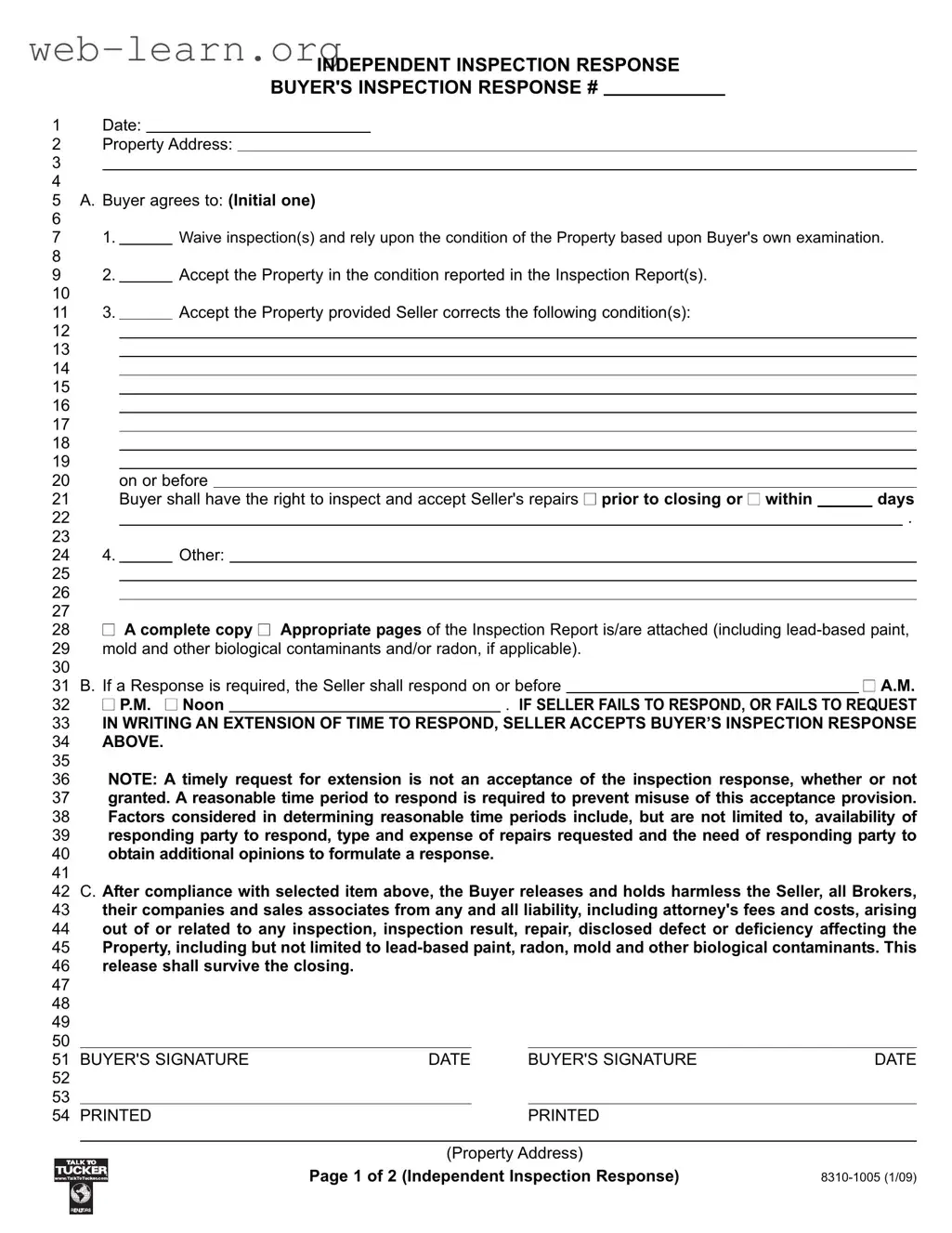
The Indiana Inspection Response form plays a crucial role in real estate transactions, particularly in the context of property inspections. This document facilitates communication between buyers and sellers regarding the condition of a property. Buyers can choose from several options: they may waive inspections altogether, accept the property as-is based on the inspection report, or request specific repairs to be made by the seller before closing. Each option requires careful consideration, as it can significantly impact the buyer's rights and responsibilities. Additionally, the form outlines the timeline for responses, ensuring that both parties adhere to agreed-upon deadlines. If the seller fails to respond within the specified timeframe, the buyer's inspection response is automatically accepted, which emphasizes the importance of timely communication. The form also includes a release clause, protecting the seller and associated parties from liability related to inspection results or repairs. This structured approach helps to clarify expectations and responsibilities, ultimately fostering a smoother transaction process.

INDEPENDENT INSPECTION RESPONSE
BUYER'S INSPECTION RESPONSE #
1Date:
2Property Address:
3
4
5 A. Buyer agrees to: (Initial one)
6
71. Waive inspection(s) and rely upon the condition of the Property based upon Buyer's own examination.
8
92. Accept the Property in the condition reported in the Inspection Report(s).
10
11 |
3. |
|
Accept the Property provided Seller corrects the following condition(s): |
|
|
|
||
12 |
|
|
|
|
|
|
|
|
13 |
|
|
|
|
|
|
|
|
14 |
|
|
|
|
|
|
|
|
15 |
|
|
|
|
|
|
|
|
16 |
|
|
|
|
|
|
|
|
17 |
|
|
|
|
|
|
|
|
18 |
|
|
|
|
|
|
|
|
19 |
|
|
|
|
|
|
|
|
20 |
|
on or before |
|
|
|
|
||
21 |
|
Buyer shall have the right to inspect and accept Seller's repairs ■ prior to closing or ■ within |
|
days |
||||
22 |
|
|
|
|
|
. |
||
23 |
|
|
|
|
|
|
|
|
24 |
4. |
|
Other: |
|
|
|
||
25 |
|
|
|
|
|
|
|
|
26 |
|
|
|
|
|
|
|
|
27 |
|
|
|
|
|
|
|
|
28■ A complete copy ■ Appropriate pages of the Inspection Report is/are attached (including
29mold and other biological contaminants and/or radon, if applicable).
30 |
|
|
|
|
|
31 |
B. If a Response is required, the Seller shall respond on or before |
|
■ A.M. |
||
32 |
■ P.M. ■ Noon |
|
. IF SELLER FAILS TO RESPOND, OR FAILS TO REQUEST |
||
33IN WRITINGAN EXTENSION OF TIME TO RESPOND, SELLERACCEPTS BUYER’S INSPECTION RESPONSE
34ABOVE.
35
36NOTE: A timely request for extension is not an acceptance of the inspection response, whether or not
37granted. A reasonable time period to respond is required to prevent misuse of this acceptance provision.
38Factors considered in determining reasonable time periods include, but are not limited to, availability of
39responding party to respond, type and expense of repairs requested and the need of responding party to
40obtain additional opinions to formulate a response.
41
42C. After compliance with selected item above, the Buyer releases and holds harmless the Seller, all Brokers,
43their companies and sales associates from any and all liability, including attorney's fees and costs, arising
44out of or related to any inspection, inspection result, repair, disclosed defect or deficiency affecting the
45Property, including but not limited to
46release shall survive the closing.
47 |
|
|
|
|
|
|
|
||
48 |
|
|
|
|
|
|
|
||
49 |
|
|
|
|
|
|
|
||
50 |
|
|
|
|
|
|
|
||
51 |
BUYER'S SIGNATURE |
DATE |
|
BUYER'S SIGNATURE |
DATE |
||||
52 |
|
|
|
|
|
|
|
||
53 |
|
|
|
|
|
|
|
||
54 |
PRINTED |
|
|
PRINTED |
|
||||
|
|
|
|
|
|
|
|
||
|
|
|
|
|
|
(Property Address) |
|
||
|
|
|
|
|
|
Page 1 of 2 (Independent Inspection Response) |
|||
|
|
|
|
|
|
|
|
|
|
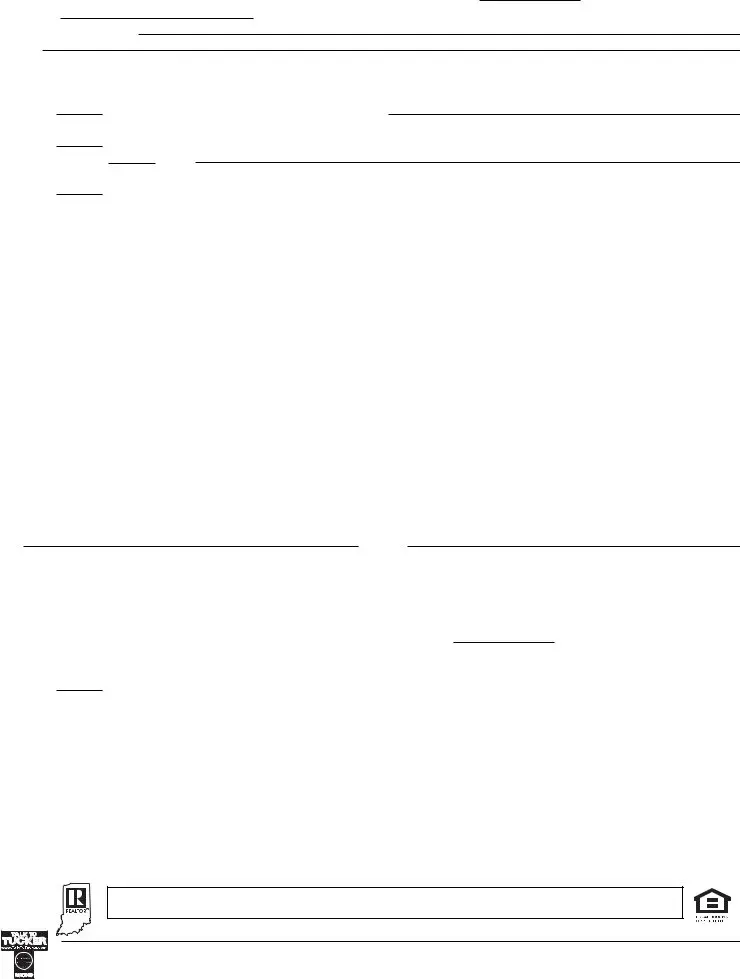
55SELLER'S INSPECTION RESPONSE #
56Date:
57Property Address:
58
59
60A. Seller responds as follows: (Initial one)
621. Seller accepts Buyer's Inspection Response #
642. Seller agrees to correct condition(s) in item #3 ■ prior to closing the transaction or ■ within
65days
66
673. Seller is unable or unwilling to make the corrections requested by Buyer.
69 |
4. |
|
|
Seller agrees to correct the following condition(s) at Seller's expense ■ prior to closing the |
|||||||
70 |
|
|
|
|
transaction or ■ within |
|
days |
|
|
||
71 |
|
|
|
|
|
|
|
|
|
|
|
72 |
|
|
|
|
|
|
|
|
|
|
|
73 |
|
|
|
|
|
|
|
|
|
|
|
74 |
|
|
|
|
|
|
|
|
|
|
|
75 |
|
|
|
|
|
|
|
|
|
|
|
76 |
5. |
|
|
Other: |
|
|
|
|
|
||
77 |
|
|
|
|
|
|
|
|
|
|
|
78 |
|
|
|
|
|
|
|
|
|
|
|
79 |
B. If a Reply is required, the Buyer shall reply on or before |
|
■ A.M. ■ P.M. ■ Noon |
||||||||
80 |
|
|
|
|
|
|
|
. IF BUYER FAILS TO REPLYOR FAILS TO REQUEST IN WRITINGAN |
|||
81EXTENSION OF TIME TO REPLY, BUYERACCEPTS SELLER’S INSPECTION RESPONSEABOVE.
83NOTE: A timely request for extension is not an acceptance of the inspection response, whether or not
84granted. A reasonable time period to respond is required to prevent misuse of this acceptance provision.
85Factors considered in determining reasonable time periods include, but are not limited to, availability of
86responding party to respond, type and expense of repairs requested and the need of responding party to
87obtain additional opinions to formulate a response.
90 |
SELLER'S SIGNATURE |
DATE |
SELLER'S SIGNATURE |
DATE |
|
91 |
|
|
|
|
|
92 |
|
|
|
|
|
93 |
PRINTED |
|
|
PRINTED |
|
94 |
|
|
|
|
|
95BUYER'S INSPECTION REPLY #
96A. Buyer replies as follows: (initial one)
97
981. Buyer accepts Seller's Response.
100 |
2. |
|
SEE BUYER'S INSPECTION RESPONSE # |
. |
|
|
|||||
101 |
|
|
|
|
|
|
|
|
|
|
|
102 |
3. |
|
Other: |
|
|
|
|
|
. |
||
103 |
|
|
|
|
|
|
|
|
|
|
|
104 |
|
|
|
|
|
|
|
|
|
|
|
105BUYER'S SIGNATURE |
DATE |
|
BUYER'S SIGNATURE |
DATE |
|||||||
106 |
|
|
|
|
|
|
|
|
|
|
|
107 |
|
|
|
|
|
|
|
|
|
|
|
108PRINTED |
|
|
|
|
|
PRINTED |
|
|
|||
Approved by and restricted to use by members of the Indiana Association of REALTORS®, Inc.
This is a legally binding contract, if not understood seek legal advice. Form #17B. Copyright IAR 2009
(Property Address) |
|
Page 2 of 2 (Independent Inspection Response) |
| Fact Name | Details |
|---|---|
| Purpose | The Indiana Inspection Response form is used to facilitate communication between buyers and sellers regarding property inspections. |
| Governing Law | This form is governed by Indiana real estate laws and the Indiana Association of REALTORS® guidelines. |
| Initial Options | Buyers can choose to waive inspections, accept the property as-is, or request repairs before closing. |
| Seller's Response Deadline | Sellers must respond to the buyer's inspection response within a specified time frame, typically indicated on the form. |
| Extension Requests | Both buyers and sellers can request extensions for their responses, but this does not imply acceptance of the other party's terms. |
| Liability Release | The form includes a release clause that protects sellers and brokers from liability related to inspection results. |
| Inspection Report Requirement | Buyers may attach a complete copy or specific pages of the inspection report, including details on lead-based paint and mold. |
| Survival of Release | The liability release remains in effect even after the closing of the property transaction. |
| Signature Requirement | Both buyers and sellers must sign the form to indicate their agreement to the terms outlined. |
| Form Updates | The form has been updated periodically, with the current version dated January 2009, indicating the need for periodic review. |
Completing the Indiana Inspection Response form involves several steps that require careful attention to detail. This form is essential in the process of responding to inspection results related to a property transaction. Following the outlined steps will help ensure that all necessary information is accurately provided, facilitating a smoother communication process between the buyer and seller.
After completing the form, it is important to ensure that all parties involved receive the necessary copies. This helps maintain clear communication and records throughout the transaction process. The seller will then have the opportunity to respond, and further steps will follow based on the responses received.
What is the purpose of the Indiana Inspection Response form?
The Indiana Inspection Response form is used during real estate transactions to document the buyer's response to the findings of a property inspection. It outlines the buyer's decisions regarding the property’s condition and any necessary repairs that the seller may need to address before closing the sale.
What options does a buyer have on the form?
The buyer can choose from several options:
What happens if the seller does not respond to the buyer's inspection response?
If the seller fails to respond by the specified deadline or does not request an extension in writing, the seller is considered to have accepted the buyer's inspection response. This means the buyer's terms will automatically apply.
What is included in the buyer's release of liability?
The form includes a clause where the buyer releases the seller and associated parties from any liability related to the inspection results or repairs. This includes issues such as lead-based paint, mold, and other biological contaminants. This release remains effective even after the closing of the sale.
What must the seller do in response to the buyer's inspection response?
The seller has several options to respond, including:
What if the buyer does not reply to the seller's inspection response?
If the buyer fails to reply by the deadline or does not request an extension in writing, the buyer accepts the seller's inspection response. This acceptance means that the terms set forth by the seller will be in effect.
Is the Indiana Inspection Response form legally binding?
Yes, the Indiana Inspection Response form is a legally binding contract. Buyers and sellers should ensure they understand the implications of the form before signing. It is advisable to seek legal advice if there are any uncertainties regarding the terms and conditions outlined in the document.
Filling out the Indiana Inspection Response form can be a daunting task, and many people make common mistakes that could lead to complications later on. One frequent error is failing to read the instructions carefully. The form has specific sections that require attention, and skipping over them can result in incomplete or incorrect submissions. For instance, if a buyer neglects to properly initial their choice in Section A, it may create confusion about their intentions regarding the inspection results.
Another common mistake involves not attaching the necessary inspection reports. Buyers must ensure that they include a complete copy or the appropriate pages of the Inspection Report. Without these documents, the seller may not have a clear understanding of the issues that need addressing. This omission can lead to misunderstandings and delays in the negotiation process.
Some individuals also overlook the deadlines for responses. The form specifies that the seller must respond by a certain time. If the buyer fails to request an extension in writing, they may inadvertently accept the seller's inspection response. This could limit their options and leave them in a less favorable position.
Moreover, buyers sometimes misunderstand the implications of waiving inspections. Choosing to waive an inspection means they are relying solely on their examination of the property. This decision can have serious consequences if hidden issues arise later. It’s crucial for buyers to weigh the risks before making such a choice.
Another mistake is not being specific about the conditions that need correction. In Section A, buyers can specify what repairs they expect the seller to make. Vague requests can lead to disagreements about what repairs are acceptable, potentially causing frustration for both parties.
Additionally, buyers may fail to release the seller from liability appropriately. The form includes a release clause, which protects the seller and brokers from future claims related to the inspection. If this section is not filled out correctly, it could leave buyers vulnerable to unexpected liabilities after the transaction closes.
Lastly, many individuals forget to sign and date the form properly. Both the buyer and seller need to provide their signatures and print their names. Without these essential details, the form may be considered invalid, leading to further complications in the transaction process. Ensuring that every section is complete and accurate is vital for a smooth real estate transaction.
The Indiana Inspection Response form is a crucial document in real estate transactions, particularly during the negotiation phase following a property inspection. Alongside this form, several other documents may be utilized to facilitate clear communication and agreement between buyers and sellers. Below is a list of related forms that are often employed in conjunction with the Indiana Inspection Response form.
These documents collectively enhance the clarity and efficiency of the negotiation process in real estate transactions. Properly utilizing them can help both buyers and sellers navigate the complexities of property inspections and repairs, ensuring a smoother transaction experience.
When filling out the Indiana Inspection Response form, it’s important to be careful and thorough. Here’s a list of things you should and shouldn’t do:
Understanding the Indiana Inspection Response form is crucial for both buyers and sellers in real estate transactions. However, several misconceptions can lead to confusion. Below is a list of common misconceptions along with explanations to clarify them.
This is not true. The Buyer has options, including waiving inspections, accepting the property as reported in the Inspection Report, or requesting specific repairs before closing.
The Seller must respond by a specified time, typically indicated on the form. If they fail to respond, they automatically accept the Buyer’s terms.
This is incorrect. A request for an extension is simply a request for more time and does not imply acceptance of the terms.
The Buyer retains the right to inspect any repairs before closing, ensuring that the work meets their expectations.
The form includes a release clause that protects the Seller and other parties from liability related to the inspection results.
While it is advisable to include relevant inspection reports, only specific pages or summaries may be necessary, depending on the situation.
The Seller can choose to accept, negotiate, or decline the repair requests, as indicated in their response section.
This form is a legally binding contract. Parties should understand its terms and implications before signing.
Once submitted, the Buyer’s response is typically considered final unless both parties agree to modifications.
Understanding the Indiana Inspection Response form is crucial for both buyers and sellers involved in real estate transactions. Here are key takeaways to keep in mind:
Being thorough and timely when filling out and responding to the Indiana Inspection Response form is essential for a smooth transaction. Ensure all details are accurate and that both parties understand their obligations.