Homepage Attorney-Approved Hold Harmless Agreement Template Attorney-Approved Hold Harmless Agreement Document for the State of Indiana
Outline

The Indiana Hold Harmless Agreement form plays a vital role in establishing clear expectations and responsibilities between parties engaged in various activities. This document is designed to protect one party from legal liability for any injuries or damages that may occur during the execution of a specific task or event. It outlines the agreement between the parties involved, ensuring that one party agrees to assume the risk and indemnify the other against potential claims. The form typically includes essential elements such as the names of the parties, a description of the activity or event, and the specific liabilities being waived. By signing this agreement, individuals or organizations can foster a sense of security and trust, allowing them to participate in activities without the constant worry of legal repercussions. Understanding the nuances of this form is crucial for anyone looking to navigate the complexities of liability and risk management in Indiana.

Sample - Indiana Hold Harmless Agreement Form

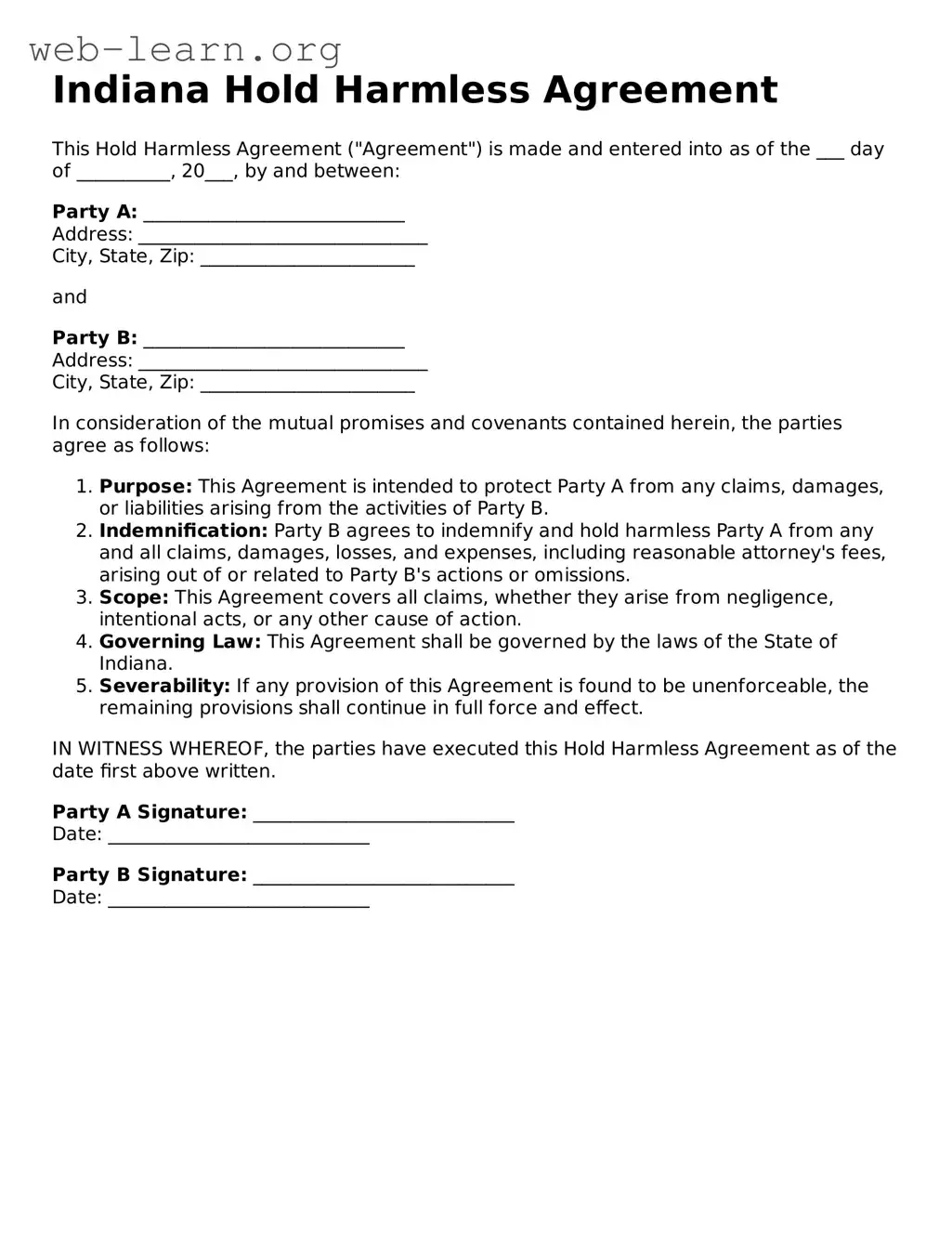
Indiana Hold Harmless Agreement

This Hold Harmless Agreement ("Agreement") is made and entered into as of the ___ day of __________, 20___, by and between:

Party A: ____________________________
Address: _______________________________
City, State, Zip: _______________________

and

Party B: ____________________________
Address: _______________________________
City, State, Zip: _______________________

In consideration of the mutual promises and covenants contained herein, the parties agree as follows:

  1. Purpose: This Agreement is intended to protect Party A from any claims, damages, or liabilities arising from the activities of Party B.
  2. Indemnification: Party B agrees to indemnify and hold harmless Party A from any and all claims, damages, losses, and expenses, including reasonable attorney's fees, arising out of or related to Party B's actions or omissions.
  3. Scope: This Agreement covers all claims, whether they arise from negligence, intentional acts, or any other cause of action.
  4. Governing Law: This Agreement shall be governed by the laws of the State of Indiana.
  5. Severability: If any provision of this Agreement is found to be unenforceable, the remaining provisions shall continue in full force and effect.

IN WITNESS WHEREOF, the parties have executed this Hold Harmless Agreement as of the date first above written.

Party A Signature: ____________________________
Date: ____________________________

Party B Signature: ____________________________
Date: ____________________________

File Characteristics

Fact Name Details
Definition An Indiana Hold Harmless Agreement is a legal document that protects one party from liability for certain actions or events.
Purpose This agreement is often used in contracts to ensure that one party will not hold the other responsible for damages or injuries.
Governing Law The agreement is governed by the laws of the State of Indiana, specifically under Indiana Code.
Common Uses It is commonly used in situations like rental agreements, construction contracts, and event planning.
Enforceability To be enforceable, the agreement must be clear, specific, and signed by all parties involved.

Detailed Guide for Filling Out Indiana Hold Harmless Agreement

Filling out the Indiana Hold Harmless Agreement form requires careful attention to detail. Once completed, the form will need to be submitted according to the specific requirements outlined by the relevant authority. Below are the steps to guide you through the process of filling out the form.

  1. Obtain a copy of the Indiana Hold Harmless Agreement form. This can typically be found online or requested from the appropriate office.
  2. Read the instructions provided on the form thoroughly. Understanding the requirements is crucial for accurate completion.
  3. Begin by filling in your name in the designated area. Ensure that it is spelled correctly and matches any identification you may need to provide.
  4. Next, enter your address. Include your street address, city, state, and zip code.
  5. Provide your contact information. This usually includes your phone number and email address.
  6. Identify the party or parties involved in the agreement. Clearly state their names and addresses as required.
  7. Complete any sections that require specific details about the activity or event related to the agreement. Be as precise as possible.
  8. Read through the entire form again to ensure all information is accurate and complete. Double-check for any missing signatures or dates.
  9. Sign and date the form in the appropriate section. Make sure to use the same name as provided at the beginning of the form.
  10. Submit the completed form according to the instructions provided. Keep a copy for your records.

Obtain Answers on Indiana Hold Harmless Agreement

  1. What is an Indiana Hold Harmless Agreement?

    An Indiana Hold Harmless Agreement is a legal document designed to protect one party from liability or claims that may arise from the actions of another party. Typically, this agreement is used in situations where one party agrees to assume the risk of certain activities, thereby relieving the other party from responsibility for any potential damages or injuries. This agreement is often used in contracts involving services, events, or property use.

  2. Who typically uses a Hold Harmless Agreement in Indiana?

    Various individuals and organizations may utilize a Hold Harmless Agreement. Common users include:

    • Event organizers who need to protect themselves from liability during public events.
    • Property owners who allow others to use their property for activities.
    • Contractors and service providers who want to limit their liability when performing work for clients.
  3. What are the key components of a Hold Harmless Agreement?

    A typical Hold Harmless Agreement includes several essential elements:

    • The names of the parties involved.
    • A clear description of the activities or services covered by the agreement.
    • The specific liabilities or risks that are being assumed.
    • A statement indicating that one party will not hold the other liable for any claims or damages.
    • Signatures of both parties to indicate their consent and understanding.
  4. Is a Hold Harmless Agreement enforceable in Indiana?

    Yes, a Hold Harmless Agreement can be enforceable in Indiana, provided it is properly drafted and executed. However, certain limitations may apply. For example, an agreement that attempts to waive liability for gross negligence or intentional misconduct may not be enforceable. It is advisable to consult with a legal professional to ensure that the agreement complies with state laws and adequately protects the parties involved.

  5. How can I create a Hold Harmless Agreement in Indiana?

    Creating a Hold Harmless Agreement involves several steps:

    • Identify the parties involved and their roles.
    • Clearly outline the activities or services that the agreement covers.
    • Specify the liabilities being assumed and any limitations.
    • Draft the agreement in clear, understandable language.
    • Have both parties review and sign the document.

    While templates are available online, it may be beneficial to seek legal advice to ensure that the agreement meets all necessary legal standards and adequately protects your interests.

Common mistakes

Filling out the Indiana Hold Harmless Agreement form can be a straightforward process, but many individuals make common mistakes that could lead to complications. Understanding these pitfalls can help ensure the form is completed correctly and serves its intended purpose.

One frequent mistake is failing to provide complete and accurate information. This includes not filling in all required fields, such as names, addresses, and dates. Incomplete forms may be rejected or cause delays in processing. It's essential to double-check that all necessary information is included before submitting the agreement.

Another common error is neglecting to read the entire agreement carefully. Many people skim through the document, missing critical clauses or conditions. Understanding the implications of the agreement is vital, as it outlines the responsibilities and liabilities involved. Taking the time to read and comprehend the terms can prevent misunderstandings later on.

Some individuals overlook the importance of signatures. A Hold Harmless Agreement is not valid without the proper signatures from all parties involved. It is crucial to ensure that everyone who needs to sign the document does so. Additionally, forgetting to date the signatures can create confusion regarding when the agreement was made.

Inaccurate dates can also lead to problems. Individuals may mistakenly enter the wrong date or fail to update it if the agreement is being amended. This can affect the enforceability of the agreement. Ensuring that all dates are correct is a simple yet vital step in the process.

Another mistake involves not including any necessary attachments or supporting documents. If the agreement references other documents, such as insurance policies or additional agreements, these should be included with the submission. Failing to do so may render the agreement incomplete.

Some people may not understand the legal implications of the Hold Harmless Agreement. This can lead to unrealistic expectations about liability and protection. Consulting with a legal professional can provide clarity and help individuals fully grasp what they are agreeing to.

Lastly, many individuals forget to keep a copy of the completed agreement for their records. It is essential to retain a signed copy for personal reference and to have proof of the agreement should any disputes arise in the future. Keeping a copy can also facilitate communication between parties involved.

By being aware of these common mistakes, individuals can fill out the Indiana Hold Harmless Agreement form more effectively. Taking the time to ensure accuracy and understanding can save time and prevent potential legal issues down the line.

Documents used along the form

The Indiana Hold Harmless Agreement is a useful document for protecting parties from liability. When using this agreement, you may find it helpful to have additional forms and documents on hand. Here’s a list of related documents that can complement the Hold Harmless Agreement.

  • Liability Waiver: This document releases one party from liability for any injuries or damages that may occur during an event or activity.
  • Indemnity Agreement: This agreement requires one party to compensate another for any loss or damage incurred, often used in business transactions.
  • Release of Liability: Similar to a waiver, this document protects a party from being held liable for any injuries or accidents that occur during a specific event.
  • Contract for Services: This outlines the terms and conditions of services provided, detailing responsibilities and expectations of both parties.
  • Insurance Certificate: This document provides proof of insurance coverage, which can help safeguard against potential claims.
  • Event Permit: Necessary for hosting events, this document grants permission from local authorities to conduct specific activities.
  • Property Lease Agreement: This outlines the terms for renting property, including responsibilities and rights of both the landlord and tenant.
  • Participant Agreement: Often used in recreational activities, this document ensures participants understand the risks involved and agree to the terms.
  • Confidentiality Agreement: This protects sensitive information shared between parties, ensuring that it remains private and secure.

Having these documents ready can streamline processes and enhance protection for all parties involved. It's always wise to consult with a professional to ensure that each document meets your specific needs and complies with applicable laws.

Similar forms

A Hold Harmless Agreement is a document that protects one party from liability for certain actions or events. Several other documents serve similar purposes. Here’s a list of eight documents that share characteristics with a Hold Harmless Agreement:

  • Indemnity Agreement: This document obligates one party to compensate another for certain damages or losses, similar to how a Hold Harmless Agreement functions.
  • Liability Waiver: A liability waiver releases one party from responsibility for injuries or damages, protecting them in a manner akin to a Hold Harmless Agreement.
  • Release of Liability: This document allows a party to relinquish their right to sue for damages, paralleling the protective intent of a Hold Harmless Agreement.
  • Insurance Policy: An insurance policy can provide coverage for liabilities, similar to how a Hold Harmless Agreement seeks to minimize exposure to risk.
  • Service Agreement: This outlines the responsibilities of each party and often includes clauses that limit liability, much like a Hold Harmless Agreement.
  • Contractual Agreement: Many contracts include clauses that address liability and indemnification, reflecting the same protective goals as a Hold Harmless Agreement.
  • Confidentiality Agreement: While primarily focused on information protection, these agreements may include clauses that limit liability for breaches, akin to Hold Harmless Agreements.
  • Professional Services Agreement: This document often contains provisions that limit liability for professionals, which aligns with the objectives of a Hold Harmless Agreement.

Dos and Don'ts

When filling out the Indiana Hold Harmless Agreement form, it is essential to approach the task with care. This document is designed to protect one party from liability for injuries or damages that may occur during a specific activity or event. Here are ten things to keep in mind:

  • Do read the entire form thoroughly before beginning to fill it out.
  • Do provide accurate and complete information. Inaccuracies can lead to complications later.
  • Do ensure that all parties involved understand the terms of the agreement.
  • Do sign and date the form where required. An unsigned document may not be enforceable.
  • Do consult with a legal professional if you have questions about any part of the agreement.
  • Don't rush through the form. Take your time to ensure everything is correct.
  • Don't leave any sections blank unless instructed. Missing information can invalidate the agreement.
  • Don't assume that verbal agreements will be sufficient. Everything should be documented in writing.
  • Don't ignore the implications of the agreement. Understand what you are agreeing to before signing.
  • Don't forget to keep a copy of the signed agreement for your records.

Misconceptions

Misconceptions about the Indiana Hold Harmless Agreement form can lead to confusion. Here are four common misunderstandings:

  1. It absolves all liability. Many believe that signing a Hold Harmless Agreement means they cannot be held responsible for any actions. In reality, it only limits liability under specific circumstances and does not cover gross negligence or willful misconduct.
  2. It is only for businesses. Some think that only businesses can use this agreement. Individuals can also benefit from a Hold Harmless Agreement, especially in personal transactions or events where liability may arise.
  3. It is a one-size-fits-all document. There is a misconception that a standard form will suffice for every situation. In truth, each agreement should be tailored to the specific circumstances and parties involved to ensure it is effective and enforceable.
  4. It eliminates the need for insurance. Some assume that signing this agreement means they no longer need insurance. However, it is important to maintain adequate insurance coverage, as the agreement does not replace the need for protection against unforeseen events.

Key takeaways

When filling out and using the Indiana Hold Harmless Agreement form, consider the following key takeaways:

  • Understand the Purpose: The Hold Harmless Agreement is designed to protect one party from liability for injuries or damages that may occur during an activity or event.
  • Identify the Parties: Clearly specify the parties involved in the agreement. This includes the individual or organization being held harmless and the one assuming the risk.
  • Be Clear and Specific: Use straightforward language to outline the scope of the agreement. Detail the activities covered and any specific risks associated with them.
  • Consult Legal Advice: It is advisable to seek legal counsel to ensure that the agreement is enforceable and complies with Indiana laws.
  • Keep Records: Maintain a copy of the signed agreement for your records. This documentation can be crucial in the event of a dispute.

Using this form correctly can safeguard against potential legal issues, making it an important step in planning any event or activity.