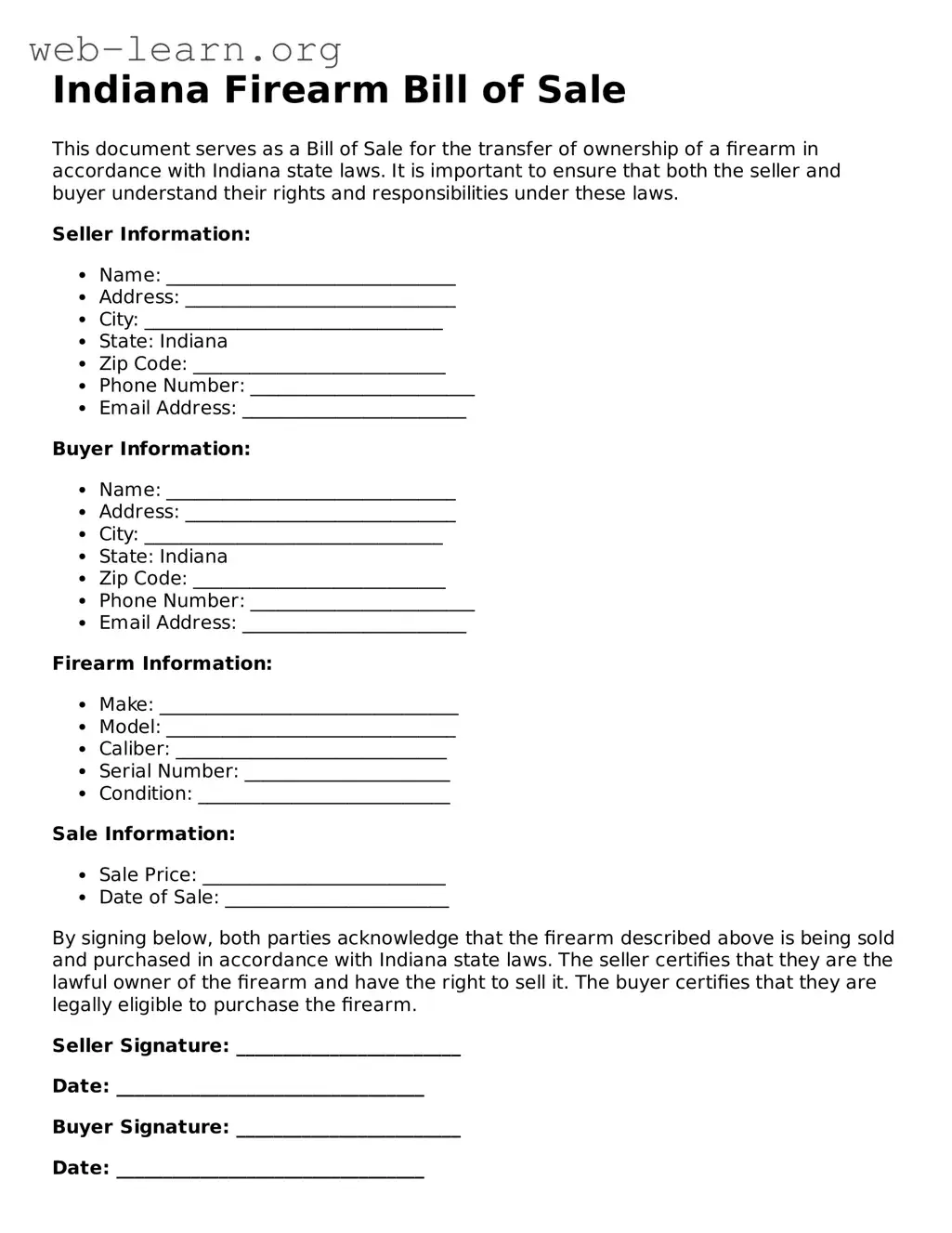
In Indiana, the process of buying or selling a firearm involves certain legal considerations, and one of the key documents that comes into play is the Firearm Bill of Sale form. This form serves as a written record of the transaction between the buyer and the seller, providing essential details that protect both parties involved. It typically includes information such as the names and addresses of both the buyer and seller, a description of the firearm being sold—including its make, model, and serial number—and the date of the transaction. Additionally, the form may outline the purchase price and any conditions of the sale. While Indiana does not require a background check for private sales, having a Bill of Sale can offer legal protection and clarity, ensuring that both parties have a clear understanding of the transaction. Understanding the importance of this document can help facilitate a smooth transfer of ownership and comply with state regulations.
Indiana Firearm Bill of Sale
This document serves as a Bill of Sale for the transfer of ownership of a firearm in accordance with Indiana state laws. It is important to ensure that both the seller and buyer understand their rights and responsibilities under these laws.
Seller Information:
Buyer Information:
Firearm Information:
Sale Information:
By signing below, both parties acknowledge that the firearm described above is being sold and purchased in accordance with Indiana state laws. The seller certifies that they are the lawful owner of the firearm and have the right to sell it. The buyer certifies that they are legally eligible to purchase the firearm.
Seller Signature: ________________________
Date: _________________________________
Buyer Signature: ________________________
Date: _________________________________
Keep this document for your records. It may be required for future reference regarding the ownership of the firearm.
| Fact Name | Details |
|---|---|
| Purpose | The Indiana Firearm Bill of Sale form serves as a record of the sale or transfer of a firearm between individuals. |
| Governing Law | The sale of firearms in Indiana is governed by Indiana Code Title 35, Article 47. |
| Parties Involved | The form typically includes information about both the seller and the buyer. |
| Identification Requirements | Both parties are usually required to provide valid identification to verify their identities. |
| Firearm Description | A detailed description of the firearm, including make, model, and serial number, must be included. |
| Consideration | The form should state the amount of money or other consideration exchanged for the firearm. |
| Signatures | Both the buyer and seller must sign the form to validate the transaction. |
| Record Keeping | It is advisable for both parties to keep a copy of the completed form for their records. |
| Legal Implications | Completing this form does not exempt either party from federal or state laws regarding firearm ownership and transfer. |
| Notarization | While notarization is not typically required, it can add an extra layer of authenticity to the transaction. |
Completing the Indiana Firearm Bill of Sale form is a straightforward process that ensures both the buyer and seller have a clear record of the transaction. After filling out the form, both parties should keep a copy for their records.
What is a Firearm Bill of Sale in Indiana?
A Firearm Bill of Sale is a legal document that records the sale or transfer of a firearm between two parties. It serves as proof of ownership and outlines the details of the transaction, including the buyer and seller's information, the firearm's description, and the date of the sale.
Is a Firearm Bill of Sale required in Indiana?
While Indiana does not require a Bill of Sale for private firearm sales, having one is highly recommended. It provides legal protection for both the buyer and seller and can be useful in case of future disputes or legal issues.
What information should be included in the Bill of Sale?
The Bill of Sale should include:
Do I need to notarize the Bill of Sale?
Notarization is not required in Indiana for a Firearm Bill of Sale. However, having the document notarized can add an extra layer of authenticity and may be beneficial if any disputes arise in the future.
Can I sell a firearm to someone from another state?
Yes, but there are specific federal and state laws that must be followed. Generally, the buyer must go through a licensed dealer in their state to complete the transfer. It is crucial to understand these laws to ensure compliance.
What if the firearm is sold to a prohibited person?
Selling a firearm to someone who is prohibited from owning one can lead to serious legal consequences. It is the seller's responsibility to ensure that the buyer is legally allowed to purchase the firearm. Conducting a background check is advisable.
How long should I keep a copy of the Bill of Sale?
It is recommended to keep a copy of the Bill of Sale for at least several years. This documentation can be crucial for proving ownership or for legal purposes if questions arise about the firearm's history.
What happens if I lose the Bill of Sale?
If you lose the Bill of Sale, it may be challenging to prove ownership of the firearm. If possible, try to obtain a copy from the seller. Keeping digital records or backups can help prevent loss in the future.
Where can I find a Firearm Bill of Sale template?
Templates for a Firearm Bill of Sale can be found online through legal form websites, or you can consult with a local attorney for a customized document. Ensure that any template you use complies with Indiana laws.
When completing the Indiana Firearm Bill of Sale form, many individuals make common mistakes that can lead to complications down the line. One frequent error is failing to provide accurate personal information. Buyers and sellers must ensure that names, addresses, and contact details are correctly filled out. Any discrepancies can create issues with future ownership verification.
Another mistake involves not including a detailed description of the firearm being sold. It is essential to specify the make, model, caliber, and serial number. Omitting this information can lead to confusion or disputes regarding the firearm's identity.
Many people overlook the necessity of both parties signing the form. A valid bill of sale requires signatures from both the buyer and the seller. Without these signatures, the document may not hold up in legal situations.
Additionally, individuals often forget to date the form. A missing date can complicate matters, especially if there is a dispute over when the sale occurred. Including the date helps establish a clear timeline of ownership.
Some individuals fail to understand the importance of retaining a copy of the completed bill of sale. Both the buyer and seller should keep a copy for their records. This serves as proof of the transaction and can be crucial for future reference.
Another common mistake is not verifying the buyer's eligibility to purchase a firearm. Sellers should ensure that the buyer meets all legal requirements. Failing to do so can lead to legal repercussions for the seller.
People sometimes neglect to check for any local regulations that may apply. While the Indiana Firearm Bill of Sale form is a state requirement, local laws may impose additional conditions. Ignoring these can lead to fines or other legal issues.
Errors in payment details can also occur. If the payment method is not clearly stated, it can lead to misunderstandings between the parties. It is important to specify whether payment was made in cash, check, or another form.
Some individuals may not understand the significance of including a witness. While not always required, having a witness can provide additional validation of the transaction. This can be particularly helpful in case of future disputes.
Lastly, many people fail to review the completed form before submission. Taking a moment to double-check all entries can prevent many of the mistakes mentioned above. A thorough review ensures that the document is accurate and complete, reducing the likelihood of complications later on.
When completing a firearm transaction in Indiana, several other documents may be necessary alongside the Indiana Firearm Bill of Sale form. These documents help ensure that the sale is legal and properly recorded. Here are some common forms you might encounter:
Having these documents on hand can streamline the transaction process and provide legal protection for both the buyer and the seller. Always ensure that all forms are completed accurately to avoid any complications.
When filling out the Indiana Firearm Bill of Sale form, it is essential to approach the task with care and attention to detail. This document serves as a legal record of the transaction, and proper completion helps protect both the buyer and the seller. Below are some important dos and don'ts to keep in mind.
By following these guidelines, you can help ensure that your firearm transaction is conducted smoothly and legally. Taking the time to complete the form correctly can prevent potential legal issues in the future.
When it comes to the Indiana Firearm Bill of Sale form, several misconceptions often arise. Understanding the facts can help ensure that both buyers and sellers navigate the process smoothly and legally. Here are five common misconceptions:
By clarifying these misconceptions, individuals can engage in firearm transactions with greater confidence and understanding. Always remember to do your research and consult with legal experts if you have specific questions.
When filling out and using the Indiana Firearm Bill of Sale form, it’s essential to keep several key points in mind. This form serves as an important document for both buyers and sellers in the transfer of firearm ownership. Here are some takeaways to consider:
Being thorough and organized when completing the Indiana Firearm Bill of Sale form can help facilitate a smooth transaction and protect both parties involved.
Free Gun Bill of Sale - Provides proof of purchase for a firearm transaction.
Dps-3 - It may be required by law enforcement during routine checks or investigations.
Kentucky Firearm Bill of Sale - Can be used for private sales between individuals.