In the realm of healthcare, the Indiana Do Not Resuscitate (DNR) Order form serves as a vital tool for individuals wishing to communicate their preferences regarding life-sustaining treatments. This form empowers patients to make informed decisions about their end-of-life care, ensuring that their wishes are respected in critical moments. By completing the DNR Order, individuals indicate that they do not wish to receive cardiopulmonary resuscitation (CPR) in the event of cardiac or respiratory arrest. The form must be signed by a qualified healthcare provider and can be presented in various healthcare settings, from hospitals to home care environments. Importantly, the DNR Order is not a standalone document; it is part of a broader conversation about advance care planning, which includes discussions about the patient’s values, goals, and overall healthcare preferences. In Indiana, the DNR Order is recognized as a legally binding directive, providing peace of mind to patients and their families during some of life’s most challenging moments. Understanding the nuances of this form can help individuals navigate the complexities of medical care and ensure that their choices are honored with dignity and respect.
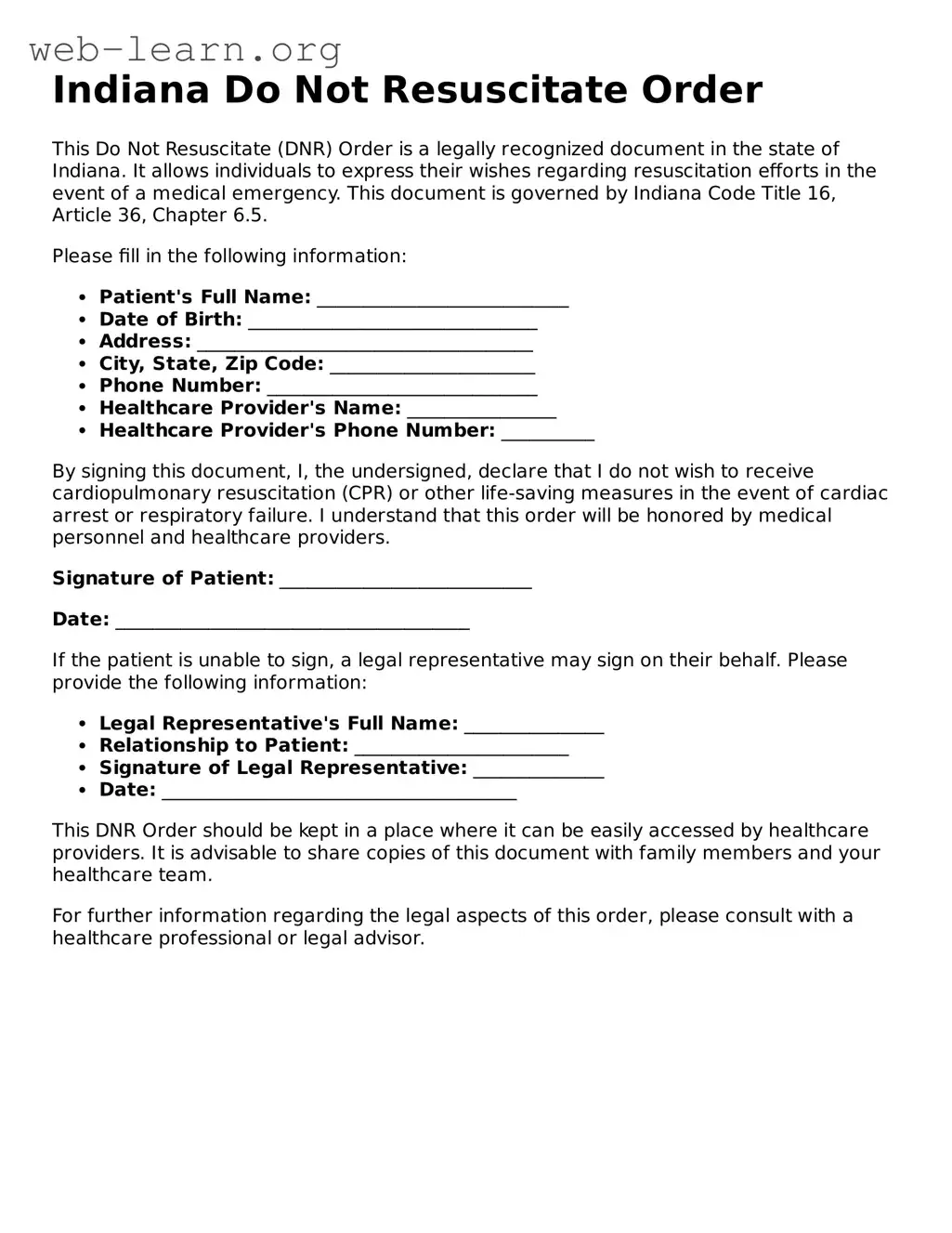
Indiana Do Not Resuscitate Order
This Do Not Resuscitate (DNR) Order is a legally recognized document in the state of Indiana. It allows individuals to express their wishes regarding resuscitation efforts in the event of a medical emergency. This document is governed by Indiana Code Title 16, Article 36, Chapter 6.5.
Please fill in the following information:
By signing this document, I, the undersigned, declare that I do not wish to receive cardiopulmonary resuscitation (CPR) or other life-saving measures in the event of cardiac arrest or respiratory failure. I understand that this order will be honored by medical personnel and healthcare providers.
Signature of Patient: ___________________________
Date: ______________________________________
If the patient is unable to sign, a legal representative may sign on their behalf. Please provide the following information:
This DNR Order should be kept in a place where it can be easily accessed by healthcare providers. It is advisable to share copies of this document with family members and your healthcare team.
For further information regarding the legal aspects of this order, please consult with a healthcare professional or legal advisor.
| Fact Name | Description |
|---|---|
| Governing Law | The Indiana Do Not Resuscitate Order form is governed by Indiana Code Title 16, Article 36, Chapter 6. |
| Eligibility | Any adult may complete a Do Not Resuscitate Order, provided they have the capacity to make healthcare decisions. |
| Signature Requirement | The form must be signed by the patient or their authorized representative, along with a physician's signature to be valid. |
| Form Accessibility | The Indiana Do Not Resuscitate Order form is available online and can be printed for use in healthcare settings. |
Filling out the Indiana Do Not Resuscitate Order form is a crucial step in ensuring that your healthcare preferences are honored. Once completed, this form will need to be shared with your healthcare providers and kept in an easily accessible location. Follow the steps below to fill out the form accurately.
After completing these steps, ensure that the form is stored safely and that those involved in your care are aware of its existence. This will help to ensure your wishes are respected in any medical situation.
What is a Do Not Resuscitate (DNR) Order in Indiana?
A Do Not Resuscitate Order is a legal document that allows a person to refuse cardiopulmonary resuscitation (CPR) and other life-saving measures in the event of cardiac arrest or respiratory failure. In Indiana, this order is recognized by healthcare providers and is intended to honor the wishes of individuals who do not wish to undergo resuscitation efforts.
Who can request a DNR Order in Indiana?
In Indiana, a DNR Order can be requested by a competent adult or by a legal representative, such as a guardian or healthcare proxy, on behalf of an incapacitated person. It is important that the individual requesting the order understands the implications and that the decision reflects the patient's wishes.
How do I obtain a DNR Order form in Indiana?
You can obtain a DNR Order form from various sources, including:
Once you have the form, fill it out completely and ensure it is signed by both the patient and a physician to make it valid.
What should I do after completing the DNR Order?
After completing the DNR Order, it is crucial to share copies with your healthcare provider, family members, and anyone involved in your care. Keep a copy in a visible location, such as on your refrigerator or in a medical file, so that emergency responders can easily access it if needed.
Can a DNR Order be revoked or changed?
Yes, a DNR Order can be revoked at any time. If you decide to change your mind, simply notify your healthcare provider and destroy any copies of the existing DNR Order. It is advisable to create a new order if you wish to specify different wishes regarding resuscitation.
When filling out the Indiana Do Not Resuscitate (DNR) Order form, individuals often encounter several common mistakes that can lead to confusion or complications. One prevalent error is failing to provide complete and accurate personal information. This includes the patient's name, date of birth, and contact details. Incomplete information can hinder the effectiveness of the DNR order, as medical personnel may struggle to verify the patient's identity in critical situations.
Another frequent mistake involves not having the form properly signed and witnessed. The Indiana DNR Order requires the signatures of both the patient and a witness. Without these signatures, the document may not be considered valid. It is essential to ensure that the witness is not a family member or someone who stands to benefit from the patient's estate, as this could raise questions about the authenticity of the form.
Additionally, individuals may overlook the importance of discussing their wishes with family members and healthcare providers. A DNR order is a significant decision that affects not only the patient but also their loved ones. Failing to communicate these wishes can lead to misunderstandings and emotional distress during critical moments. Open conversations about the DNR order can help ensure that everyone involved understands the patient's preferences.
Lastly, some people neglect to review and update their DNR orders regularly. Life circumstances change, and so do healthcare preferences. It is crucial to revisit the DNR order periodically to ensure it accurately reflects the patient's current wishes. A document that has not been updated may not align with the patient's current health status or desires, potentially leading to unwanted medical interventions.
When considering end-of-life care options, individuals and families may encounter various documents that complement the Indiana Do Not Resuscitate Order (DNR) form. Each of these forms serves a unique purpose in ensuring that a person's healthcare wishes are respected and clearly communicated. Below is a list of commonly used forms and documents associated with the DNR form.
Understanding these documents can empower individuals and families to make informed decisions regarding healthcare preferences. It is essential to have open discussions with loved ones and healthcare providers to ensure that everyone is aware of and respects these important wishes.
A Do Not Resuscitate (DNR) Order is a specific document that outlines a person's wishes regarding resuscitation efforts in the event of cardiac or respiratory arrest. Several other documents share similarities with the DNR in terms of purpose and function. Here’s a list of ten documents that are comparable:
When filling out the Indiana Do Not Resuscitate Order form, it’s important to be careful and thorough. Here are some things to keep in mind:
Understanding the Indiana Do Not Resuscitate (DNR) Order form is essential for individuals and families facing critical health decisions. Unfortunately, several misconceptions can cloud judgment and lead to confusion. Here are five common misconceptions about the Indiana DNR Order form:
This is a significant misunderstanding. A DNR order specifically instructs medical personnel not to perform cardiopulmonary resuscitation (CPR) in the event of cardiac arrest. However, it does not prevent other forms of medical treatment or care. Patients will still receive necessary medical attention, including pain management and comfort care.
This misconception suggests that DNR orders are only for those with a terminal illness. In reality, any individual can request a DNR order, regardless of their health status. The decision is deeply personal and can be based on individual values and preferences regarding end-of-life care.
Many believe that once a DNR order is established, it cannot be altered. This is not true. Individuals can change or revoke a DNR order at any time, as long as they are mentally competent to make that decision. It is essential to communicate any changes to medical personnel and family members.
Some people think that DNR orders are only applicable within hospital settings. In Indiana, a properly executed DNR order is valid in various settings, including homes and long-term care facilities. However, individuals should ensure that their wishes are communicated clearly to caregivers and emergency responders outside of a hospital.
This belief can lead to emotional distress and hesitation in making the decision. A DNR order does not signify a desire to end life; rather, it reflects a person's choice to avoid aggressive resuscitation efforts in specific situations. It is about prioritizing quality of life and aligning medical interventions with personal values.
Clarifying these misconceptions can empower individuals and families to make informed decisions regarding their healthcare preferences. Open discussions about DNR orders and end-of-life care can lead to better understanding and respect for personal choices.
When considering the Indiana Do Not Resuscitate (DNR) Order form, it is essential to understand its purpose and implications. Here are key takeaways to keep in mind:
Can You Get a Dnr at Any Age - Completing a DNR order can provide peace of mind for patients and their families regarding medical interventions.
Ky Dnr Form - It is vital to understand the legal implications of a DNR order in your state.
Is a Dnr an Advance Directive - Patients should understand that a DNR order does not limit other types of medical treatment.