When buying or selling a boat in Indiana, having the right paperwork is essential to ensure a smooth transaction. The Indiana Boat Bill of Sale form serves as a crucial document that records the transfer of ownership from the seller to the buyer. This form captures important details, including the names and addresses of both parties, a description of the boat, and the sale price. Additionally, it often includes information about the boat's registration number and hull identification number, which are vital for legal and registration purposes. By properly completing this form, both buyers and sellers can protect their interests and provide proof of the transaction, should any disputes arise in the future. Understanding the key elements of the Indiana Boat Bill of Sale can help facilitate a successful sale and ensure compliance with state regulations.
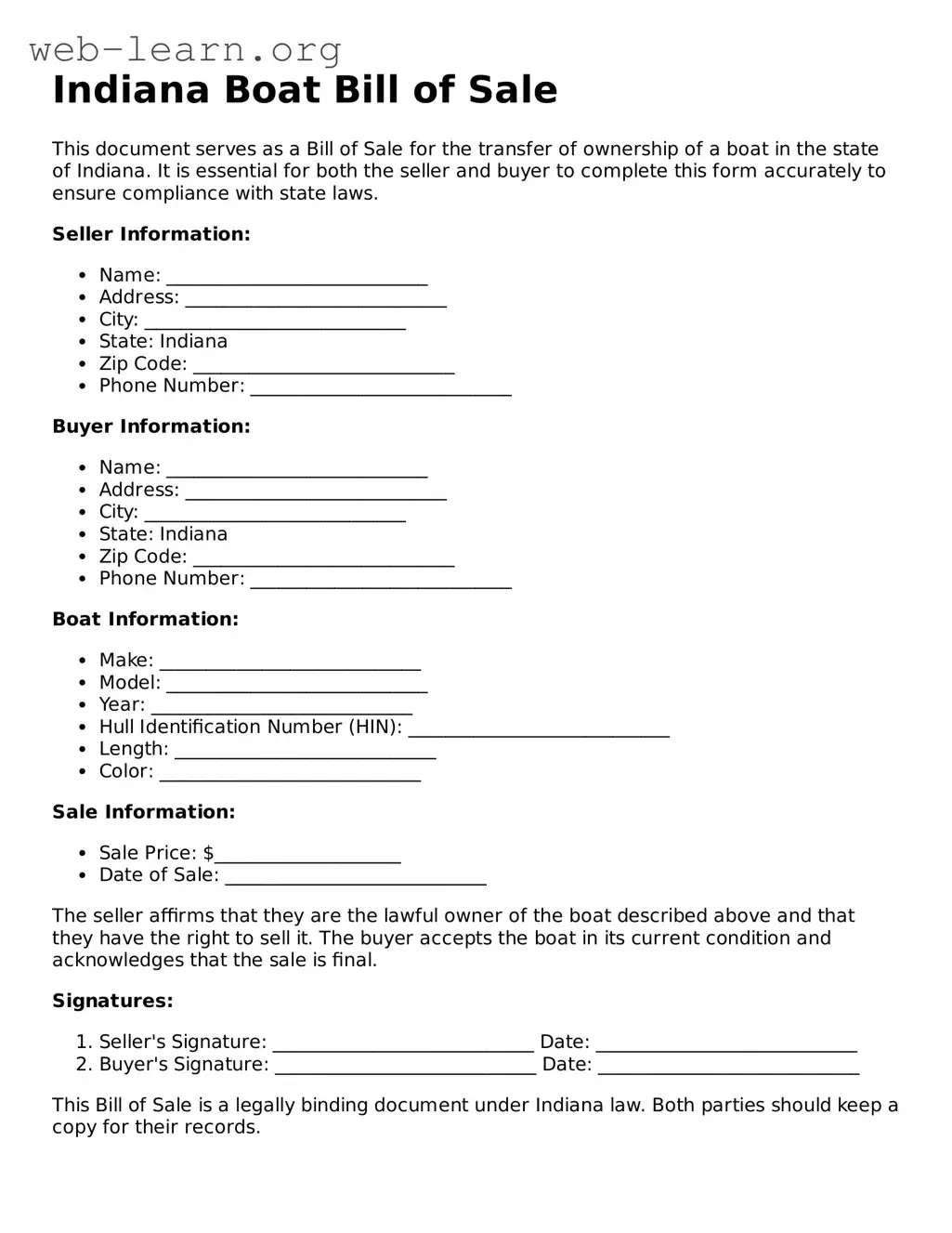
Indiana Boat Bill of Sale
This document serves as a Bill of Sale for the transfer of ownership of a boat in the state of Indiana. It is essential for both the seller and buyer to complete this form accurately to ensure compliance with state laws.
Seller Information:
Buyer Information:
Boat Information:
Sale Information:
The seller affirms that they are the lawful owner of the boat described above and that they have the right to sell it. The buyer accepts the boat in its current condition and acknowledges that the sale is final.
Signatures:
This Bill of Sale is a legally binding document under Indiana law. Both parties should keep a copy for their records.
| Fact Name | Details |
|---|---|
| Purpose | The Indiana Boat Bill of Sale form serves as a legal document to record the sale of a boat between a seller and a buyer. |
| Governing Law | This form is governed by Indiana Code Title 9, Article 32, which pertains to watercraft and motorboats. |
| Required Information | The form typically requires details such as the boat's make, model, year, hull identification number, sale price, and the names and addresses of both the buyer and seller. |
| Signatures | Both the seller and buyer must sign the document to validate the transaction. This ensures that both parties agree to the terms of the sale. |
| Record Keeping | It is advisable for both parties to keep a copy of the Bill of Sale for their records. This can help resolve any future disputes related to the sale. |
Once you have the Indiana Boat Bill of Sale form, you can proceed to fill it out accurately. This document serves as a record of the sale and transfer of ownership of a boat. Ensure that all necessary information is provided to avoid any issues in the future.
After completing the form, ensure that both parties retain a copy for their records. This will help in any future transactions or inquiries regarding the boat.
A Boat Bill of Sale is a legal document that records the transfer of ownership of a boat from one person to another. It serves as proof of the transaction and can be important for registration and titling purposes.
While a Boat Bill of Sale is not legally required for all boat transactions in Indiana, it is highly recommended. Having this document can protect both the buyer and seller by providing a clear record of the sale.
The Boat Bill of Sale should include the following information:
Notarization is not a requirement for a Boat Bill of Sale in Indiana. However, having the document notarized can add an extra layer of authenticity and may be beneficial for both parties.
Yes, a generic Boat Bill of Sale form can be used as long as it includes all necessary information. However, using a form specifically designed for Indiana may help ensure compliance with state regulations.
The Boat Bill of Sale is often required when registering the boat in the buyer's name. It provides proof of ownership and can be submitted to the Indiana Department of Natural Resources during the registration process.
If there is a lien on the boat, it is important to address it before completing the sale. The seller should disclose any liens to the buyer, and arrangements should be made to clear the lien to avoid complications in the future.
If a Boat Bill of Sale is lost, the seller can create a new one, but it should include a statement indicating that it is a replacement for the original. Both parties should sign the new document to ensure its validity.
Once a Boat Bill of Sale is signed and the transaction is complete, it is generally considered final. However, if both parties agree to cancel the sale, they can create a written agreement to document the cancellation.
When completing the Indiana Boat Bill of Sale form, individuals often overlook important details that can lead to complications. One common mistake is failing to provide accurate information about the boat. This includes the boat's make, model, year, and identification number. Inaccurate details can create confusion and may complicate future ownership transfers.
Another frequent error is neglecting to include the sale price. The form requires a clear statement of the transaction amount. Omitting this information can lead to disputes or issues with tax authorities. It is essential to document the agreed-upon price to ensure a smooth transfer of ownership.
Many people also forget to date the form. A date is crucial as it establishes when the sale occurred. Without a date, it may be difficult to verify the timeline of ownership, which can be problematic if any legal issues arise later.
Signatures are another area where mistakes are commonly made. Both the buyer and seller must sign the form. If either party neglects to sign, the document may be considered invalid. This can hinder the registration process and create unnecessary delays.
In addition, individuals sometimes fail to provide their contact information. Including phone numbers and addresses for both parties is important. This information facilitates communication if any questions or issues arise after the sale.
People may also misinterpret the requirements for notarization. While notarization is not always necessary, certain situations may require it. Understanding when a notarized signature is needed can prevent complications in the future.
Lastly, individuals might not keep a copy of the completed form. Retaining a copy is crucial for both the buyer and seller. This serves as proof of the transaction and can be helpful for future reference, especially if any disputes arise regarding ownership.
When purchasing or selling a boat in Indiana, several forms and documents may accompany the Boat Bill of Sale. These documents help ensure a smooth transaction and provide necessary information for both parties involved. Below is a list of commonly used forms that can complement the Boat Bill of Sale.
Having these documents prepared and organized can facilitate the sale process and protect the interests of both the buyer and seller. It is essential to ensure that all paperwork is completed accurately to avoid any potential issues in the future.
The Boat Bill of Sale form serves a specific purpose in the transfer of ownership for boats. However, it shares similarities with several other documents used in the transfer of ownership for various types of property. Here are four documents that are comparable to the Boat Bill of Sale:
When filling out the Indiana Boat Bill of Sale form, there are important guidelines to follow. Here are five things you should do and five things you should avoid.
Things You Should Do:
Things You Shouldn't Do:
Understanding the Indiana Boat Bill of Sale form is essential for anyone involved in buying or selling a boat in the state. However, several misconceptions can lead to confusion. Below is a list of common misunderstandings regarding this important document.
Being aware of these misconceptions can help ensure a smoother transaction when buying or selling a boat in Indiana. Properly understanding the Indiana Boat Bill of Sale form is key to protecting your interests.
Ensure the form is filled out completely. Missing information can lead to complications during registration.
Include accurate details about the boat. This includes the make, model, year, and hull identification number (HIN).
Both the buyer and seller must sign the form. Signatures validate the transaction and confirm agreement on the sale.
Consider notarizing the document. While not required, notarization adds an extra layer of authenticity.
Keep a copy of the completed bill of sale for your records. This serves as proof of the transaction for both parties.
Use the bill of sale for registration purposes. Indiana requires this document when registering the boat in the buyer's name.
Be aware of any local regulations. Different counties may have specific requirements regarding boat sales.
Verify the seller's ownership. Ensure that the seller has the legal right to sell the boat to avoid future disputes.
Check for any liens on the boat. A lien can complicate ownership and may need to be resolved before the sale.
Arizona Watercraft Bill of Sale - The form may also include a statement about the boat's condition at the time of sale.
Boat Bill of Sale Colorado - Both parties should sign the document to validate the sale and transfer of ownership.
Registering a Boat in Kansas - It can help ensure compliance with local laws regarding boat sales.